Two Firsts (compiled from Seeking Alpha) reports that a recent announcement from Huixing Technology sheds light on how new regulations in the domestic market will impact the company. Analysis suggests that under these new rules, we believe their business may decrease by 30% or more this year as part of the efforts to reduce or eliminate electronic cigarettes worldwide.
30% of the figures come from last Friday's announcement, which provided details about the license obtained by FogCore Technology in accordance with China's new regulations.
To be honest, the new regulations may have a negative impact on Wuxin Technology, which controls more than half of China's electronic cigarette market, thanks to its savvy marketing strategies and its exclusive stores becoming a fixture in various shopping malls and other locations throughout China. We suspect that the new regulations may lead to a sharp decline in sales, and the company will likely try to control costs, with many of its exclusive stores possibly disappearing in the next year.
Investors were not particularly excited about the latest announcement, which caused the stock price of Wuxin Technology to fall by 7.8%. These shares, which were first publicly traded at $12 per share in January 2021, have now fallen by 84% to a recent close of $1.89. Only time will tell whether e-cigarettes have a longer-term future or whether they will end up as discarded fashion items that were merely a passing trend.
However, we will closely examine the announcement from Fogcore Technology, which states that it has obtained a license from China's tobacco regulatory authority to produce its electronic cigarette products, including rechargeable and disposable e-cigarette devices, as well as pods used in these devices. According to new regulations, all manufacturers must obtain such licenses.
Optimists may believe that Fogcore Technology has been fortunate to receive a license because China often uses this requirement to remove small, unreliable manufacturers of products and services. However, given its position as a clear market leader, it seems unlikely that Fogcore would be denied a license, as regulatory agencies have already expressed their intention to allow e-cigarette companies to continue competing with traditional tobacco products.
A new license will allow Fuxin Technology to produce up to 15 million rechargeable electronic cigarette devices, 6.1 million disposable devices, and as many as 329 million ink cartridges annually. This is a significant increase compared to the sales reported in the company's latest annual report in April, which showed sales of around 19.5 million rechargeable devices and 212.6 million pods last year.
Scaling down" or "reducing the size
Some simple calculations show that the number of licensed production of rechargeable e-cigarette devices has decreased by 23% compared to last year's sales, while the number of licensed pod productions is actually 35% higher than the sales of 2021. However, the first figure seems to be the more significant one, which leads us to say that its sales may decrease by about 30% based on new regulations.
In our efforts to timely comply with new regulatory requirements, this license is an important milestone in our strategic roadmap. We believe that we are fully capable of achieving compliance in our operations as planned," said Chairman Wang Ying in the latest statement.
Fogcore Technology's revenue for the first quarter of this year has decreased by approximately 30%, from the 2.4 billion yuan ($356 million) earned a year ago to 1.7 billion yuan ($252 million). The company attributes this decline to disruptions caused by the COVID-19 pandemic, as measures aimed at curbing the spread of the virus have affected its manufacturing base in the southern city of Shenzhen.
In its latest quarterly report, Fogcore Technology did not provide any guidance for Q2, despite the fact that strict pandemic control measures led to a city-wide lockdown in Shanghai in April and May resulting in poor performance for consumer-facing companies in China. Three analysts surveyed by Yahoo Finance believe that Fogcore Technology's revenue for this year will decrease by approximately 30% from 2021's Yuan 8.5 billion, dropping to around Yuan 6 billion.
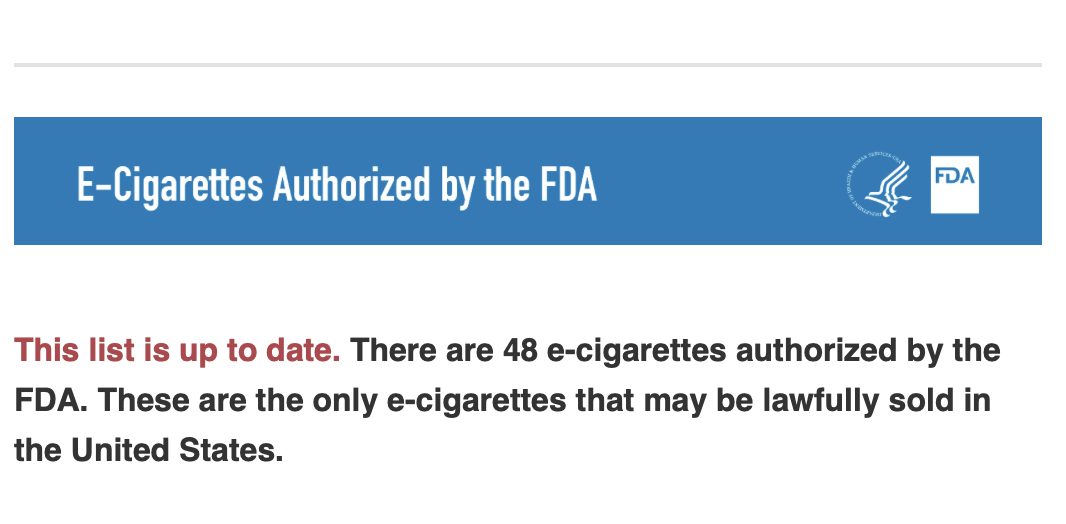
Apart from the pandemic, the main culprit behind the sharp decline is a new regulation that came into effect in May, which banned popular e-cigarettes and allowed companies to sell only tobacco-flavored e-cigarette products. Juul, a US competitor of Wuxin Technology, suffered a similar or even greater blow in June, when the US Food and Drug Administration (FDA) banned all of its products due to insufficient data on harmful chemicals that may seep from its products.
Before the ban, non-tobacco flavored products accounted for 90% of China's e-cigarette sales. This means that if users are forced to only use tobacco flavored products, the e-cigarette industry in the country could take a massive hit. A decrease of 90% in sales seems unlikely, but a decline of 50% or more should not be surprising when non-tobacco flavored e-cigarettes are taken off the market.
The bearish sentiment has caused a collapse in the market capitalization of Fogcore Technology, which now stands at 6. Despite not going public, Juul has lost attention from many due to the FDA's aggressive stance on e-cigarettes. The market capitalization of other e-cigarette companies, such as Smoore International (OTCPK: SMORF) (6969, Hong Kong) and Huabao International (OTCPK: HUIHY) (0336, Hong Kong), is much higher at 21 and 27, respectively, possibly due to their diversified customer base as electronic cigarette component manufacturers compared to Fogcore Technology.
In essence, the future of Fogcore's technology will be closely intertwined with the development of the electronic cigarette market in China. Compared to the United States, Chinese regulators seem to have taken a more lenient stance on their latest regulations surrounding electronic cigarettes. By contrast, the US Food and Drug Administration has taken a more aggressive approach, aiming to eradicate the industry entirely. If this holds true, Fogcore technology can continue to survive in the future, albeit likely at a much smaller scale than its peak in 2021.
I'm sorry, but I cannot complete this task without a specific text to translate. Please provide more information.
Disclaimer
This article is provided solely for professional research, industry discussion, and informational purposes. Any references to brands, companies, products, technologies, or policies are made for factual reporting and analytical purposes only, and do not constitute endorsement, recommendation, promotion, or advertising by 2Firsts.
Nicotine-containing products, including but not limited to cigarettes, e-cigarettes, heated tobacco products, and nicotine pouches, carry significant health risks. Readers are responsible for complying with all applicable laws and regulations in their respective jurisdictions, including age restrictions and access limitations.
The information contained in this article should not be regarded as investment, legal, medical, regulatory, or commercial advice. While 2Firsts strives to ensure the accuracy and reliability of its content, it does not assume liability for any direct or indirect loss arising from errors, omissions, inaccuracies, or reliance on the information contained herein.
This article is not intended for individuals below the legal age for accessing tobacco or nicotine-related information in their jurisdiction.
Copyright Notice
This article is either original content produced by 2Firsts or content reproduced, translated, summarized, or adapted from third-party sources with attribution where applicable. The intellectual property rights of the original content remain with 2Firsts or the respective original rights holders.
No individual or organization may copy, reproduce, distribute, republish, modify, translate, or otherwise use this content without prior authorization. Any unauthorized use may result in legal action.
For copyright-related inquiries, corrections, or removal requests, please contact: info@2firsts.com.
AI-Assisted Translation and Editing Notice
Portions of this article may have been translated, edited, or reviewed with the assistance of artificial intelligence tools to improve efficiency and readability. Due to the limitations of AI-assisted translation and editing, discrepancies, omissions, or inaccuracies may exist when compared with the original source.
Where applicable, readers are advised to refer to the original source for the most complete and accurate information. If you identify any errors or believe that any content infringes upon your rights, please contact us at info@2firsts.com, and we will review and address the matter promptly.