Kazakhstan President Addresses Youth E-Cigarette Use Threat

Jun.19.2023
Kazakhstan President Addresses Youth E-Cigarette Use Threat
Kazakhstan's President warns of the threat of e-cigarettes to the country's youth and calls for urgent measures.

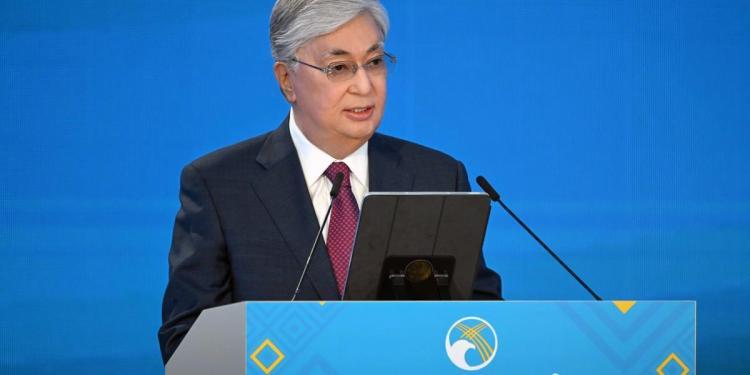
Recently, according to a report by "The Voice of the People," the President of Kazakhstan, Kasym Zhomart Tokayev, addressed the issue of young Kazakhs using e-cigarettes during a national conference.


Tokayev emphasizes that e-cigarettes have posed a threat to young people, and Kazakhstan needs to take urgent systemic measures to counter this dangerous phenomenon.


Another disaster posing a threat to the health of our country is the so-called e-cigarette and its various types.


He stated that these e-cigarettes have become popular among teenagers. This is mainly due to their wide availability and promotion as harmless.


We need to take urgent systemic measures to combat this dangerous phenomenon. A ban alone is not enough.


References:


Tokayev: "From vapes to drugs, there is just one step.


Disclaimer

This article is provided solely for professional research, industry discussion, and informational purposes. Any references to brands, companies, products, technologies, or policies are made for factual reporting and analytical purposes only, and do not constitute endorsement, recommendation, promotion, or advertising by 2Firsts.

Nicotine-containing products, including but not limited to cigarettes, e-cigarettes, heated tobacco products, and nicotine pouches, carry significant health risks. Readers are responsible for complying with all applicable laws and regulations in their respective jurisdictions, including age restrictions and access limitations.

The information contained in this article should not be regarded as investment, legal, medical, regulatory, or commercial advice. While 2Firsts strives to ensure the accuracy and reliability of its content, it does not assume liability for any direct or indirect loss arising from errors, omissions, inaccuracies, or reliance on the information contained herein.

This article is not intended for individuals below the legal age for accessing tobacco or nicotine-related information in their jurisdiction.


Copyright Notice

This article is either original content produced by 2Firsts or content reproduced, translated, summarized, or adapted from third-party sources with attribution where applicable. The intellectual property rights of the original content remain with 2Firsts or the respective original rights holders.

No individual or organization may copy, reproduce, distribute, republish, modify, translate, or otherwise use this content without prior authorization. Any unauthorized use may result in legal action.

For copyright-related inquiries, corrections, or removal requests, please contact: info@2firsts.com.


AI-Assisted Translation and Editing Notice

Portions of this article may have been translated, edited, or reviewed with the assistance of artificial intelligence tools to improve efficiency and readability. Due to the limitations of AI-assisted translation and editing, discrepancies, omissions, or inaccuracies may exist when compared with the original source.

Where applicable, readers are advised to refer to the original source for the most complete and accurate information. If you identify any errors or believe that any content infringes upon your rights, please contact us at info@2firsts.com, and we will review and address the matter promptly.


Bringing Tax and Insurance Into Nicotine Regulation: Insights From a Tobacco Harm-Reduction Report
A smoke-free nicotine policy report argues that tobacco harm reduction should move beyond product bans and health warnings into tax policy, insurance pricing and risk-based regulation. While some projections remain open to debate, the report highlights a wider challenge: nicotine products, technologies and consumer behavior have changed sharply over the past decade, and regulatory systems may need new tools to better align tobacco control with harm-reduction goals.
Jun.08
Former ATF Official’s Claims on Chinese Vape Companies and 6-Methyl Nicotine Fuel US Regulatory Debate
Former ATF Deputy Director Edgar Domenech has warned that some Chinese vape companies may be using 6-methyl nicotine, a nicotine analogue, raising new questions over how US regulators should classify emerging nicotine compounds.
Jul.13
State Registries Are Reshaping U.S. Vape Market Access 2Firsts Interview with U.S. Vapor Manufacturers Association President Allison Boughner
As the U.S. vapor market faces FDA authorizations, import seizures and growing state-level restrictions, AVM President Allison Boughner told 2Firsts that state product registries and white-list systems are having the most immediate impact. She said distributors are placing greater weight on documentation, product origin and supply-chain transparency.
Special Report
May.26
Product | ZYN Adds Tropical Flavor and Expands 1.5mg Nicotine Options in the Philippines
ZYN has expanded its nicotine pouch portfolio in the Philippines with the addition of Cool Breeze 1.5mg and Tropical in 3mg and 6mg strengths. Public information shows that 1.5mg is among the lower nicotine strengths offered by ZYN in the Philippine market and is positioned for adult nicotine consumers who are new to nicotine pouches.
PMI
Jun.08
Adani’s Mumbai Airport Duty-Free Shops Face Scrutiny Over Nicotine Pouch Sales in India
An Indian investigation found that duty-free shops at Mumbai international airport operated by billionaire Gautam Adani’s business group sold nicotine pouches in breach of the law, Reuters reported, in a case that could shape how India regulates sales of new nicotine products at airport retail outlets.
Jul.08
Japan’s Heated Tobacco Tax Changes Reshape Consumer Choices, Survey Reveals Impact of Price and Income
A consumer survey by Japanese heated tobacco information platform RELAZO found that rising tobacco prices and planned heated tobacco tax changes may influence smoking decisions among Japanese consumers. The survey covered 49,879 men and women aged 20 to 69 nationwide. It found that around 40% of respondents cumulatively indicated they may consider quitting when a pack reaches ¥600 (approximately US$4.1), while nearly 90% expressed potential quitting intentions at a ¥1,000 (approximately US$6.8) price level. The survey also found significant differences by income level, with lower-income respondents showing greater sensitivity to price increases.
Jul.24