Just like a real-life version of "China's Entrepreneurs," seventeen years ago, Liu Tuanfang was invited by a friend to boldly explore the electronic cigarette industry, becoming one of its first pioneers. Now, after seventeen years of ups and downs, how will he look back on the past and look forward to the future, and what hopes does he have for the young people who are now entering the industry with great energy? In an exclusive interview with 2FIRSTS, Liu Tuanfang, Vice Chairman of the Electronic Cigarette Commission and Chairman of Yijia Technology, shares his legendary story and his vision for the electronic cigarette industry.
Engineer's high-stakes gamble
In 2006, in the streets of Shenzhen, the handsome guys sported big wavy hairdos and carried portable radios in their pockets. The second line of defense was no longer effective in slowing down Shenzhen's rapid integration. Shenzhen's GDP exceeded 500 billion for the first time and it was rapidly attracting talented individuals from across the country.
Liu Yuanfang, who was formerly the manager of the engineering department in a Hong Kong-based company, was responsible for developing electronic products that produce heat. He actually comes from an electronic application technology background and has held various technical engineering positions within the company, accumulating a wealth of practical experience. At the end of last year, he was offered an opportunity to work in the electronic cigarette industry.
The first electronic cigarette was invented in China, but the majority of people are still unaware of this rare invention. Industry pioneers who were once at the forefront of this mysterious blue ocean market of electronic cigarettes are now unable to predict the future of its development.
Without hesitation, Liu Tuanfang agreed to the idea. His reasoning was simple and clear: "One, we have channels through our trade company and a large number of hungry clients; two, Han Li's invention has already demonstrated profitability; three, electronic cigarettes are a new type of nicotine delivery device with a base of cigarette users, and I believe in this product; four, my expertise aligns perfectly with this field, and I am confident in innovating technology and promoting product upgrades and iterations." With his meticulous thinking and professional confidence, Liu Tuanfang won this future-oriented gamble easily and beautifully.
Since 2007, Liu Yuanfang's expertise found a place in the field of electronic cigarettes, prompting her company to frequently improve new technologies such as high-rate batteries, airflow atomizer switches, and heating components. These groundbreaking innovations caused an industry earthquake and to this day, electronic cigarettes maintain the distinct features reformed by Liu Yuanfang. In 2010, Liu Yuanfang established Shenzhen Yijiate Technology Co., Ltd.
However, despite the efforts of Liu Tuanfang's company, their orders did not increase and revenue actually decreased. His painstakingly developed technology was easily copied by others who then undercut his prices to steal his clients. Driven by the desire for victory, Liu Tuanfang decided to establish the Aspire brand, naming his products after characters from Greek mythology, in the hopes of regaining his lost glory. Fate once again smiled upon Liu Tuanfang. From the first generation of oil atomizers to the "Parrot Shell," from "Atlantis" to "Cleito," Liu Tuanfang has continued to push the limits of cutting-edge technology in the industry, ensuring that Aspire always brings surprises to consumers.
Someone once asked Liu Tuanfang an interesting question: "What will electronic cigarettes look like in ten years?" He replied, "Simple products, affordable prices, and fully automated manufacturing." His seemingly simple answer actually embodies the ultimate requirements for the industry. Liu Tuanfang explains, "The premise of simple products and affordable prices is fully automated manufacturing. The word 'automation' is concise but not simple, hiding behind it are very ambitious engineering designs and highly advanced technological innovations, which cannot be achieved overnight.
In just a few words, Liu Tuanfang expressed her grand expectations for the future development of electronic cigarettes.
Far-sighted hero sacrifices limb for greater good.
After 15 years in the floating industry, Liu Tuanfang has gradually become accustomed to the ebb and flow of life. He now lives calmly, forgetting both favor and disgrace, and uses his sharp insight to view issues from the macro perspective of history. This requires a kind of courage that ordinary people do not possess.
As we enter 2020, disposable products are sweeping the global e-cigarette market. However, Liu Tuanfang believes that the lifespan of these products has yet to be verified. They take advantage of loopholes in the PMTA and exist in a legal grey area. Liu reveals that some countries are considering the legality and rationality of disposable products, and they face a test of environmental responsibility.
According to Liu Tuanfang, there are two reasons for the popularity of disposable products. Firstly, the threshold for use is low, and consumers find them convenient, easy to use and available in a variety of flavors, making them very appealing. Secondly, distributors are willing to promote disposable products because they are easy to provide after-sales service for, and insurance companies are also willing to guarantee them. He believes that disposable electronic cigarettes were born out of an excessive focus on appearance and taste, but the current market trend has met consumers' temporary needs. However, as time goes on, products will continue to evolve and the focus of industry development will shift to environmental protection, safety, and price.
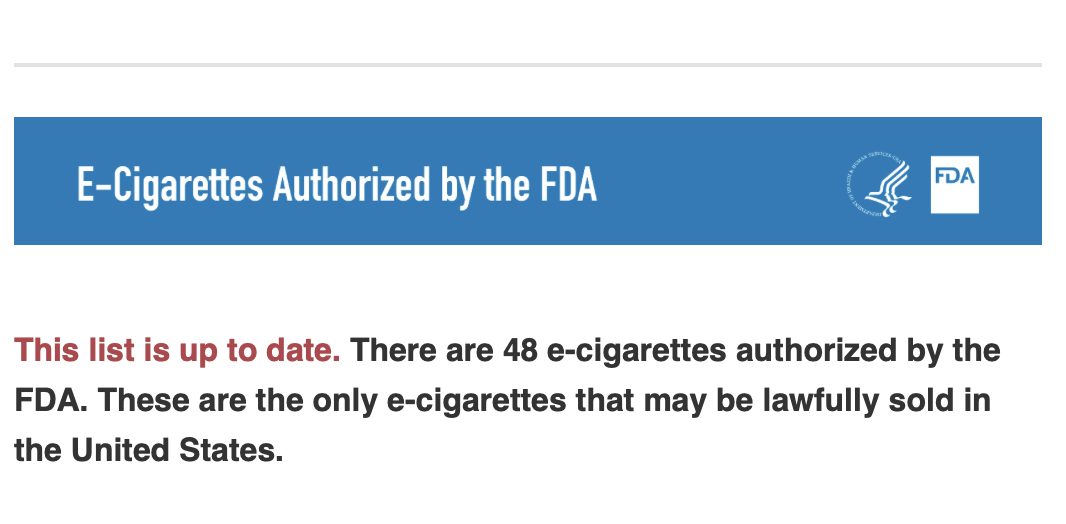
The United States is the largest market for disposable electronic cigarettes. According to Liu Tuanfang, the first principle for Chinese e-cigarette companies entering the US market is to respect and comply with FDA laws and regulations. Secondly, while it is undeniable that the vast number of American smokers require e-cigarettes, objectively speaking, disposable products have not been verified by the FDA and pose a high risk.
Therefore, Liu Tuanfang made the brave decision to gradually withdraw Aspire's disposable products from the world's largest electronic cigarette market - the US market - starting in 2020. He believes that the development of electronic cigarettes needs to be viewed with a long-term perspective, and it is even more important to comply with local regulatory requirements and prepare to present legal and compliant products in the US. However, making quick money before meeting compliance requirements carries high risks. Resisting temptation and complying with regulations requires courage.
Great Ideal
For many years, Liu Yuanfang has been not only a respected craftsman, but also a socially responsible entrepreneur. Since its establishment 12 years ago, Yi Jia Te has participated in various charity and donation activities every year, such as donating 2.69 million yuan to the Jinshui District of Zhengzhou City in Henan Province.
Liu Tuanfang explained his good deeds in simple terms: "I used to be very poor when I was living in my hometown. At that time, I also received help from others, which made me feel very warm. Now that I have started my own business, I am helping others. When they benefit, they will feel the harmony in society and naturally educate their children to pass on the love. With this, we can achieve a world of great harmony, where everyone has love, for generations to come.
In order to move closer to her ideal vision, Liu Tuanfang sent a message to the e-cigarette industry, saying "Over the years, I have witnessed the development of the e-cigarette industry. Every country has or will have laws and regulations governing e-cigarettes. I hope that all e-cigarette companies have an awareness of compliance and operate their businesses with a long-term compliance strategy. Whether it's product innovation or marketing, it's important to follow regulations and focus on their strengths to do professional things.
This article is an original piece from Shenzhen 2FIRSTS Technology Co., Ltd. The copyright and permission to use it belong to the company. Without authorization, no individuals or entities may copy, repost, or use the article in any other way that infringes on the company's copyright. Any violations will result in the company reserving the right to pursue legal action.
Disclaimer
This article is provided solely for professional research, industry discussion, and informational purposes. Any references to brands, companies, products, technologies, or policies are made for factual reporting and analytical purposes only, and do not constitute endorsement, recommendation, promotion, or advertising by 2Firsts.
Nicotine-containing products, including but not limited to cigarettes, e-cigarettes, heated tobacco products, and nicotine pouches, carry significant health risks. Readers are responsible for complying with all applicable laws and regulations in their respective jurisdictions, including age restrictions and access limitations.
The information contained in this article should not be regarded as investment, legal, medical, regulatory, or commercial advice. While 2Firsts strives to ensure the accuracy and reliability of its content, it does not assume liability for any direct or indirect loss arising from errors, omissions, inaccuracies, or reliance on the information contained herein.
This article is not intended for individuals below the legal age for accessing tobacco or nicotine-related information in their jurisdiction.
Copyright Notice
This article is either original content produced by 2Firsts or content reproduced, translated, summarized, or adapted from third-party sources with attribution where applicable. The intellectual property rights of the original content remain with 2Firsts or the respective original rights holders.
No individual or organization may copy, reproduce, distribute, republish, modify, translate, or otherwise use this content without prior authorization. Any unauthorized use may result in legal action.
For copyright-related inquiries, corrections, or removal requests, please contact: info@2firsts.com.
AI-Assisted Translation and Editing Notice
Portions of this article may have been translated, edited, or reviewed with the assistance of artificial intelligence tools to improve efficiency and readability. Due to the limitations of AI-assisted translation and editing, discrepancies, omissions, or inaccuracies may exist when compared with the original source.
Where applicable, readers are advised to refer to the original source for the most complete and accurate information. If you identify any errors or believe that any content infringes upon your rights, please contact us at info@2firsts.com, and we will review and address the matter promptly.