Key Points
● Faster Reviews: FDA has been working to reduce its PMTA backlog and improve review efficiency, but recent authorizations do not by themselves show that the agency has lowered its scientific review standard.
● JUUL2 Evidence: “Complete switching” and the balance between potential benefits for adult smokers and risks to youth were among the notable elements of FDA’s JUUL2 review.
● Market Access: Marketing Granted Orders are increasingly interacting with state product directories, enforcement and channel requirements in determining commercial access.
● Corporate Reassessment: 2Firsts Compliance Solutions said brands, manufacturers and investors should reassess long-term U.S. market exposure as regulatory and market conditions continue to evolve.
2Firsts Compliance Solutions
SHENZHEN, China, Sept. 6, 2026
The U.S. Food and Drug Administration on Aug. 28 authorized the JUUL2 device and tobacco- and menthol-flavored pods. A week earlier, the agency granted marketing authorization to 11 ZYN ULTRA nicotine pouches.
The decisions have prompted renewed attention among brands, manufacturers and investors, including companies in China’s vaping industry, over what the latest Marketing Granted Orders, or MGOs, may indicate about FDA’s Premarket Tobacco Product Application process.
Less than a week after the JUUL2 decision, 2Firsts Compliance Solutions, a dedicated compliance services platform under 2Firsts, held an online briefing titled “After JUUL2: What Is Happening in FDA’s PMTA Review?”
Nearly 30 participants from brands, manufacturers, compliance service providers and investment firms joined the Sept. 4 session. Originally scheduled for one hour, the discussion continued for about 90 minutes as the Q&A extended beyond the planned time.
What JUUL2 Says About FDA Review
Kurt Yang, chief compliance expert at 2Firsts, reviewed the PMTA process and technical materials related to JUUL2 and ZYN ULTRA.
The materials presented at the briefing showed that even recent applications resulting in MGOs involved multiple rounds of information requests, amendments and regulatory communication between applicants and FDA.
One issue highlighted during the discussion was “complete switching.”
In its JUUL2 decision, FDA considered whether adult smokers completely switched from combustible cigarettes to the authorized products, alongside potential risks to youth and other non-users. 2Firsts’ recent U.S. market research has also identified complete switching as an important variable to watch in the JUUL2 case.
The briefing distinguished between faster review activity and a lower scientific bar. Recent MGOs and FDA efforts to improve review efficiency warrant closer attention, but the available evidence does not establish that FDA has relaxed its PMTA standard.
MGOs Are Becoming Part of a Broader Market-Access System
Echo Guo, co-founder and chief operating officer of 2Firsts, examined the latest developments from a market-access perspective.
She described the U.S. market through three connected layers: federal qualification, state market architecture and commercial outcome. Under that framework, FDA authorization establishes federal market status, while state product directories, taxes, registration requirements and other rules can further shape distribution and commercial viability.
The briefing also addressed the lawsuit filed on Sept. 2 by Altria subsidiaries Helix Innovations and NJOY, together with other plaintiffs, challenging FDA’s 2021 PMTA rule.
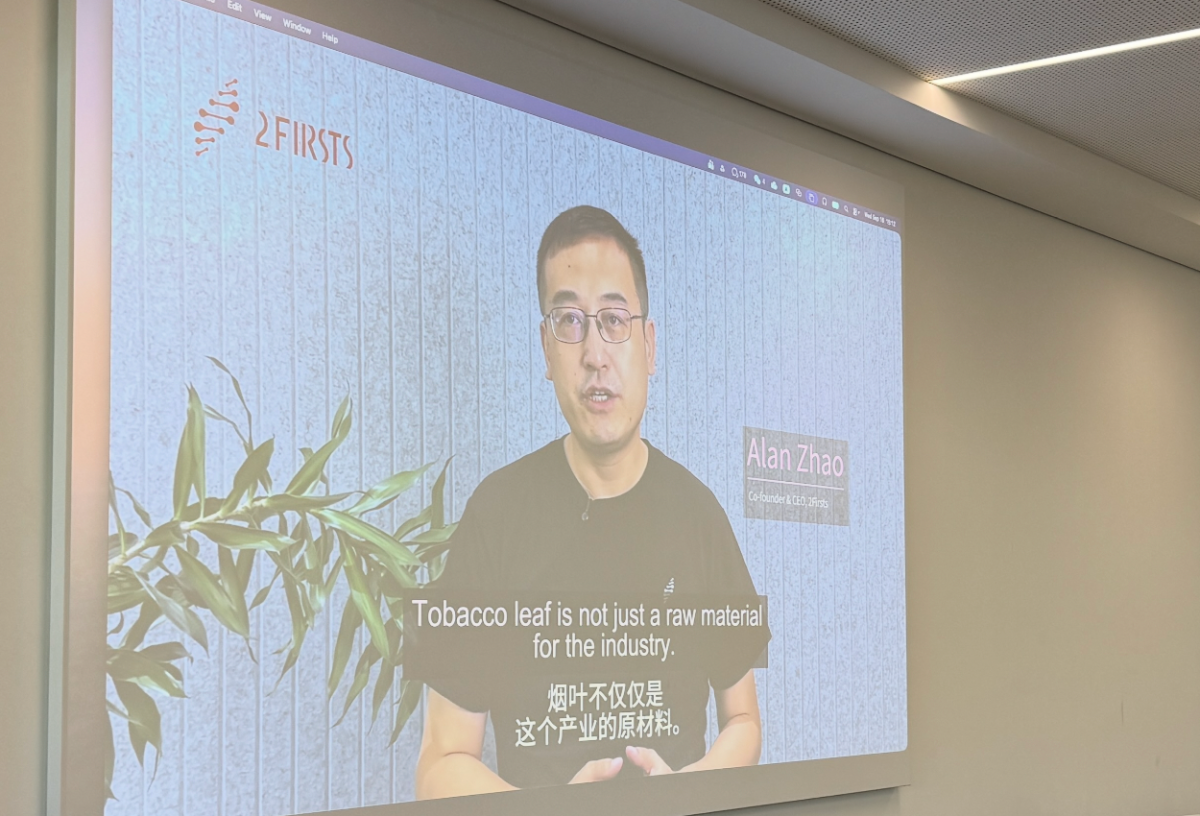
Alan Zhao, co-founder and CEO of 2Firsts, said FDA is attempting to accelerate reviews at the same time that elements of the review process, including timelines and procedural structure, are being tested in court.
He said the case could bring greater attention to the legal boundaries surrounding PMTA review timelines, Acceptance Review and Filing Review, as well as to demands for greater procedural clarity.

Echo Guo reviews six key indicators shaping the U.S. NGP market in August 2026, covering PMTA authorizations, nicotine pouches, state taxation and China-to-U.S. exports. | Source: 2Firsts
Brands, Manufacturers and Investors Reassess U.S. Exposure
Zhao said the U.S. nicotine regulatory environment is undergoing significant change and identified 2027 as a potentially important period for assessing whether those changes begin to produce a more visible shift in market structure.
He said brands with the resources and long-term ambition to participate in the U.S. market should reassess whether to increase PMTA preparation, while smaller brands need to pay closer attention to the enforcement and commercial risks associated with unauthorized products.
For manufacturers, Zhao emphasized documentation, quality systems and supply-chain compliance. For investors, he said PMTA progress, authorized product portfolios and compliance capabilities may increasingly warrant attention alongside market size and growth. These were Zhao’s assessments based on market and project experience, rather than FDA forecasts or regulatory timelines.
During the Q&A, participants asked about FDA’s current enforcement discretion toward certain unauthorized products; why some products appear on state directories even when they do not obviously fall within commonly cited eligibility categories; and whether unauthorized products could eventually gain substantial share in the U.S. nicotine pouch market, as they have in vaping.
2Firsts specialists addressed the questions during the session based on current regulatory and market developments.
From PMTA Training to Regulatory Science
The Sept. 4 briefing was also part of a series of U.S.-focused compliance programs organized by 2Firsts Compliance Solutions during 2026.
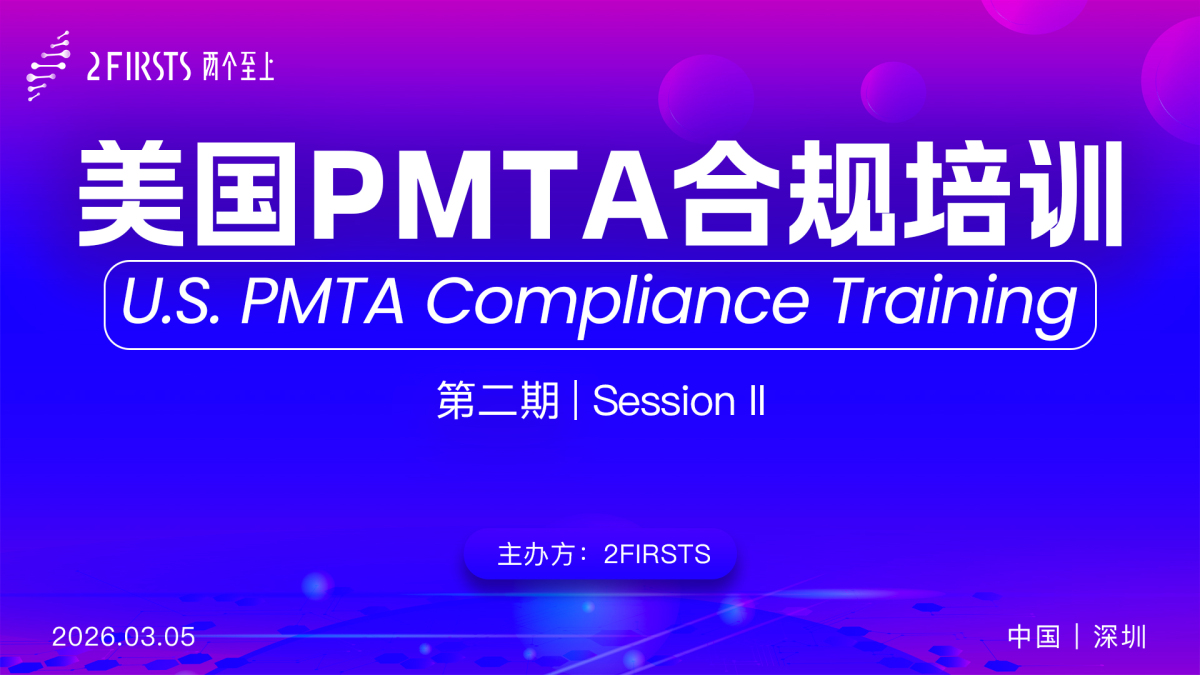
In March, 2Firsts held its second structured PMTA training program. A June briefing moved deeper into supply-chain readiness, including PMTA support, Tobacco Product Master Files (TPMF), Tobacco Product Manufacturing Practice (TPMP) and customer audit preparation. In July, a mid-year U.S. market briefing expanded the discussion to state-level access, potential foreign-manufacturer oversight and corporate market strategy.
The September session moved further into specific FDA review cases, using JUUL2 and ZYN ULTRA to examine regulatory science, review procedures and the market implications of authorization.
Across the four programs, 2Firsts Compliance Solutions has expanded its work from regulatory education to supply-chain execution, market access and case-based analysis of FDA decision-making, combining 2Firsts’ media research and market intelligence with practical compliance project experience.
Whether the recent pace of MGOs develops into a longer-term regulatory pattern will depend on subsequent FDA reviews, enforcement, state-level regulation and litigation.
2Firsts Compliance Solutions will continue to track developments in U.S. PMTA review, market access and related compliance policy.
Cover image generated by AI.