
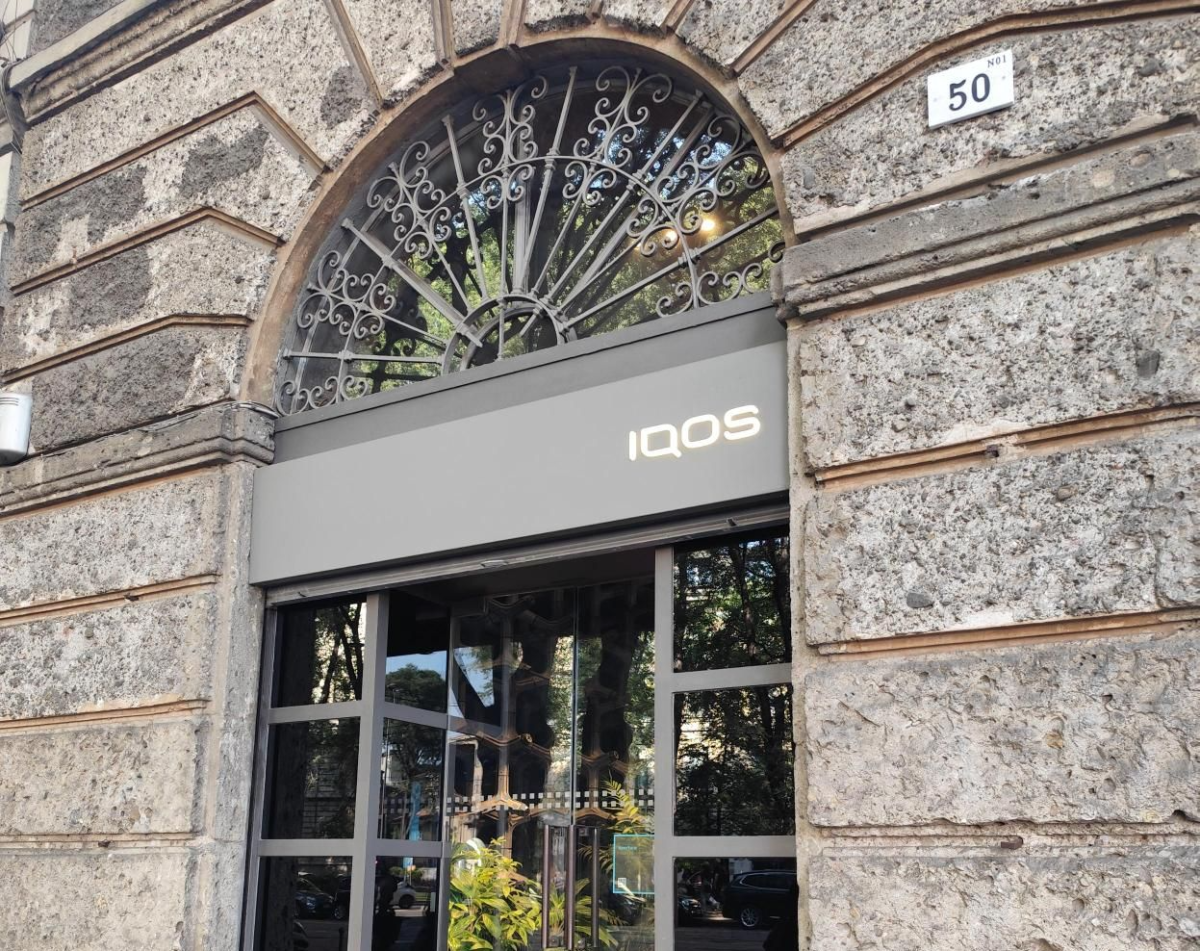
Key Points
- PMI fined €7 million;
- “Smoke-free future”claims cited;
- Health Ministry triggered probe;
- IQOS, VEEV and ZYN mentioned;
- EU scrutiny of marketing grows.
2Firsts
June 16, 2026
According to Generation Without Tobacco, Italy’s Competition and Market Authority, known as AGCM, has fined Philip Morris Italia €7 million for misleading commercial practices related to the promotion of its so-called “smoke-free” products.
The case originated from a report filed by the Italian Ministry of Health with AGCM on October 15, 2025.
The investigation focused on Philip Morris Italia’s use of terms such as “smoke-free,” “smoke-free products,” and phrases including “building,” “planning” and “accelerating” a “smoke-free future” in corporate and commercial communications.
AGCM examined whether such wording could lead consumers to believe the products were harmless or had a fully established and significant risk reduction compared with conventional cigarettes.
The report said the products involved include IQOS heated tobacco devices, VEEV vaping products and ZYN nicotine pouches.
AGCM found that the products still contain nicotine and remain capable of causing addiction.
As part of the investigation, AGCM officials, assisted by a specialized unit of Italy’s Guardia di Finanza, carried out inspections on October 14, 2025, at the premises of Philip Morris Italia and Philip Morris Manufacturing & Technology Bologna.
The inspections aimed to gather documents and evidence related to the group’s communication strategy and claims used to promote its combustion-free products.
After several months of investigation, AGCM issued its decision on June 10, 2026.
The authority found that the evidence gathered during the proceedings did not establish that the products were harmless or significantly less harmful than traditional cigarettes.
AGCM therefore concluded that repeated use of the “smoke-free future” concept could mislead consumers about the actual health characteristics of the products.
The report noted that this is not the first case involving Philip Morris and Italian consumer-protection authorities over IQOS-related promotion.
In 2018, AGCM fined the company €500,000 for practices amounting to disguised advertising for IQOS in several Italian magazines.
Generation Without Tobacco said the latest sanction highlights regulatory challenges facing Philip Morris International’s broader attempt to reposition its corporate image around a “smoke-free future.”
The organization argued that this messaging does not mean the company is exiting the tobacco or nicotine market, but instead accompanies the development of new addictive product lines, including heated tobacco, e-cigarettes and nicotine pouches.
The article said the use of positive, technological or health-related language allows tobacco companies to present themselves as drivers of change while continuing to market nicotine-containing products.
It argued that such strategies may blur the distinction between the absence of combustion, supposed risk reduction and the absence of danger.
The article also noted that heated tobacco products remain tobacco products, deliver nicotine and expose consumers to toxic substances.
From a market perspective, Italy is an important European market for Philip Morris’ heated tobacco business.
IQOS was first launched in Japan and Italy in 2014, and heated tobacco has since become a significant product category in the Italian market.
The report said Italy’s regulatory environment has been more favorable to heated tobacco promotion and use than markets such as France, where tobacco advertising restrictions are stricter.
The article also referenced legal action in France over Philip Morris’ IQOS promotion.
In 2024, the Paris Court of Appeal upheld the conviction of Philip Morris France and Philip Morris Products for illegal propaganda and advertising in favor of IQOS.
In January 2026, the Paris judicial court also recognized the advertising nature of packaging statements for heated tobacco products, such as “no combustion = no smoke,” finding that they could enhance the product’s value and reduce risk perception.
Generation Without Tobacco said Italy’s sanction is another example of growing European scrutiny over tobacco companies’ communication strategies for new tobacco and nicotine products.
The organization argued that the language of innovation, transition or harm reduction cannot obscure the continued marketing of addictive products or weaken core principles of public health protection.
Cover image:Generation Without Tobacco / AGCM
Disclaimer
This article is provided solely for professional research, industry discussion, and informational purposes. Any references to brands, companies, products, technologies, or policies are made for factual reporting and analytical purposes only, and do not constitute endorsement, recommendation, promotion, or advertising by 2Firsts.
Nicotine-containing products, including but not limited to cigarettes, e-cigarettes, heated tobacco products, and nicotine pouches, carry significant health risks. Readers are responsible for complying with all applicable laws and regulations in their respective jurisdictions, including age restrictions and access limitations.
The information contained in this article should not be regarded as investment, legal, medical, regulatory, or commercial advice. While 2Firsts strives to ensure the accuracy and reliability of its content, it does not assume liability for any direct or indirect loss arising from errors, omissions, inaccuracies, or reliance on the information contained herein.
This article is not intended for individuals below the legal age for accessing tobacco or nicotine-related information in their jurisdiction.
Copyright Notice
This article is either original content produced by 2Firsts or content reproduced, translated, summarized, or adapted from third-party sources with attribution where applicable. The intellectual property rights of the original content remain with 2Firsts or the respective original rights holders.
No individual or organization may copy, reproduce, distribute, republish, modify, translate, or otherwise use this content without prior authorization. Any unauthorized use may result in legal action.
For copyright-related inquiries, corrections, or removal requests, please contact: info@2firsts.com.
AI-Assisted Translation and Editing Notice
Portions of this article may have been translated, edited, or reviewed with the assistance of artificial intelligence tools to improve efficiency and readability. Due to the limitations of AI-assisted translation and editing, discrepancies, omissions, or inaccuracies may exist when compared with the original source.
Where applicable, readers are advised to refer to the original source for the most complete and accurate information. If you identify any errors or believe that any content infringes upon your rights, please contact us at info@2firsts.com, and we will review and address the matter promptly.



