Key Points
- Permanent business restrictions: Two operators and three affiliated companies were barred from specified vaping business activities in New York, with $534,550 in court-ordered monetary liabilities.
- Prohibited flavors identified: Of 121 surveyed businesses selling e-cigarettes near NYC schools, 48, or 40%, offered identifiable prohibited flavors.
- Large gap in recorded payments: Penalties associated with businesses without active retail licenses totaled approximately $1.12 million, against roughly $5,300 in recorded net payments.
- LLC ownership concerns: DCWP said some repeat offenders use newly incorporated companies to continue operating under the same ownership and evade enforcement.
- Sealing legislation under consideration: Introduction 1167 would expand the city's authority to seal premises for repeated unlicensed, underage or prohibited flavored e-cigarette sales.
2Firsts
November 25, 2026
The New York Attorney General's office announced on November 20 that an Otsego County court had permanently barred two vape shop operators and three affiliated companies from selling, marketing or distributing vaping products in New York and ordered them to pay $534,550 in penalties, outstanding fines and court costs.
The operators had continued trading under different company names and at new locations after earlier licensing sanctions and store closures.
Two days earlier, the New York City Council released an investigation into e-cigarette availability near schools. Investigators visited 193 businesses, including 121 that offered e-cigarettes for sale. Of those sellers, 48, or 40%, offered at least one identifiable prohibited flavor.
The investigation also identified substantial unpaid penalties among some businesses without active e-cigarette retail licenses.
At a November 20 City Council hearing, the Department of Consumer and Worker Protection (DCWP) said some repeat offenders were incorporating new limited liability companies (LLCs) to continue operating under the same ownership while evading enforcement and outstanding penalties.
The City Council is considering legislation to expand the authority to seal retail premises for repeated e-cigarette violations.
The Otsego County court case and the New York City retail investigation concerned different locations and were conducted independently.
New York Court Permanently Bars Two Vape Shop Operators, Orders $534,550 Payment
The Otsego County case involved Eysa Sharhan, Ahmed Mozeb and three affiliated businesses: Pop-In Smoke & Vape, Pufftopia and Royalty Tobacco.
According to Attorney General Letitia James, the court permanently prohibited the individuals and companies from selling, marketing or distributing vaping products in New York.
The two operators were also barred from owning, operating or managing businesses selling vaping products and from obtaining the relevant retail credentials.
The ruling followed a multi-year enforcement investigation.
In a petition filed in October 2025, the state alleged that Pop-In Smoke & Vape had repeatedly violated restrictions on flavored vaping products and sold nicotine products to customers below the legal purchasing age.
The New York State Department of Taxation and Finance suspended the business's vapor product sales registration in September 2022 and revoked it in January 2023.
The operators subsequently continued business at the original location under the Pufftopia name.
In November 2024, authorities sealed Pufftopia following enforcement involving unlicensed cannabis sales. Investigators also identified prohibited flavored vaping products at the premises.
The operators later established Royalty Tobacco approximately one mile away. During a September 2025 inspection, state authorities found hundreds of flavored vaping products offered for sale.
The Attorney General filed proceedings against the two operators and three affiliated companies on October 23, 2025.
The court issued a temporary restraining order the following day and granted injunctive and related relief in April 2026.
A subsequent judgment signed on November 4 and entered on November 10 established the financial liabilities.
| Judgment component | Amount |
|---|---|
| Civil penalties | $514,500 |
| Outstanding Department of Health fines | $10,050 |
| Court costs | $10,000 |
| Total | $534,550 |
The court imposed joint and several liability on the operators and affiliated companies for the relevant penalties. The $524,550 in civil penalties and outstanding administrative fines is subject to post-judgment interest at an annual rate of 9%.
The defendants must also pay for the safe disposal of flavored vaping products remaining at Royalty Tobacco. The additional amount has yet to be determined.
The Attorney General announced the outcome on November 20. The $534,550 represents court-ordered monetary liabilities, not an amount confirmed to have been collected.
NYC Survey Finds Prohibited Flavors at 40% of E-Cigarette Sellers
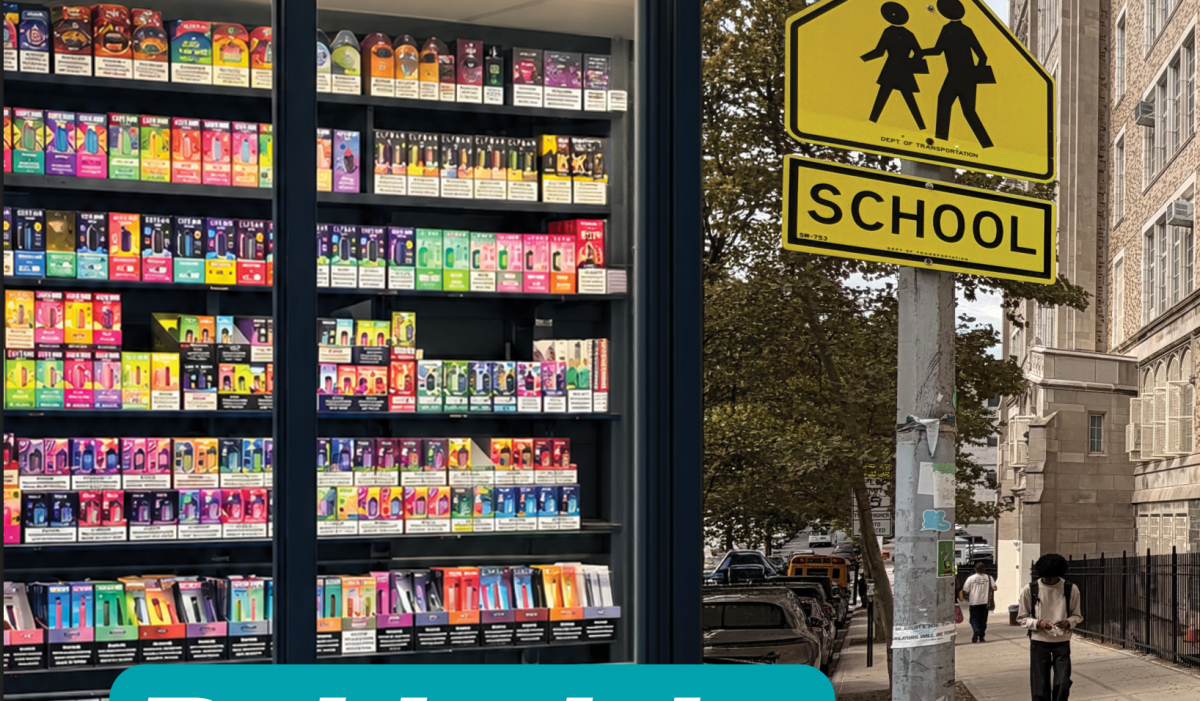
On November 18, the New York City Council released Behind the Counter, a report prepared by its Oversight and Investigations Division (OID) examining flavored e-cigarette availability near public middle and high schools.
Investigators selected 222 businesses within 500 feet of schools. Of those, 193 were open during the visits and included in the field analysis.
The sample comprised 130 businesses with active e-cigarette retail licenses and 63 without active licenses. The latter group was selected partly on the basis of previous tobacco- or e-cigarette-related complaints, inspections and enforcement records.
Investigators found that 121 businesses offered e-cigarettes for sale, including 48 that offered at least one identifiable prohibited flavor.
| Survey finding | Result |
|---|---|
| Businesses visited and included in analysis | 193 |
| Businesses selling e-cigarettes | 121 |
| E-cigarette sellers offering identifiable prohibited flavors | 48, or 40% |
| Licensed businesses selling e-cigarettes | 101, including 28 offering prohibited flavors |
| Businesses without active licenses selling e-cigarettes | 20, all offering prohibited flavors |
| Schools included in school-level analysis | 201, including 65 with a nearby seller offering prohibited flavors |
The investigation covered all five New York City boroughs.
Among the 201 public middle and high schools included in the analysis, 65, or 32%, had at least one surveyed retailer within 500 feet offering an identifiable prohibited flavored e-cigarette product.
Investigators also found that 33 of the 48 businesses offering prohibited flavors made those products available only when specifically asked, rather than openly displaying them.
Another 52 e-cigarette sellers offered products labeled as "clear"-flavored without offering other identifiable prohibited flavors.
The report raised concerns that some "clear"-labeled products might have a distinguishable non-tobacco flavor or be used to market other flavors under different labeling.
However, investigators did not determine that all "clear"-labeled products violated city law and counted them separately from identifiable prohibited flavors.
The survey focused on selected retailers near schools, and businesses without active licenses were partly selected based on earlier complaints or enforcement records. Its findings are not representative of all e-cigarette retailers in New York City.
About $1.12 Million in Penalties Yielded Just 0.5% in Recorded Payments Among Businesses Without Active Licenses
Beyond the site visits, the City Council examined DCWP administrative enforcement and payment records involving the surveyed retailers.
The report identified 47 of the 193 businesses that had received upheld or defaulted summonses related to prohibited flavored e-cigarette sales or sales to people under 21.
The relevant cases primarily covered July 2023 through March 2026 and involved 72 summonses, with approximately $1.615 million in reported penalties.
The payment records showed a substantial difference between the licensed and unlicensed groups.
| Retailer category | Reported penalties | Recorded net payments | Payment ratio |
|---|---|---|---|
| Businesses with active licenses | $492,000 | Approx. $297,000 | Approx. 60% |
| Businesses without active licenses | $1,123,000 | Approx. $5,300 | Approx. 0.5% |
| Total | $1,615,000 | Approx. $302,500 | Approx. 19% |
These figures concern the 47 surveyed businesses with relevant enforcement cases, rather than all New York City e-cigarette retailers. The underlying payment records were updated through September 2026.
At the November 20 City Council hearing, DCWP Chief of Staff Carlos A. Ortiz identified another enforcement issue: some repeat offenders were using newly incorporated LLCs to evade penalties and regulatory action.
Ortiz said operators could establish new companies while retaining the same underlying ownership and continue conducting business. DCWP supported stronger disclosure requirements for LLC ownership.
The agency also disclosed that, as of November 2026, it had conducted nearly 12,000 tobacco retail inspections and approximately 10,300 e-cigarette inspections during the year, issued nearly 4,000 summonses and collected $3.6 million in penalties.
DCWP said it had also sealed 240 repeatedly noncompliant tobacco retailers since 2023 using its existing tobacco enforcement authority.
The 240 closures refer to tobacco retailers, not a separate count of e-cigarette retailers. The $3.6 million represents collections across the agency's relevant enforcement activities, rather than payments associated only with the City Council's surveyed businesses.
NYC Weighs Broader Vape Shop Sealing Powers as State Courts Restrict Repeat Offenders
New York City Council Introduction 1167, introduced on November 12, 2026, would expand DCWP's authority to seal e-cigarette retail premises following repeated violations.
Under the proposal, the commissioner could order premises sealed after notice and an opportunity to be heard if an operator had:
Engaged in unlicensed e-cigarette retail activity at least twice within three years; or
Committed at least three violations within three years involving underage e-cigarette sales or prohibited flavored e-cigarette sales.
The bill was considered at a committee hearing on November 20. As of November 24, it remained under committee consideration and had not become law.
DCWP expressed support for the proposal, saying its existing premises-sealing authority applies to repeat-offending tobacco retailers and that additional powers would help address e-cigarette violations.
New York State has also obtained restrictions against repeat-offending retail operators through other court cases and settlements.
In May 2025, a Jefferson County case involving Evan Mills Smoke & Accessories concluded with a consent order prohibiting the relevant operators from continuing businesses selling nicotine or tobacco products. The agreement included $50,000 in penalties and potential additional liabilities of several million dollars for violating its terms.
In March 2026, a Herkimer County court entered a default judgment against G Smoke 360 and an associated operator, permanently prohibiting further sales, marketing or distribution of vaping products.
In June, the Attorney General reached a settlement with other defendants in the related proceedings, closing Liberty Smokeland and restricting the operator's future participation in vape and tobacco product sales.
The cases involved different judicial orders and settlement arrangements, with the precise scope of each restriction determined by the applicable legal documents.
In Otsego County, operators who continued trading under successive company names and at different premises faced permanent restrictions on their personal and affiliated business activities.
The separate New York City Council investigation documented prohibited flavored product sales, outstanding administrative penalties and repeat violations among the retailers reviewed. DCWP's testimony on LLC ownership and the proposed sealing legislation have brought business-entity transparency and premises closure powers into the city's retail enforcement debate.
Follow 2Firsts for coverage of global tobacco and nicotine regulations, retail distribution and enforcement developments.
Cover Image: New York City Council, Behind the Counter investigation report