Key Points
- Excise cut proposed
- A$17 off per pack
- Illicit share near 80%
- Government backs enforcement
2Firsts
June 18, 2026
According to news.com.au, Australian One Nation leader Pauline Hanson said the party would cut Australia’s tobacco excise by 50% and freeze indexation until June 30, 2028, if the policy were implemented, in an effort to lower legal tobacco prices and reduce the appeal of the illicit tobacco market.
Hanson announced the policy on social media platform X on the morning of June 17. She said about 70% to 75% of the cost of legal tobacco products in Australia is federal excise, which is raised twice a year. She argued that repeated excise increases had made tobacco products so expensive that Australian tobacco consumers had shifted to the illegal black market.
According to Hanson, One Nation would cut tobacco excise by 50% and freeze indexation until June 30, 2028, with an option to review and extend the measure. She said the policy would reduce the retail price of tobacco products by about 35%, equivalent to about A$17 off a pack of 20 cigarettes.
Hanson said the aim was to reduce the incentive for consumers to turn to the black market. She said the measure would improve consumer and business safety, reduce the black market and related criminal activity to levels manageable for law enforcement agencies, and potentially reverse the decline in government revenue.
The announcement came a day after Hanson told 2GB host Ben Fordham that tobacco excise should be cut to remove the profit supply for “thugs and criminals” in the illicit cigarette market. She criticised the Labor government’s repeated tobacco excise increases and said the tax was due to rise again in September.
Information from the Australian Taxation Office (ATO) shows that, under current law, tobacco excise rates in Australia increase in March and September each year based on the Average Weekly Ordinary Time Earnings (AWOTE) index. The ATO said the AWOTE indexation factor applying from March 3, 2026, was 1.020.
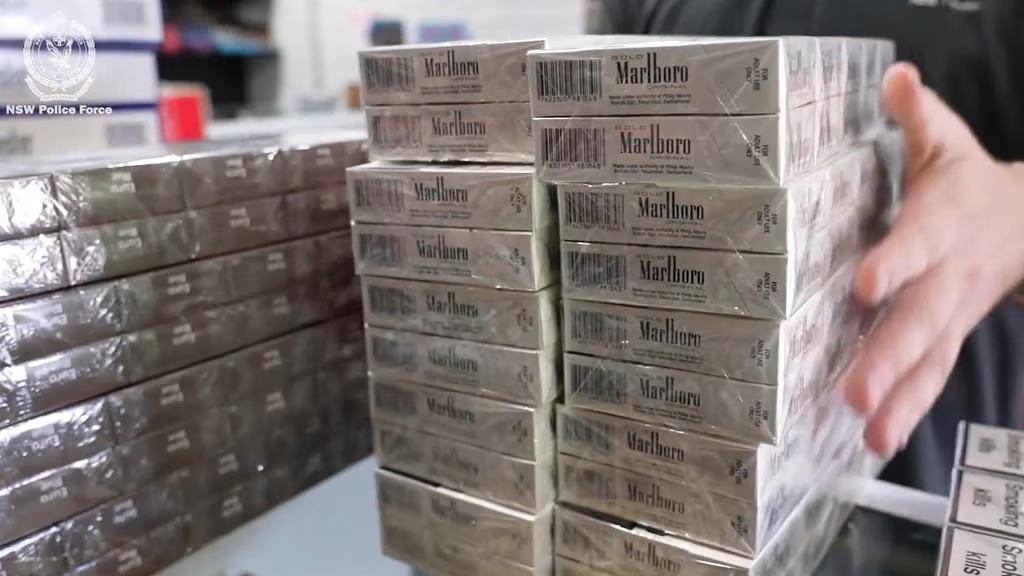
News.com.au reported that the average price of a legal pack of 20 cigarettes in Australia is now more than A$40, with each cigarette carrying about A$1.50 in federal excise. By contrast, illegal cigarettes sell for A$12 or less per pack. The report said firebombings have become a regular occurrence at tobacco stores across the country as criminal groups compete for control of the lucrative illicit tobacco trade.
Experimental estimates released this month by the Australian Bureau of Statistics (ABS) showed that about 80% of cigarettes, e-cigarettes and other nicotine products consumed in Australia in 2025 came from illegal sources. The ABS said nicotine consumption in Australia increased by almost 40% from 2017 to 2025, while the population grew by 14% over the same period. The increase was driven by a large rise in illicit cigarettes, as well as increases in e-cigarettes and other nicotine products.
The ABS also said consumption from illicit sources as a share of total tobacco consumed rose from 12% in 2017 to 80% in 2025. The estimate was based on nicotine metabolite concentrations in wastewater, combined with data showing a decline in household spending on legal cigarettes and vapes. The ABS said legal tobacco prices had almost tripled since 2016.
New South Wales Premier Chris Minns has also weighed in on calls to lower tobacco tax, saying police information had led him to believe a recent crime wave was linked to gangs fighting for control of the illicit tobacco market. He said that when a black market exists, illicit players will take advantage of it, and that black-market cigarettes are now cheaper than they have been for decades, the opposite of the tax policy’s intended effect.
Australian Prime Minister Anthony Albanese has shown no sign of backing a cut to excise. He said last week that the government was taking the strongest action ever taken against the illicit tobacco trade and would continue to do so. The report said the latest federal budget had downgraded tobacco excise revenue by A$8 billion over the next five years.
Deakin University criminologist James Martin told Sky News that Australia’s illicit tobacco market and rising nicotine consumption represented a “financial disaster” for the country. He said Australia was losing billions of dollars each year in tobacco excise revenue and spending hundreds of millions of dollars on additional enforcement that had so far failed to reverse the trend. Martin said Australia could not police its way out of the problem and needed to increase access to affordable and preferably less harmful forms of nicotine.
Hanson’s proposal remains a political policy put forward by One Nation and is not Australian federal government policy. Australia is sharply divided over whether tobacco excise should be reduced: supporters argue that high tax rates have widened the price gap between legal and illegal products and increased black-market profits, while opponents and public health advocates generally warn that lowering tobacco taxes could weaken tobacco-control policy and make smoking more affordable.
For Australia’s tobacco and nicotine sector, the dispute shows that a policy framework relying heavily on high excise rates and enforcement is facing new political pressure. The rising share of illicit tobacco and illicit e-cigarette consumption has expanded the regulatory debate from traditional tobacco control to tax compliance, border enforcement, retail governance, organised crime and access to alternative nicotine products.
Follow 2Firsts for the latest updates on global tobacco harm reduction, nicotine products and regulatory developments.

Cover image:news.com.au
Disclaimer
This article is provided solely for professional research, industry discussion, and informational purposes. Any references to brands, companies, products, technologies, or policies are made for factual reporting and analytical purposes only, and do not constitute endorsement, recommendation, promotion, or advertising by 2Firsts.
Nicotine-containing products, including but not limited to cigarettes, e-cigarettes, heated tobacco products, and nicotine pouches, carry significant health risks. Readers are responsible for complying with all applicable laws and regulations in their respective jurisdictions, including age restrictions and access limitations.
The information contained in this article should not be regarded as investment, legal, medical, regulatory, or commercial advice. While 2Firsts strives to ensure the accuracy and reliability of its content, it does not assume liability for any direct or indirect loss arising from errors, omissions, inaccuracies, or reliance on the information contained herein.
This article is not intended for individuals below the legal age for accessing tobacco or nicotine-related information in their jurisdiction.
Copyright Notice
This article is either original content produced by 2Firsts or content reproduced, translated, summarized, or adapted from third-party sources with attribution where applicable. The intellectual property rights of the original content remain with 2Firsts or the respective original rights holders.
No individual or organization may copy, reproduce, distribute, republish, modify, translate, or otherwise use this content without prior authorization. Any unauthorized use may result in legal action.
For copyright-related inquiries, corrections, or removal requests, please contact: info@2firsts.com.
AI-Assisted Translation and Editing Notice
Portions of this article may have been translated, edited, or reviewed with the assistance of artificial intelligence tools to improve efficiency and readability. Due to the limitations of AI-assisted translation and editing, discrepancies, omissions, or inaccuracies may exist when compared with the original source.
Where applicable, readers are advised to refer to the original source for the most complete and accurate information. If you identify any errors or believe that any content infringes upon your rights, please contact us at info@2firsts.com, and we will review and address the matter promptly.