Key Points
- India Maintains Comprehensive Ban – The government said it is not considering revoking or amending the 2019 prohibition covering both e-cigarettes and heat-not-burn devices.
- PMI’s Multi-Year Lobbying Effort – Confidential letters (2021–2025) show outreach to Indian officials and parliamentary panels seeking scientific review and exemptions.
- Market Significance – Reuters cited Euromonitor estimates showing PMI’s India cigarette share rose to 7.6% in 2024 from 1.75% in 2019.
- Japan’s 2026 Excise Steps – Two tax increases (April and October) were described by PMI as “transitional headwinds” during its February 6 earnings call.
- Global Regulatory Fragmentation – Divergent market-access rules and fiscal cycles are emerging as a major external variable shaping PMI’s smoke-free roadmap.
2Firsts, February 12, 2026, Shenzhen
India has ruled out any relaxation of its 2019 ban on e-cigarettes, including heated tobacco products, dealing a setback to Philip Morris International’s (PMI) multi-year effort to reopen the market for its IQOS device, according to a Reuters report published on February 11.
Citing a statement from India’s health ministry, Reuters reported that “the government of India is not considering revoking, amending or relaxing this ban.” The ministry added that India remains committed to “evidence-based tobacco control and cessation measures,” and that the existing law explicitly prohibits heat-not-burn devices, with that position set to remain unchanged.
A Multi-Year Lobbying Campaign Detailed by Reuters
Reuters described PMI’s outreach in India as a “lengthy private lobbying campaign.” Based on its review of confidential company letters from 2021 to 2025, Reuters reported that the Marlboro maker wrote to senior Indian officials and a parliamentary health panel urging them to consider the scientific evidence behind heated tobacco devices such as IQOS, to conduct research, and to exempt heat-not-burn products from the ban.
In one 2023 letter cited by Reuters, Ankur Modi, then PMI’s chief strategy officer, compared harm-reduction strategies for smoking to approaches used in HIV/AIDS policy. The correspondence also proposed bringing PMI scientists and former U.S. Food and Drug Administration officials to present global data and experience on heated tobacco products.
Reuters further reported that PMI executives met several Indian state government officials in Davos in January to discuss long-term value creation in the tobacco sector using products such as IQOS.
PMI did not directly comment on the ministry’s statement, but said it “regularly engages with governments around the world… to discuss how smoke-free products can greatly advance public health.” Chief Executive Jacek Olczak described it as “illogical” for markets to allow cigarettes while restricting alternatives such as heated tobacco and vapes.

India’s Market Significance Amid a Firm Policy Stance
India banned e-cigarettes, including heated tobacco products, in 2019. Reuters noted that the country sells more than 100 billion cigarettes annually and is the world’s seventh-largest cigarette market by volume. Tobacco use kills more than one million people a year in India, Reuters reported.
Reuters also cited Euromonitor estimates showing PMI’s share of India’s cigarette market rose to 7.6% in 2024 from 1.75% in 2019.
India’s state-run Indian Council of Medical Research (ICMR) told Reuters it was “not considering or undertaking any research on heated tobacco products.”
Taiwan: Conditional Opening Under a Strict Regulatory Framework
In contrast to India’s continued prohibition, Taiwan, China moved in 2025 to conditionally open its market to heated tobacco products under a stringent review framework.
According to a July 29, 2025 report by United Daily News, Taiwan’s Health Promotion Administration under the “Ministry of Health and Welfare” announced the latest progress in its designated tobacco product health risk assessment process. Two heated tobacco companies, covering a total of 14 product items, received “conditional approval.”
The authority stated that the review was conducted in accordance with the amended Tobacco Hazards Prevention Act passed in March 2023, which bans e-cigarettes while imposing strict regulatory controls on heated tobacco products.
The report said regulators would issue “conditional approval letters” to the two companies and establish distribution and taxation mechanisms under strengthened oversight. The review process began in late June 2023 when the first company submitted its application and took approximately two and a half years to conclude.
The development means that, while e-cigarettes remain prohibited, heated tobacco products have been granted limited and conditional market access in Taiwan.
In Contrast, Japan’s Tax Cycle Reflects a Fiscal Constraint Rather Than a Market-Access Ban
While India’s stance represents a continued prohibition on the sale of e-cigarettes and heated tobacco devices, Japan illustrates a different policy dynamic: scheduled excise tax increases that may affect pricing and short-term growth performance in a market where smoke-free products are already available.
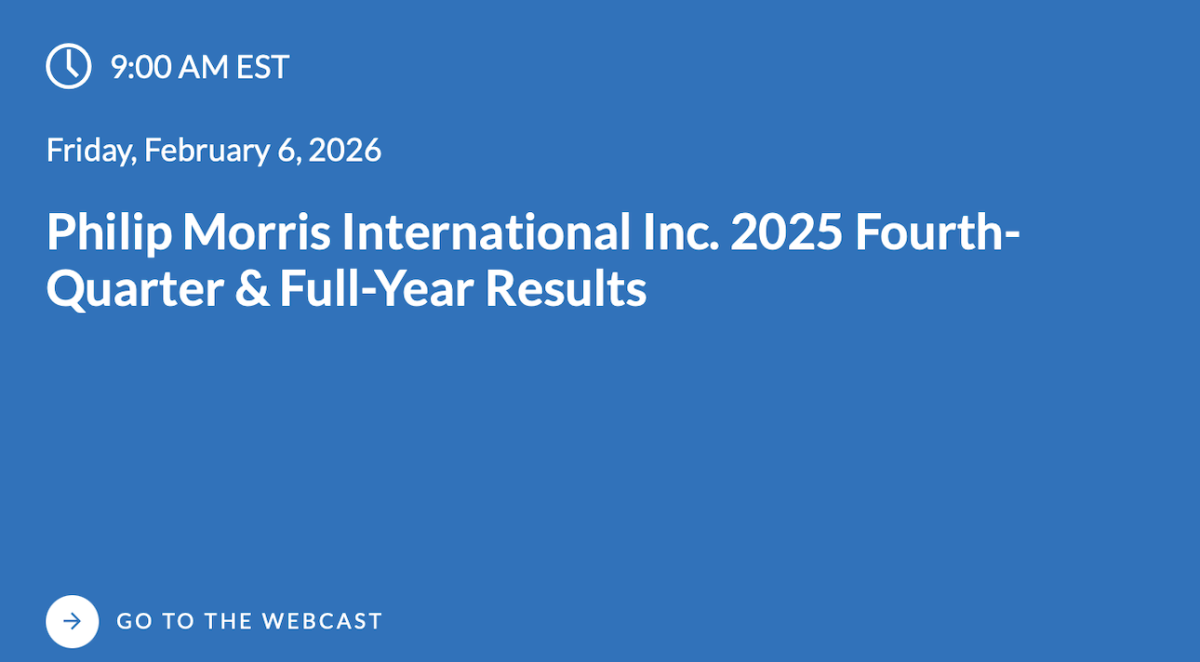
During PMI’s February 6 fourth-quarter and full-year 2025 earnings call, management highlighted two excise tax increase steps in Japan scheduled for April and October 2026. The company described the impact as “transitional headwinds,” with smoke-free growth expected to re-accelerate beyond that period.
Management noted that Japan has historically experienced excise increases followed by price adjustments, a sequence expected to weigh on 2026 growth dynamics before normalizing in subsequent years. PMI reiterated its medium-term ambition of around $45 billion in operating cash flow over 2026–2028 during the call.
Global Regulatory Fragmentation as a Key Growth Variable for PMI
Taiwan, China’s recent conditional opening of the heated tobacco market adds a contrasting data point to India’s continued market-access ban and Japan’s tax-driven pricing cycle. Taken together, these developments underscore the widening divergence in national regulatory and fiscal pathways.
Against this backdrop, global regulatory fragmentation is gradually emerging as not only a significant external variable shaping PMI’s smoke-free strategy, but potentially a structural ceiling on its future growth trajectory. For PMI, product innovation and competitive positioning remain critical, yet differences in national regulatory frameworks are increasingly determining whether its products can enter markets at all — and how growth dynamics unfold once they do.
(Cover photo by 2Firsts)


Disclaimer
This article is provided solely for professional research, industry discussion, and informational purposes. Any references to brands, companies, products, technologies, or policies are made for factual reporting and analytical purposes only, and do not constitute endorsement, recommendation, promotion, or advertising by 2Firsts.
Nicotine-containing products, including but not limited to cigarettes, e-cigarettes, heated tobacco products, and nicotine pouches, carry significant health risks. Readers are responsible for complying with all applicable laws and regulations in their respective jurisdictions, including age restrictions and access limitations.
The information contained in this article should not be regarded as investment, legal, medical, regulatory, or commercial advice. While 2Firsts strives to ensure the accuracy and reliability of its content, it does not assume liability for any direct or indirect loss arising from errors, omissions, inaccuracies, or reliance on the information contained herein.
This article is not intended for individuals below the legal age for accessing tobacco or nicotine-related information in their jurisdiction.
Copyright Notice
This article is either original content produced by 2Firsts or content reproduced, translated, summarized, or adapted from third-party sources with attribution where applicable. The intellectual property rights of the original content remain with 2Firsts or the respective original rights holders.
No individual or organization may copy, reproduce, distribute, republish, modify, translate, or otherwise use this content without prior authorization. Any unauthorized use may result in legal action.
For copyright-related inquiries, corrections, or removal requests, please contact: info@2firsts.com.
AI-Assisted Translation and Editing Notice
Portions of this article may have been translated, edited, or reviewed with the assistance of artificial intelligence tools to improve efficiency and readability. Due to the limitations of AI-assisted translation and editing, discrepancies, omissions, or inaccuracies may exist when compared with the original source.
Where applicable, readers are advised to refer to the original source for the most complete and accurate information. If you identify any errors or believe that any content infringes upon your rights, please contact us at info@2firsts.com, and we will review and address the matter promptly.