Editor's Note:
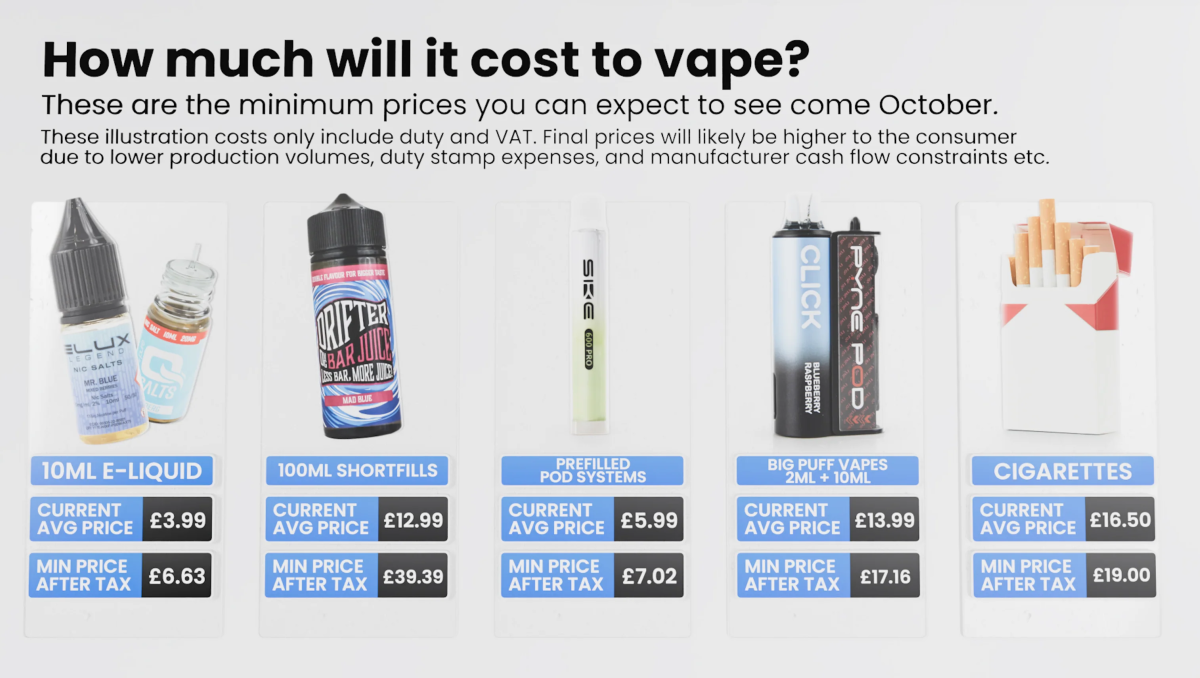
The UK government recently released its budget plan, announcing that from October 2026, a £2.20 excise duty will be imposed on every 10ml of vape e-liquid. In the same policy document, Vaping Products Duty: Consultation Response, the government also outlined plans to implement a "Duty Suspension" policy for e-cigarette products.
According to the document, "Duty Suspension" allows businesses to defer excise duty payments on vape products under certain conditions, rather than paying immediately upon customs clearance. This policy is intended to ease cash flow for businesses.

Robert Sidebottom, Managing Director of UK compliance firm Arcus Compliance, provided an in-depth analysis of this policy in a social media post. 2Firsts has been authorized to republish the full article.

Here is the original article by Robert Sidebottom.
Navigating Duty Suspension and Compliance for Vaping Products
Robert Sidebottom
The UK’s new approach to vaping products duty suspension is set to shake up the industry—and if you’re in manufacturing or importing, it’s worth understanding how these changes will impact day-to-day operations. From what I’ve reviewed, it’s clear that HMRC is focusing on preventing illicit sales while attempting to ensure that compliant businesses can still function smoothly (or as smoothly as can be with new rules to follow).
Key Compliance Requirements
Approved Premises: Only HMRC-approved facilities can handle vaping products under duty suspension, ensuring controlled movement and processing of excise goods.
Record-Keeping: Manufacturers and importers must maintain detailed records of all transactions involving duty-suspended vaping products, supporting accurate duty assessment and preventing illicit diversion.
Excise Movement and Control System (EMCS): All duty-suspended movements must be recorded in EMCS, tracking each stage in the supply chain for traceability.
Security Requirements: To safeguard against product diversion, financial guarantees are likely to be mandatory for products in duty suspension, protecting government revenue and ensuring duty compliance.
Restrictions on Retail-Ready Products: Once packaged for retail, further duty-suspended movements are prohibited, helping to prevent diversion to the black market.
Security and Warehouse Management Systems for Vape Manufacturers
To comply with these requirements, vape manufacturers will need to implement robust security and warehouse management systems:
Physical Security: Limit access to duty-suspended goods with badge or biometric access controls, CCTV surveillance, and on-site security to monitor compliance and manage risks.
Inventory Tracking: Real-time inventory tracking software, coupled with regular stock reconciliation, ensures accurate records. Product segregation in dedicated areas also supports HMRC compliance.
Duty-Suspended Movement Tracking: Integration with EMCS, along with digital logbooks, will help document each movement of goods within the warehouse and ensure audit-readiness.
Financial Security and Compliance Reporting: Financial guarantees, such as bonds, cover potential duty liabilities, while automated reporting tools facilitate timely filings with HMRC.
Export and Destruction Procedures: Proper export documentation supports duty drawbacks, while detailed records for the destruction of unsellable goods further ensure regulatory compliance.
Additional Points to Consider
Export Drawback: For duty-paid products destined for export, businesses can claim duty refunds by providing export documentation, supporting international operations without double taxation.
Grace Period for Compliance: A grace period allows businesses time to align processes with duty suspension and duty stamp requirements, easing the transition and helping smaller businesses to adapt smoothly.
Tax Duty Stamp Requirements: Duty stamps must be applied to products exiting duty suspension for retail, visibly marking compliant products and helping prevent illicit sales.
Potential Controls on Nicotine Supply: The government may impose controls on non-retail nicotine supply to limit unauthorized production, adding another layer of compliance for manufacturers.
For Overseas Manufacturers (e.g., in China)
Manufacturers based abroad, including China, will need to meet specific requirements to comply with UK duty suspension regulations:
Appoint a UK Duty Representative: Non-UK manufacturers must appoint a UK-based duty representative, approved by HMRC, who will be financially responsible for ensuring duty compliance on imported products.
Use Duty Stamps on Imports: Overseas manufacturers may apply duty stamps on products before shipping them to the UK. This requires coordination with a UK representative to confirm that stamps meet HMRC standards.
Compliance with UK Standards: Imported products must comply with all UK excise and duty suspension requirements, including clear record-keeping, approved packaging for duty-paid items, and duty stamps where applicable.
Final Thoughts
This all boils down to better tracking and security for vaping products. The new regulations won’t be an easy adjustment, especially for smaller businesses, but with the right warehouse management systems and compliance in place, it’s doable. The proposed changes have been put in place in an effort to demonstrate the UK government’s priority on public health and anti-illicit trade efforts. For vape businesses, it’s about tightening up processes, keeping things above board, and being prepared.
On November 5, Robert Sidebottom provided further clarification on the above policy to 2Firsts:
Yes it does however, UK manufacturers and UK distributors will need a customs warehoues to suspend the duty, the process of achiveing this status is quite complicated and requires the companies to have and audit and gap analysis to discover what they need to do including an assessment of their processes and procedures and a check to see if their warehouse management system is up to the job. Once in place they need to then apply to HMRC for this status and will be subject to an inspection. The reason they government have set the target to 2026 is they know that a great number of businesses need to do this work.
For context, let say for example you have 1 million bottles of 10ml eliquid on your shelves or you import that from China you Duty liability which will be due immediately. So you have to pay the tax of £2.2 million pounds. If you put the product into a customs warehouse the duty / tax is suspended until you remove them from that facility. Most business that do this operate a bonded and free stock system. Having a working stock of duty paid products immediately available to manage the cash flow.
For any questions regarding UK tax and compliance policies, feel free to contact 2Firsts at info@2firsts.com. We will invite experts to provide further insights.
Disclaimer: This article represents only the views of the expert.
About Arcus Compliance Ltd
Arcus Compliance Ltd was founded by CEO Lee Bryan & Director of Research and Development John Walker to help vape brands to build such compliance strategies as countries around the world began to regulate the vapour industry in their region. Expertly led by Robert Sidebottom, our recently appointed Managing Director, we are well-placed to guide and advise our global client base. Arcus Compliance Ltd supports its clients to strategically navigate the constantly evolving regulations that face the vape, cannabis/hemp, cosmetics, medical device and adult health industries.