Key Points
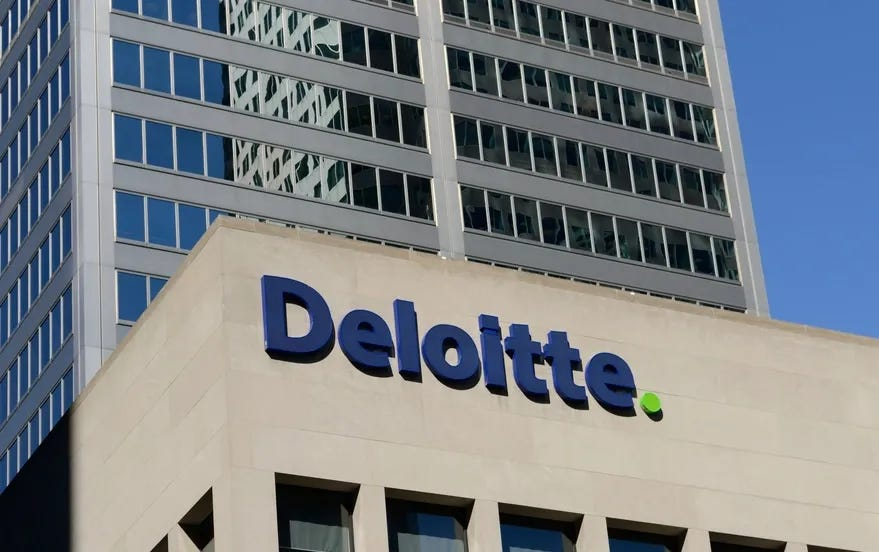
- Deloitte is supporting Australia’s Illicit Tobacco and E-Cigarette Commissioner with data analytics, business processes, communications products and project delivery.
- Home Affairs says Deloitte does not provide policy advice and that policy development and decision-making remain with public officials.
- The related specialist-services contract took effect on July 1, 2026 and is valued at A$2.16 million.
- Deloitte’s historic work for tobacco and vaping companies has prompted questions about potential conflicts of interest.
2Firsts
September 3, 2026
According to Australian publication Deepcut on September 2, 2026, Australia’s Department of Home Affairs has hired Deloitte to provide specialist support to the Office of the Illicit Tobacco and E-Cigarette Commissioner, including data analytics, business processes, communications products and project delivery as required.
Home Affairs told Deepcut that Deloitte personnel do not provide policy advice to the Illicit Tobacco and E-Cigarette Commissioner or the Australian government. Policy development, advice to government and final decision-making remain the responsibility of public officials.
That distinction is central to the arrangement: Deloitte is providing specialist and operational support to Australia’s illicit tobacco and vaping response rather than directly developing tobacco policy.
Deloitte Provides Data, Process and Project Support
According to information provided by Home Affairs to Deepcut, Deloitte’s work covers four main areas: data analytics, business-process support, communications products and project delivery.
Public procurement records identify the arrangement as a “Specialist Service procurement” by the Department of Home Affairs, valued at A$2.16 million, approximately $1.55 million.
The contract was published in June 2026 and took effect on July 1.
Based on the information currently available, Deloitte is operating as an external specialist-services provider, supplementing the Commissioner’s office with analytical, process and delivery capabilities.
Home Affairs has explicitly said that those services do not include policy advice.
Commissioner Coordinates Australia’s Illicit Tobacco Response
Australia established the Illicit Tobacco and E-Cigarette Commissioner role to strengthen coordination between federal, state and territory governments in tackling black-market tobacco and vaping products.
Amber Shuhyta formally became the Illicit Tobacco and E-Cigarette Commissioner in July 2025.
Australian government materials describe the role as supporting the development and implementation of national strategies while driving a coordinated whole-of-government response to illicit tobacco and e-cigarettes.
Australia has significantly increased enforcement spending in recent years. The government has previously said it committed more than A$350 million to combating illicit tobacco and related black-market activity.
Against that backdrop, the use of an external consultancy for analytics, process design and project delivery suggests that illicit tobacco enforcement increasingly involves not only frontline enforcement but also data, supply-chain analysis and cross-agency program management.
Deloitte’s Previous Tobacco Work Draws Scrutiny
The arrangement has also attracted attention because Deloitte has previously provided professional services to tobacco and vaping companies.
Deepcut cited the University of California, San Francisco tobacco industry documents archive, saying records connecting Deloitte with the tobacco sector date back at least to the 1980s.
The records include past professional relationships involving British American Tobacco, Philip Morris International and R.J. Reynolds.
Deepcut also cited 2019 material indicating Deloitte provided tax and marketing-related services to vaping company Juul.
In Australia, Deloitte produced a report for British American Tobacco in 2011 in connection with the debate over tobacco plain packaging. The methodology used in that work was criticized at the time by academics and Australia’s Customs and Border Protection agency.
Those historical commercial relationships form the main basis for current questions over potential conflicts of interest.
Greens Senator Plans to Pursue Conflict Questions
Australian Greens finance and public service spokesperson Barbara Pocock told Deepcut that Deloitte’s history with the tobacco industry, combined with limited public detail about the arrangement, raised questions about how potential conflicts had been assessed and managed.
Pocock said she intended to pursue the issue through Senate estimates.
There is currently no public evidence that Deloitte is simultaneously lobbying the Australian government on illicit tobacco policy on behalf of tobacco companies while performing the contract, nor is there evidence that Deloitte is directly developing ITEC policy.
The more precise characterization is therefore that Deloitte’s previous tobacco-industry relationships have prompted questions about a potential conflict of interest, rather than that an actual conflict has been established.
Government Says Policy Remains With Public Officials
Australia is a party to the World Health Organization Framework Convention on Tobacco Control.
Article 5.3 of the convention calls on parties to protect tobacco-control public health policies from the commercial and other vested interests of the tobacco industry.
Deepcut reported that it asked the Australian government whether Deloitte was required to disclose tobacco-industry clients and how potential conflicts were assessed, but did not receive details of those procedures.
Home Affairs said Deloitte personnel working with the Commissioner’s office did not contravene the relevant WHO framework requirements.
The department again stressed that Deloitte does not provide policy advice and that policy development, advice and decision-making remain with government officials.
Consultancy Role Highlights a Broader Governance Question
For the tobacco and nicotine industry, the significance of the case lies less in the A$2.16 million contract value than in how Australia is using external professional-services firms in its response to illicit tobacco and vaping.
As enforcement increasingly depends on data analysis, supply-chain intelligence, cross-agency coordination and project management, outside consultancies may play a larger supporting role in regulatory and enforcement infrastructure.
At the same time, when such firms have previously served tobacco companies, disclosure of client relationships, management of potential conflicts and clear separation from policy development may become increasingly important issues in public procurement and governance.
For now, the Australian government’s stated position is that Deloitte is providing specialist operational support, while tobacco and vaping policy remains firmly with the public sector.
Follow 2Firsts for timely updates on global illicit tobacco and vaping enforcement and regulatory developments.
Cover Image: Deepcut
Disclaimer
This article is provided solely for professional research, industry discussion, and informational purposes. Any references to brands, companies, products, technologies, or policies are made for factual reporting and analytical purposes only, and do not constitute endorsement, recommendation, promotion, or advertising by 2Firsts.
Nicotine-containing products, including but not limited to cigarettes, e-cigarettes, heated tobacco products, and nicotine pouches, carry significant health risks. Readers are responsible for complying with all applicable laws and regulations in their respective jurisdictions, including age restrictions and access limitations.
The information contained in this article should not be regarded as investment, legal, medical, regulatory, or commercial advice. While 2Firsts strives to ensure the accuracy and reliability of its content, it does not assume liability for any direct or indirect loss arising from errors, omissions, inaccuracies, or reliance on the information contained herein.
This article is not intended for individuals below the legal age for accessing tobacco or nicotine-related information in their jurisdiction.
Copyright Notice
This article is either original content produced by 2Firsts or content reproduced, translated, summarized, or adapted from third-party sources with attribution where applicable. The intellectual property rights of the original content remain with 2Firsts or the respective original rights holders.
No individual or organization may copy, reproduce, distribute, republish, modify, translate, or otherwise use this content without prior authorization. Any unauthorized use may result in legal action.
For copyright-related inquiries, corrections, or removal requests, please contact: info@2firsts.com.
AI-Assisted Translation and Editing Notice
Portions of this article may have been translated, edited, or reviewed with the assistance of artificial intelligence tools to improve efficiency and readability. Due to the limitations of AI-assisted translation and editing, discrepancies, omissions, or inaccuracies may exist when compared with the original source.
Where applicable, readers are advised to refer to the original source for the most complete and accurate information. If you identify any errors or believe that any content infringes upon your rights, please contact us at info@2firsts.com, and we will review and address the matter promptly.