Key Points
- The Coalition proposes an 80% tobacco excise cut, reducing excise on a standard 20-pack from about A$30 to about A$6.
- Vapes and nicotine pouches would be legalised, regulated and taxed for adults, replacing the current pharmacy-focused vape model and restrictions on nicotine pouches.
- Vaping liquid would face A$0.50 per mL in excise, while nicotine pouches would be taxed at A$0.025 per milligram of nicotine.
- The package includes A$200 million for enforcement and A$60 million for a three-year public-awareness campaign, while health groups oppose the tobacco tax reduction.
2Firsts
September 3, 2026
According to SBS News on September 3, 2026, Australia’s opposition Coalition has unveiled a national policy targeting the illicit tobacco and vaping market that would cut tobacco excise by 80% and legalise, regulate and tax vaping products and nicotine pouches for adults if it wins the next federal election.
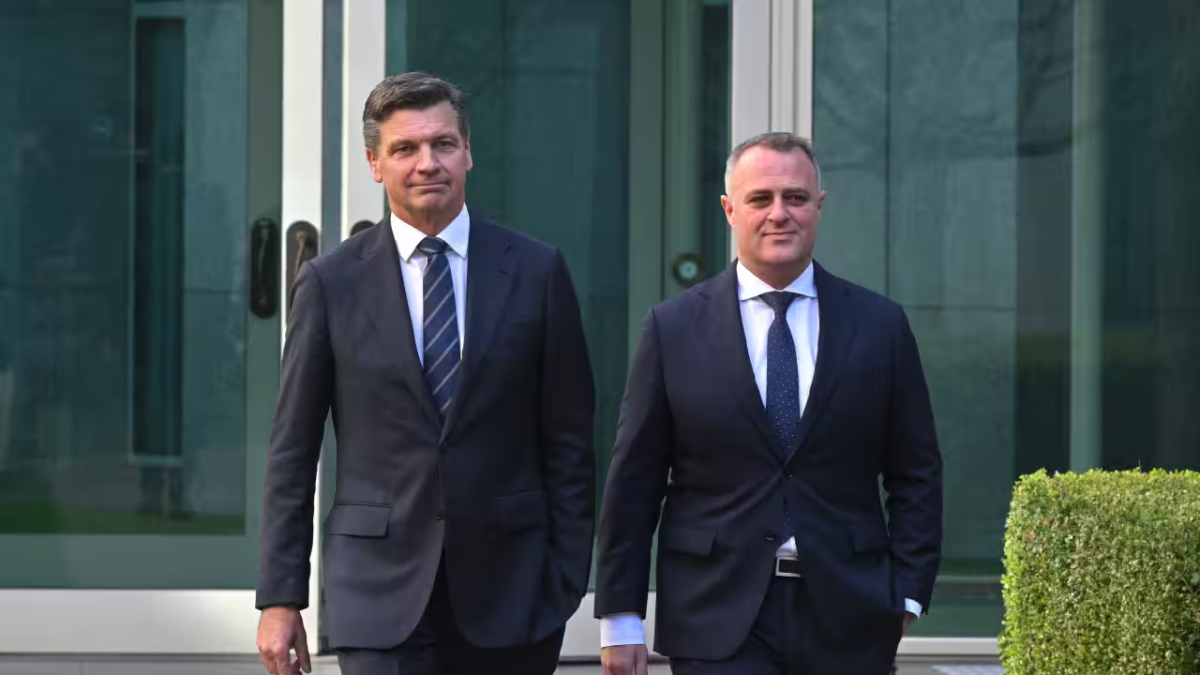
The Coalition’s official policy also includes A$200 million for a nationwide law-enforcement surge and A$60 million for a three-year public-awareness and education campaign. Opposition Leader Angus Taylor said the package is intended to remove the price advantage and profit margins that organised crime groups derive from illicit tobacco and vaping products.
The announcement moves the Coalition beyond an earlier taskforce recommendation on tobacco excise and establishes a broader policy covering cigarettes, vaping products, nicotine pouches, taxation and enforcement.
Tobacco Excise Would Be Cut 80%
Under the Coalition proposal, tobacco excise would be reduced by 80%.
The Coalition says excise on a standard pack of 20 cigarettes would fall from around A$30 to approximately A$6.
The Australian Broadcasting Corporation reported that legal 20-packs currently typically sell for around A$40 to A$50. If the entire excise reduction were passed through to consumers, retail prices could fall by about A$24 to roughly A$16-A$26.
Actual retail pricing, however, would depend on pricing decisions by manufacturers, wholesalers and retailers, meaning the excise reduction should not automatically be treated as an equivalent retail-price cut.
The Coalition said the excise rate would be reviewed after two years, with the aim of keeping the legal-illegal price gap narrow enough to prevent the black market from rebuilding.
Vapes Would Move Beyond Pharmacy-Only Model
The proposal would represent a major change to Australia’s current vaping framework.
Australia currently operates a highly restricted therapeutic model under which lawful nicotine vaping products are primarily supplied to adults through pharmacies.
The Coalition says it would replace that framework with a regulated legal adult market that includes sales through non-pharmacy retailers.
Nicotine vaping products would face excise of A$0.50 per millilitre of e-liquid, in addition to GST.
The Coalition says age restrictions and other protections for children would remain in place.
Its policy also proposes regulatory requirements including plain packaging for legally supplied vaping products.
Nicotine Pouches Would Be Legalised and Taxed
The Coalition also proposes reversing current restrictions on nicotine pouches.
Under its plan, nicotine pouches would become legally available to adults and would attract excise of A$0.025 per milligram of nicotine.
The proposal therefore treats vaping products and nicotine pouches as products to be brought into a legal, regulated and taxed adult nicotine market rather than primarily excluded from mainstream retail channels.
The Coalition argues that adults already purchasing these products in large numbers should be directed toward legitimate Australian businesses operating under domestic rules rather than illicit sellers.
That represents the Coalition’s policy rationale rather than an independently established outcome.
A$200 Million Enforcement Surge
The Coalition says the package would not rely on tax and regulatory changes alone.
It proposes A$200 million in additional nationwide enforcement funding for more raids, arrests, seizures, border interdictions and financial investigations.
The Australian Federal Police, Australian Border Force, Australian Criminal Intelligence Commission and AUSTRAC would be among the federal agencies targeted for stronger coordinated action.
The Coalition also says it would seek nationally consistent penalties and greater coordination with state police forces.
A further A$60 million over three years would fund public-awareness and education campaigns covering the organised crime behind illicit tobacco and vaping products as well as the health risks of smoking.
Coalition Says Package Would Improve Budget Revenue
Fiscal revenue is another central element of the Coalition’s case.
Its policy document says tobacco excise revenue peaked at around A$16 billion in 2019-20 and fell to roughly A$8 billion in the last financial year.
The Coalition says it worked with the independent Parliamentary Budget Office to model the package.
According to figures released by the Coalition, PBO modelling estimates the overall policy, including the 80% excise reduction, could improve the budget balance by around A$8 billion over the first four years and by more than A$20 billion over a decade.
The Coalition argues that narrowing the price gap would move purchases from the illicit market back into the taxed legal economy.
Those figures are modelled outcomes based on the Coalition’s policy assumptions and should not be read as evidence of actual post-implementation market effects.
Illicit Market Is Central to Coalition’s Case
The Coalition says organised crime groups are making between A$4.1 billion and A$6.9 billion in annual profits from illicit tobacco.
Its policy document also cites almost 200 tobacco-related arsons and six homicides in Victoria.
SBS reported that legal cigarettes in Australia currently sell for around A$40-A$70 per pack, compared with approximately A$10-A$20 for illicit products.
Taylor argues that narrowing that price differential is necessary to undermine the criminal business model.
Estimates of illicit-market share, however, require care. Some figures cited in the debate combine illicit cigarettes with vaping and other nicotine products, meaning claims that “80% of the tobacco market” is illicit should not be presented without specifying the underlying measure.
Public-Health Groups Warn of Smoking Risks
The proposal has faced strong opposition from public-health organisations.
Laura Hunter, chief executive of the Australian Council on Smoking and Health, has warned that making cigarettes significantly cheaper could have major consequences for public health.
Health organisations have long supported tobacco excise as a tool to reduce smoking by making cigarettes less affordable and have warned that dramatic cuts could reverse decades of progress, particularly among younger people.
7NEWS cited Australia’s National Drug Strategy Household Survey showing daily smoking among people aged 14 and over fell from 8.3% in 2022-23 to 5.6% in 2025.
Australia’s Illicit Tobacco and E-Cigarette Commissioner Amber Shuhyta has also previously warned that cutting tobacco excise could add further pressure to an already dangerous illicit market rather than necessarily eliminating it.
The Labor government argues there is insufficient credible evidence that a major excise reduction would eliminate illicit trade and has instead emphasised nationally coordinated enforcement.
Proposal Moves From Taskforce Recommendation to Coalition Policy
An 80% tobacco excise reduction had previously been proposed by the Coalition’s taskforce on illicit tobacco.
The significance of the September 3 announcement is that Opposition Leader Angus Taylor has now incorporated the measure into a formal Coalition policy and added specific proposals for legal vaping and nicotine pouch markets, product excise rates, enforcement spending and fiscal modelling.
The package remains an opposition policy proposal, not current Australian law or government policy.
Implementation would depend on the Coalition winning government at a future federal election and completing any required legislative and regulatory changes.
For the global tobacco and nicotine industry, the proposal is notable because it simultaneously challenges two long-standing pillars of Australia’s current approach: very high tobacco excise and highly restricted retail access to alternative nicotine products.
Follow 2Firsts for timely updates on global tobacco and nicotine taxation, illicit-market policy and product regulation.
Cover Image: SBS News
Disclaimer
This article is provided solely for professional research, industry discussion, and informational purposes. Any references to brands, companies, products, technologies, or policies are made for factual reporting and analytical purposes only, and do not constitute endorsement, recommendation, promotion, or advertising by 2Firsts.
Nicotine-containing products, including but not limited to cigarettes, e-cigarettes, heated tobacco products, and nicotine pouches, carry significant health risks. Readers are responsible for complying with all applicable laws and regulations in their respective jurisdictions, including age restrictions and access limitations.
The information contained in this article should not be regarded as investment, legal, medical, regulatory, or commercial advice. While 2Firsts strives to ensure the accuracy and reliability of its content, it does not assume liability for any direct or indirect loss arising from errors, omissions, inaccuracies, or reliance on the information contained herein.
This article is not intended for individuals below the legal age for accessing tobacco or nicotine-related information in their jurisdiction.
Copyright Notice
This article is either original content produced by 2Firsts or content reproduced, translated, summarized, or adapted from third-party sources with attribution where applicable. The intellectual property rights of the original content remain with 2Firsts or the respective original rights holders.
No individual or organization may copy, reproduce, distribute, republish, modify, translate, or otherwise use this content without prior authorization. Any unauthorized use may result in legal action.
For copyright-related inquiries, corrections, or removal requests, please contact: info@2firsts.com.
AI-Assisted Translation and Editing Notice
Portions of this article may have been translated, edited, or reviewed with the assistance of artificial intelligence tools to improve efficiency and readability. Due to the limitations of AI-assisted translation and editing, discrepancies, omissions, or inaccuracies may exist when compared with the original source.
Where applicable, readers are advised to refer to the original source for the most complete and accurate information. If you identify any errors or believe that any content infringes upon your rights, please contact us at info@2firsts.com, and we will review and address the matter promptly.