Disclaimer: This article is intended solely for industry research and reference purposes and does not constitute investment advice.
Key Points
● Diverging Performance: CTIHK’s H1 2026 revenue fell 26.9% year on year, while gross profit declined only 9.5%, reflecting sharply different trends across business segments.
● Leaf Business Shift: Tobacco leaf import revenue dropped 40.5%, while combined revenue from leaf exports and Brazil operations rose 56.8%, increasing the weight of international leaf business.
● Cigarette Transition: Cigarette export revenue fell 25.3%, but gross profit rose 4.9%, as China’s domestic duty-free regulatory transition disrupted shipment timing; the sustainability of margin improvement remains to be seen.
● New Tobacco Still Small: New tobacco product export revenue remained below HK$10 million, showing that the segment has yet to become a meaningful growth driver.
● Investment Platform Unproven: CTIHK continues to emphasize its investment and financing role, but its most significant capital move remains the internal acquisition of China Tobacco Brasil, with no major external M&A yet disclosed.
2Firsts
Shenzhen, August 24, 2026
China Tobacco International (HK) Company Limited, or CTIHK (6055.HK), released its results for the first half of 2026 on August 21. Revenue fell 26.9% year on year to HK$7.54 billion, gross profit declined 9.5% to HK$856 million, and profit attributable to owners of the company fell 11.2% to HK$627 million. The results were broadly within the ranges set out in CTIHK’s June profit warning, which projected a 25%-30% decline in revenue and a 10%-15% decline in attributable profit.
On August 24, the first trading day after the results were released, CTIHK shares closed at HK$25.18, up 6.24%, according to Google Finance.
CTIHK is currently the only listed tobacco business company within China’s state tobacco system and also serves as an international capital platform for China National Tobacco Corporation (CNTC). Against that background, the headline revenue decline tells only part of the story. Tobacco leaf imports, international leaf operations, cigarette exports and new tobacco products are driven by very different combinations of domestic planning, global leaf markets, duty-free regulation and overseas market access. Their financial movements therefore carry different industry implications.
At the same time, international leaf operations are gaining weight, the international expansion of Chinese cigars is continuing, and CTIHK’s increasingly explicit positioning as an investment and financing platform has yet to translate into another major capital transaction. Together, these developments provide a clearer framework for assessing where the company’s next growth drivers may emerge.

China Tobacco International (HK) (6055.HK) share price performance on August 24. The stock closed at HK$25.18, up 6.24% on the day, after reaching an intraday high of HK$25.74; the previous close was HK$23.70. | Source: Google Finance
Key Financials: Revenue Fell Faster Than Gross Profit and Earnings
● Revenue: HK$7.54 billion, down 26.9% year on year
● Gross profit: HK$856 million, down 9.5%
● Profit attributable to owners of the company: HK$627 million, down 11.2%
● Earnings per share: HK$0.91, versus HK$1.02 a year earlier
● Interim dividend: HK$0.19 per share, unchanged year on year
● Cash and short-term bank deposits: HK$3.82 billion as of June 30, versus HK$3.31 billion at the end of 2025
CTIHK said the revenue decline was mainly attributable to its tobacco leaf import and cigarette export businesses, while growth in tobacco leaf exports and Brazil operations partly offset the decline. The fall in gross profit was mainly driven by the tobacco leaf import business.
CTIHK’s financial summary for the first half of 2026. Revenue fell 26.9% year on year to HK$7.54 billion, gross profit declined 9.5% to HK$856 million, and profit attributable to shareholders decreased 11.2% to HK$627 million. The interim dividend remained unchanged at HK$0.19 per share. | Source: CTIHK 2026 Interim Results Announcement
Profit Fell 11.2%, but the Interim Dividend Remained at HK$0.19
Despite lower revenue and profit, CTIHK kept its interim dividend unchanged at HK$0.19 per share.
The company disclosed a total interim dividend of HK$131.4 million. Based on attributable profit, the interim payout ratio was approximately 21.0% in the first half of 2026, compared with about 18.6% a year earlier.
As of June 30, CTIHK held HK$447.8 million in cash and cash equivalents and HK$3.37 billion in short-term bank deposits, for a combined HK$3.82 billion, up about 15% from the end of 2025.
The company said the board decided to maintain the interim dividend after considering the group’s profitability and ample cash flow.
Leaf Business Diverges: Import Revenue Falls 40.5% as International Operations Expand
Tobacco leaf imports remained CTIHK’s largest individual business. Revenue from the segment fell 40.5% year on year to HK$5.00 billion, while gross profit declined 20.8% to HK$544 million. CTIHK attributed the decrease mainly to international trade conditions and shipment timing, which reduced tobacco leaf imports from the United States and other regions.
But the import business is not a conventional market-development business.
Its primary role is to source tobacco leaf globally for China’s domestic cigarette manufacturing system. CTIHK imports leaf into mainland China, while the scale of the business is influenced by domestic industrial demand, planning arrangements, global supply and trade conditions. As a result, fluctuations in import revenue have a major effect on CTIHK’s overall financial scale, but do not directly translate into changes in the company’s own international market-development capability. CTIHK’s interim report describes tobacco leaf imports as one of its five operating businesses and notes the group’s role in coordinating supply and ensuring orderly arrivals.
The picture was different in businesses directly exposed to global tobacco leaf markets.
For analytical purposes, 2Firsts groups CTIHK’s separately reported tobacco leaf export and Brazil operations segments together as its “international leaf business.” Based on company segment data, the two businesses generated combined revenue of approximately HK$2.12 billion in the first half, up 56.8% year on year. Their share of group revenue increased to about 28.1%, from roughly 13.1% a year earlier. Combined gross profit rose about 39.7%.
Tobacco leaf export revenue increased 52.7%, while gross profit rose 60.6%. CTIHK said it expanded sourcing channels, business in non-exclusive territories and direct customer relationships, while deepening cooperation with major multinational cigarette manufacturers.
Brazil operations, meanwhile, increased revenue by 81.3%. But gross profit rose only 15%. Based on 2Firsts calculations from company data, the segment’s gross margin fell from about 27.4% to 17.4%, showing that scale expanded considerably faster than gross profit.
This does not mean CTIHK has reduced its dependence on tobacco leaf. Tobacco leaf product sales still accounted for approximately 94.4% of group revenue in the first half. The change is occurring within the leaf business itself: operations tied to Chinese import demand contracted, while businesses serving international customers and operating directly in an overseas leaf-origin market gained weight.
Cigarette Export Revenue Falls 25.3% as Margin Improvement Faces a Transition Test
CTIHK’s cigarette export business generated HK$412 million in first-half revenue, down 25.3% year on year, while gross profit increased 4.9% to HK$149 million. Based on 2Firsts calculations, gross margin increased from about 25.7% to 36.1%.
The company said the fall in volume and revenue mainly reflected a temporary impact from business-process adjustments in China’s domestic duty-free market, which delayed cigarette shipments. Gross profit growth was supported by greater direct supply to duty-free retailers, optimization of the product mix and expansion of self-operated business.
For international readers, it is important to distinguish between two similarly named entities within the CNTC system.
CTIHK is the Hong Kong-listed company and carries out international businesses including cigarette exports. China Tobacco International Co., Ltd. (CTI), by contrast, is a mainland China company wholly owned by CNTC. Under the new domestic duty-free tobacco rules implemented in 2026, CTI became the only company qualified to conduct state-trading cigarette exports into China’s domestic duty-free market.
The new rules took effect on January 1, with a six-month transition period ending June 30 and full compliance required from July 1. The entire first half therefore coincided with the transition.
According to CTIHK’s February 13 announcement, cigarette manufacturers seeking to continue supplying China’s domestic duty-free market through CTIHK are required to appoint CTI as the qualified export agent. However, CTIHK’s existing exclusive cigarette export business was not displaced: transaction terms and pricing policies under its framework agreements remained unchanged, while the additional agency costs are borne by the relevant counterparties and CTI does not charge CTIHK for the arrangement.
The regulatory change therefore primarily rearranged the compliance and export-qualification pathway rather than the basic economic structure of CTIHK’s existing business.
The sharp margin improvement, however, needs to be read in the context of that transition. Because some shipments were delayed, the mix of products, channels and markets recognized as revenue in the first half may have differed from a more normal period. Direct supply, a larger self-operated business and product-mix optimization supported gross profit, but whether the current 36.1% gross margin represents a sustainable improvement will depend in part on the business mix after delayed shipments normalize. CTIHK has not disclosed the contribution of each factor to the margin change.
Chinese cigars are another product area to watch within the broader cigarette and tobacco export portfolio.
In 2025, CTIHK signed overseas exclusive distribution or agency agreements with tobacco companies in Sichuan, Hubei, Shandong and Anhui covering Great Wall, Huanghelou, Taishan and Wangguan cigars. The company said it had begun building a unified international distribution platform for Chinese cigars and reported strong growth in its duty-paid cigar business during the year.
CTIHK has not separately disclosed cigar revenue, volume or gross profit for the first half of 2026, however, so there is not enough evidence to quantify any contribution from Chinese cigars to the cigarette export segment’s higher margin. Their broader significance is that CTIHK is extending China Tobacco’s international product portfolio beyond cigarettes.
With the new domestic duty-free regime fully in force from July 1, second-half shipment recovery, the release of delayed orders and the sustainability of margins under a more normalized sales mix will provide a clearer view of CTIHK’s cigarette business under the new framework.
New Tobacco Product Revenue Remains Below HK$10 Million
CTIHK’s new tobacco product business remains small.
Revenue from new tobacco product exports fell 32.8% to HK$9.81 million in the first half, while gross profit declined 33.1% to HK$522,000. The segment accounted for only about 0.13% of group revenue. CTIHK attributed the decline to geopolitical conflicts, tighter regulation in target markets and instability in supply and demand.
On the current financial structure, new tobacco products have yet to become a meaningful growth driver for CTIHK. The company said it plans to continue optimizing its brand and product portfolio, encourage suppliers to accelerate product iteration and explore new operating models in key markets.
Alan Zhao, Co-Founder and CEO of 2Firsts, said the gradual development and opening of China’s domestic heated tobacco market could help Chinese tobacco companies build stronger capabilities in products, technology and brands across heated tobacco, nicotine pouches and other new tobacco categories, while supporting their internationalization.
Over the longer term, Zhao said, that could expand the range of products and capabilities that international business platforms such as CTIHK are able to commercialize overseas.
Investment and Financing Role Strengthens, but External Capital Expansion Has Yet to Break Through
Beyond its existing trading businesses, CTIHK has continued to emphasize its role as an “investment and financing platform.”
This is not a new theme. In its 2025 annual report, the company said it was screening potential investment and acquisition targets and would seek to pursue cross-border M&A. Its 2026 planning language further emphasized its dual role as an international market expansion platform and an investment and financing platform, supported by both organic and inorganic growth. The first-half 2026 report continued that positioning and referred to international business resource integration, value-chain development and the identification of potential investment opportunities.
A key reference point in CTIHK’s post-listing capital history came in 2021.
That year, CTIHK acquired 100% of China Tobacco International Brasil from its direct controlling shareholder, China Tobacco International Group Limited, for US$63.4 million, or approximately HK$494.6 million in cash. The transaction gave CTIHK indirect control of 51% of China Brasil Tabacos Exportadora S.A. (CBT).
The deal was an intra-group asset integration within the CNTC system rather than an acquisition of an independent third-party company outside the group.
It also created what is now reported as CTIHK’s Brazil operations segment. Through the transaction, CTIHK gained exposure to local tobacco leaf procurement, processing, sales and agricultural inputs in Brazil. In the first half of 2026, revenue from Brazil operations rose 81.3% to HK$354 million, illustrating how a capital transaction can alter the company’s business mix. CTIHK’s current group structure shows that it wholly owns China Tobacco International Brasil, which in turn holds 51% of CBT.
But based on public disclosures reviewed by 2Firsts, the Brazil acquisition remains CTIHK’s most representative major acquisition since listing, and no comparable major acquisition of an independent third-party tobacco company outside the CNTC system has yet been disclosed. As of June 30, 2026, the company also reported no material investments, no material acquisitions or disposals, and no disclosed plans for material investments or capital assets.
Its remaining IPO proceeds provide additional context. CTIHK originally allocated HK$406.8 million of its IPO net proceeds for investments and acquisitions complementary to its existing businesses. As of June 30, HK$81.4 million of that allocation remained unused, while total unused IPO proceeds stood at HK$404 million. The company currently expects the remaining proceeds to be used by June 30, 2027, while noting that the timetable may change depending on market conditions.
The remaining HK$81.4 million acquisition allocation, however, should not be viewed as a measure of CTIHK’s overall potential capital capacity. The company held HK$3.82 billion in cash and short-term bank deposits at the end of June. The more important question is whether, as CTIHK continues to strengthen its investment and financing role, its capital activity will evolve from integrating overseas assets already within the CNTC system toward investing in external brands, channels, technologies or other industry assets.
The first-half results show that CTIHK’s revenue base remains heavily concentrated in tobacco leaf, even as its international leaf business expands. Cigarette exports are navigating a regulatory transition, new tobacco products remain small, and Chinese cigars are emerging as an additional international product opportunity.
The next phase will therefore be defined not only by whether existing businesses recover or continue to grow, but by which of international leaf, new tobacco products, cigars and potential inorganic investments can develop into new and sustainable growth drivers.
For continued coverage of China Tobacco’s internationalization, financial performance and business development, follow 2Firsts.
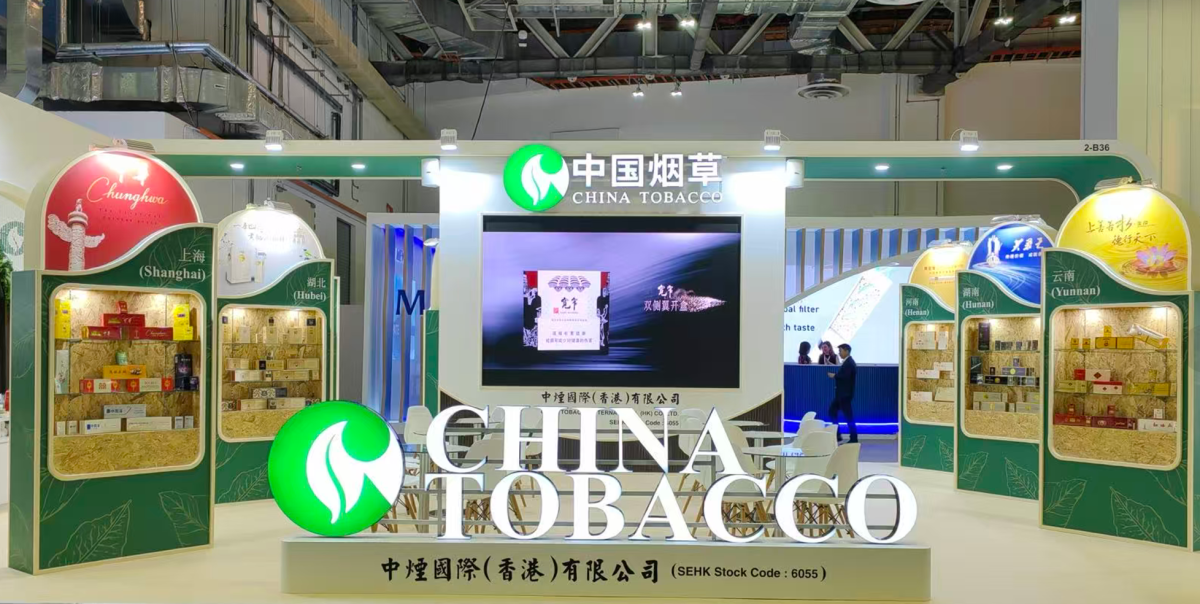
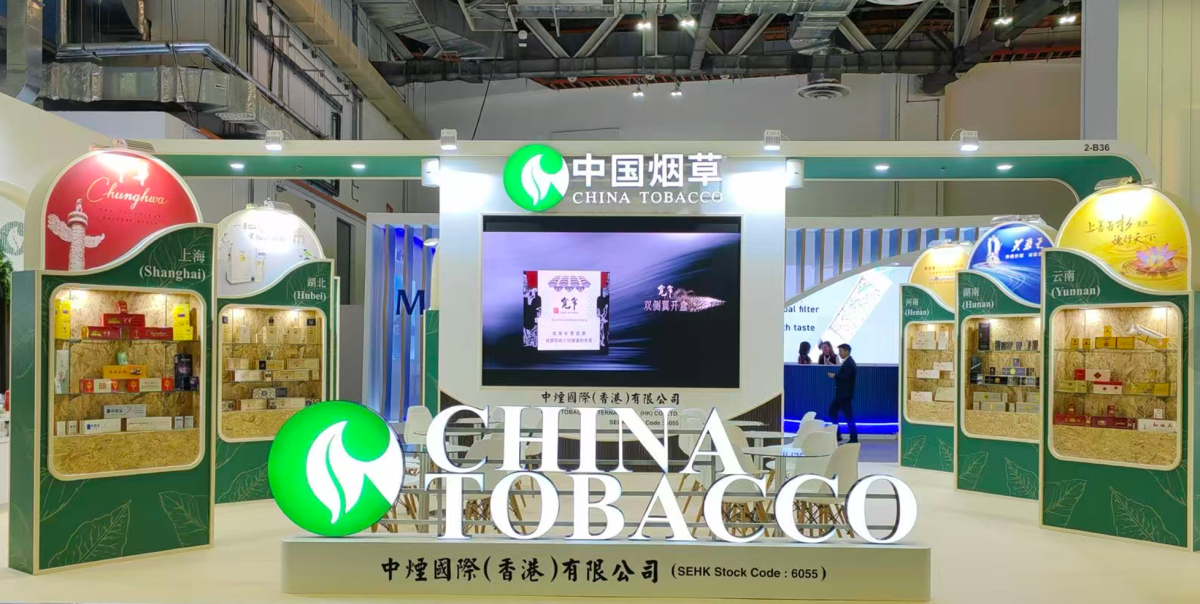
Cover image: China Tobacco International (HK) participates in an international trade show. |Photo by 2Firsts.
Disclaimer
This article is provided solely for professional research, industry discussion, and informational purposes. Any references to brands, companies, products, technologies, or policies are made for factual reporting and analytical purposes only, and do not constitute endorsement, recommendation, promotion, or advertising by 2Firsts.
Nicotine-containing products, including but not limited to cigarettes, e-cigarettes, heated tobacco products, and nicotine pouches, carry significant health risks. Readers are responsible for complying with all applicable laws and regulations in their respective jurisdictions, including age restrictions and access limitations.
The information contained in this article should not be regarded as investment, legal, medical, regulatory, or commercial advice. While 2Firsts strives to ensure the accuracy and reliability of its content, it does not assume liability for any direct or indirect loss arising from errors, omissions, inaccuracies, or reliance on the information contained herein.
This article is not intended for individuals below the legal age for accessing tobacco or nicotine-related information in their jurisdiction.
Copyright Notice
This article is either original content produced by 2Firsts or content reproduced, translated, summarized, or adapted from third-party sources with attribution where applicable. The intellectual property rights of the original content remain with 2Firsts or the respective original rights holders.
No individual or organization may copy, reproduce, distribute, republish, modify, translate, or otherwise use this content without prior authorization. Any unauthorized use may result in legal action.
For copyright-related inquiries, corrections, or removal requests, please contact: info@2firsts.com.
AI-Assisted Translation and Editing Notice
Portions of this article may have been translated, edited, or reviewed with the assistance of artificial intelligence tools to improve efficiency and readability. Due to the limitations of AI-assisted translation and editing, discrepancies, omissions, or inaccuracies may exist when compared with the original source.
Where applicable, readers are advised to refer to the original source for the most complete and accurate information. If you identify any errors or believe that any content infringes upon your rights, please contact us at info@2firsts.com, and we will review and address the matter promptly.