Key Points
- MAST said on Aug. 14 that seven people had been charged and two criminal networks were valued by authorities at a combined A$80 million, approximately US$56.8 million.
- Investigators allege the networks used bonded warehouses, freight businesses and “trusted insiders” to circumvent border controls.
- Authorities describe trusted insiders as people who exploit positions within legitimate industries to assist transnational serious organised crime.
- In a separate action, Operation SHORTHAND targeted more than 100 service stations on Aug. 11, involving about 250 officers and regulators from 15 agencies.
- The AFP said the retail raids were also intended to identify potential importation routes, distribution networks and how illicit tobacco sales proceeds are collected and moved.
- A separate MAST investigation alleges about 88 air-cargo consignments of illicit tobacco were imported, stored and then distributed to retailers and wholesalers since May 2026.
- More than A$25 million in assets were frozen, including 14 properties, bank accounts and significant shareholdings connected to logistics companies.
2Firsts
August 17, 2026
Australian authorities are pushing their crackdown on illicit tobacco and vaping products beyond seizures and shop closures, focusing increasingly on the structure of crime groups, logistics channels and financial networks that allegedly keep the black market operating.
According to the Australian Border Force on Aug. 14, the Multi Agency Strike Team, or MAST, charged seven people following two investigations and said it had dismantled two criminal networks valued by authorities at a combined A$80 million, approximately US$56.8 million.
Investigators allege those networks used bonded warehouses, freight businesses and “trusted insiders” working within legitimate industries to bypass border controls and move illicit tobacco and vaping products.

Three days earlier, a separate operation known as Operation SHORTHAND targeted more than 100 service stations across six Australian jurisdictions. Authorities said the action was intended not only to investigate alleged illicit retail sales, but also to gather intelligence on importation routes, distribution networks and the movement of sales proceeds.
The cases are not directly linked. Taken together, however, they illustrate how Australian authorities are probing both ends of the illicit market: alleged organised crime groups using legitimate logistics infrastructure upstream, and criminal operators diversifying into convenience stores and service stations downstream.
Two Crime Networks Valued at a Combined A$80 Million
MAST brings together officers from NSW Police, the Australian Federal Police, Australian Border Force, NSW Crime Commission, Australian Criminal Intelligence Commission, AUSTRAC and the Australian Taxation Office.
One of its priorities is investigating so-called “trusted insiders” — people suspected of using access, positions or expertise within legitimate industries to assist transnational serious organised crime groups.
One investigation, Strike Force Borderdale, began in May 2025.
Investigators allege a 53-year-old man and associates used a bonded warehouse in Bankstown to circumvent border controls and import and supply large quantities of illicit tobacco and vaping products.
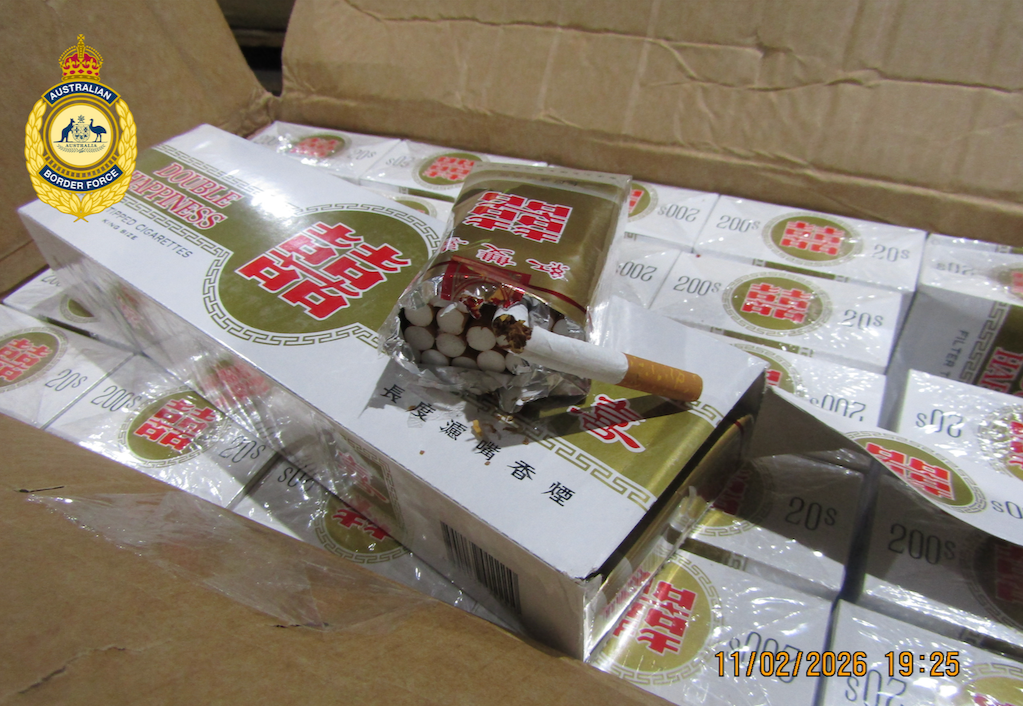
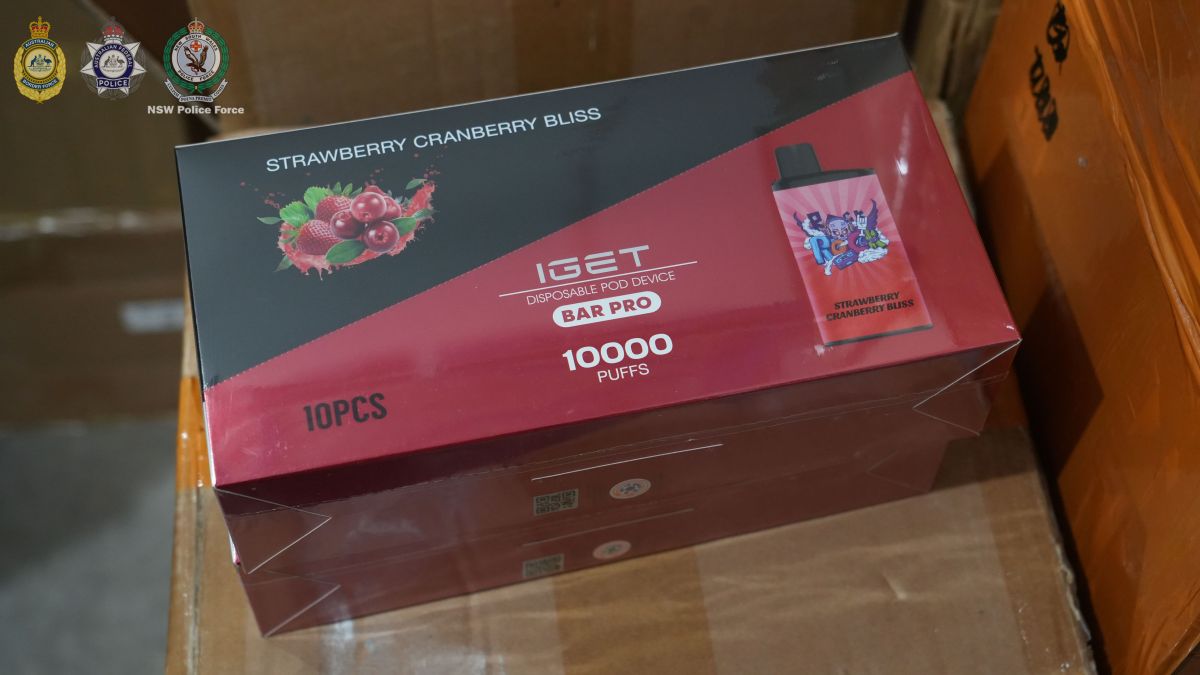
In February 2026, investigators searched a commercial storage facility and two trucks in Burwood, seizing about 91,000 vapes and a loaded Glock pistol.
A further operation in July at properties in Revesby and Marrickville resulted in another large vape seizure.
By August, MAST said the two criminal networks covered by its combined investigations were valued at A$80 million.
The A$80 million figure refers to the authorities’ valuation of the two networks. It is not the value of a single seizure and should not be read as a confirmed figure for criminal proceeds.
Logistics “Trusted Insiders” Become a Central Focus
One of the more significant elements of the MAST investigation is its focus on trusted insiders.
The AFP said people who exploit their positions within legitimate industries can play a critical role in helping crime networks move illicit tobacco into and around Australia.
The allegations extend beyond individual storage sites or vehicles.
Investigators have examined bonded warehouses, freight-forwarding operations, storage facilities and licensed logistics businesses.
Following further searches on Aug. 13, the ABF immediately suspended depot licences in Sydney and Brisbane and issued a notice of intent to cancel a Melbourne licence linked to a national freight-forwarding company.
That takes the enforcement response beyond the seizure of illicit goods and into the licences and infrastructure that enable commercial freight movements.
88 Air-Cargo Shipments Point to Sustained Distribution
A second MAST investigation, Strike Force Benberta, was established in December 2025 and focused on a freight-forwarding company in Moorebank.
Police allege a 26-year-old man and associates used sea and air freight to circumvent border controls and import large quantities of illicit tobacco.
Investigators allege that since May 2026 about 88 air-cargo consignments of illicit tobacco were imported and stored before being distributed to retail stores and wholesalers.
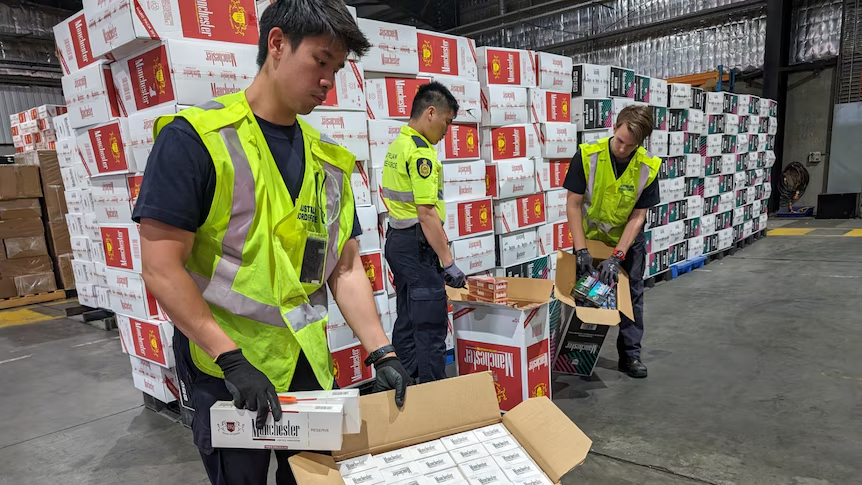
On Aug. 6, MAST investigators executed six Commonwealth search warrants at locations including Prestons, Bass Hill, Roselands, Moorebank and Sefton, seizing 51 boxes of illicit tobacco, A$690,000 in cash and steroids.
The alleged pattern points to something more structured than isolated smuggling attempts: a recurring import, storage and distribution system capable of feeding wholesale and retail channels.
Authorities Follow the Money and Assets
The MAST investigations have also moved into suspected proceeds and asset structures.
Further searches on Aug. 13 across Sydney, Brisbane and Melbourne resulted in the seizure of cash, gold bullion, luxury watches, luxury handbags, firearms, cigarettes and vehicles.
The NSW Crime Commission froze more than A$25 million in assets, including 14 properties in New South Wales and Victoria, multiple bank accounts, a luxury vehicle and significant shareholdings connected to logistics companies.
AUSTRAC said its financial intelligence had helped identify key financial connections and support operational outcomes.
That pushes the investigation beyond the movement of tobacco and vaping products into corporate interests, financial accounts and asset ownership.
Separate Sweep Targets More Than 100 Service Stations
Operation SHORTHAND, conducted separately from the MAST investigations, focused on the retail side of the illicit market.
On Aug. 11, the ABF-led Illicit Tobacco National Disruption Group conducted coordinated enforcement activity in New South Wales, Queensland, Victoria, South Australia, Western Australia and the Australian Capital Territory.
About 250 law-enforcement and regulatory officers from 15 agencies took part, targeting more than 100 service stations.
Authorities said the operation followed intelligence from the AFP and Australian Criminal Intelligence Commission indicating possible links between some targeted sites, suspected criminal activity and the alleged sale of illicit tobacco and vaping products.
ABF Assistant Commissioner Tony Smith said criminal operators were changing their business models, moving away from traditional tobacconists and into convenience stores, milk bars and service stations.
That suggests illicit tobacco distribution is becoming more dispersed and increasingly embedded in ordinary retail settings.
Service Stations Also Offer a Route Back to Criminal Networks
Operation SHORTHAND was not solely about what was being sold over the counter.
The AFP said one aim of the operation was to obtain information that could help identify how illicit tobacco is potentially imported, how distribution networks operate and how proceeds from sales are collected and moved.
In that sense, retail sites are not only enforcement targets. They may also provide investigators with a route back toward suppliers, logistics nodes and financial flows higher up the chain.
Nine Metro Petroleum locations in New South Wales received temporary closure orders following the operation.
Metro Petroleum said the affected sites were independently operated and that it had begun terminating arrangements with the operators involved.
Operation SHORTHAND remains active, and authorities have not yet released final nationwide seizure figures.
From Seizing Products to Unpicking the Business Model
The two actions point to a broader shift in Australian illicit-tobacco enforcement.
The focus is moving beyond how many products are seized or how many shops are shut.
The MAST investigations are examining how alleged crime groups use bonded warehouses, freight companies and insiders in legitimate industries, while also tracing company shareholdings, bank accounts and other assets.
Operation SHORTHAND, meanwhile, is using retail enforcement to seek information on importation, distribution and the movement of proceeds.
Together, the cases outline a broader illicit business model: products allegedly enter through logistics channels, move through storage and wholesale networks, reach increasingly diverse retail outlets such as convenience stores and service stations, and generate proceeds that may flow back into organised crime.
The AFP has said organised crime groups can use profits from illicit tobacco sales to fund further criminal activity.
The allegations in the MAST cases have not yet been determined by the courts, while Operation SHORTHAND remains under investigation and specific links between targeted businesses and organised crime have not been judicially established.
The latest actions nevertheless show Australian authorities attempting to move from disrupting individual shipments and stores toward identifying and dismantling the organisational, logistics, retail and financial structures underpinning the illicit tobacco and vape market.
Follow 2Firsts for the latest updates on global tobacco and nicotine regulation, enforcement and industry developments.
Cover Image source: NSW Police Force
Disclaimer
This article is provided solely for professional research, industry discussion, and informational purposes. Any references to brands, companies, products, technologies, or policies are made for factual reporting and analytical purposes only, and do not constitute endorsement, recommendation, promotion, or advertising by 2Firsts.
Nicotine-containing products, including but not limited to cigarettes, e-cigarettes, heated tobacco products, and nicotine pouches, carry significant health risks. Readers are responsible for complying with all applicable laws and regulations in their respective jurisdictions, including age restrictions and access limitations.
The information contained in this article should not be regarded as investment, legal, medical, regulatory, or commercial advice. While 2Firsts strives to ensure the accuracy and reliability of its content, it does not assume liability for any direct or indirect loss arising from errors, omissions, inaccuracies, or reliance on the information contained herein.
This article is not intended for individuals below the legal age for accessing tobacco or nicotine-related information in their jurisdiction.
Copyright Notice
This article is either original content produced by 2Firsts or content reproduced, translated, summarized, or adapted from third-party sources with attribution where applicable. The intellectual property rights of the original content remain with 2Firsts or the respective original rights holders.
No individual or organization may copy, reproduce, distribute, republish, modify, translate, or otherwise use this content without prior authorization. Any unauthorized use may result in legal action.
For copyright-related inquiries, corrections, or removal requests, please contact: info@2firsts.com.
AI-Assisted Translation and Editing Notice
Portions of this article may have been translated, edited, or reviewed with the assistance of artificial intelligence tools to improve efficiency and readability. Due to the limitations of AI-assisted translation and editing, discrepancies, omissions, or inaccuracies may exist when compared with the original source.
Where applicable, readers are advised to refer to the original source for the most complete and accurate information. If you identify any errors or believe that any content infringes upon your rights, please contact us at info@2firsts.com, and we will review and address the matter promptly.