
Key Points
- Victoria’s new illegal tobacco store closure powers took effect on September 9.
- TLV and police can issue short-term closure orders lasting up to 90 days.
- Closed premises must generally stop all trading and will be publicly listed.
- Breaching a closure order can result in penalties of up to A$2.5 million and up to 20 years’ imprisonment.
2Firsts
September 10, 2026
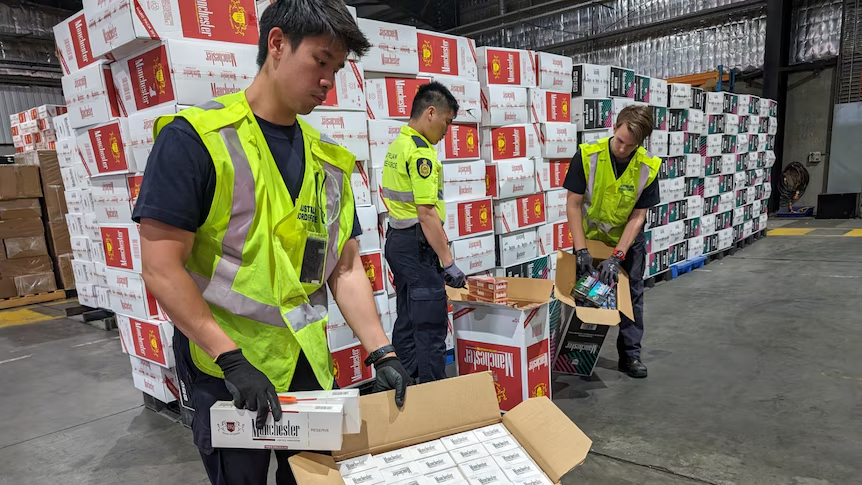
According to the Australian Broadcasting Corporation on September 9, 2026, the state of Victoria has activated new closure powers targeting retailers suspected of selling, supplying or possessing illicit tobacco.
Tobacco Licensing Victoria, or TLV, and Victoria Police can now order premises to close for up to 90 days, giving authorities a new enforcement tool beyond seizures, fines and criminal prosecution.
Stores Can Be Shut for Up to 90 Days
Under the new framework, both TLV and Victoria Police can issue short-term closure orders.
Those orders can remain in force for up to 90 days.
During the closure period, the affected premises must generally cease all business operations, rather than simply stop selling tobacco products.
For longer shutdowns, TLV or police can apply to the Magistrates’ Court for an order extending the closure beyond 90 days.
The structure allows authorities to interrupt suspected illicit tobacco retail activity quickly while retaining a court-based path for longer restrictions.
Closed Businesses Will Be Publicly Named
Victoria will also publish the names of premises subject to closure orders.
TLV will maintain a public closure list that can be accessed by consumers, enforcement agencies and other market participants.
The measure adds a disclosure element to the enforcement regime.
For retailers, inclusion on the list creates reputational and commercial consequences in addition to the direct loss of trading activity.
Breaches Can Draw Penalties of Up to A$2.5 Million
The penalties for ignoring a closure order are substantial.
According to ABC, breaches can carry fines of up to A$2.5 million and prison terms of up to 20 years.
At recent exchange rates, A$2.5 million is roughly US$1.6 million.
Victoria’s broader tobacco licensing regime already provides for heavy penalties against individuals and companies involved in illicit tobacco sales.
The new closure powers add a more immediate mechanism by allowing authorities to stop trading at the premises itself.
Inspectors to Conduct Unannounced Checks
The Victorian government has said TLV will use dozens of inspectors to enforce the regime, including through unannounced inspections of premises suspected of selling illicit tobacco.
Victoria Police can also issue closure notices directly.
That means enforcement no longer depends solely on longer criminal investigations or prosecutions before a business can be stopped from trading.
Victoria has been one of Australia’s main enforcement hotspots for illicit tobacco, with authorities also linking parts of the market to organized crime, arson and violence.
Closure Powers Currently Focus on Illicit Tobacco
The new mechanism currently applies primarily to illicit tobacco.
ABC reported that Quit official Rachael Andersen said Victorian enforcement officers do not have equivalent closure powers for retailers selling illegal vapes or nicotine pouches and called for the regime to be expanded.
That leaves a difference in the enforcement tools available across tobacco, vaping and oral nicotine products.
For the nicotine industry, the distinction is significant because Australia already maintains tight restrictions on vaping products, but the legal basis and enforcement mechanisms differ by product category.
Enforcement Upgrade Comes Amid Federal Tobacco Tax Debate
Victoria’s tougher retail enforcement comes as Australia continues to debate tobacco excise policy at the federal level.
The Coalition has recently proposed a sharp reduction in tobacco excise, arguing that lower legal-market prices could help reduce illicit trade.
Victoria Premier Ben Carroll has said he does not support cutting tobacco taxes.
The two approaches illustrate different policy responses to the same illicit-market problem: one focused on narrowing the price gap through tax policy, and the other on strengthening retail enforcement and closure powers.
Victoria Moves Into Direct Store-Closure Enforcement
The key change is not simply a higher fine.
Authorities can now directly disrupt the operations of premises suspected of involvement in illicit tobacco sales.
For retailers, a 90-day shutdown, public naming and the possibility of longer court-ordered closure means enforcement risk now extends beyond seizures and financial penalties to business continuity itself.
The change marks a further shift in Victoria’s illicit tobacco strategy toward control of retail networks and premises.
Follow 2Firsts for timely updates on global tobacco and nicotine regulations, market developments and industry trends.
Cover Image: ABC / Victorian Government
Disclaimer
This article is provided solely for professional research, industry discussion, and informational purposes. Any references to brands, companies, products, technologies, or policies are made for factual reporting and analytical purposes only, and do not constitute endorsement, recommendation, promotion, or advertising by 2Firsts.
Nicotine-containing products, including but not limited to cigarettes, e-cigarettes, heated tobacco products, and nicotine pouches, carry significant health risks. Readers are responsible for complying with all applicable laws and regulations in their respective jurisdictions, including age restrictions and access limitations.
The information contained in this article should not be regarded as investment, legal, medical, regulatory, or commercial advice. While 2Firsts strives to ensure the accuracy and reliability of its content, it does not assume liability for any direct or indirect loss arising from errors, omissions, inaccuracies, or reliance on the information contained herein.
This article is not intended for individuals below the legal age for accessing tobacco or nicotine-related information in their jurisdiction.
Copyright Notice
This article is either original content produced by 2Firsts or content reproduced, translated, summarized, or adapted from third-party sources with attribution where applicable. The intellectual property rights of the original content remain with 2Firsts or the respective original rights holders.
No individual or organization may copy, reproduce, distribute, republish, modify, translate, or otherwise use this content without prior authorization. Any unauthorized use may result in legal action.
For copyright-related inquiries, corrections, or removal requests, please contact: info@2firsts.com.
AI-Assisted Translation and Editing Notice
Portions of this article may have been translated, edited, or reviewed with the assistance of artificial intelligence tools to improve efficiency and readability. Due to the limitations of AI-assisted translation and editing, discrepancies, omissions, or inaccuracies may exist when compared with the original source.
Where applicable, readers are advised to refer to the original source for the most complete and accurate information. If you identify any errors or believe that any content infringes upon your rights, please contact us at info@2firsts.com, and we will review and address the matter promptly.




