Key Points
- Closure orders may reach 12 months;
- Illicit cigarettes make up one-third;
- Tax losses estimated at £4.5bn;
- £20m enforcement unit created;
- Cork reviews shop clustering.
2Firsts
June 12, 2026
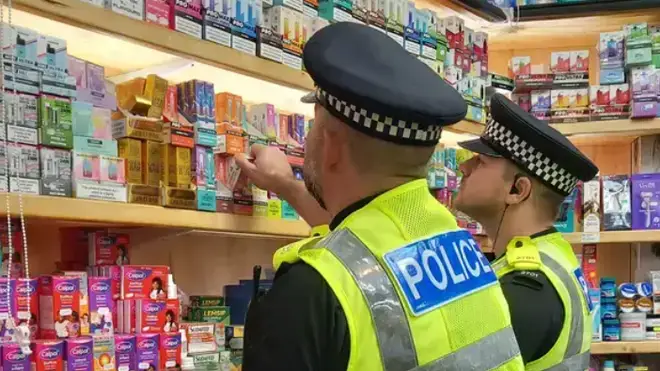
According to The Telegraph, Manchester Evening News, LBC and Echo Live, the UK government plans to expand police and trading standards powers by extending temporary closure orders for shops selling illegal vapes and cigarettes to a maximum of 12 months.
Under current anti-social behaviour laws, authorities can shut a shop for three months, with an option to extend the closure to six months.
Home Secretary Shabana Mahmood said the new measure will increase the maximum closure period to one year.
She said the additional time will give police and other authorities the chance to pursue prosecutions and put offenders behind bars.
“I know all over the country, local people feel that their high streets are being hijacked by organised crime, immigration criminality,” Mahmood said.
Manchester Evening News and LBC reported that the legislation is expected to be introduced later this year, with the government planning to bring in secondary legislation by the end of the year following consultation.
The Home Office said the current six-month maximum can allow businesses to reopen before investigations are complete.
Extending temporary closure orders is intended to give investigators more time to gather evidence, pursue prosecutions and identify criminal bosses operating behind the scenes.
The Telegraph reported that the move came a week after it exposed high-street shops openly selling illegal cigarettes and vapes.
The report said illicit cigarettes are manufactured in black-market factories or smuggled into the UK by organised crime gangs.
Such products are being sold by some corner shops for as little as one-fifth of the legal retail price, contributing to an estimated £4.5 billion, or about US$5.7 billion, in lost tax revenue.
The Telegraph said it joined a team of former undercover police officers in Wigan and Ashton-in-Makerfield in Greater Manchester to investigate the illicit trade.
The investigation found 18 high-street shops in the two towns openly selling illegal cigarettes for between £3.50 and £7 per pack, compared with about £18.50 for a legitimate pack of 20.
According to a KPMG report cited by The Telegraph, one-third of the 22 billion cigarettes sold in the UK last year were illicit, up from 18% four years earlier.
The report said high profits and low risk are attracting organised criminals into the illegal tobacco and vape trade.
John Herriman, chief executive of the Chartered Trading Standards Institute (CTSI), said strengthening enforcement powers, including extending closure orders, is an important first step.
He said stronger enforcement powers will give officers more time to investigate criminality, prevent criminals from using premises to break the law and protect local communities from serious risks.
A CTSI survey found that 96% of trading standards officers had encountered serious organised crime gangs during their duties.
In some areas, officers estimated that as many as half of mini-marts, convenience stores or vape shops had links to organised crime.
Nearly three-quarters of trading standards officers said they had been physically assaulted, threatened with violence or experienced intimidating behaviour while carrying out their duties.
The UK government is also drawing up a licensing scheme for shops selling cigarettes.
Trading standards officers said such a scheme would make it easier to stamp out the illicit trade.
In addition, a new specialist law-enforcement unit backed by £20 million, or about US$25.4 million, has been set up within the National Crime Agency to crack down on gangs operating high-street businesses such as vape stores, mini-marts and barbers’ shops as fronts for organised crime.
The Home Office said 75 new police officers will also be recruited across the country to tackle high-street gangs.
Mahmood said the national crackdown will lead to thousands more businesses being raided and closed, business owners arrested and criminal money seized.
Officials are also urgently reviewing whether vape shops, barbers and car washes should remain on the skilled-worker sponsorship list amid concerns about abuse of the visa system.
As additional context, Echo Live reported that Cork City Council in Ireland has opened 17 enforcement files this year following complaints about clusters of vape, phone and barber shops in parts of the city.
Cork City Council said that under current planning legislation, it can do little to limit such clusters when the businesses are established in existing retail shop units.
Niall Ó Donnabháin, the council’s director of planning and integrated development, said such businesses fall under the definition of a “shop” under planning law, meaning a change from one type of retail shop to another generally does not require planning permission.
Industry observers said attention from UK and Irish local authorities toward vape shops, barbers, mini-marts and other cash-intensive high-street businesses shows that illicit vape and tobacco issues have expanded beyond product regulation into organised crime, tax losses, immigration enforcement and urban commercial governance.
Cover image: LBC
Disclaimer
This article is provided solely for professional research, industry discussion, and informational purposes. Any references to brands, companies, products, technologies, or policies are made for factual reporting and analytical purposes only, and do not constitute endorsement, recommendation, promotion, or advertising by 2Firsts.
Nicotine-containing products, including but not limited to cigarettes, e-cigarettes, heated tobacco products, and nicotine pouches, carry significant health risks. Readers are responsible for complying with all applicable laws and regulations in their respective jurisdictions, including age restrictions and access limitations.
The information contained in this article should not be regarded as investment, legal, medical, regulatory, or commercial advice. While 2Firsts strives to ensure the accuracy and reliability of its content, it does not assume liability for any direct or indirect loss arising from errors, omissions, inaccuracies, or reliance on the information contained herein.
This article is not intended for individuals below the legal age for accessing tobacco or nicotine-related information in their jurisdiction.
Copyright Notice
This article is either original content produced by 2Firsts or content reproduced, translated, summarized, or adapted from third-party sources with attribution where applicable. The intellectual property rights of the original content remain with 2Firsts or the respective original rights holders.
No individual or organization may copy, reproduce, distribute, republish, modify, translate, or otherwise use this content without prior authorization. Any unauthorized use may result in legal action.
For copyright-related inquiries, corrections, or removal requests, please contact: info@2firsts.com.
AI-Assisted Translation and Editing Notice
Portions of this article may have been translated, edited, or reviewed with the assistance of artificial intelligence tools to improve efficiency and readability. Due to the limitations of AI-assisted translation and editing, discrepancies, omissions, or inaccuracies may exist when compared with the original source.
Where applicable, readers are advised to refer to the original source for the most complete and accurate information. If you identify any errors or believe that any content infringes upon your rights, please contact us at info@2firsts.com, and we will review and address the matter promptly.