Australia Adds 6-Methylnicotine to Schedule 9 Prohibited Substances, Effective October 1

News
Sep.29
Australia Adds 6-Methylnicotine to Schedule 9 Prohibited Substances, Effective October 1
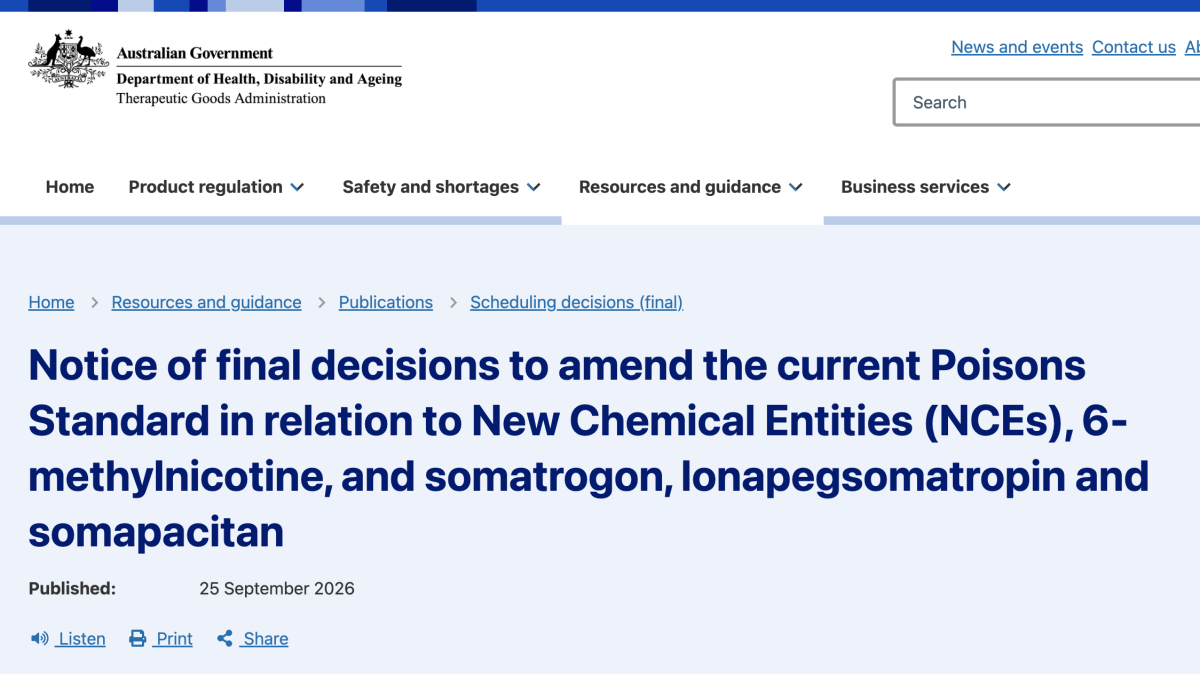
Australia's Therapeutic Goods Administration published a final decision on September 25 to classify 6-methylnicotine as a Schedule 9 prohibited substance under the Poisons Standard, effective October 1, 2026. TGA said the chemical has been reported in e-cigarette liquids sold in Australia and marketed as nicotine-free or nicotine alternatives, while evidence also indicates its use in preparations such as oral pouches. The government originally proposed a Schedule 7 classification but ultimately adopted the stricter Schedule 9 designation, citing acute toxicity, dependence risk, use in unapproved consumer products and misleading marketing.

Key Points

  • Australia will classify 6-methylnicotine as a Schedule 9 prohibited substance from October 1, 2026.
  • The government initially proposed Schedule 7 but moved to Schedule 9 to strengthen controls over unlawful supply and possession.
  • TGA said the substance has appeared in nicotine-free or nicotine-alternative e-cigarette liquids sold in Australia and is also being added to preparations such as oral pouches.
  • An Australian study tested nine nicotine-alternative vape products and found 6-methylnicotine in all nine, with concentrations reaching about 100 mg/mL.

2Firsts

September 29, 2026

Australia's Therapeutic Goods Administration published a final decision on September 25 to classify 6-methylnicotine as a Schedule 9 prohibited substance under the country's Poisons Standard, effective October 1, 2026.

TGA said 6-methylnicotine has been reported in several e-cigarette liquids sold in Australia and advertised as nicotine-free or as nicotine alternatives. The regulator also cited evidence that the substance is being added to preparations such as oral pouches.

Australia Moves From Proposed Schedule 7 to Schedule 9

The Department of Health, Disability and Ageing initially proposed creating a Schedule 7 Dangerous Poison entry for 6-methylnicotine.

Following consideration by the Advisory Committee on Medicines Scheduling, the regulator ultimately confirmed an interim decision to place the substance in the more restrictive Schedule 9 category.

TGA cited acute toxicity, use in unapproved consumer products, misleading “nicotine-free” marketing and the risk of dependence, particularly among vulnerable populations.

The regulator said there are no identified therapeutic benefits for 6-methylnicotine and no lawful products currently available in Australia that would be affected by the decision.

TGA said Schedule 7 would not provide sufficient controls, while Schedule 9 offers a stronger legal framework for action against unlawful supply and possession, including higher penalties under Commonwealth and state or territory drug laws.

Study Found 6-Methylnicotine in All Nine Vape Products Tested

The regulatory decision follows earlier Australian research into products marketed as nicotine alternatives.

A 2024 study published in the Medical Journal of Australia analysed nine e-cigarette products purchased in Australia in November 2023 from three manufacturers. The samples included four concentrated solutions for dilution and five ready-to-use disposable devices or pod cartridges.

Products carried descriptions including “nicotine derivative,” “nicotine alternative agent,” “no-nicotine nicotine solution” and claims of a nicotine-like experience without nicotine.

Laboratory testing found 6-methylnicotine in all nine products.

Two concentrates labelled as equivalent to 100 mg/mL nicotine contained about 31.4 mg/mL and 20 mg/mL of 6-methylnicotine. Of two products labelled as 10% solutions, one contained about 100 mg/mL and the other about 57 mg/mL.

Brand names were not disclosed in the published study.

Routine Nicotine Analysis Did Not Identify the Compound

Researchers said the ingredient in all nine products was not identified by the routine analytical testing they used for nicotine.

They subsequently used nuclear magnetic resonance spectroscopy and high-resolution mass spectrometry to identify and fully characterise it as 6-methylnicotine.

The study cited laboratory evidence indicating that 6-methylnicotine has higher affinity for some nicotinic cholinergic receptors than nicotine and referenced earlier research reporting psychotropic potency around three times that of nicotine.

Researchers also said data on long-term inhalation and human health effects remain limited.

TGA Considered 163 Initial Public Submissions

TGA said it considered 163 public submissions during the pre-meeting consultation, nine of which included a written component.

One further submission was received during consultation on the interim decision and supported the stronger Schedule 9 classification.

The final decision confirmed the interim position and set an implementation date of October 1.

Schedule 9 Decision Targets the Substance Itself

Australia had already tightened separate product-level controls on vaping goods and nicotine pouches before the latest decision.

Non-therapeutic vapes cannot be supplied through ordinary retail channels, while regulated therapeutic vaping goods remain available through pharmacies under applicable requirements.

Australia tightened nicotine pouch regulation again in July 2026. From July 24, consumers can no longer import nicotine pouches under the Personal Importation Scheme or access unapproved pouches through the Special Access Scheme, Authorised Prescriber Scheme or pharmacist compounding pathways. TGA says there is now no lawful pathway for consumers to buy or import nicotine pouches in Australia.

The latest decision does not target a particular vape or pouch brand. It schedules 6-methylnicotine itself as a prohibited substance.

TGA's final notice does not identify specific vape brands, oral pouch brands or manufacturers linked to the substance.

From October 1, unlawful supply and possession of 6-methylnicotine will be subject to the stronger legal controls associated with Schedule 9 under Commonwealth and state or territory drug laws.

Follow 2Firsts for updates on global vape, nicotine pouch and novel nicotine-analogue regulation.

Cover Image: Therapeutic Goods Administration

Reynolds Seeks to Join Altria Lawsuit Challenging FDA PMTA Rule and Calculation of 180-Day Deadline
Three R.J. Reynolds companies are seeking to intervene in a lawsuit filed by Altria subsidiaries Helix Innovations and NJOY challenging the FDA's 2021 PMTA final rule. The companies dispute how the agency uses Acceptance and Filing reviews and completeness determinations to establish when the Tobacco Control Act's 180-day decision period begins. Reynolds has also linked prolonged PMTA reviews to competition from unauthorized vaping products. The FDA, meanwhile, has been accelerating reviews and reducing its backlog.
Sep.14
JTI Proposes 25-Cent Irish Cigarette Tax Increase, Says It Could Raise €45 Million
Japan Tobacco International's Irish business has proposed a €0.25 tax increase on a pack of 20 cigarettes in its pre-Budget 2027 submission, below the €0.50-or-more increases typically imposed in recent Irish budgets. JTI says the proposal could generate around €45 million in additional Exchequer revenue while limiting further movement toward illicit and non-Irish-tax-paid tobacco. Revenue's existing estimate for a comparable €0.25 increase, including pro-rata rises on other tobacco products, is about €18 million for a full year.
JTI
Sep.18 by 2Firsts Perspectives
Ireland’s Vape Tax Raises €22 Million in Nine Months as Government Considers 2027 Budget Changes
According to Irish media outlets Highland Radio and BreakingNews.ie, the Irish government is considering whether to adjust vape tax policy in the 2027 Budget. The tax has generated about €22 million ($24 million) in revenue during its first nine months. While no increase has been confirmed, the revenue performance could influence future fiscal discussions. Any tax rise could increase product costs and potentially affect retail prices.
Aug.12
Switzerland Tightens Vape Checks as Only 3 of 32 Tested Products Meet New Tobacco Rules
According to Swiss media outlet Blick, local authorities are strengthening compliance checks on vape products, nicotine pouches and other tobacco-related products following the implementation of Switzerland’s revised Tobacco Products Act. A Basel laboratory tested 32 disposable vapes and e-liquids, with only three meeting regulatory requirements and 21 products banned from sale. Swiss authorities are also expanding retail inspections, laboratory testing and youth purchase checks to enforce the new tobacco and nicotine product rules.
Aug.12
As FDA Reshapes PMTA Reviews and ENDS Enforcement Priorities, CTP Acting Director Bret Koplow to Keynote NATO Event for a Retail Network of 66,000-Plus Stores
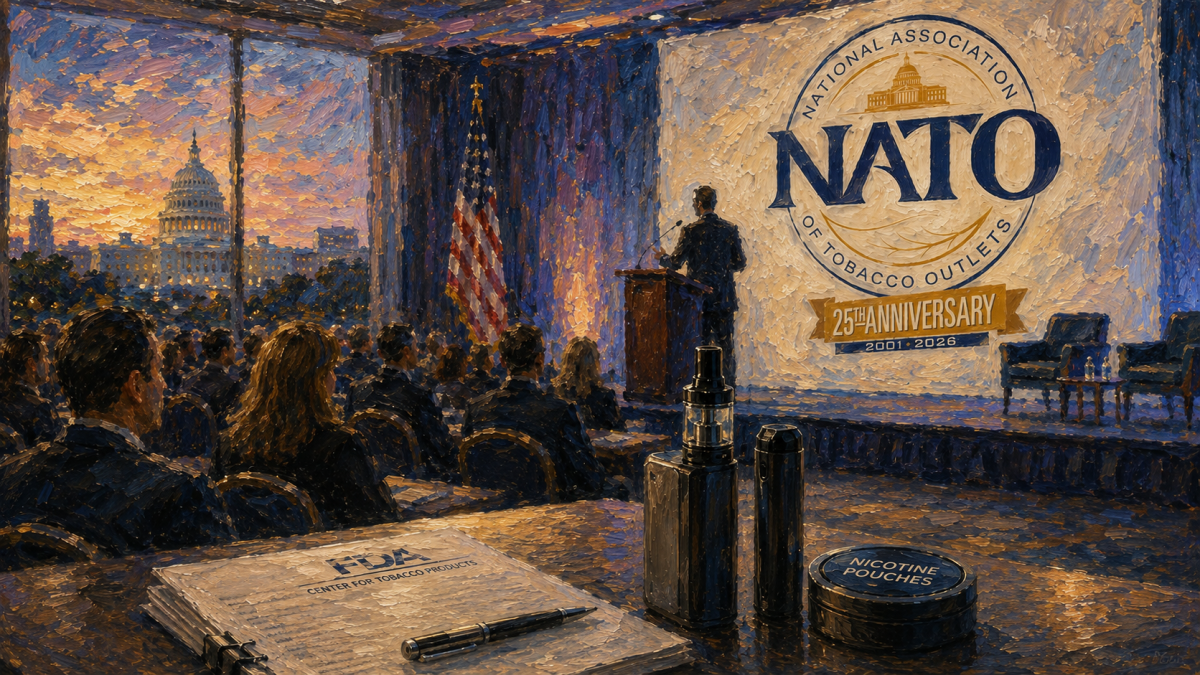
Bret Koplow, acting director of the U.S. Food and Drug Administration's Center for Tobacco Products, will deliver a keynote and participate in a fireside chat at the National Association of Tobacco Outlets' Sept. 29-30 conference in Washington. His appearance comes months after the FDA moved to accelerate PMTA reviews and introduced a more differentiated enforcement policy for certain unauthorized ENDS and oral nicotine pouch products. The agency also plans a public list identifying manufacturers and products it does not currently intend to prioritize for enforcement under the May guidance. NATO says its membership includes more than 66,000 retail stores, making product-status transparency and enforcement boundaries directly relevant to the retail sector.
Aug.14
Major U.S.  Vape Distributor Demand Vape Pays at Least $300,000 for White House Lobbying Amid Enforcement Pressure
Major U.S. Vape Distributor Demand Vape Pays at Least $300,000 for White House Lobbying Amid Enforcement Pressure
New York vape distributor Ecto World, which operates as Demand Vape, hired political consultant Roger Stone to lobby the Executive Office of the President on regulation of vaping and related products while facing state enforcement and multiple lawsuits. Public lobbying disclosures show that Ecto World paid at least $300,000 for the work through June 30, 2026. Separately, New York State announced in March that more than 28,500 pounds of vaping products tied to the company had been seized, while New York City and the state have pursued legal or enforcement actions. Public records do not show that the lobbying directly changed any specific regulatory or enforcement outcome.
Sep.08