Key Points:
- The FDA has issued a formal press release confirming that six on! PLUS nicotine pouch products received Marketing Granted Orders (MGO) through the PMTA pathway.
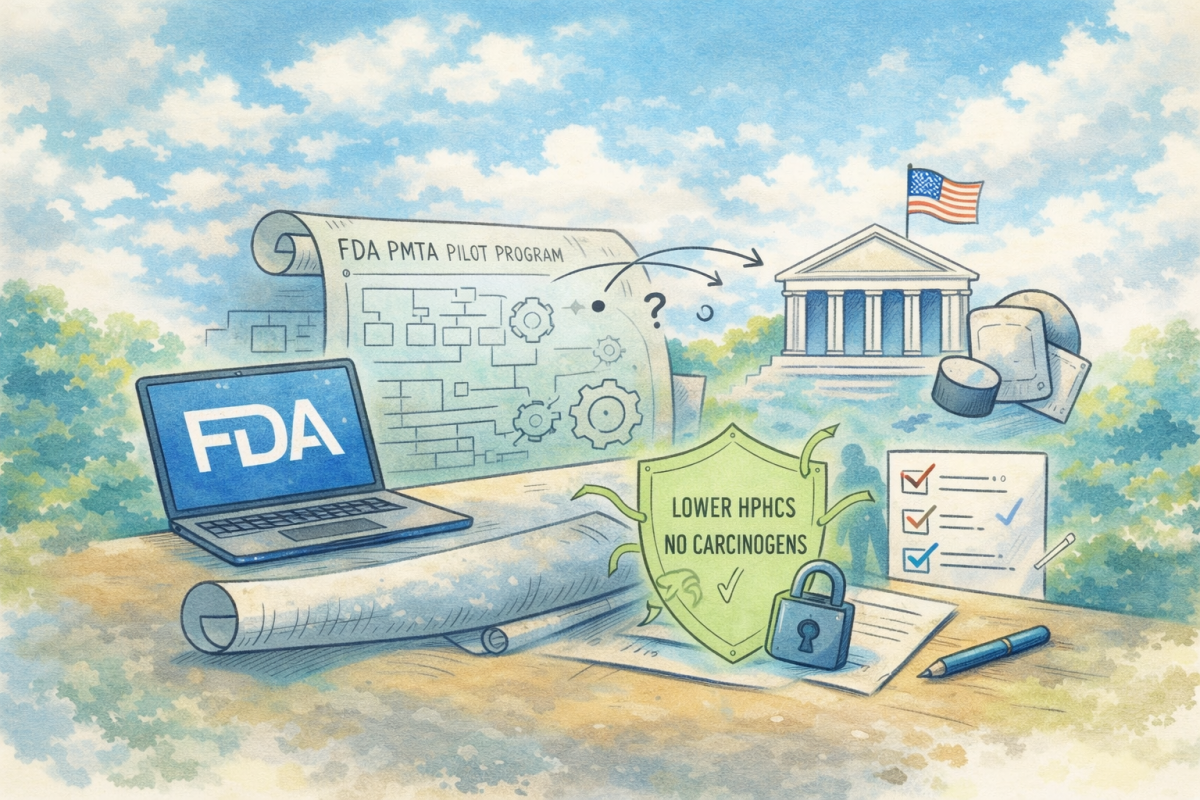
- The authorizations were completed under the FDA’s nicotine pouch PMTA review pilot program, launched in September, and were described by the agency as being finalized in “record time.”
- In its scientific review, the FDA cited lower levels of harmful and potentially harmful constituents (HPHCs) and the absence of measurable levels of several carcinogenic HPHCs linked to excess oral cancer risk.
- The agency concluded that the products’ potential benefits to certain adult users outweigh the risks, including risks to youth, under the statutory public health standard.
- The authorization applies only to the six specified products, and the FDA emphasized that authorization does not mean the products are safe or FDA approved.
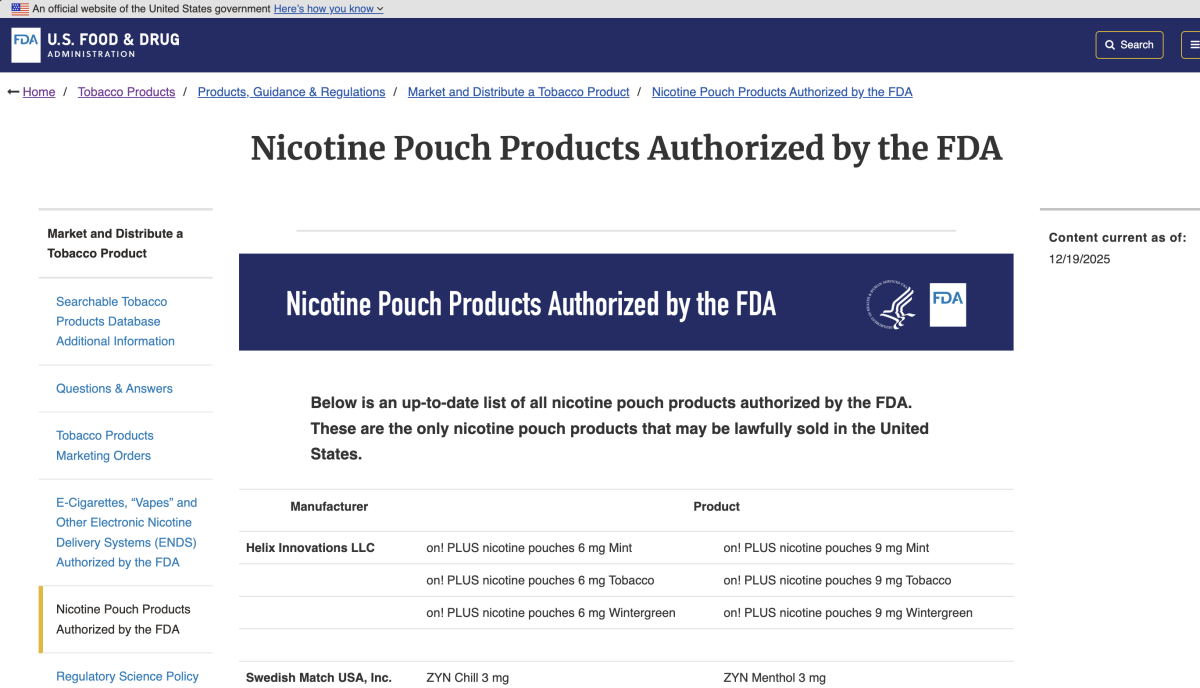
2Firsts,Dec 20 2025,After initially reflecting the authorization through an update to its online list of authorized nicotine pouch products, the FDA subsequently issued a formal press release confirming that six on! PLUS products manufactured by Helix Innovations LLC had received Marketing Granted Orders (MGO) through the Premarket Tobacco Product Application (PMTA) pathway. In the release, the agency stated that the review had been completed in what it described as “record time.”
The U.S. Food and Drug Administration’s decision to authorize six on! PLUS nicotine pouch products is notable not only for the products themselves, but for the manner in which the agency disclosed and explained the decision.
The press release provides a structured account of the regulatory context, scientific considerations, and post-authorization boundaries associated with the decision, offering insight into how the FDA currently frames PMTA outcomes for nicotine pouch products.
Authorization Completed Under a Pilot Review Program
According to the FDA, the on! PLUS authorizations were completed under a nicotine pouch PMTA review pilot program launched by the agency in September. The FDA stated that the purpose of the pilot program is to improve the efficiency of PMTA reviews while maintaining the statutory scientific standards required under federal law.
The agency explained that the pilot program incorporates procedural changes, including real-time communication with applicants, enabling scientific review to be completed more quickly than under traditional PMTA timelines. The FDA identified the on! PLUS products as the first set of nicotine pouch products to be authorized under this pilot framework.
The press release also notes that the pilot program remains ongoing and that the FDA intends to evaluate the effectiveness of the process changes after the pilot concludes.
Statutory Standard Applied in the PMTA Review
In its announcement, the FDA reiterated that the PMTA review for the on! PLUS products was conducted under the statutory standard established by the Family Smoking Prevention and Tobacco Control Act.
Under this standard, the FDA must determine whether the marketing of a new tobacco product is “appropriate for the protection of public health,” based on an assessment of risks and benefits to the population as a whole. The agency emphasized that this population-level evaluation includes consideration of both users and nonusers of tobacco products.
Key Findings in FDA’s Scientific Evaluation
1. Overall lower levels of HPHCs, with several too low to be quantified
- The FDA stated that, compared with other oral and smokeless tobacco products, the on! PLUS products contain lower levels of most harmful and potentially harmful constituents (HPHCs).
- According to the agency, several of these constituents were present at levels too low to be quantified under its testing framework.
- The FDA’s use of qualifiers such as “most” and “too low to be quantified” indicates that its conclusion is based on overall trends and the limits of scientific measurement, rather than absolute determinations for every constituent.
- The press release explicitly defines the comparison baseline as other oral and smokeless tobacco products, reflecting a product-category–specific comparative assessment.
2. No measurable levels of several carcinogenic HPHCs, directly linked to oral cancer risk
- The FDA reported that the on! PLUS products do not contain measurable levels of several carcinogenic HPHCs.
- The agency further specified that these include constituents identified as important drivers of excess oral cancer risk among adult smokeless tobacco users.
- By using the term “drivers,” the FDA directly connects constituent-level findings with a specific disease risk outcome, rather than describing a general association.
- This framing positions oral cancer risk as a central reference point in the agency’s public explanation of its scientific evaluation.
3. Population-level determination that potential benefits outweigh risks
- Based on its review of the scientific evidence, the FDA stated that the products have the potential to provide a benefit to adults who smoke cigarettes and/or use other smokeless tobacco products.
- The agency concluded that this potential benefit is sufficient to outweigh the risks of the products, explicitly noting that the risk assessment includes risks to youth.
- This finding reflects the statutory PMTA standard, which requires the FDA to assess new tobacco products through a population-level risk–benefit framework when determining whether marketing is appropriate for the protection of public health.
4. Child-resistant packaging identified as a risk-mitigation element
- The FDA noted that the primary packaging for the on! PLUS products consists of a certified child-resistant can with a safety lid.
- The press release also references the agency’s prior efforts urging nicotine pouch manufacturers to adopt child-resistant packaging to reduce the risk of accidental nicotine poisoning among young children.
- By including packaging design among the key findings, the FDA treats child-resistant packaging as part of its overall risk-mitigation considerations, rather than as a peripheral compliance detail.
Post-Authorization Oversight and Marketing Controls
While granting Marketing Granted Orders, the FDA emphasized that authorization does not mean the products are safe, nor does it mean that they are “FDA approved.” The agency reiterated that there is no safe tobacco product and that youth and nonusers should not use tobacco products.
The press release states that the FDA will closely monitor the marketing and use of the authorized on! PLUS products. As part of the authorization, the company is subject to marketing restrictions intended to reduce youth exposure, including limitations on digital, television, and radio advertising.
In addition, the FDA indicated that the company will be required to track and report on the effectiveness of its youth prevention measures and to provide demographic information regarding the audiences reached by its advertising and marketing activities.
Scope of Authorization and Market Context
The FDA made clear that the authorization applies only to the six on! PLUS products identified in the decision and does not extend to other nicotine pouch products produced by Helix Innovations LLC or to any unlisted products.
The agency also noted that, with this action, the total number of nicotine pouch products authorized by the FDA now stands at 26. The FDA directed readers to its publicly available list of authorized tobacco products for further reference.
Read More:
Exclusive: Altria Confirms FDA Grants Marketing Authorization to on! PLUS, Ending More Than a Year of PMTA Review
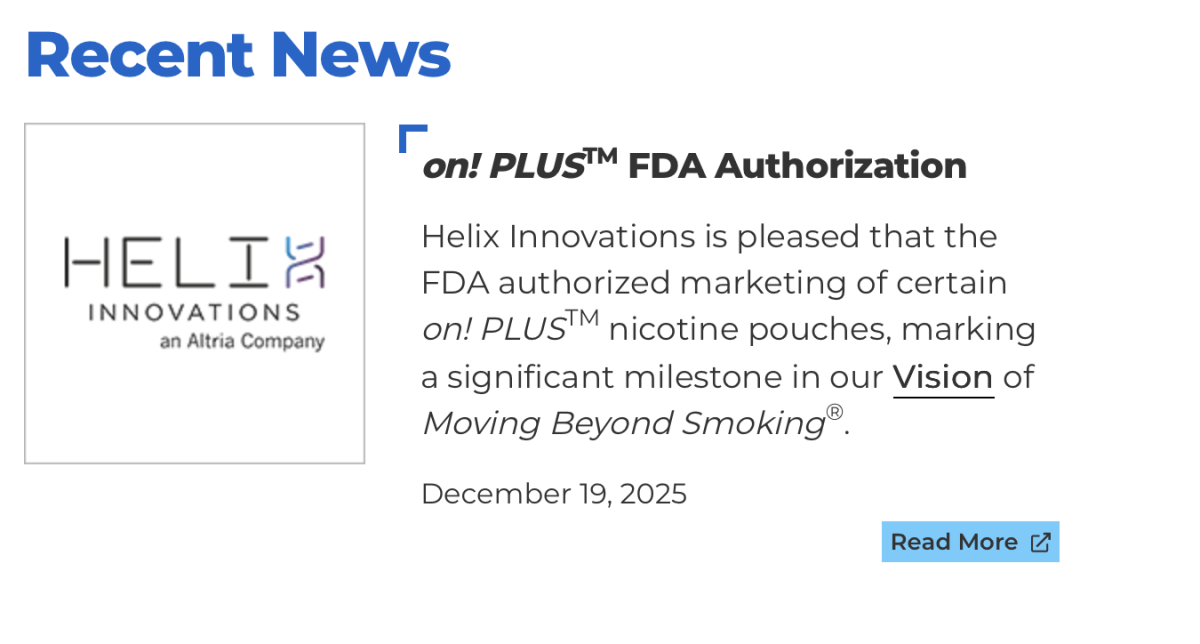
Breaking News | FDA Adds on! Plus Nicotine Pouches to PMTA-Authorized List
Disclaimer
This article is provided solely for professional research, industry discussion, and informational purposes. Any references to brands, companies, products, technologies, or policies are made for factual reporting and analytical purposes only, and do not constitute endorsement, recommendation, promotion, or advertising by 2Firsts.
Nicotine-containing products, including but not limited to cigarettes, e-cigarettes, heated tobacco products, and nicotine pouches, carry significant health risks. Readers are responsible for complying with all applicable laws and regulations in their respective jurisdictions, including age restrictions and access limitations.
The information contained in this article should not be regarded as investment, legal, medical, regulatory, or commercial advice. While 2Firsts strives to ensure the accuracy and reliability of its content, it does not assume liability for any direct or indirect loss arising from errors, omissions, inaccuracies, or reliance on the information contained herein.
This article is not intended for individuals below the legal age for accessing tobacco or nicotine-related information in their jurisdiction.
Copyright Notice
This article is either original content produced by 2Firsts or content reproduced, translated, summarized, or adapted from third-party sources with attribution where applicable. The intellectual property rights of the original content remain with 2Firsts or the respective original rights holders.
No individual or organization may copy, reproduce, distribute, republish, modify, translate, or otherwise use this content without prior authorization. Any unauthorized use may result in legal action.
For copyright-related inquiries, corrections, or removal requests, please contact: info@2firsts.com.
AI-Assisted Translation and Editing Notice
Portions of this article may have been translated, edited, or reviewed with the assistance of artificial intelligence tools to improve efficiency and readability. Due to the limitations of AI-assisted translation and editing, discrepancies, omissions, or inaccuracies may exist when compared with the original source.
Where applicable, readers are advised to refer to the original source for the most complete and accurate information. If you identify any errors or believe that any content infringes upon your rights, please contact us at info@2firsts.com, and we will review and address the matter promptly.