Kumulus Vape2026 H1 Revenue Falls 8.3% but Profit Rises 24% as B2B Weakens and Consumer Channels Grow

Market
Sep.17
Kumulus Vape2026 H1 Revenue Falls 8.3% but Profit Rises 24% as B2B Weakens and Consumer Channels Grow
French vaping company Kumulus Vape reported first-half 2026 revenue of €25.5 million, down 8.3% year over year, as its core B2B distribution business fell 11% to €21.6 million. B2C and store-network revenue rose 5.6% and 17.8%, respectively. Commercial margin increased to 26.3% from 21.7%, while net profit rose 24.1% to €0.8 million. The company attributed the profitability improvement to catalog optimization, logistics restructuring and the ramp-up of Labster, its in-house production unit for proprietary brands.

Key Points

  •  H1 2026 revenue fell 8.3% to €25.5 million, with B2B distribution revenue down 11% to €21.6 million.
  •  B2C revenue rose 5.6% to €2.4 million, while store-network revenue increased 17.8% to €1.5 million.
  •  Commercial margin rose to 26.3% from 21.7%; gross operating surplus, or EBE, increased 29.4% to €1.9 million and net profit rose 24.1% to €0.8 million.
  •  Kumulus Vape attributed the profitability improvement to catalog optimization, logistics restructuring and the ramp-up of Labster, and plans to continue expanding production and the Cigaverte franchise network in the second half.

2Firsts

September 17, 2026

According to Kumulus Vape’s half-year results released on September 16, 2026, the French vaping company reported consolidated revenue of €25.5 million for the first half of the year, down 8.3% year over year. Revenue from its core B2B distribution business declined 11%, while B2C and store-network sales continued to grow. Commercial margin increased to 26.3% from 21.7%, and net profit rose 24.1% to €0.8 million.

B2B Declines as B2C and Store Network Grow

Kumulus Vape’s B2B distribution revenue fell 11% to €21.6 million in the first half, accounting for about 85% of group revenue.

The company cited weaker consumer spending choices and increased price competition in the market as factors weighing on its distribution business.

Consumer-facing channels moved in the opposite direction. B2C revenue reached €2.4 million, up 5.6%, while revenue from the store network increased 17.8% to €1.5 million.

B2B remains Kumulus Vape’s dominant revenue source, meaning growth in direct consumer channels was not sufficient to offset the decline in distribution revenue.

Commercial Margin Expands by 4.6 Percentage Points

Commercial gross profit reached €6.7 million in the first half, up 11.3%, representing 26.3% of revenue compared with 21.7% a year earlier.

Operating profitability also improved. Gross operating surplus, or EBE under the company’s French reporting terminology, rose 29.4% to €1.9 million. Net profit increased 24.1% to €0.8 million from about €0.6 million a year earlier.

Kumulus Vape therefore posted higher gross profit and net income despite an 8.3% decline in revenue.

The company attributed the improvement to continued catalog rationalization, logistics restructuring and the ramp-up of Labster, its in-house production unit dedicated to proprietary brands.

Labster Brings More Proprietary Production In-House

Labster began operations in January 2026 as part of Kumulus Vape’s move to bring selected proprietary-brand production in-house.

Located in the Lyon metropolitan area next to the group’s warehouses, the roughly 800-square-meter facility is equipped with automated production lines for bottling and packaging e-liquids in multiple formats and has capacity for several million units a year.

Kumulus Vape said Labster gives it greater control over production, time to market and margins for selected proprietary ranges while maintaining relationships with outside brands and suppliers.

The group currently lists 13 in-house brands, with Labster supporting proprietary ranges including Cigaverte.

In its half-year results, Kumulus Vape specifically cited Labster’s ramp-up as one of the factors behind the improvement in profitability.

Cash Rises to €6.3 Million as Debt Falls

At the end of June, Kumulus Vape reported shareholders’ equity of €17.1 million, available cash of €6.3 million and gross financial debt of €3 million.

At the end of 2025, the company had reported €5.2 million in cash and €3.5 million in financial debt.

Kumulus Vape had already been pursuing cost controls, inventory management and logistics optimization during 2025. The first-half results show those operating measures coinciding with higher margins as internal production expands.

Labster and Cigaverte Remain H2 Priorities

For the second half of 2026, Kumulus Vape said it plans to bring Labster toward full operating capacity, consolidate industrial partnerships and continue expanding the Cigaverte franchise network.

Acquired by Kumulus Vape in 2023, Cigaverte has grown to more than 60 branded stores. The group now operates across professional B2B distribution, e-commerce, physical retail and proprietary-brand production.

Kumulus Vape has not provided a specific full-year 2026 revenue or profit target.

The first-half results show continued pressure on the group’s largest B2B business alongside growth in B2C and stores, while internal production and operating changes have coincided with higher margins and profit. Labster utilization and further Cigaverte expansion will be key operating developments to watch in the second half.

Follow 2Firsts for timely updates on global tobacco and nicotine industry developments, corporate strategy and market trends.

Cover Image: Kumulus Vape

 

Special Report|AIR H1 Revenue Rises 3.7% as Shisha Volumes Fall 9%, Testing Its Shift Beyond Traditional Hookah
AIR’s first half-year results as a listed company offer a new test of how far a traditional hookah business can transform. H1 2026 revenue rose 3.7%, even as Flavored Shisha Molasses shipments fell 9%, with pricing and mix supporting growth. Traditional shisha still generates almost all revenue, while OOKA, Crown Switch, Greentank and U.S. regulatory spending point to accelerating diversification. The next test is whether those investments can become a second business of meaningful scale and profitability.
Capital Markets
Aug.21
2Firsts On-Site | PMI Brings IQOS, ZYN, VEEV and Marlboro Together at Its “Boulevard” at InterTabac 2026
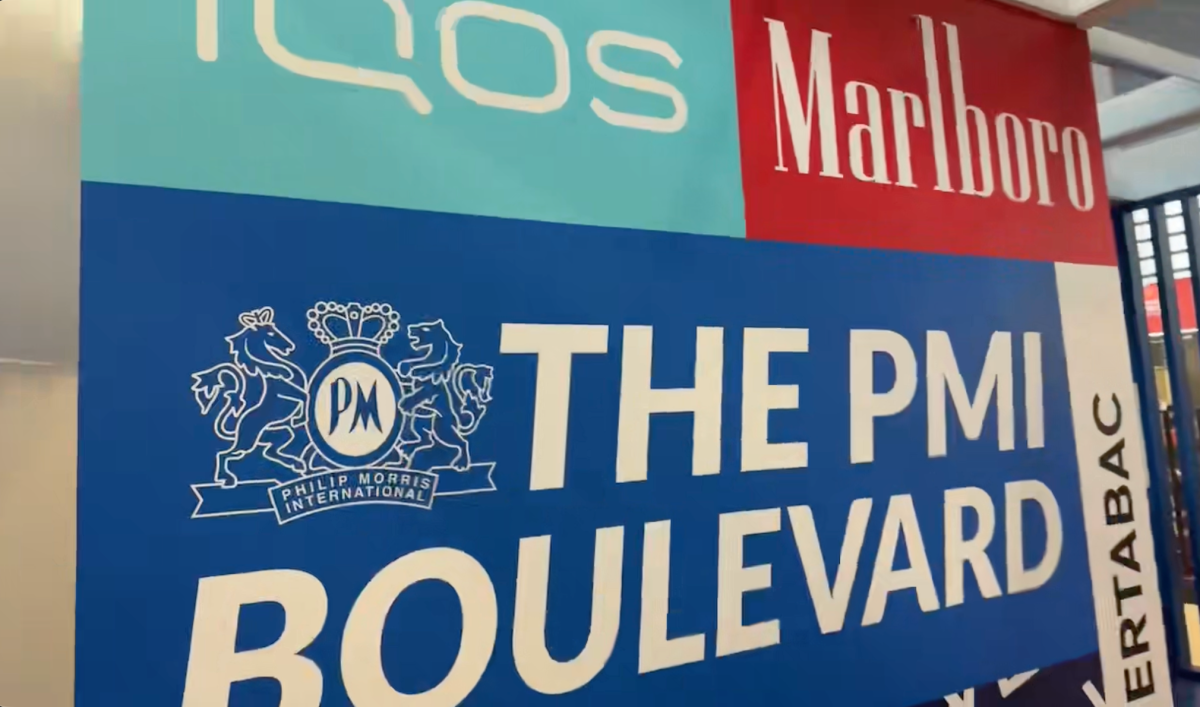
At InterTabac 2026 in Dortmund, PMI is presenting multiple brands and products along “The PMI Boulevard,” including IQOS, ZYN, VEEV and Marlboro. On-site images captured by 2Firsts show dedicated spaces including the IQOS Boutique, ZYN Café, PMI Gallery and Marlboro Office
Market
Sep.16 by 2Firsts Perspectives
2Firsts Hosts U.S. Market Mid-Year Briefing: Companies Need to Reassess Product and Market-Access Strategies
2Firsts held its 2026 U.S. Market Compliance and Development Mid-Year Briefing in Shenzhen, China, on July 28. The discussion examined how state-level requirements, proposed foreign-establishment registration rules and expanding supply-chain responsibilities are changing product and investment decisions in the U.S. tobacco and nicotine market.
Jul.29
French Anti-Tobacco Group Questions PMI’s IQOS “Curiosity” Campaign Over Potential Youth Appeal
According to French anti-tobacco group Générations Sans Tabac, Philip Morris International’s (PMI) IQOS “Curiosity” campaign has drawn attention from public health advocates. The group argues that the campaign uses themes including curiosity, exploration and lifestyle branding that could increase interest among younger audiences. PMI has positioned IQOS as a key part of its smoke-free product strategy, while France maintains strict restrictions on tobacco and nicotine product marketing. The debate highlights ongoing tensions between heated tobacco branding strategies and public health concerns in Europe.
Jul.24
Nasdaq-Listed Vape Company iSpire Technology Restructures Leadership as Tuanfang Liu Becomes Sole CEO, BTIG Initiates Coverage on ODM Growth Opportunity
Nasdaq-listed vape company iSpire Technology has restructured its leadership team, with Tuanfang Liu becoming the company’s sole chief executive officer (CEO) and Michael Wang appointed CEO of Aspire North America. The move ends iSpire’s previous co-CEO structure and creates clearer responsibilities between group strategy and regional execution. Separately, BTIG initiated coverage on iSpire Technology with a Buy rating and a $3.50 price target, identifying ODM growth opportunities as a key investment factor.
Jul.27
Imperial Brands Plans Thousands of Job Cuts Across U.S. and Europe in Cost Restructuring
According to Reuters, citing Bloomberg News, British tobacco company Imperial Brands PLC plans to cut thousands of jobs across the United States and Europe as part of a cost reduction and organizational restructuring effort. The announcement drew market attention to the company’s shares. The move comes as global tobacco companies continue adjusting their operations amid slower cigarette market growth, changing consumer preferences and the transition toward next-generation nicotine products.
Aug.11