New Zealand Introduces New Tobacco Laws for Smokes

Sep.23.2022
New Zealand Introduces New Tobacco Laws for Smokes
New Zealand introduces tobacco law to achieve smoke-free generation by increasing legal purchasing age and reducing nicotine content by 2023.

The New Zealand government recently introduced a new tobacco law, which is expected to take effect in 2023.


In order to achieve the goal of becoming a "smoke-free generation," New Zealand has introduced new tobacco laws aimed at steadily increasing the legal age for purchasing tobacco products. These measures include raising the minimum age limit for purchasing tobacco products and reducing the nicotine content in cigarettes. The new tobacco laws apply only to traditional cigarette products and do not include regulations for e-cigarettes.


This article has excerpted or reprinted information from third-party sources. The copyright belongs to the original media and the author. If there is any infringement, please contact us to delete it. Any individual or organization that needs to reprint should contact the author and should not reprint directly without permission.


Disclaimer

This article is provided solely for professional research, industry discussion, and informational purposes. Any references to brands, companies, products, technologies, or policies are made for factual reporting and analytical purposes only, and do not constitute endorsement, recommendation, promotion, or advertising by 2Firsts.

Nicotine-containing products, including but not limited to cigarettes, e-cigarettes, heated tobacco products, and nicotine pouches, carry significant health risks. Readers are responsible for complying with all applicable laws and regulations in their respective jurisdictions, including age restrictions and access limitations.

The information contained in this article should not be regarded as investment, legal, medical, regulatory, or commercial advice. While 2Firsts strives to ensure the accuracy and reliability of its content, it does not assume liability for any direct or indirect loss arising from errors, omissions, inaccuracies, or reliance on the information contained herein.

This article is not intended for individuals below the legal age for accessing tobacco or nicotine-related information in their jurisdiction.


Copyright Notice

This article is either original content produced by 2Firsts or content reproduced, translated, summarized, or adapted from third-party sources with attribution where applicable. The intellectual property rights of the original content remain with 2Firsts or the respective original rights holders.

No individual or organization may copy, reproduce, distribute, republish, modify, translate, or otherwise use this content without prior authorization. Any unauthorized use may result in legal action.

For copyright-related inquiries, corrections, or removal requests, please contact: info@2firsts.com.


AI-Assisted Translation and Editing Notice

Portions of this article may have been translated, edited, or reviewed with the assistance of artificial intelligence tools to improve efficiency and readability. Due to the limitations of AI-assisted translation and editing, discrepancies, omissions, or inaccuracies may exist when compared with the original source.

Where applicable, readers are advised to refer to the original source for the most complete and accurate information. If you identify any errors or believe that any content infringes upon your rights, please contact us at info@2firsts.com, and we will review and address the matter promptly.


Smoore Seeks to Toss CCELL Price-Fixing Claim as Court Weighs Vertical Distribution Versus Horizontal Conspiracy
Smoore and four authorized U.S. CCELL distributors are asking a California federal court to permanently dismiss a core antitrust claim brought by direct purchasers. Plaintiffs allege that Smoore coordinated minimum wholesale prices, customer allocation and limits on price competition among distributors, amounting to a per se unlawful horizontal conspiracy. The defendants say the alleged conduct reflects ordinary vertical relationships between a manufacturer and its distributors. The court previously dismissed a similar claim, and the latest dispute centers on whether the second amended complaint adds sufficient facts to establish a horizontal agreement.
Sep.14
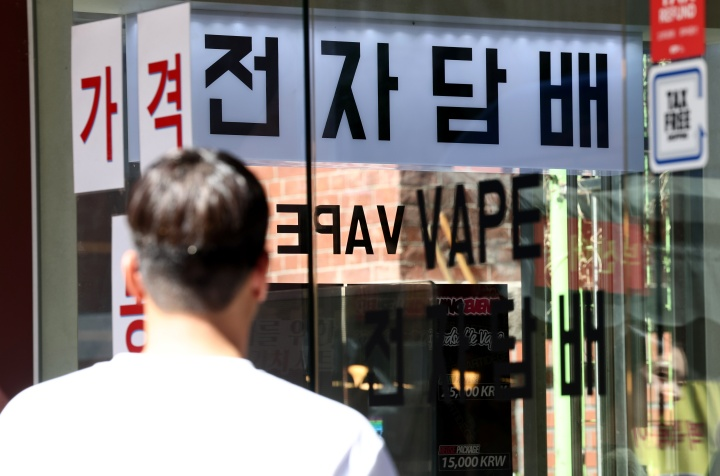
South Korea Extends Vape Rules to Unmanned Stores After Bringing Synthetic Nicotine Under Tobacco Law
South Korea's Ministry of Gender Equality and Family said on September 14 that it plans to designate unmanned e-cigarette stores as businesses where minors are prohibited from entering or working. Operators would be required to verify customers' ages and display notices restricting access by minors. The proposal is open for public comment through October 6. The move follows an April expansion of South Korea's statutory tobacco definition that brought products made with natural or synthetic nicotine under the Tobacco Business Act. Nicotine-free liquids and products using nicotine analogues such as 6-methylnicotine, however, remain an emerging regulatory issue.
Sep.21
Special Report | Altria Subsidiaries Sue FDA to Vacate 2021 PMTA Rule as Agency Moves to Speed Reviews
2Firsts reviewed the original federal court complaint filed by Altria subsidiaries Helix Innovations and NJOY on Sept. 2 challenging FDA’s 2021 PMTA rule. The lawsuit questions whether FDA’s review process complies with the Tobacco Control Act’s 180-day timeline, even as the agency moves to accelerate PMTA reviews and issues more marketing orders. Drawing on the complaint, FDA records, government audits and recent court rulings, 2Firsts examines the legal arguments, supporting evidence and potential implications for the U.S. tobacco review system.
Regulations
Sep.03
JTI Makes Third Bet on South Korea as Ploom AURA Enters a Market Dominated by lil and IQOS
Japan Tobacco International is stepping up its heated tobacco push in South Korea with Ploom AURA. Since its official launch in April 2026, the device's limited First Edition and Glacier White version have sold out, while distribution has expanded across Seoul, Incheon, Gyeonggi Province and airport duty-free channels. The rollout marks JTI's third major attempt to build a stronger heated tobacco position in South Korea, following Ploom TECH in 2019 and Ploom X Advanced in 2024. At the group level, JT plans to invest about ¥800 billion, approximately $5 billion, in reduced-risk products from 2026 through 2028, with heated products and Ploom identified as its primary investment priority.
Aug.14
Special Report | How Capital Is Reassessing the Global Tobacco and Modern Nicotine Industry: Lessons from a New York Forum
Capital is reassessing the global tobacco and modern nicotine industry as heated tobacco, vaping and nicotine pouches reshape demand, profitability and regulation. At the 2026 New Approaches Summit in New York, investors and analysts examined whether smoke-free growth can sustain earnings, how regulation shapes startup value, and whether shareholder engagement can be more effective than divestment. The debate points to a broader shift: tobacco transition is increasingly becoming a capital-allocation, governance and valuation question.
Capital Markets
Oct.05
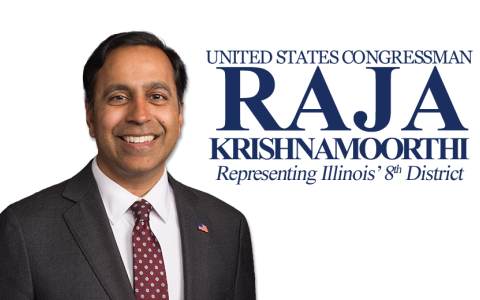
U.S. Rep. Krishnamoorthi Questions FDA Over Planned PMTA Rewrite, Seeks Communications With Altria and Reynolds
U.S. Rep. Raja Krishnamoorthi on Oct. 6 questioned the FDA over its plan to reassess and potentially replace the 2021 PMTA regulatory framework, asking the agency to identify provisions it may change or eliminate, state whether current scientific evidentiary standards will be maintained, and disclose communications with Altria, Reynolds and other parties challenging the rule. Krishnamoorthi led a congressional investigation into JUUL and youth vaping in 2019 and has since remained active on e-cigarette regulation and enforcement.
Regulations
Oct.08