Proposed Changes to Tobacco and CBD Sales in Kaukauna, Wisconsin

Dec.08.2022
Proposed Changes to Tobacco and CBD Sales in Kaukauna, Wisconsin
Wisconsin's city of Waupaca proposes raising age limit for tobacco and CBD sales to 21 and restricting sales near certain facilities.

The city of Kaukauna, located in Wisconsin, is considering raising the age limit for the sale of tobacco or CBD products from 18 to 21. Mayor Tony Penterman explained the reasoning behind this proposed change.


The regulation will also prohibit the sale of tobacco or CBD products within a 750-foot radius of facilities such as hospitals, churches, youth service organizations, city parks, and school daycares. Ponteman expects the ordinance to be approved at tonight's (Tuesday) joint council meeting.


2FIRSTS will continue to provide ongoing coverage of this issue, with updates available on the 2FIRSTS app. Please scan the QR code below to download the app.


Disclaimer

This article is provided solely for professional research, industry discussion, and informational purposes. Any references to brands, companies, products, technologies, or policies are made for factual reporting and analytical purposes only, and do not constitute endorsement, recommendation, promotion, or advertising by 2Firsts.

Nicotine-containing products, including but not limited to cigarettes, e-cigarettes, heated tobacco products, and nicotine pouches, carry significant health risks. Readers are responsible for complying with all applicable laws and regulations in their respective jurisdictions, including age restrictions and access limitations.

The information contained in this article should not be regarded as investment, legal, medical, regulatory, or commercial advice. While 2Firsts strives to ensure the accuracy and reliability of its content, it does not assume liability for any direct or indirect loss arising from errors, omissions, inaccuracies, or reliance on the information contained herein.

This article is not intended for individuals below the legal age for accessing tobacco or nicotine-related information in their jurisdiction.


Copyright Notice

This article is either original content produced by 2Firsts or content reproduced, translated, summarized, or adapted from third-party sources with attribution where applicable. The intellectual property rights of the original content remain with 2Firsts or the respective original rights holders.

No individual or organization may copy, reproduce, distribute, republish, modify, translate, or otherwise use this content without prior authorization. Any unauthorized use may result in legal action.

For copyright-related inquiries, corrections, or removal requests, please contact: info@2firsts.com.


AI-Assisted Translation and Editing Notice

Portions of this article may have been translated, edited, or reviewed with the assistance of artificial intelligence tools to improve efficiency and readability. Due to the limitations of AI-assisted translation and editing, discrepancies, omissions, or inaccuracies may exist when compared with the original source.

Where applicable, readers are advised to refer to the original source for the most complete and accurate information. If you identify any errors or believe that any content infringes upon your rights, please contact us at info@2firsts.com, and we will review and address the matter promptly.


Altria’s USSTC Starts $250 Million Kentucky Expansion, Adding More Than 200 Jobs
U.S. Smokeless Tobacco Company, an Altria Group company, has broken ground on an approximately $250 million manufacturing expansion in Hopkinsville, Kentucky. The roughly 270,000-square-foot facility is expected to create more than 200 jobs and absorb processing, manufacturing and packaging operations currently split between Hopkinsville and Nashville, Tennessee. USSTC previously said production at its Nashville facility is expected to wind down by early 2028. The project forms part of Altria’s broader effort to modernize and consolidate its U.S. smokeless tobacco manufacturing network.
Sep.10
UK HMRC Plans 30,000 Retail Enforcement Actions as Illegal Tobacco and Vape Sellers Face Tougher Crackdown
The UK government has announced that HM Revenue & Customs (HMRC) will carry out more than 30,000 interventions targeting businesses and retail premises during the 2026-2027 financial year. The actions will focus on tax fraud, illegal goods sales and businesses involved in unlawful activities through retail channels. The government said illegal tobacco and illegal vape sales remain areas of concern. The move shows that UK enforcement against illegal nicotine products is expanding from import and supply channels toward retail-level oversight, alongside the upcoming introduction of the Vaping Products Duty.
Jul.24
Japan’s Heated Tobacco Tax Changes Reshape Consumer Choices, Survey Reveals Impact of Price and Income
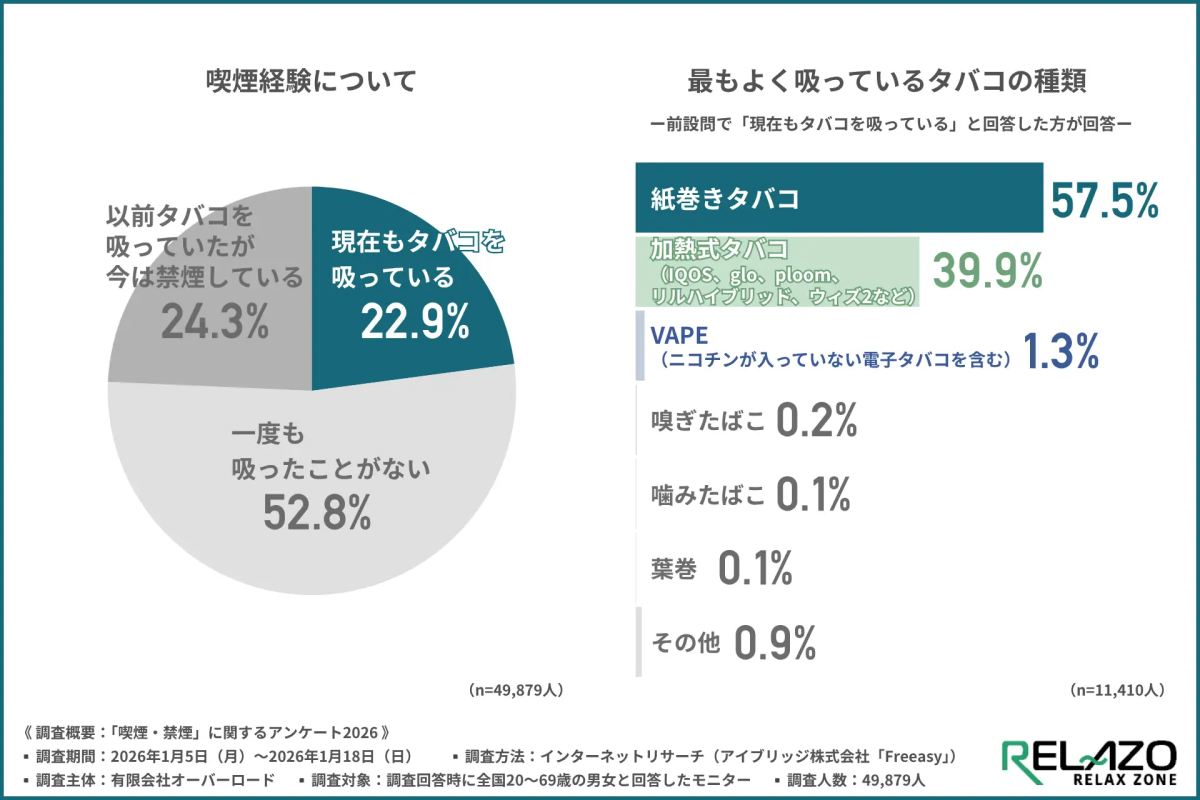
A consumer survey by Japanese heated tobacco information platform RELAZO found that rising tobacco prices and planned heated tobacco tax changes may influence smoking decisions among Japanese consumers. The survey covered 49,879 men and women aged 20 to 69 nationwide. It found that around 40% of respondents cumulatively indicated they may consider quitting when a pack reaches ¥600 (approximately US$4.1), while nearly 90% expressed potential quitting intentions at a ¥1,000 (approximately US$6.8) price level. The survey also found significant differences by income level, with lower-income respondents showing greater sensitivity to price increases.
Jul.24
Russia Adds Vapes to “Strategic Goods” List, Illegal Cross-Border Trade Faces Up to Five Years in Prison
Russia will place e-cigarettes and related nicotine products under its “strategic goods” framework from August 20, 2026. According to TVP World’s report published on August 19, the newly listed items include e-cigarettes, electronic smoking devices, vape liquids and nicotine salts. Individuals who illegally move these products across Russia’s customs border or its state border with other Eurasian Economic Union (EAEU) members could face up to five years in prison if shipment values exceed 100,000 rubles (about €1,000), provided all elements of a criminal offence are established.
Aug.20
Major U.S.  Vape Distributor Demand Vape Pays at Least $300,000 for White House Lobbying Amid Enforcement Pressure
Major U.S. Vape Distributor Demand Vape Pays at Least $300,000 for White House Lobbying Amid Enforcement Pressure
New York vape distributor Ecto World, which operates as Demand Vape, hired political consultant Roger Stone to lobby the Executive Office of the President on regulation of vaping and related products while facing state enforcement and multiple lawsuits. Public lobbying disclosures show that Ecto World paid at least $300,000 for the work through June 30, 2026. Separately, New York State announced in March that more than 28,500 pounds of vaping products tied to the company had been seized, while New York City and the state have pursued legal or enforcement actions. Public records do not show that the lobbying directly changed any specific regulatory or enforcement outcome.
Sep.08
PMI Expands U.S. ZYN Portfolio With New 1.5 mg and 8 mg Strengths, Moves Toward a Unified 20-Pouch-Per-Can Format
Philip Morris International is expanding its U.S. ZYN nicotine pouch portfolio with new 1.5 mg and 8 mg strengths and plans to move its core 3 mg and 6 mg dry-pouch products from 15 to 20 pouches per can in the fourth quarter of 2026. ZYN ULTRA is also commercially available, with FDA authorization covering 10 products at 9 mg and one 11 mg Smooth product. PMI U.S. lists the new 1.5 mg and 8 mg strengths as commercially available, but as of September 10 they do not appear on the FDA’s public authorization list. Public materials do not identify which PMTA submissions cover the two new strengths or their current review status.
Sep.11