Key Points
- Sesh has recently emphasized independence, 8VC backing, celebrity investors and retail expansion.
- New York Post reported that DJ Khaled joined Sesh as an investor and promoter.
- Sesh’s more than $40 million financing was announced in September 2025 and is not a new funding round.
- The San Francisco Examiner item was labeled Marketplace Contributor Content and said the newsroom was not involved.
2Firsts
July 7, 2026
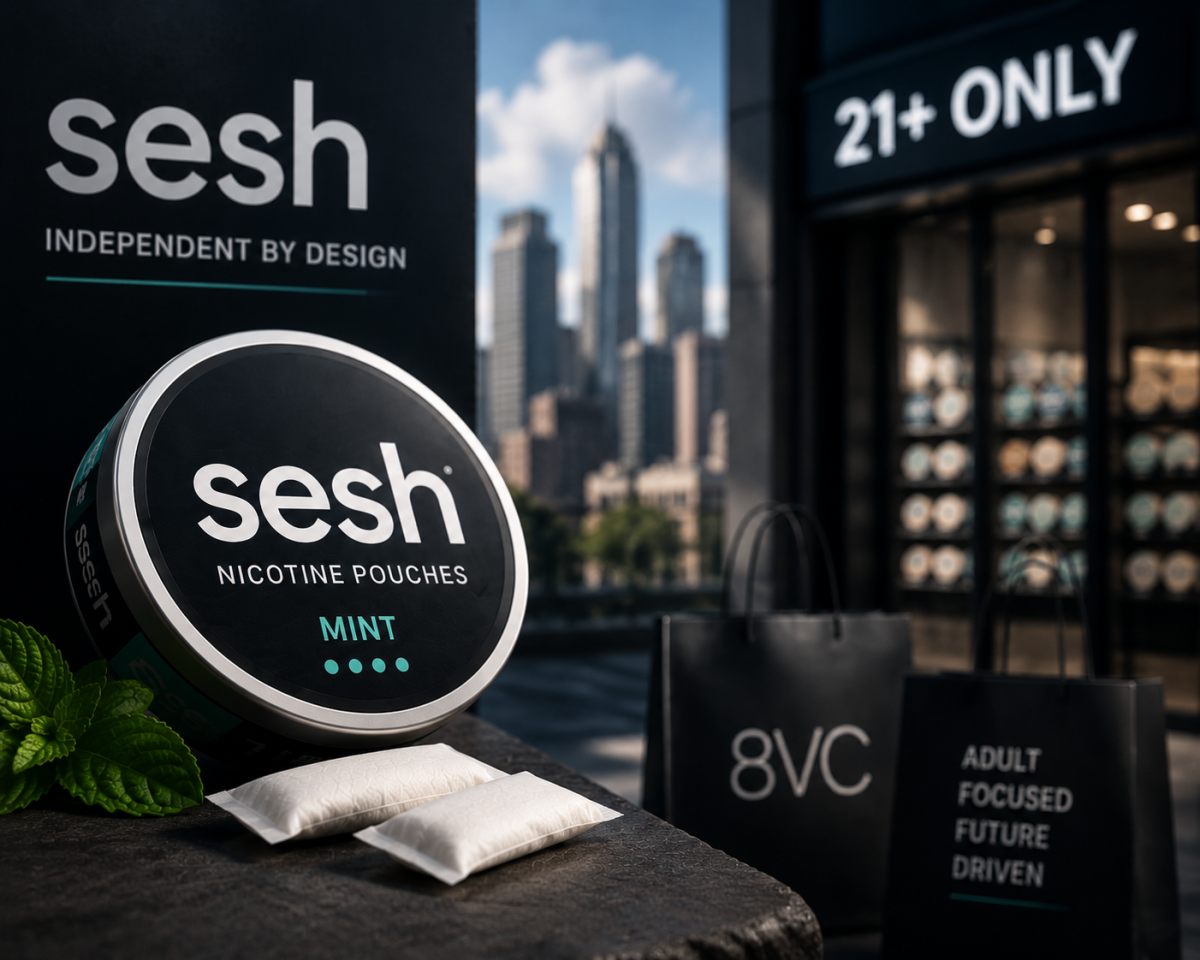
U.S. nicotine pouch brand Sesh has recently emphasized its independence from major tobacco companies, along with backing from investors including 8VC, celebrity supporters and a retail footprint of more than 7,500 stores. The messaging shows how the company is seeking to differentiate itself in a U.S. nicotine pouch market where tobacco-owned brands including ZYN have built strong recognition.
Sesh Emphasizes Independence and Investor Backing
Sesh says it is aimed at adult consumers aged 21 and older and is not owned by Altria, Philip Morris International or British American Tobacco. That message has become one of the central themes in its recent public positioning.
New York Post reported on July 1 that DJ Khaled had joined Sesh as an investor and promoter, placing the brand within a commercial narrative of competing with ZYN. The report also cited investors and supporters including Post Malone, Diplo, Ashton Kutcher and 8VC.
A San Francisco Examiner Marketplace Contributor article highlighted Sesh’s 8VC backing and positioned the company as an independent nicotine pouch brand. The article said Sesh is headquartered in Austin, with products designed in Sweden and manufactured in the United States, while noting that the content was not produced by the Examiner newsroom.
Financing Was Previously Announced
The “more than $40 million” financing figure repeated in recent Sesh-related content is not a new funding event. In a September 2025 announcement, Sesh said it had raised more than $40 million in total funding, with the round led by 8VC and Jack Link’s CEO Troy Link and participation from investors including Post Malone, Diplo and Zac Brown.
Tobacco Reporter also reported at the time that Sesh, an Austin-based tobacco-free nicotine pouch maker, raised the funds to scale its U.S. business, with backing from 8VC, Troy Link, Electric Feel Ventures and strategic investors spanning entertainment, retail and manufacturing.
Recent public content is therefore more accurately described as reusing and amplifying Sesh’s earlier financing background rather than disclosing a new round.
Messaging Points to Brand Differentiation
Several recent pieces around Sesh have repeated a similar set of messages, including its independence from Big Tobacco, 8VC backing, celebrity investors, more than 7,500 retail doors and adult-consumer positioning. Such messaging may help the company strengthen its independent brand profile among adult consumers, retailers and investors. However, Sesh has not announced a new funding round or disclosed sales or market-share figures, and whether the brand push translates into growth will depend on retail stability, repeat purchases by adult consumers and regulatory compliance.
Date | Media | Messaging Focus | Key Messages Highlighted |
July 1, 2026 | Celebrity investment and market positioning | Reported DJ Khaled’s involvement as an investor and promoter, positioning Sesh within the competitive landscape against ZYN | |
July 3, 2026 | Brand growth strategy | Highlighted Sesh’s community-driven approach, product trials and retail conversion strategy rather than traditional advertising | |
July 3, 2026 | Retail expansion | Focused on Sesh’s reported 7,500+ retail doors and its expansion strategy supported by capital investment | |
July 2026 | Independent brand positioning | Emphasized Sesh’s “designed in Sweden, made in America” positioning and its differentiation from tobacco-owned brands | |
July 2026 | Venture capital and startup narrative | Framed Sesh through its 8VC backing and presented the company as a venture-backed consumer brand entering the nicotine pouch market |
Tobacco-Owned Brands Shape the Market Context
Sesh’s independence narrative sits within a U.S. nicotine pouch market where several major brands are owned by large tobacco companies. ZYN is made by Swedish Match, which Philip Morris International acquired in 2022. On! is owned by Altria through Helix Innovations, while Velo is a BAT modern oral nicotine brand.
Against this backdrop, Sesh’s “not Big Tobacco-owned” positioning helps distinguish the brand from ZYN, On! and Velo in public messaging. But independent ownership does not itself prove market share, consumer preference or regulatory advantage.
The U.S. Food and Drug Administration authorized 20 ZYN nicotine pouch products through the PMTA pathway in January 2025, the first time it authorized products commonly referred to as nicotine pouches. In June 2026, FDA also issued Modified Risk Tobacco Product orders for 20 ZYN variants, allowing specific authorized reduced-risk claims versus cigarettes under defined conditions.
That regulatory backdrop underscores the importance of product authorization and compliance in the U.S. pouch market. For Sesh, expanding market position will also require navigating FDA rules, adult-marketing boundaries and youth-protection concerns.
Retail Reach Is a Key Test
Another recurring figure in Sesh’s recent messaging is more than 7,500 retail doors. For a nicotine pouch brand, that metric matters commercially.
Nicotine pouches are repeat-purchase adult consumer products that typically rely on gas-station stores, convenience chains, tobacco outlets and other everyday retail points. Media attention and celebrity investors may raise awareness, but shelf visibility, channel stability and repeat availability are central to whether a brand can grow.
The San Francisco Examiner item supplied by the user said Sesh products had been reported in retailers including Buc-ee’s, Sheetz, QuikTrip, AMPM, Circle K West and Pilot. Sesh’s earlier financing announcement also listed national retail channels including Buc-ee’s, Sheetz, QuikTrip, Pilot, AMPM and Circle K West.
However, Sesh has not disclosed sales, market-share or repeat-purchase data. Its 7,500-door footprint indicates channel expansion, but does not by itself show that the brand is challenging larger competitors by sales scale.
Regulation and Adult Marketing Remain Uncertainties
Sesh’s recent messaging emphasizes adult consumers. New York Post reported that Sesh stresses responsible marketing, avoids underage appeal and targets adult users.
That matters for nicotine pouch brands. Although nicotine pouches contain no tobacco leaf, they remain nicotine products. U.S. rules and public-health scrutiny around marketing, sales age, product authorization and youth protection remain significant. Celebrity involvement and social media visibility can raise brand awareness, but they can also increase regulatory and public-health attention if messaging reaches younger audiences.
For Sesh, independent status, 8VC backing, celebrity investors and retail expansion may help the brand gain visibility. They cannot replace regulatory compliance, product authorization and stable repeat purchase. Key issues to watch include whether Sesh discloses new financing or channel data, whether it obtains FDA marketing authorization, and whether retail-door growth translates into measurable sales performance.
Overall, Sesh’s recent public content is not a single new financing event. It is a market-positioning push built around independent ownership, investor backing and retail reach. For the U.S. nicotine pouch industry, it shows how smaller or independent brands are trying to use ownership narrative, capital backing and distribution to create space in a market shaped by tobacco-owned incumbents.
Follow 2Firsts for the latest updates on global tobacco harm reduction, nicotine products and regulatory developments.
Cover Image :generated by AI