Key Points
- South Korea began full enforcement on June 24.
- Synthetic-nicotine vapes now fall under tobacco rules.
- Use in non-smoking areas can bring a fine of up to 100,000 won.
- Online sales and regulatory evasion are enforcement priorities.
2Firsts
June 25, 2026
According to Seoul Economic Daily and Maeil Business Newspaper, South Korea began full enforcement of tobacco-style rules for synthetic-nicotine e-cigarettes on June 24, 2026. Under the rules, users caught using liquid e-cigarettes in non-smoking areas can face fines of up to 100,000 won, while online sales, raw nicotine liquid sales and products falsely marketed as nicotine-free will come under inspection.
Synthetic Nicotine Added to Tobacco Definition
South Korea revised its Tobacco Business Act on April 24, 2026, expanding the definition of tobacco from products made from tobacco leaves to all products containing nicotine, regardless of whether the nicotine is natural or synthetic. As a result, synthetic-nicotine e-cigarettes, long viewed as a regulatory blind spot, have been brought under tobacco regulation.
The government operated an approximately two-month grace period after the legal revision to support implementation. From June 24, the rules entered full enforcement. Synthetic-nicotine e-cigarettes are now subject to restrictions similar to those on existing tobacco products, including non-smoking area rules, advertising limits, warning images and sales controls.
Seoul Economic Daily quoted a Ministry of Health and Welfare (MOHW) official as saying that clearly defining synthetic-nicotine products as tobacco strengthens public health protection and tobacco-control effectiveness. The official also advised smokers to familiarize themselves with the changed system to avoid penalties.
The regulatory expansion comes as e-cigarette use rises in South Korea. Seoul Economic Daily cited the Community Health Survey as showing that the conventional cigarette smoking rate fell from 18.9% last year to 17.9%, while e-cigarette use rose. Over the same period, heated tobacco use increased from 6.0% to 6.3%, and liquid e-cigarette use rose from 4.0% to 4.5%. Liquid e-cigarette use has increased by more than 70% over the past seven years.
Non-Smoking Areas and Sales Inspections
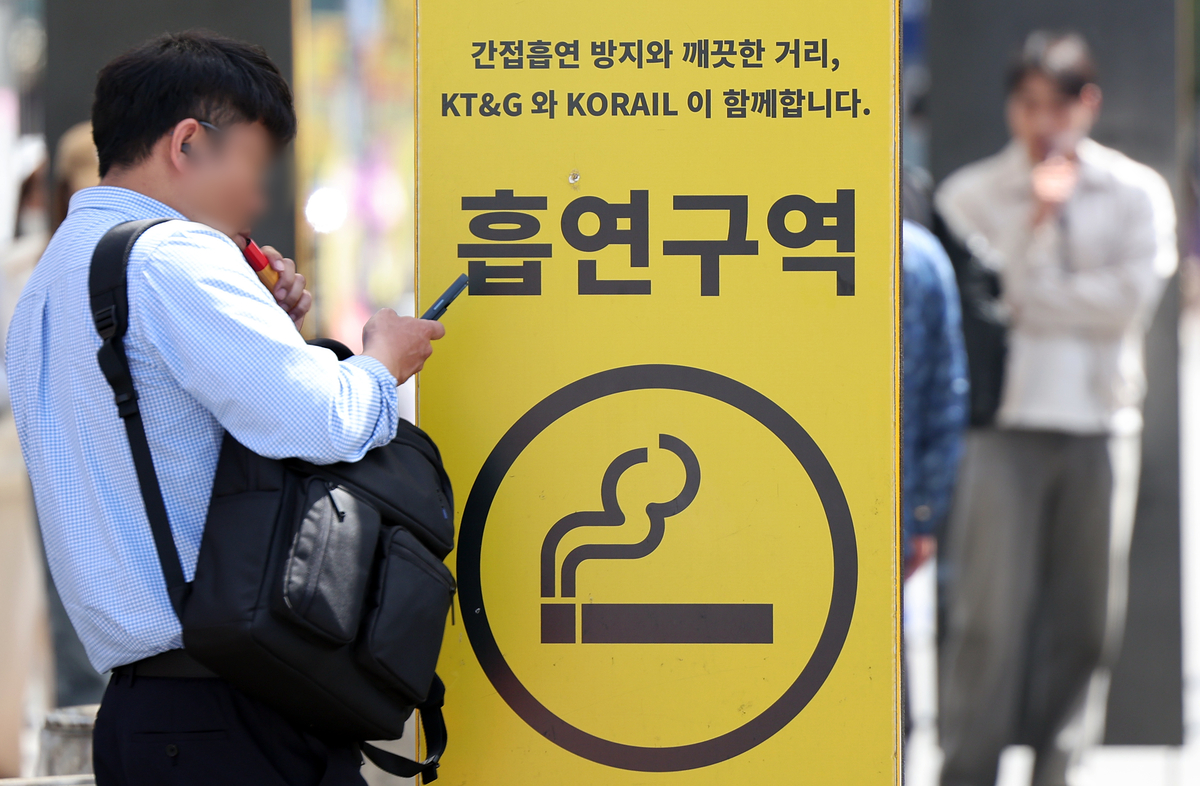
Under South Korea’s National Health Promotion Act, non-smoking areas prohibit not only conventional cigarettes but also all tobacco products, including liquid e-cigarettes and heated tobacco products. Local governments can impose fines of up to 100,000 won on users caught using liquid e-cigarettes in non-smoking areas.
MOHW and local public health centers nationwide will conduct three weeks of intensive inspections from June 24 to July 15, focusing on smoking in non-smoking areas and compliance with cigarette vending machine operating standards. Cigarette vending machines may be installed only in locations where minors are restricted from entering, such as inside tobacco retail outlets, and must have adult-verification devices.
Before full implementation, MOHW and local governments inspected e-cigarette sales outlets and vending machines for compliance with sales and advertising standards. The government said it will combine guidance and enforcement so the expanded tobacco rules take hold in the field.
Maeil Business reported that, as synthetic-nicotine e-cigarette regulation takes effect, the government will take strict action against attempts to evade tax and regulatory requirements. Authorities will focus on raw nicotine liquid sales, products marketed as nicotine-free while containing nicotine, and other sales models designed to bypass the new rules.
The government has detected cases in which sellers appeared to induce consumers to mix raw nicotine liquid with e-cigarette products for inhalation, and has requested investigations. It also plans to pursue investigations into online products marketed as nicotine-free while containing nicotine. The Ministry of Food and Drug Safety is also expected to begin toxicity assessments of nicotine-like substances for human inhalation.
According to Maeil Business, online sales of liquid e-cigarettes are also prohibited from June 24. When products are released, companies must pay taxes and charges including individual consumption tax and tobacco consumption tax, amounting to about 1,823 won per milliliter.
Tax-Evasion Dispute as Background
The enforcement rollout is also intertwined with a synthetic-nicotine tax dispute. Rep. Jung Jin-wook of the Democratic Party of Korea previously claimed that Chinese-made natural-nicotine e-liquids may have been imported as synthetic nicotine and avoided 16 trillion to 20 trillion won in tobacco taxes over the past 10 years. He called for a cross-government joint investigation.
The South Korean government rejected that claim. Maeil Business reported that fiscal authorities said synthetic-nicotine solution production in China is strictly regulated, but exports are not completely banned and there are no special rules restricting exports to South Korea. The government said not all Chinese-made e-liquid imports can be treated as natural nicotine disguised as synthetic nicotine.
The government also said South Korea has tightened customs review for synthetic-nicotine imports since 2019, requiring importers to submit six types of documents and making natural-or-synthetic classification and nicotine content mandatory in declarations. Korea Customs Service data show that detected cases of natural nicotine falsely declared as synthetic nicotine fell from 10 cases involving 290 liters in 2022 to two cases involving 0.02 liters last year.
The background shows that South Korea’s synthetic-nicotine regulation has moved from the legislative question of whether such products count as tobacco to enforcement issues involving non-smoking areas, online sales, inventory and tax management, raw materials and nicotine-like substances.
For the industry, the June 24 enforcement date means synthetic-nicotine e-cigarettes no longer sit in South Korea’s previous regulatory gap. Compliance focus will shift to whether products are taxed, whether they are sold online, whether nicotine content is mislabeled, whether raw nicotine liquids are sold for inhalation mixtures, and whether sales outlets comply with advertising, warning-label and youth-protection requirements.
Follow 2Firsts for the latest updates on global tobacco harm reduction, nicotine products and regulatory developments.
封面图源:Maeil Business Newspaper
Cover image:Maeil Business Newspaper