Key Points
- South Korea now applies 100% document review to nicotine-analog and nicotine-free e-cigarette liquid imports.
- Since July 16, all e-cigarette liquid import declarations have been subject to pre-clearance ingredient analysis.
- As of September 20, nicotine-analog liquid imports totaled about 15 metric tons, 99.99% from China.
- Nicotine-free liquid imports totaled about 316 metric tons, including around 315 metric tons, or 99.7%, from China.
- Since August 18, importers have been required to provide five categories of supporting documents, including MSDS files, overseas transaction-chain records, export declarations and manufacturing licences.
- Nicotine-analog import weight fell 83.3% between January-April and May-August, while nicotine-free import weight fell 2.6%.
- Customs detected 22 cases from 2025 through September 20, 2026, involving nicotine-containing liquids declared as nicotine-free.
- Korea Customs Service did not identify the specific importers, manufacturers or vape brands involved.
2Firsts
September 24, 2026
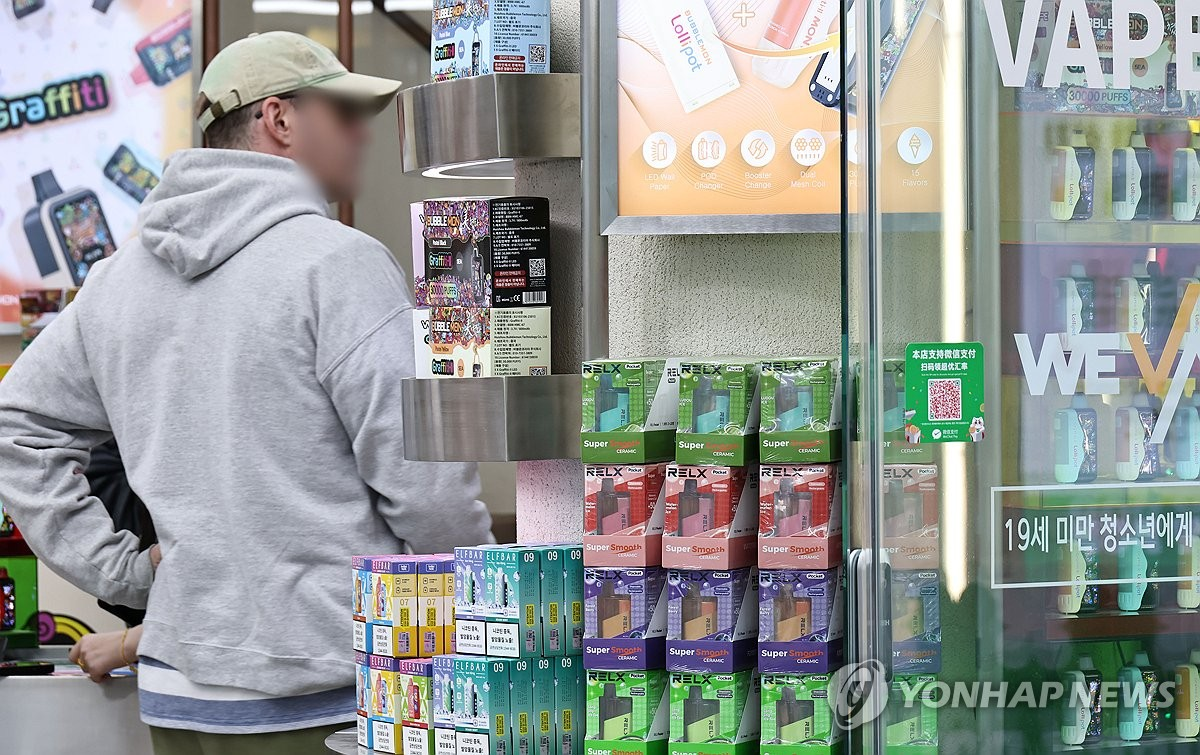
South Korea has placed nicotine-analog and nicotine-free e-cigarette liquid imports under full document review and is conducting pre-clearance ingredient analysis on all e-cigarette liquid import declarations, Korea Customs Service said on September 23.
As of September 20, the country had imported about 15 metric tons of nicotine-analog liquids, 99.99% from China, and about 316 metric tons of nicotine-free liquids, of which roughly 315 metric tons, or 99.7%, came from China.
The agency said it has progressively tightened scrutiny of nicotine-analog and nicotine-free declarations since synthetic nicotine was brought into South Korea's tobacco regulatory framework in April.
Synthetic Nicotine Brought Under Tobacco Regulation in April
South Korea's revised Tobacco Business Act took effect on April 24, 2026, expanding the statutory tobacco definition to cover products made using tobacco or nicotine as raw materials.
Synthetic nicotine produced from non-tobacco sources had previously fallen outside the old tobacco definition.
The legislative changes brought those products into the country's tobacco licensing, sales and taxation framework.
South Korea also introduced a two-year transition for certain taxes and levies on tobacco products made from non-tobacco-derived nicotine. Under the amended framework, some charges, including individual consumption tax, tobacco consumption tax and the National Health Promotion levy, are applied at 50% of their ordinary level during the transition period.
Korea Customs Service said the regulatory change increased the risk of taxable products being declared as nicotine analogues or nicotine-free liquids to avoid applicable taxes and controls.
More Than 99% of Two Import Categories Come From China
As of September 20, South Korea had imported about 15 metric tons of nicotine-analog liquid, with China accounting for 99.99%.
Nicotine-free liquid imports totaled approximately 316 metric tons, including around 315 metric tons from China, or 99.7%.
Those percentages apply specifically to the nicotine-analog and nicotine-free categories covered by the customs data and do not represent China's share of all e-cigarette liquid imports into South Korea.
Because China overwhelmingly supplies the two categories, Korean customs authorities have studied China's e-cigarette production and export licensing system and incorporated production, transaction-chain and export documentation into import verification.
Customs Requirements Tightened From June Through August
South Korea increased its controls in several stages during 2026.
From June 15, importers of nicotine-analog and nicotine-free liquids were required to provide material safety data sheets, or MSDS, to support ingredient verification.
From July 16, the Central Customs Laboratory began conducting pre-clearance ingredient analysis on all e-cigarette liquid import declarations.
From July 28, Korea Customs Service and the Ministry of Food and Drug Safety established standardized qualitative and quantitative analytical methods for nicotine analogues.
From August 18, nicotine-analog and nicotine-free liquids were placed under 100% document review.
Required records include:
- material safety data sheets;
- special electronic transaction contracts;
- diagrams showing relationships among overseas manufacturers, distributors and exporters;
- export declarations from the country of origin;
- tobacco-manufacturing licences.
For China-origin products, manufacturing-licence information is among the documents importers are required to submit to support the declared production and export chain.
The requirement is part of South Korea's import-verification process and does not by itself constitute a separate Korean licensing determination for every Chinese company involved.
Nicotine-Analog Import Weight Falls 83.3%
Korea Customs Service also released data comparing import volumes before and after the tighter controls.
From January through April 2026, nicotine-analog liquid imports totaled six shipments and 12 metric tons.
From May through August, imports fell to five shipments and 2 metric tons.
Shipment numbers declined 16.7%, while import weight dropped 83.3%.
Nicotine-free liquids showed a smaller change.
Imports totaled 513 shipments and 153 metric tons from January through April, compared with 430 shipments and 149 metric tons from May through August.
Shipment numbers fell 16.2%, while import weight declined just 2.6%.
22 Cases Involved Nicotine Liquids Declared as Nicotine-Free
Korea Customs Service also disclosed enforcement data involving false declarations.
From 2025 through September 20, 2026, authorities detected 22 cases involving nicotine-containing e-cigarette liquids declared as nicotine-free, totaling 65.43 liters.
Of those:
- 15 cases totaling 61.89 liters were recorded in 2025;
- seven cases totaling 3.54 liters were recorded in 2026 through September 20.
Korean customs authorities developed an analytical method to distinguish natural nicotine from synthetic nicotine in November 2022.
Through September 2026, they had identified 45 cases totaling 464.73 liters in which natural nicotine e-cigarette liquids were declared as synthetic nicotine.
In an earlier enforcement campaign covering 2020 and 2021, Korea Customs Service investigated 57 companies and took action against 40 over issues including declarations of leaf-derived nicotine as stem- or root-derived nicotine. Authorities assessed KRW 165.5 billion in additional taxes.
Customs Investigations Extend Beyond Border Clearance
The current enforcement program also includes corporate customs investigations.
Korea Customs Service said it is examining companies suspected of declaring natural nicotine as nicotine-analog or nicotine-free material to avoid applicable taxes.
The investigations also cover undervaluation, irregular foreign-exchange payments, the actual post-clearance use of imports and whether imported nicotine feedstock was ultimately used to manufacture e-cigarettes.
Information involving suspected tax evasion may be referred to the National Tax Service, while customs records may also be provided to police where appropriate.
Nicotine Analogues Are Distinct From Synthetic Nicotine
South Korean regulatory materials treat synthetic nicotine, nicotine analogues and nicotine-free products as separate categories.
Synthetic nicotine is nicotine itself produced without tobacco-derived raw materials. Nicotine analogues are other compounds with structures or effects similar to nicotine.
South Korea's Ministry of Food and Drug Safety has previously detected nicotine and compounds including 6-methylnicotine in some e-cigarette liquids marketed as nicotine-free.
The September 23 customs announcement does not identify the specific compounds in the nicotine-analog imports covered by its statistics and does not state that all such products contain 6-methylnicotine.
Authorities Do Not Name Brands or Companies
Korea Customs Service did not identify the importers, overseas manufacturers or vape brands involved in the latest enforcement data.
The public disclosure focuses instead on product categories, country of origin, import volumes, documentary requirements and enforcement cases.
With China accounting for more than 99% of the nicotine-analog and nicotine-free imports covered by the data, the latest measures increase documentation, ingredient-verification and supply-chain compliance requirements for Chinese suppliers serving the South Korean market.
Follow 2Firsts for updates on global e-cigarette regulation, cross-border trade and supply-chain compliance.
Cover Image: Maeil Business Newspaper
Disclaimer
This article is provided solely for professional research, industry discussion, and informational purposes. Any references to brands, companies, products, technologies, or policies are made for factual reporting and analytical purposes only, and do not constitute endorsement, recommendation, promotion, or advertising by 2Firsts.
Nicotine-containing products, including but not limited to cigarettes, e-cigarettes, heated tobacco products, and nicotine pouches, carry significant health risks. Readers are responsible for complying with all applicable laws and regulations in their respective jurisdictions, including age restrictions and access limitations.
The information contained in this article should not be regarded as investment, legal, medical, regulatory, or commercial advice. While 2Firsts strives to ensure the accuracy and reliability of its content, it does not assume liability for any direct or indirect loss arising from errors, omissions, inaccuracies, or reliance on the information contained herein.
This article is not intended for individuals below the legal age for accessing tobacco or nicotine-related information in their jurisdiction.
Copyright Notice
This article is either original content produced by 2Firsts or content reproduced, translated, summarized, or adapted from third-party sources with attribution where applicable. The intellectual property rights of the original content remain with 2Firsts or the respective original rights holders.
No individual or organization may copy, reproduce, distribute, republish, modify, translate, or otherwise use this content without prior authorization. Any unauthorized use may result in legal action.
For copyright-related inquiries, corrections, or removal requests, please contact: info@2firsts.com.
AI-Assisted Translation and Editing Notice
Portions of this article may have been translated, edited, or reviewed with the assistance of artificial intelligence tools to improve efficiency and readability. Due to the limitations of AI-assisted translation and editing, discrepancies, omissions, or inaccuracies may exist when compared with the original source.
Where applicable, readers are advised to refer to the original source for the most complete and accurate information. If you identify any errors or believe that any content infringes upon your rights, please contact us at info@2firsts.com, and we will review and address the matter promptly.