Key Points
- From Oct. 29, the minimum retail age of 18 will apply to all vaping and nicotine products, including zero-nicotine vapes and nicotine pouches.
- Adults who purchase or attempt to purchase these products on behalf of someone under 18 will commit an offence.
- Promotional free samples, giveaways and coupons will be prohibited, along with substantial discounts intended to promote vaping or nicotine products.
- Normal clearance sales, bulk discounts and trade discounts are not covered by the substantial-discount ban.
- Relevant offences can carry a £200 fixed penalty notice in England, Wales and Scotland, while Northern Ireland plans a £250 penalty subject to Assembly approval.
2Firsts
August 12, 2026
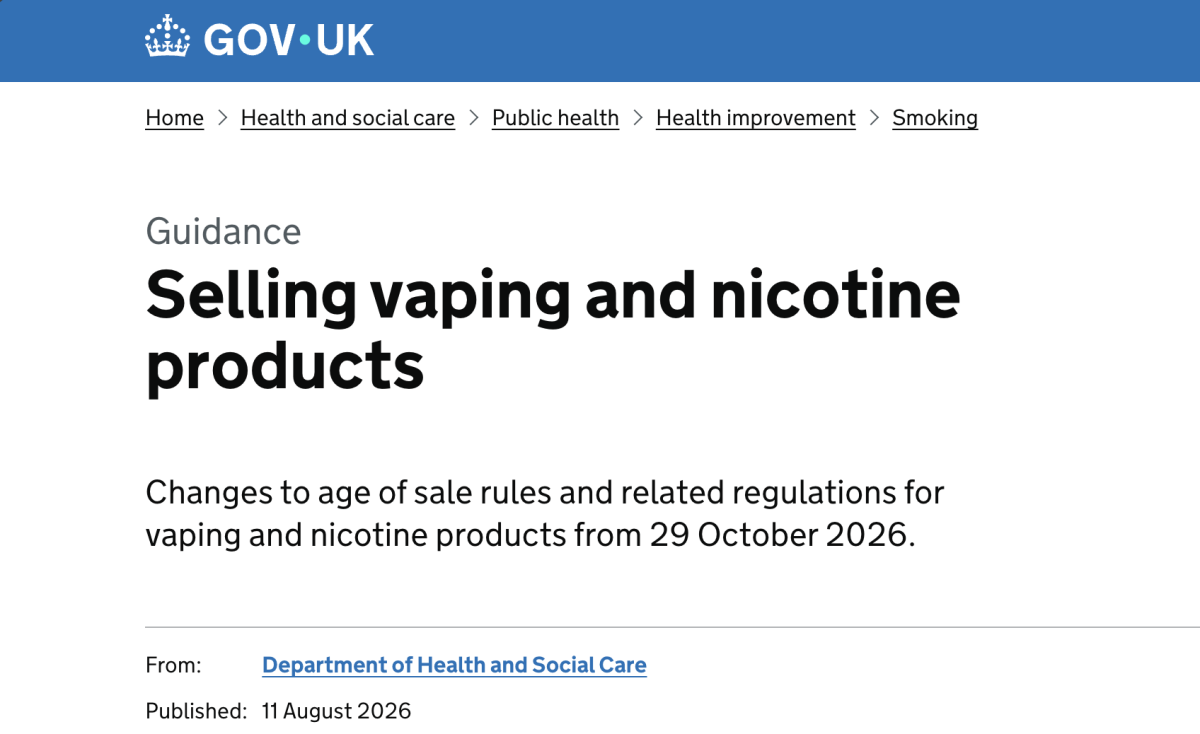
The UK Department of Health and Social Care on Aug. 11, 2026, published new guidance detailing retail rules for vaping and nicotine products that will take effect from Oct. 29, covering age restrictions and verification, proxy purchasing, promotional giveaways and substantial discounts as the Tobacco and Vapes Act 2026 moves into its next implementation phase.
The guidance applies across England, Wales, Scotland and Northern Ireland, although penalties vary by jurisdiction. UK retail publications SLR and Asian Trader described the guidance as a key preparation point for retailers ahead of the next phase of the legislation.
Scope Expands to Zero-Nicotine Vapes and Nicotine Pouches
From Oct. 29, retailers, including online sellers, will be prohibited from selling any vaping or nicotine product to people under 18.
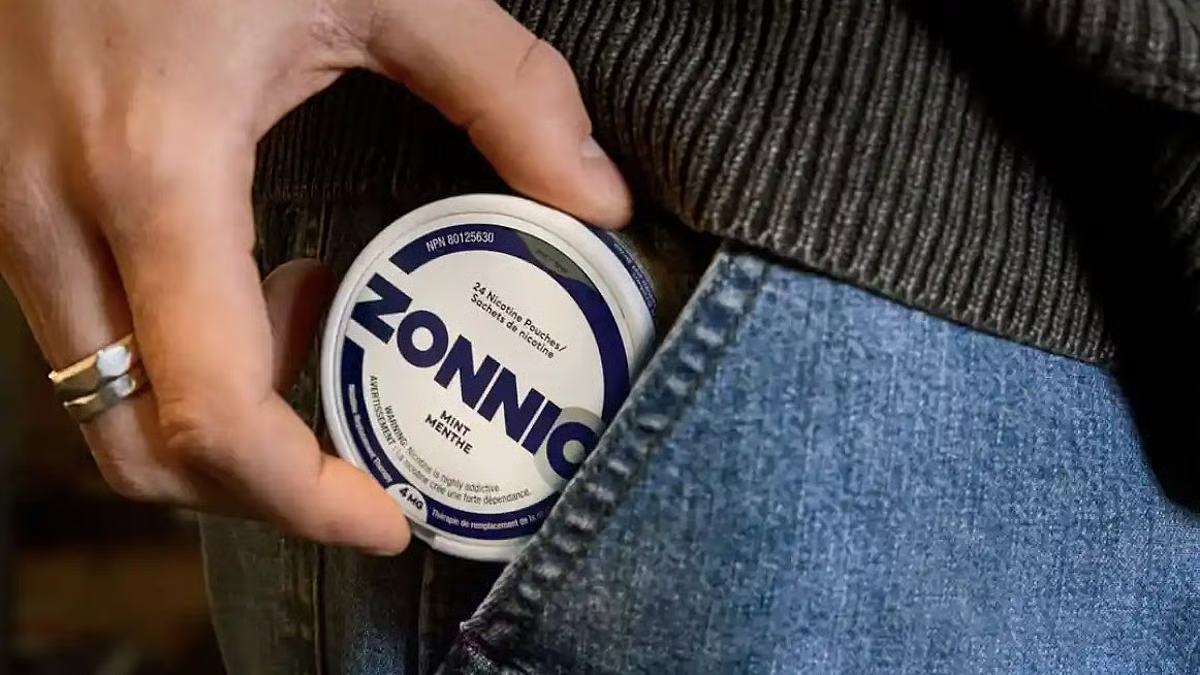
Products covered include vape devices, e-liquids, pods and coils, as well as nicotine pouches, nicotine strips and nicotine pearls. Synthetic nicotine produced in laboratories is also expressly included. Medical devices and medicinal products are excluded.
In England, Wales and Northern Ireland, the previous age restriction primarily applied to nicotine-containing vaping products. The new rules extend the restriction to all vaping products and consumer nicotine products. Scotland already applies age restrictions to both nicotine and non-nicotine vapes, with the new framework extending the rules to nicotine products.
Retailers are expected to verify a customer's age when they are unsure whether the person is 18 or over. Regulations setting out specific age-verification steps that can provide a statutory defence in England, Wales and Northern Ireland have yet to be debated in Parliament, and the government said the guidance will be updated once further details are available.
Proxy purchasing rules will also expand. Anyone aged 18 or over who buys or attempts to buy vaping or nicotine products for someone under 18 will commit an offence, while retail staff are advised to refuse sales where they suspect proxy purchasing.
Free Samples and Deep Promotional Discounts Face New Restrictions
The guidance provides more detailed restrictions on how vaping and nicotine products can be promoted at retail.
From Oct. 29, businesses will be prohibited from giving vaping or nicotine products, or coupons for such products, to members of the public for free where the purpose or effect is to promote the product. The restriction applies to in-store, online and third-party promotions, including free samples and product giveaways.
Businesses will also be prohibited from selling vaping or nicotine products, or related coupons, at a substantial discount when the purpose or effect is promotional. The government said selling e-liquids, vape devices or nicotine products for a nominal price such as 10 pence would likely constitute an offence.
The restriction does not ban normal retail discounting. Businesses may continue to reduce the price of unsold stock as part of normal operations, while bulk and trade discounts can remain in place.
An exemption applies to certain publicly arranged smoking-cessation services. Vaping or nicotine products and related coupons may still be provided free under formal arrangements with public authorities, including local authority- or NHS-backed cessation programmes.
Fixed Penalties and Sales Restrictions for Repeat Offenders
From Oct. 29, relevant offences involving underage sales, proxy purchasing, promotional free distribution or substantial discounts can result in a £200 fixed penalty notice, approximately $270, in England, Wales and Scotland. Northern Ireland plans a £250 penalty, approximately $330, subject to approval by the Northern Ireland Assembly. More serious cases can also be prosecuted in court.
Repeat violations can also result in restrictions on a retailer's ability to sell regulated products. In England and Wales, retailers that commit relevant offences at least three times within two years can be barred from selling specified products for up to 12 months. Scotland provides for sales bans of up to two years in comparable cases, while Northern Ireland can impose restricted sales or premises orders lasting from 28 days to three years following three relevant offences within five years.
Retail organisations have begun urging businesses to update staff training and age-verification procedures ahead of implementation. Asian Trader reported that the Chartered Trading Standards Institute, Action on Smoking and Health and its counterparts in Wales and Northern Ireland have jointly called on retailers to familiarise themselves with the requirements before the October deadline.
For the vaping and next-generation nicotine sector, the significance of the new guidance is less about revisiting the UK's long-debated age-of-sale framework than about translating the Tobacco and Vapes Act 2026 into more specific retail compliance requirements. The inclusion of free samples, promotional giveaways, nominal-price sales and age-verification procedures in the enforcement framework will require brands and retailers to review existing consumer acquisition, trial and in-store promotional practices.
Follow 2Firsts for the latest updates on global tobacco and nicotine regulation, policy developments and industry trends.
Cover Image source: UK Government
Disclaimer
This article is provided solely for professional research, industry discussion, and informational purposes. Any references to brands, companies, products, technologies, or policies are made for factual reporting and analytical purposes only, and do not constitute endorsement, recommendation, promotion, or advertising by 2Firsts.
Nicotine-containing products, including but not limited to cigarettes, e-cigarettes, heated tobacco products, and nicotine pouches, carry significant health risks. Readers are responsible for complying with all applicable laws and regulations in their respective jurisdictions, including age restrictions and access limitations.
The information contained in this article should not be regarded as investment, legal, medical, regulatory, or commercial advice. While 2Firsts strives to ensure the accuracy and reliability of its content, it does not assume liability for any direct or indirect loss arising from errors, omissions, inaccuracies, or reliance on the information contained herein.
This article is not intended for individuals below the legal age for accessing tobacco or nicotine-related information in their jurisdiction.
Copyright Notice
This article is either original content produced by 2Firsts or content reproduced, translated, summarized, or adapted from third-party sources with attribution where applicable. The intellectual property rights of the original content remain with 2Firsts or the respective original rights holders.
No individual or organization may copy, reproduce, distribute, republish, modify, translate, or otherwise use this content without prior authorization. Any unauthorized use may result in legal action.
For copyright-related inquiries, corrections, or removal requests, please contact: info@2firsts.com.
AI-Assisted Translation and Editing Notice
Portions of this article may have been translated, edited, or reviewed with the assistance of artificial intelligence tools to improve efficiency and readability. Due to the limitations of AI-assisted translation and editing, discrepancies, omissions, or inaccuracies may exist when compared with the original source.
Where applicable, readers are advised to refer to the original source for the most complete and accurate information. If you identify any errors or believe that any content infringes upon your rights, please contact us at info@2firsts.com, and we will review and address the matter promptly.