
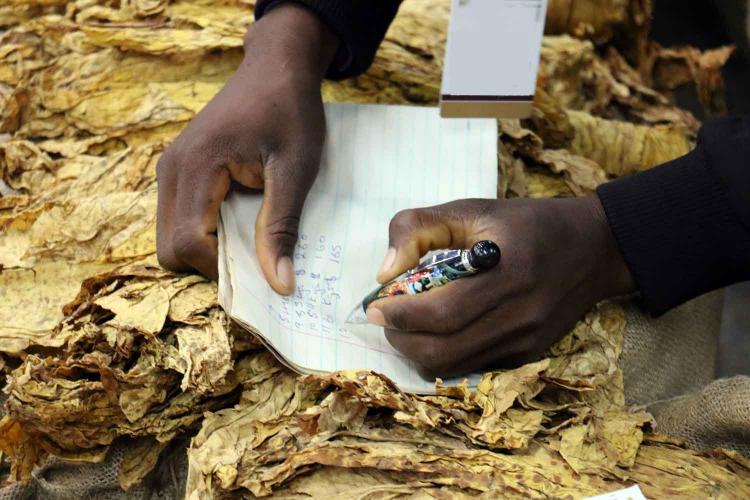
According to a report by Tobacco Reporter, Zimbabwe has exported over 98 million kilograms of tobacco so far this sales season. The country aims to increase its total exports to reach $1.6 billion, as reported by The Pioneer. This represents a growth compared to the $900 million achieved in 2022.
As of now, the country's tobacco exports have reached $502 million, a growth of 20% compared to the same period in 2022 when it was $417 million.
The export value includes the income obtained by farmers from cultivating, drying, and grading crops, as well as the income obtained by merchants from additional processing, packaging, fulfilling precise customer orders, and finally delivering the goods.
In terms of tobacco exports, Zimbabwe is expected to surpass $1.6 billion, while achieving $900 million in 2022, so we are seeking growth in all aspects," said John Basera, the permanent secretary for Agriculture and Rural Development. "My expectations are very high; we need to pursue even better growth." According to Basera, this year's tobacco production is the highest and best in the country's history.
This season has been favorable, with good crop quality and prices," said Chelesani Tsarwe, Public Relations Officer of the Tobacco Industry and Marketing Board (TIMB). "In comparison to previous seasons, farmers have been receiving their payments on time. Overall, the tobacco market is well-organized, and all stakeholders are adhering to the committee's compliance framework.
If the government continues to support smallholder farmers like the Pfumvudza project, farmers will be able to ensure timely access to inputs," said Edward Dune, Deputy Chairman of the Tobacco Farmers Union Trust. "There should be a complete elimination of unscrupulous middlemen to ensure that farmers receive what they deserve.
Tobacco has already transformed the lives of most people, but it is necessary to ensure processing is done domestically to ensure our farmers can generate greater income," Duane said.
Tobacco serves as Zimbabwe's largest foreign exchange crop. It is exported throughout the year, with a significant portion being purchased from contracted farmers. China accounts for 40% to 45% of the total exports.
Reference:
[1] Zimbabwe Aims for $1.6 Billion in Exports
Disclaimer
This article is provided solely for professional research, industry discussion, and informational purposes. Any references to brands, companies, products, technologies, or policies are made for factual reporting and analytical purposes only, and do not constitute endorsement, recommendation, promotion, or advertising by 2Firsts.
Nicotine-containing products, including but not limited to cigarettes, e-cigarettes, heated tobacco products, and nicotine pouches, carry significant health risks. Readers are responsible for complying with all applicable laws and regulations in their respective jurisdictions, including age restrictions and access limitations.
The information contained in this article should not be regarded as investment, legal, medical, regulatory, or commercial advice. While 2Firsts strives to ensure the accuracy and reliability of its content, it does not assume liability for any direct or indirect loss arising from errors, omissions, inaccuracies, or reliance on the information contained herein.
This article is not intended for individuals below the legal age for accessing tobacco or nicotine-related information in their jurisdiction.
Copyright Notice
This article is either original content produced by 2Firsts or content reproduced, translated, summarized, or adapted from third-party sources with attribution where applicable. The intellectual property rights of the original content remain with 2Firsts or the respective original rights holders.
No individual or organization may copy, reproduce, distribute, republish, modify, translate, or otherwise use this content without prior authorization. Any unauthorized use may result in legal action.
For copyright-related inquiries, corrections, or removal requests, please contact: info@2firsts.com.
AI-Assisted Translation and Editing Notice
Portions of this article may have been translated, edited, or reviewed with the assistance of artificial intelligence tools to improve efficiency and readability. Due to the limitations of AI-assisted translation and editing, discrepancies, omissions, or inaccuracies may exist when compared with the original source.
Where applicable, readers are advised to refer to the original source for the most complete and accurate information. If you identify any errors or believe that any content infringes upon your rights, please contact us at info@2firsts.com, and we will review and address the matter promptly.


