Keyponts
● Major Enforcement Case: Chinese authorities broke up an illegal hookah tobacco operation worth more than 46 million yuan ($6.8 million), detaining five foreign suspects.
● Large-Scale Seizure: More than 500,000 boxes of illegal tobacco paste and 6.2 million items of waterpipe equipment and related consumables were confiscated.
● Market Expansion: Hookah is becoming increasingly common in China’s nightlife sector and is attracting overseas operators, including entrepreneurs with vaping industry backgrounds.
● Regulatory Signal: The case indicates that Chinese authorities are applying tobacco monopoly enforcement to waterpipe tobacco.
● Market Access Unclear: China has not announced whether waterpipe tobacco will follow a private-sector licensing model or be supplied mainly through the state tobacco system.
2Firsts
Shenzhen, July 31, 2026
Chinese authorities have broken up an illegal hookah tobacco operation valued at more than 46 million yuan ($6.8 million), as waterpipe services expand across urban nightlife venues and attract growing interest from overseas operators.
Tobacco monopoly and public security authorities detained five foreign suspects and seized more than 500,000 boxes of illegal tobacco paste, according to a video released by an official media outlet of China’s tobacco regulator.
The case is one of the clearest public signs to date that Chinese authorities are applying tobacco monopoly enforcement to waterpipe tobacco, although the rules governing legal production, imports and sales remain unclear.
Authorities seize 500,000 boxes of tobacco paste
The Huangpu District Tobacco Monopoly Bureau in the southern city of Guangzhou and local public security authorities jointly carried out the operation, according to a video published on July 30 by Oriental Tobacco News, an official media outlet of the State Tobacco Monopoly Administration (STMA).
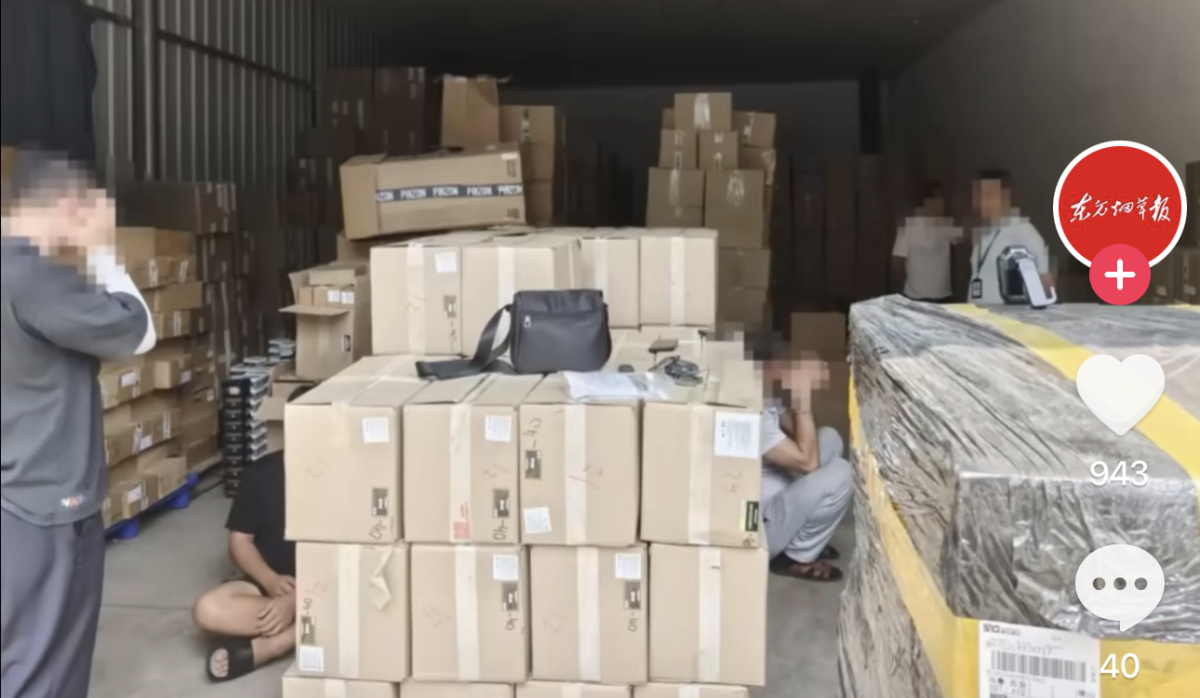
Authorities seized more than 500,000 boxes of illegal tobacco paste, which the video also described as an “atomisation substance”, along with 6.2 million items of waterpipe equipment and related consumables. The total value of the case exceeded 46 million yuan.
Five foreign suspects were detained. The report did not disclose their specific nationalities, the companies involved or the origin and intended destination of the products.
Footage showed large quantities of boxed products stored on pallets inside a warehouse. Some packaging carried the name “Spectrum Tobacco”.
The official report described the operation as a major illegal tobacco-paste business case, placing the consumable product within tobacco monopoly enforcement rather than treating it solely as a hospitality supply or general consumer good.

China’s hookah market attracts overseas operators
The case comes as hookah becomes more visible across China’s urban nightlife sector.
Alan Zhao, co-founder of 2Firsts, said waterpipe services had become increasingly common in bars and entertainment venues in major Chinese cities.
“In several nightlife districts I have visited, nearly every bar offers hookah,” Zhao said.
He has also observed more entrepreneurs entering the market, including foreign businesspeople based in Shenzhen who previously worked in the vaping industry and are now developing hookah-related businesses or exploring opportunities in China.
Hookah is expanding beyond Middle Eastern restaurants, expatriate communities and specialist venues into mainstream bars, clubs and other entertainment settings, where it is generally offered as a shared, venue-based service.
Zhao said some overseas operators increasingly viewed China as an emerging growth market for the category, given the size of the country’s urban hospitality sector and the relatively early stage of commercial development.
The official report did not identify the businesses operated by the five suspects or link them to other foreign-run hookah ventures. Their detention is nevertheless notable as overseas entrepreneurs become more active in a market governed by China’s tobacco monopoly system.
Waterpipe tobacco enters monopoly enforcement
Waterpipe tobacco differs from cigarettes and e-cigarettes in both its distribution and consumption.
It is commonly prepared by venue staff and sold by session rather than as an individually packaged tobacco product. A typical service may involve waterpipe tobacco, a hookah device, charcoal or another heating source, mouthpieces and other consumable items.
Products may reach bars and clubs through importers, restaurant suppliers or general consumer-goods channels rather than established tobacco distribution networks. The business combines tobacco supply with hospitality services.
Its regulatory treatment has been less visible than that of cigarettes and e-cigarettes, partly because of this venue-based business model.
China brought e-cigarettes under STMA oversight after the category expanded rapidly through online platforms, convenience stores and specialist retailers. The national framework introduced controls covering manufacturing, product standards, wholesale, retail and distribution.
Hookah has remained concentrated in bars, restaurants and nightlife venues and has not generated the same level of public debate in China over youth use, school access or mass-market retailing.
The latest case shows tobacco monopoly authorities applying enforcement to an unlicensed waterpipe tobacco operation. Offering the product as a venue-based service does not place the consumable tobacco outside the monopoly system.
The case does not establish that all hookah-related goods are subject to the same controls. Waterpipe devices, charcoal, accessories and other supplies may be treated differently from tobacco paste and other consumable products.
The immediate question is how China will classify waterpipe tobacco and what qualifications will be required to manufacture, import, distribute and serve it.
Market access remains unresolved
Chinese authorities have not announced a regulatory framework for waterpipe tobacco, but two existing models offer possible reference points for the industry.
China’s regulation of e-cigarettes provides one potential route. Under that system, private companies can participate after obtaining tobacco monopoly licences and meeting requirements covering manufacturing, products and distribution.
A similar framework for waterpipe tobacco could provide a legal route for private producers, overseas brands, importers and hospitality operators. Bars and clubs could also be required to purchase products through approved channels and obtain the relevant qualifications before offering hookah services.
A stricter reference point is China’s treatment of nicotine pouches, whose production is reserved for the state tobacco system.
If waterpipe tobacco follows that approach, production of the consumable product could be controlled by China National Tobacco Corp. (CNTC), leaving private companies with little or no role in manufacturing. Independent businesses could remain involved in equipment, accessories or other authorised parts of the supply chain.
Chinese authorities have not indicated which model, if either, will apply.
The regulatory outcome will determine whether foreign brands and private operators can enter the market through licensing or whether the core consumable product will be supplied primarily through the state tobacco system.
For overseas entrepreneurs already exploring China, the case shows that commercial demand alone will not determine market access. Their ability to operate will depend on how tobacco monopoly rules are applied to products, imports, distribution channels and hospitality venues.
2Firsts will continue to track enforcement, market developments and regulation affecting hookah and waterpipe tobacco in China.
Cover image:Oriental Tobacco News video account.