Key Points
- NSW Labor Premier Chris Minns reaffirmed support for reducing tobacco excise on September 8, arguing that current tax settings are feeding black-market demand.
- Minns has held the position since at least 2025 and has repeatedly called for the federal government to review tobacco excise.
- Federal Health Minister Mark Butler remains opposed to a cut, while Treasurer Jim Chalmers has recently stopped short of ruling out future changes.
- The Coalition’s September 3 proposal for an 80% excise reduction has pushed the relationship between tobacco taxation and illicit trade further into federal and intra-Labor debate.
2Firsts
September 8, 2026
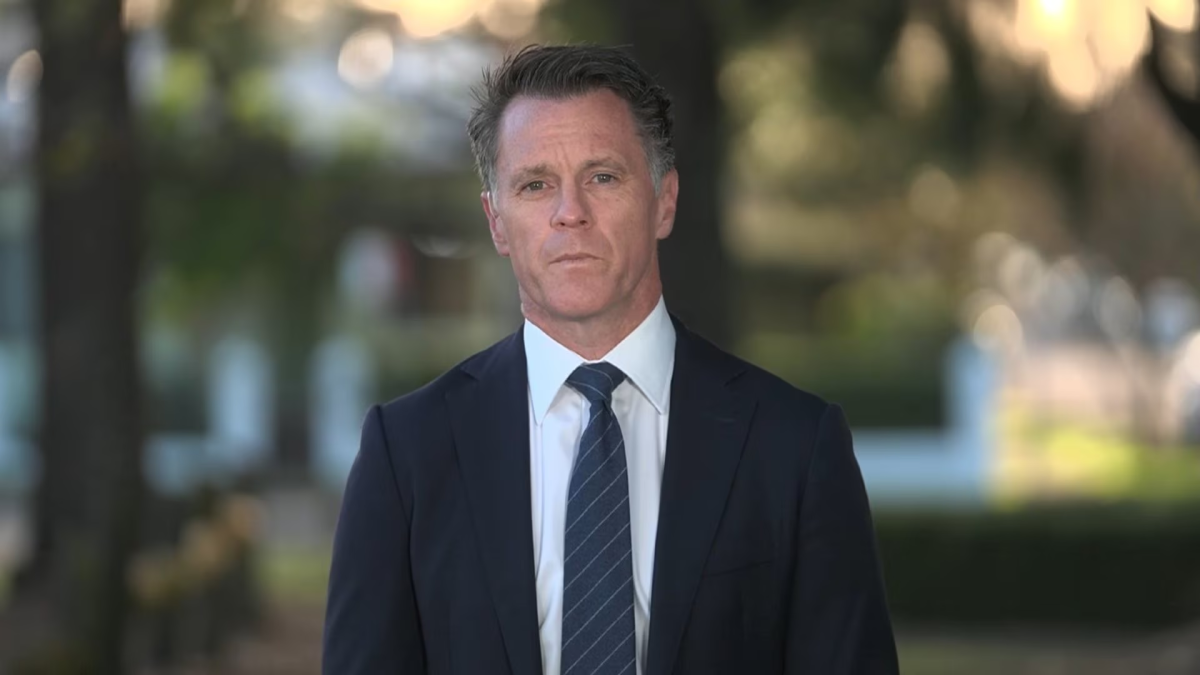
According to information released by the Liberal Party of Australia on September 8, New South Wales Labor Premier Chris Minns reaffirmed in a Sky News interview that he supports reducing tobacco excise, arguing that current tax settings are pushing consumers toward cheaper illicit cigarettes.
The comments came days after the opposition Coalition formally proposed an 80% reduction in tobacco excise and further exposed differing positions within Australia’s governing Labor Party over how to respond to the illicit tobacco market.
Minns has advocated a review of tobacco excise since at least 2025.
Minns Reaffirms Support for Lower Tobacco Excise
Asked on September 8 whether he still supported cutting tobacco excise, Minns answered “Yes.”
He argued that current tax settings were producing outcomes contrary to their intended purpose as consumers gained access to cheaper cigarettes through a black market controlled by criminal groups.
Minns also argued that policing alone would struggle to permanently dismantle organised crime networks while strong consumer demand for illicit tobacco remained.
The remarks continue a position he has held for more than a year.
In June 2025, Minns called on the federal government to consider lowering tobacco excise and reviewing whether high tax levels were contributing to illicit tobacco sales.
Federal Labor Previously Ruled Out a Cut
Minns’ position differs from the federal Labor government’s earlier public stance.
In June 2025, Treasurer Jim Chalmers explicitly ruled out reducing tobacco excise, saying he was not proposing to make cigarettes cheaper through tax cuts.
After the Coalition announced its 80% excise proposal on September 3 this year, the federal government continued to oppose a major reduction.
Labor said it acknowledged the seriousness of the illicit tobacco market but did not accept that a dramatic tax cut had been shown to eliminate illegal trade.
Health Minister Mark Butler has remained particularly opposed to the Coalition’s approach.
During federal parliament on September 7, Butler said Labor would not engage in a “discounting war” with organised crime and pointed to Canada’s experience with tobacco tax cuts in the 1990s as a warning that lower prices could increase smoking.
Chalmers Stops Short of Ruling Out Future Change
Chalmers’ more recent language has been less categorical than his position in 2025.
Asked in parliament on September 7 to rule out any reduction in tobacco excise, he did not provide a direct commitment.
Chalmers continued to defend higher cigarette prices as one of the most effective measures for reducing tobacco consumption and said the government was focusing on additional law-enforcement and compliance resources to tackle illicit trade.
Assistant Treasurer Daniel Mulino also stopped short of guaranteeing that excise would not be reduced when questioned about the issue.
That does not amount to federal Labor support for a tax cut. The government has announced no formal change in tobacco-excise policy, and its health portfolio continues to publicly oppose a substantial reduction.
Coalition’s 80% Proposal Creates New Political Flashpoint
The Labor debate has intensified since the Coalition released its tobacco policy on September 3.
Opposition Leader Angus Taylor pledged that a future Coalition government would cut tobacco excise by 80%.
Under the proposal, excise on a standard pack of 20 cigarettes would fall from roughly A$30 to around A$6.
The Coalition also proposes A$200 million in additional nationwide enforcement against illicit tobacco and plans to legalise, regulate and tax vaping products and nicotine pouches for adults.
Its proposed tax rates are A$0.50 per millilitre of e-liquid and A$0.025 per milligram of nicotine in pouches.
The Coalition argues that lowering excise would narrow the price gap between legal and illicit cigarettes and reduce black-market profit margins.
Federal Labor and public-health groups have warned that making legal cigarettes substantially cheaper risks weakening decades of tobacco-control policy.
Minns Has Held the Position Since 2025
The September 8 comments do not represent the first Labor call for lower tobacco taxation.
ABC reported in June 2025 that Minns had urged the federal government to consider reducing tobacco excise amid rising illegal cigarette sales.
He questioned whether continued high excise remained effective when federal tobacco revenue was falling and state police resources were increasingly being used against illicit tobacco networks.
A New South Wales parliamentary inquiry into illicit tobacco also referred in early 2026 to Minns’ previous call for the federal government to examine excise rates.
By late August 2026, before the Coalition formally released its policy, Minns was already identified publicly as one of the political figures advocating a substantial excise reduction.
His latest remarks therefore represent a renewed and more politically significant confirmation of that position as tobacco tax policy moves to the centre of federal debate.
Illicit Trade Is Reshaping Australia’s Tobacco Tax Debate
Australia has relied heavily on tobacco excise increases as a tool to reduce smoking.
The latest national data show daily smoking among Australians aged 14 and over fell from 8.3% in 2022-23 to a record-low 5.6% in 2025.
At the same time, illicit tobacco and nicotine supply has expanded rapidly.
An experimental Australian Bureau of Statistics estimate published in 2026 suggested that around 80% of nicotine consumption came from illicit sources, although the measure includes illicit tobacco, vaping products and other nicotine products and does not mean that 80% of cigarettes are illicit.
The coexistence of historically low smoking prevalence and a rapidly expanding illicit market is now forcing Australian policymakers to weigh public-health outcomes against tax revenue, organised crime and the competitiveness of the legal tobacco market.
Minns’ continued support for lower excise, combined with differing levels of resistance within federal Labor, shows that the debate is no longer confined to the Coalition and One Nation.
The federal government has not announced a change in tobacco-excise policy.
Follow 2Firsts for timely updates on global tobacco and nicotine regulations, market developments and industry trends.
Cover Image: Sky News / Chris Minns
Disclaimer
This article is provided solely for professional research, industry discussion, and informational purposes. Any references to brands, companies, products, technologies, or policies are made for factual reporting and analytical purposes only, and do not constitute endorsement, recommendation, promotion, or advertising by 2Firsts.
Nicotine-containing products, including but not limited to cigarettes, e-cigarettes, heated tobacco products, and nicotine pouches, carry significant health risks. Readers are responsible for complying with all applicable laws and regulations in their respective jurisdictions, including age restrictions and access limitations.
The information contained in this article should not be regarded as investment, legal, medical, regulatory, or commercial advice. While 2Firsts strives to ensure the accuracy and reliability of its content, it does not assume liability for any direct or indirect loss arising from errors, omissions, inaccuracies, or reliance on the information contained herein.
This article is not intended for individuals below the legal age for accessing tobacco or nicotine-related information in their jurisdiction.
Copyright Notice
This article is either original content produced by 2Firsts or content reproduced, translated, summarized, or adapted from third-party sources with attribution where applicable. The intellectual property rights of the original content remain with 2Firsts or the respective original rights holders.
No individual or organization may copy, reproduce, distribute, republish, modify, translate, or otherwise use this content without prior authorization. Any unauthorized use may result in legal action.
For copyright-related inquiries, corrections, or removal requests, please contact: info@2firsts.com.
AI-Assisted Translation and Editing Notice
Portions of this article may have been translated, edited, or reviewed with the assistance of artificial intelligence tools to improve efficiency and readability. Due to the limitations of AI-assisted translation and editing, discrepancies, omissions, or inaccuracies may exist when compared with the original source.
Where applicable, readers are advised to refer to the original source for the most complete and accurate information. If you identify any errors or believe that any content infringes upon your rights, please contact us at info@2firsts.com, and we will review and address the matter promptly.