Ban on Tobacco Sales, Consumption, and Trading Implemented in Kathmandu

Regulations by 2FIRSTS.ai
Dec.14.2023
Ban on Tobacco Sales, Consumption, and Trading Implemented in Kathmandu
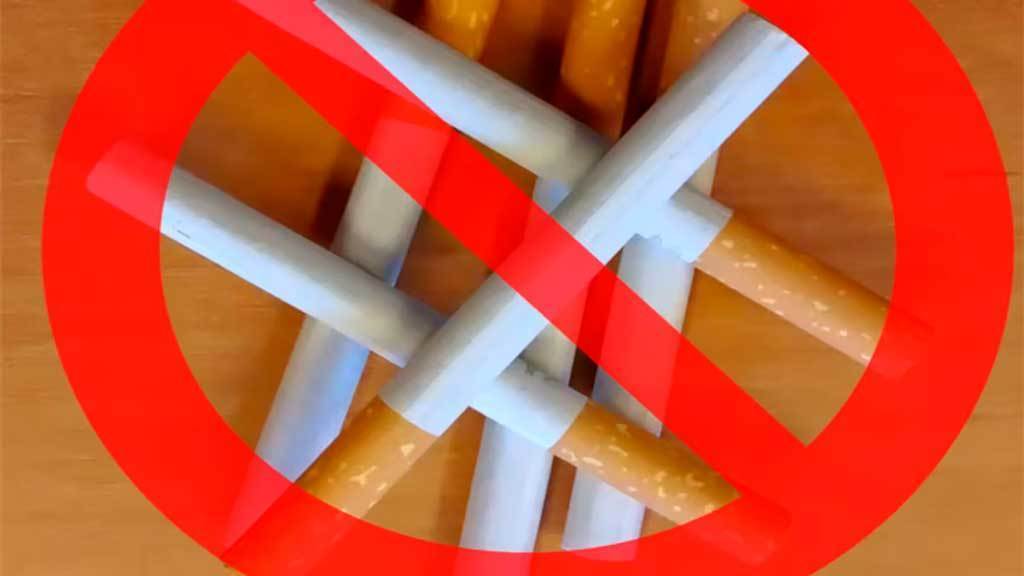
Nepal's capital Kathmandu has implemented a ban on the sale, consumption, and trade of tobacco products, according to the Ministry of Health.

According to a report by Prensa Latina on December 13th, the Nepalese health authorities have confirmed the implementation of a ban on the sale, consumption, and trade of tobacco products in the capital city of Kathmandu. Ram Prasad Poudel, the head of the health department, assured the Kathmandu Post that a comprehensive ban on the sale of tobacco products has been enforced in all 32 districts of the metropolis.


According to official sources, starting from December 13th, it has been declared illegal to produce or sell items such as raw tobacco, chewing tobacco, biddi, tambaku, shurfa, gutkha, pan parag, as well as products packaged in plastic or bags.


Boudur stated that the Kathmandu police would confiscate the products of those individuals who attempt to violate this provision.


We are currently engaged in a movement to transform Kathmandu into a healthy city, and have decided to ban the storage, sale, and use of tobacco products that are harmful to people's health and the environment.


Additional Reading:


Raw tobacco: refers to tobacco leaves that have not been processed, typically referring to unmanufactured tobacco. 

Chewing tobacco: a tobacco product that is used by chewing instead of smoking. 

Bidis: hand-rolled traditional Indian cigarettes, typically used for smoking. 

Tambaku: this may refer to a tobacco product from India or South Asia. 

Shisha: a specific tobacco product. 

Gutka: an Indian tobacco product in the form of chewing gum, typically containing tobacco, betel nut, lime, and other additives. 

Pan masala with tobacco: a mixture of betel nut and tobacco, popular in India.


We welcome news tips, article submissions, interview requests, or comments on this piece.

Please contact us at info@2firsts.com, or reach out to Alan Zhao, CEO of 2Firsts, on LinkedIn


Notice

1.  This article is intended solely for professional research purposes related to industry, technology, and policy. Any references to brands or products are made purely for objective description and do not constitute any form of endorsement, recommendation, or promotion by 2Firsts.

2.  The use of nicotine-containing products — including, but not limited to, cigarettes, e-cigarettes, nicotine pouchand heated tobacco products — carries significant health risks. Users are responsible for complying with all applicable laws and regulations in their respective jurisdictions.

3.  This article is not intended to serve as the basis for any investment decisions or financial advice. 2Firsts assumes no direct or indirect liability for any inaccuracies or errors in the content.

4.  Access to this article is strictly prohibited for individuals below the legal age in their jurisdiction.


Copyright


This article is either an original work created by 2Firsts or a reproduction from third-party sources with proper attribution. All copyrights and usage rights belong to 2Firsts or the original content provider. Unauthorized reproduction, distribution, or any other form of unauthorized use by any individual or organization is strictly prohibited. Violators will be held legally accountable.

For copyright-related inquiries, please contact: info@2firsts.com


AI Assistance Disclaimer


This article may have been enhanced using AI tools to improve translation and editorial efficiency. However, due to technical limitations, inaccuracies may occur. Readers are encouraged to refer to the cited sources for the most accurate information.

We welcome any corrections or feedback. Please contact us at: info@2firsts.com

Bangladesh Approves Philip Morris Factory for Nicotine Pouches, Sparks Controversy: Regulator Says It’s “Completely Legal”
Philip Morris Bangladesh Limited (PMBL) has received approval to invest USD 5.82 million in a nicotine pouch factory in Narayanganj. Regulators say the project is legal under existing laws, while health groups argue it breaches a 2016 Supreme Court order and poses youth addiction risks.
Nov.07 by 2FIRSTS.ai
BAT plans to sell its stake in ITC Hotels, using proceeds to reduce debt
British American Tobacco (BAT) plans to sell all or part of its stake in ITC Hotels via an accelerated bookbuild, with the sale size expected to be up to 15.3% of the company’s shares. The company says the proceeds will be used to reduce debt and bring its leverage back within the target range.
Dec.05 by 2FIRSTS.ai
South Korea Plans Unified Regulation for Synthetic and Look-Alike Nicotine Products
South Korea Parliament discusses including "nicotine" in Tobacco Business Act; synthetic nicotine testing method established, awaiting legislation approval.
Oct.22 by 2FIRSTS.ai
Tennessee Cracks Down on Vaping: 10 % Tax Hike, Expanded Enforcement Powers, Mandatory ID Checks at Every Retail Counter
New Tennessee laws passed this year impose a 10 % tax on vaping products, empower the Tennessee Alcoholic Beverage Commission (TABC) to conduct compliance inspections, and set steep fines for retailers who sell to minors. Yet, with no statewide retail-licensing scheme for e-cigarettes, enforcing the penalties remains problematic. Meanwhile, stores in cities like Jackson have voluntarily stepped up ID scanning and product tracking to help the rules take hold.
Dec.03 by 2FIRSTS.ai
Indonesia’s Statistics Agency: Bali Leads Nation in E-Cigarette Use; Urban Usage Climbing Sharply
Indonesia’s statistics agency (BPS) reports in its latest publication, Statistics of People’s Welfare 2025, that Bali has the highest share of daily e-cigarette users at 1.66%, followed by East Kalimantan (1.59%) and the Special Region of Yogyakarta (1.24%). Daily vaping prevalence is higher in urban areas (0.77%) than in rural areas (0.53%).
Oct.16
Portugal to Tax Nicotine Pouches from 2026 at €0.065 per Gram
Portugal’s 2026 State Budget adds nicotine pouches to the IEC by inserting Article 104-D into the Excise Code’s tobacco chapter. A specific duty of €0.065/g applies from 2026, with rounding to whole grams. The Budget also defines pouches (natural nicotine, up to 12 mg, tobacco-free, oral mucosal absorption). Lusa projects €1.676B in tobacco excise for 2026; combined levies near €1.993B.
Oct.30 by 2FIRSTS.ai