Dutch Ministry of Finance reports: Dutch tobacco tax revenue stagnates, mainly due to cross-border consumption shift

Sep.24.2025
Dutch Ministry of Finance reports: Dutch tobacco tax revenue stagnates, mainly due to cross-border consumption shift
A report released by the Dutch Ministry of Finance indicates that tobacco tax increases have failed to boost fiscal revenue. The previously projected €7 million in revenue from a 5 cent per pack tax increase has now fallen to zero, primarily due to cross-border cigarette purchases. The current excise tax on cigarettes is €7.81 per pack, with no further increases planned. Tobacco tax revenue is projected to reach €2.5 billion in both 2025 and 2026.

Key points:


·Tax revenue increase effect returns to zero: Netherlands had previously estimated that increasing taxes by 5 cents per pack of cigarettes could generate an additional revenue of 7 million euros, but now that expected amount has dropped to zero. 

·The tobacco tax revenue for both 2025 and 2026 is estimated to be 25 billion euros each, with no further plans for tax hikes. 

·Cross-border cigarette purchases are a key reason: Customs data shows that in 2024, 45% of seized cigarettes lacked the Dutch consumption tax stamp, with many of these cigarettes being purchased from low-tax countries, and over 10% being counterfeit products, which in turn lowers domestic cigarette sales. 

·Public health impact: Data from the National Institute for Public Health and the Environment in the Netherlands (RIVM) shows that after the last tobacco tax hike, 7% of smokers quit smoking, 22% reduced their smoking consumption, and about two-thirds of people attributed changes in behavior to the tax increase.


2Firsts, September 24, 2025 - According to a recent report by NL Times, the Dutch Ministry of Finance has announced that increasing tobacco taxes will no longer generate additional revenue for the government, largely due to the prevalence of cross-border cigarette purchases.


Previously, the Dutch Ministry of Finance estimated that increasing taxes on each pack of cigarettes by 5 euro cents could generate an additional revenue of 7 million euros for the treasury. However, this expected increase in revenue has now been reduced to zero.


The Ministry of Finance stated in the report that "Under the current levels of tobacco consumption tax, further tax increases are expected to lead to changes in public behavior, which will completely offset the additional tax revenue.


A spokesperson for Dutch State Secretary Eugène Heijnen explained the phenomenon by stating, "A decrease in smoking rates and a significant reduction in cross-border tobacco purchases have greatly decreased cigarette sales, with cross-border purchasing possibly being the main factor.


In 2025, the Dutch Ministry of Finance predicts tobacco tax revenues to be €25 billion, remaining steady in 2026. Currently, the excise tax on each pack of cigarettes is €7.81, and the government has no plans to further increase taxes.


Customs data support this claim. An analysis of seized cigarettes in 2024 showed that 45% of cigarette packages were lacking the Dutch consumption tax stamp, a figure that has been steadily increasing from 15% in 2021 and 25% in 2023. These unstamped cigarettes were mostly purchased from countries with lower tax rates, with over 10% being counterfeit products.


However, the increase in tobacco taxes has had a positive impact on public health. According to the Netherlands National Institute for Public Health and the Environment (RIVM), after the last tax hike, 7% of smokers chose to quit smoking and 22% of smokers reduced their smoking intake, with about two-thirds of them citing the tax increase as one of the reasons for changing their behavior.


We welcome news tips, article submissions, interview requests, or comments on this piece.

Please contact us at info@2firsts.com, or reach out to Alan Zhao, CEO of 2Firsts, on LinkedIn


Notice

1.  This article is intended solely for professional research purposes related to industry, technology, and policy. Any references to brands or products are made purely for objective description and do not constitute any form of endorsement, recommendation, or promotion by 2Firsts.

2.  The use of nicotine-containing products — including, but not limited to, cigarettes, e-cigarettes, nicotine pouchand heated tobacco products — carries significant health risks. Users are responsible for complying with all applicable laws and regulations in their respective jurisdictions.

3.  This article is not intended to serve as the basis for any investment decisions or financial advice. 2Firsts assumes no direct or indirect liability for any inaccuracies or errors in the content.

4.  Access to this article is strictly prohibited for individuals below the legal age in their jurisdiction.


Copyright


This article is either an original work created by 2Firsts or a reproduction from third-party sources with proper attribution. All copyrights and usage rights belong to 2Firsts or the original content provider. Unauthorized reproduction, distribution, or any other form of unauthorized use by any individual or organization is strictly prohibited. Violators will be held legally accountable.

For copyright-related inquiries, please contact: info@2firsts.com


AI Assistance Disclaimer


This article may have been enhanced using AI tools to improve translation and editorial efficiency. However, due to technical limitations, inaccuracies may occur. Readers are encouraged to refer to the cited sources for the most accurate information.

We welcome any corrections or feedback. Please contact us at: info@2firsts.com

Special Report | Vape bans and tougher rules: the South Caucasus takes different paths
Azerbaijan's sweeping e-cigarette ban has raised concerns over enforcement errors and the emergence of illicit sales, while neighboring Armenia is tightening technical rules and preparing higher excise taxes. Georgia, meanwhile, has resisted calls for broader vape restrictions and introduced preferential taxes for some domestically produced cigarettes. The divergent approaches across the South Caucasus highlight a regional policy dilemma: how to curb nicotine use and protect public health without encouraging black markets or creating unintended economic consequences for businesses and consumers.
Nov.03
U.S. Judge Stays Helix, NJOY Challenge to FDA PMTA Rule Pending New Rulemaking Court Stays Altria's Helix, NJOY Challenge to PMTA Rule as FDA Prepares New Rulemaking
A federal judge in Texas on Oct. 8 granted a joint request by the FDA and plaintiffs including Altria subsidiaries Helix Innovations and NJOY to stay litigation challenging the agency's 2021 PMTA rule. The court cited FDA's anticipated rulemaking concerning the regulation at issue. FDA announced on Sept. 28 that it intends to reassess the PMTA framework and could initiate new rulemaking to replace it. The parties must file a joint status report within 45 days and every 45 days thereafter. A motion by three Reynolds American companies to intervene remains pending.
Regulations
Oct.10
PMI Plans $71 Million Philippine Smoke-Free Expansion: BLENDS Production Established, Batangas Plant Exports to 18 Markets
Philip Morris International (PMI) plans to invest approximately PHP 4.5 billion ($71 million) to expand its existing smoke-free manufacturing facility in Tanauan, Batangas, in the Philippines. The expansion is expected to be completed in 2027, with additional capacity serving domestic and export markets. The facility began manufacturing heated tobacco consumables in April 2024, including BLENDS sticks for the BONDS by IQOS platform. Philippine business media reported in October 2026 that products from the Batangas plant were being exported to 18 markets across Asia and Europe. PMI says it has invested more than $2 billion in the Philippines since 2010. The expansion adds to the country's existing manufacturing and export role within PMI's international supply chain.
company
Nov.16
Global Nicotine-Pouch E-Commerce Group Haypp Shuts Sweden’s Snusnetto Over Age Verification as Identity Checks Become Industry Infrastructure for New Nicotine Products
Sweden's Supreme Administrative Court has declined to hear an appeal over age verification for tobacco and nicotine products collected from parcel lockers, leaving in place a lower-court ruling that geo-located BankID verification is insufficient to securely verify the actual recipient. Haypp Group has stopped tobacco and nicotine sales through Snusnetto and is deploying a new system across its other Swedish e-commerce sites to verify the age of the person who actually opens the locker and receives the shipment. The change comes as age verification across next-generation nicotine products expands from purchase checks into retail, delivery and, for some e-cigarettes, device access itself.
Regulations
Oct.20
Product | KUMI SCENIC 50K Offers Nicotine and 6-Methyl Nicotine Versions as 6-MN Products Appear in Multiple U.S. State Directories, With Louisiana Listing FDA Exemption
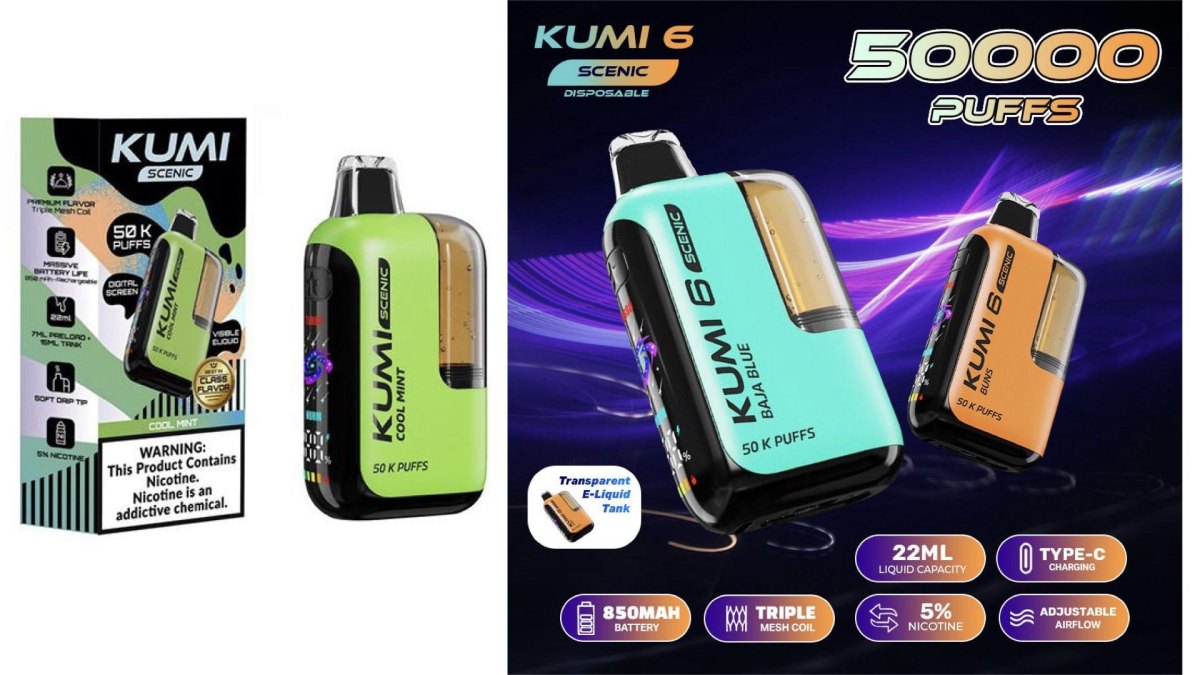
An October 2026 review of U.S. state vapor product directories found KUMI 6 SCENIC 50K listed in Louisiana and Nebraska. Louisiana classifies 20 related product entries as “FDA EXEMPTION.” The SCENIC platform is marketed in both conventional nicotine-salt and NoNic6 formulations, each advertised with 22mL e-liquid capacity and up to 50,000 puffs. U.S. wholesaler Midwest Goods listed both versions in August 2025 with a suggested retail price of $19.99 each. The NoNic6 version is associated with 6-methylnicotine and is also marketed by some distributors as “nicotine-free.”
product
Oct.27
Turning Point Brands Q3 Modern Oral Net Sales Rise 103% to $74.4 Million as Attributable Profit Falls 81%
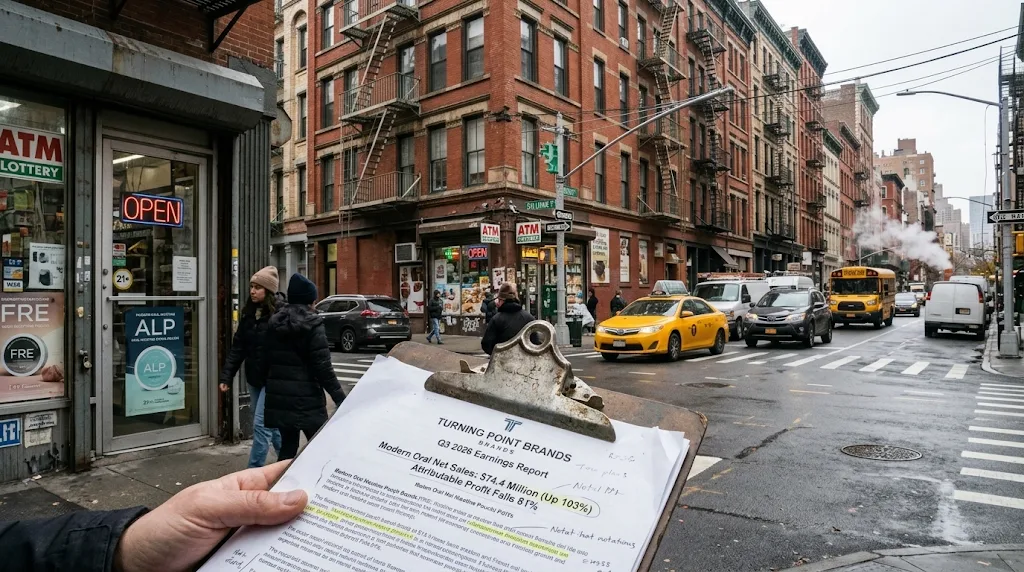
Turning Point Brands (TPB) reported third-quarter 2026 Modern Oral net sales of $74.4 million on November 9, up 102.9% year over year and representing 49.2% of consolidated net sales. Total company net sales rose 27.0% to $151.1 million, while net income attributable to TPB declined 81.4% to $3.93 million. The company is expanding the US retail presence of its FRE and ALP nicotine pouch brands and expects its Modern Oral chain-store footprint to grow by more than 70% during 2026. Selling, general and administrative expenses increased 69.1% to $75.3 million, while PMTA-related expenses reached approximately $3.15 million and manufacturing start-up costs totaled about $593,000. ALP plans to open a branded pop-up in New York City's SoHo neighborhood on November 13, alongside a marketing campaign extending into January 2027. TPB owns 50% of ALP but consolidates the venture in its financial statements.
company
Nov.11