In July 2022, lawmakers in the state of Minnesota legalized Delta-9 tetrahydrocannabinol (THC) in food and beverages, with little guidance on how to regulate or enforce it. This prompted the city of Alexandria to create its own regulations.
On October 1, 2022, the City Council of Alexandria unanimously approved a new city regulation that standardizes the sale of products containing tetrahydrocannabinol (THC).
On December 12, 2022, five businesses owned by Alexander applied for a THC license during a city council meeting. The council approved a submission from Ebacco, but postponed approval of other applications due to incomplete information.
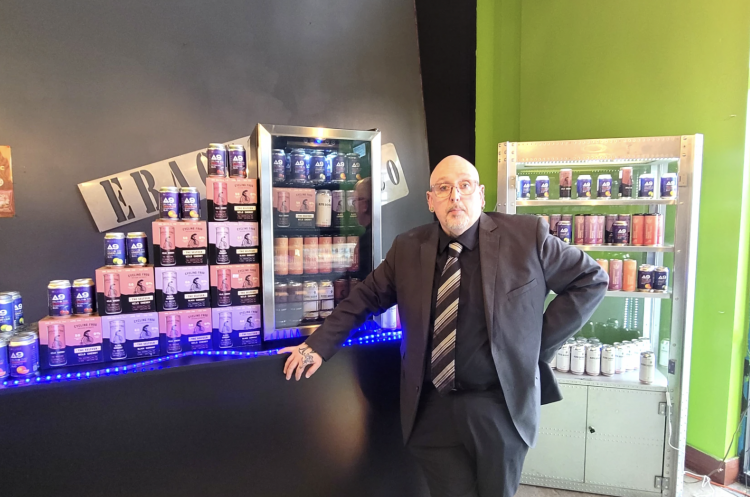
During the meeting, Len Worthington, the operational manager of Ebacco, expressed his opinion on THC. He stated that it has a clear presence in the community, but like other products such as red wine, too much of it is not good.
Throughout his life, Warrington worked as a child protection social worker for a decade in Manchester, England (his hometown), and spent three years as a youth pastor in New York and Florida.
After dealing with a serious child protection case in the UK, he and his wife moved to Brendon - where she has family in the area. He has resided there for the past 11 years.
Today, he is the operations manager for Ebacco, located in Suite 104 at 410 East 30th Avenue in Alexandria. He took on this role as a favor in September of last year.
He said, 'I only intended to stay here for one or two months, but then I realized that many of the things we're selling here actually have genuine therapeutic benefits, we're just not doing it properly.'
Worthington stated that after discussing the benefits of store products with local doctors, he realized the importance of promoting health and wellness. As a result, he implemented changes to the store's health and wellness approach.
He said that we have begun collaborating with doctors to assist individuals dealing with nicotine addiction. It's all about doing things the right way. If you come across someone who smokes 20 cigarettes a day, that's 32 carcinogenic substances, depending on the brand. In e-cigarettes, you'll only find two carcinogens.
According to Worthington, one of the goals of the store is to decrease a person's nicotine levels by gradually weaning them off of higher concentrations of nicotine in e-cigarettes to lower levels.
This new approach to health and wellness has led to Warrington applying for a license to sell THC in the city. He stated that doctors he spoke to were actually attempting to prescribe medical marijuana containing tetrahydrocannabinol (THC) for their patients, but had been unsuccessful due to insurance companies refusing to cover the costs.
Worthington chuckled as he explained his unusual background and how he came to hold his current position. He had been a social worker and a pastor and had received training in drug and alcohol counseling. Having witnessed drug abuse and addiction firsthand - including the overdose death of his own brother - he acknowledged that his support for THC might seem strange to some. But he believed that with proper monitoring and use, there is a place for THC.
Worthington stated that THC helps those who suffer from pain, anxiety, depression, and insomnia. He also stated that those selling THC should do so with honesty and provide appropriate products to meet a customer's needs.
Worthington stated that, for him, this is not a matter of excitement. "If people want to get high, they will be excited regardless. Legalizing certain levels of THC is a huge benefit. It allows people to purchase THC off the streets, which is unregulated and has detrimental effects on people's mental health and well-being.
Worthington explained that in the 1970s and 80s, people who grew marijuana began breeding CBD. A compound found in the plant, such as cannabidiol, can counteract the effects of THC. This process created a more effective and mentally stimulating plant than before. Worthington stated that no one needs THC levels this high.
This is truly dangerous. However, if we judge all THC based on strains illegally sold by individuals, it's like throwing the baby out with the bathwater," he said. When taken in the correct dosage, THC's therapeutic properties are incredible.
Worthington stated that he has been able to help clients suffering from chronic pain to stop taking prescription opioids that had little effect on their bodies due to their tolerance by treating them with Delta-9 THC and other THC variants such as Delta-8, THC-O, and THC-H.
According to the Centers for Disease Control and Prevention (CDC), those most likely to abuse drugs such as heroin are "individuals addicted to prescription opioid painkillers." This is a consequence of their tolerance to opioid drugs. When their prescription no longer has the same effect, they seek out stronger drugs, such as heroin.
Worthington said, "For me, I've looked at a lot of these THC products and said, 'This is going to change someone's life.'
Worthington stated that due to his background, he is very cautious about substances that may cause addiction or harmful side effects. Therefore, he added that Ebacco does not sell anything that he would not feel comfortable giving to his own family.
He said that they are very cautious in their sales approach and it is done with the purpose of solving problems. "We went back to the drawing board and asked ourselves, 'Can we improve people's health? Can we help people purchase the products we are selling?' The answer is 'yes,' as long as it is done in the right way.
Worthington clearly stated that Ebacco has a strict policy prohibiting the sale of products to minors. He further emphasized that selling to minors would benefit the THC industry while causing negative stigma for those who sell products to help people, thus endangering the benefits of THC to the community.
He added that he was impressed with the way the city council handled THC regulations.
They thought extensively and thoroughly about how to monitor it. Yes, it was a difficult process, but it should be. You don't want every Tom, Dick, and Harry to be able to sell this product. It must be done in an honest way. Being responsible for it is a good thing," said Worthington.
He added that one of the reasons he enjoys living in the area is the sense of community and support, which is something he tries to foster.
Disclaimer
This article is provided solely for professional research, industry discussion, and informational purposes. Any references to brands, companies, products, technologies, or policies are made for factual reporting and analytical purposes only, and do not constitute endorsement, recommendation, promotion, or advertising by 2Firsts.
Nicotine-containing products, including but not limited to cigarettes, e-cigarettes, heated tobacco products, and nicotine pouches, carry significant health risks. Readers are responsible for complying with all applicable laws and regulations in their respective jurisdictions, including age restrictions and access limitations.
The information contained in this article should not be regarded as investment, legal, medical, regulatory, or commercial advice. While 2Firsts strives to ensure the accuracy and reliability of its content, it does not assume liability for any direct or indirect loss arising from errors, omissions, inaccuracies, or reliance on the information contained herein.
This article is not intended for individuals below the legal age for accessing tobacco or nicotine-related information in their jurisdiction.
Copyright Notice
This article is either original content produced by 2Firsts or content reproduced, translated, summarized, or adapted from third-party sources with attribution where applicable. The intellectual property rights of the original content remain with 2Firsts or the respective original rights holders.
No individual or organization may copy, reproduce, distribute, republish, modify, translate, or otherwise use this content without prior authorization. Any unauthorized use may result in legal action.
For copyright-related inquiries, corrections, or removal requests, please contact: info@2firsts.com.
AI-Assisted Translation and Editing Notice
Portions of this article may have been translated, edited, or reviewed with the assistance of artificial intelligence tools to improve efficiency and readability. Due to the limitations of AI-assisted translation and editing, discrepancies, omissions, or inaccuracies may exist when compared with the original source.
Where applicable, readers are advised to refer to the original source for the most complete and accurate information. If you identify any errors or believe that any content infringes upon your rights, please contact us at info@2firsts.com, and we will review and address the matter promptly.