Estonia Bans Flavored Heated Tobacco Sales from Feb 2026 Under New Law

Apr.24.2025
Estonia Bans Flavored Heated Tobacco Sales from Feb 2026 Under New Law
Estonia’s parliament has passed an amendment to the Tobacco Act, banning the sale of flavored and scented heated tobacco products starting January 31, 2026. The revision sets rules on product composition, labeling, and penalties for violations. Manufacturers must submit product information to health authorities before market entry.

Key points:

·The Estonian Parliament has passed an amendment to the Tobacco Act with a majority vote, which will fully ban the addition of flavorings to heated tobacco products starting January 31, 2026. 

·The amendment removes special exemptions for flavors and packaging of heated tobacco products, in line with EU directives.

·The law applies to all tobacco products and their components, regardless of specific technologies. 

·Manufacturers must submit notifications for new products to health authorities six months in advance.

·Individuals could face fines of up to 2,400 euros for violations, while legal entities could face fines of up to 32,000 euros. 


According to a report by Postimees on April 23, the Estonian Parliament passed the Tobacco Act amendment with a vote of 68 in favor and 7 against. 68 representatives voted in favor of the bill, 7 voted against, and 1 abstained. Following EU directives, Estonia will ban the sale of various flavored heated tobacco products starting January 31, 2026.


According to the revised content, the bill defines "heated tobacco products" and sets specific requirements for their ingredients, labeling, and packaging. In accordance with the European Union directive, the bill eliminates previous exceptions that allowed heated tobacco products to have different flavors and packaging characteristics.


In addition, the bill also establishes penalties for violations of the requirements for informing about tobacco products. Failure to provide the required information about a product can result in a maximum fine of 300 penalty units (starting from 2025, each penalty unit is 8 euros), while legal entities could face fines of up to 32,000 euros.


The Estonian parliament also made amendments to the bill during discussions, expanding the scope of the law to include all tobacco products and their components, regardless of the technology used. Additionally, restrictions were placed on the capacity of pods containing tobacco fillings.


In addition, tobacco product and equipment manufacturers or suppliers introducing new products to the Estonian market must submit a notification to the Department of Health at least six months before the new product is launched, including a detailed description of the product and usage instructions in electronic form.


In Estonia, users of heated tobacco products make up approximately 0.2% of the adult population.


We welcome news tips, article submissions, interview requests, or comments on this piece.

Please contact us at info@2firsts.com, or reach out to Alan Zhao, CEO of 2Firsts, on LinkedIn


Notice

1.  This article is intended solely for professional research purposes related to industry, technology, and policy. Any references to brands or products are made purely for objective description and do not constitute any form of endorsement, recommendation, or promotion by 2Firsts.

2.  The use of nicotine-containing products — including, but not limited to, cigarettes, e-cigarettes, nicotine pouchand heated tobacco products — carries significant health risks. Users are responsible for complying with all applicable laws and regulations in their respective jurisdictions.

3.  This article is not intended to serve as the basis for any investment decisions or financial advice. 2Firsts assumes no direct or indirect liability for any inaccuracies or errors in the content.

4.  Access to this article is strictly prohibited for individuals below the legal age in their jurisdiction.


Copyright


This article is either an original work created by 2Firsts or a reproduction from third-party sources with proper attribution. All copyrights and usage rights belong to 2Firsts or the original content provider. Unauthorized reproduction, distribution, or any other form of unauthorized use by any individual or organization is strictly prohibited. Violators will be held legally accountable.

For copyright-related inquiries, please contact: info@2firsts.com


AI Assistance Disclaimer


This article may have been enhanced using AI tools to improve translation and editorial efficiency. However, due to technical limitations, inaccuracies may occur. Readers are encouraged to refer to the cited sources for the most accurate information.

We welcome any corrections or feedback. Please contact us at: info@2firsts.com

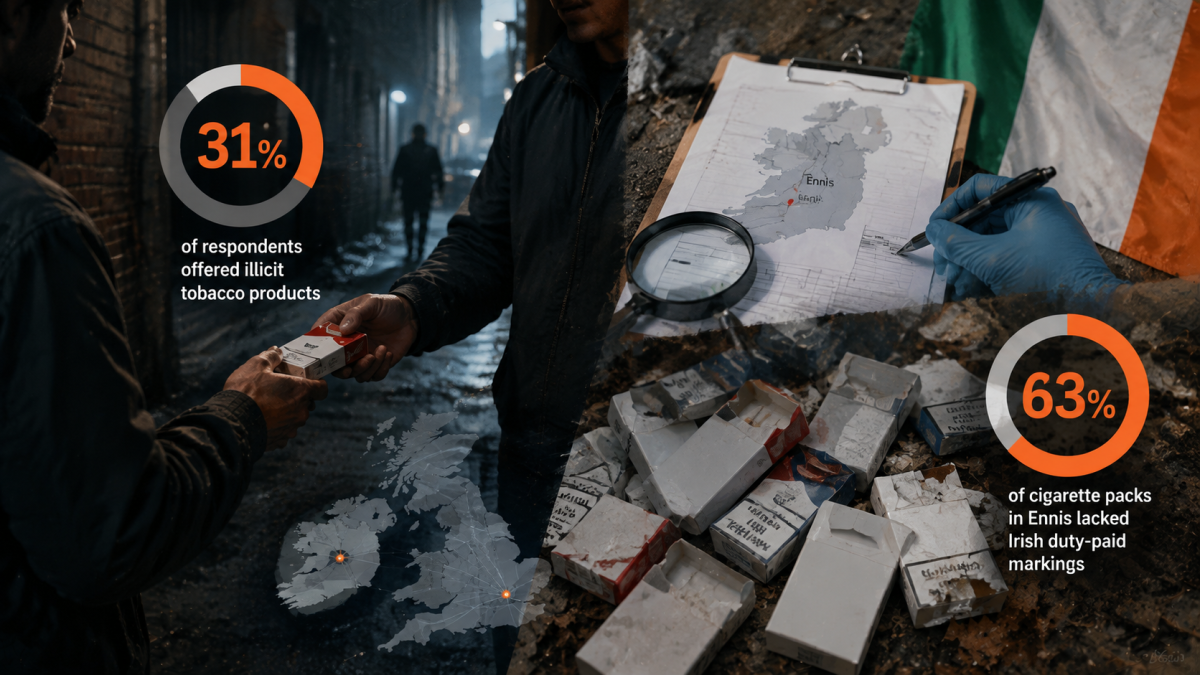
JTI Research Finds 31% of UK Respondents Offered Illicit Tobacco, While 63% of Ennis Packs Lack Duty Marks
Multiple JTI-backed studies in the UK and Ireland indicate that illicit tobacco remains visible across consumer interactions and local markets. In the UK, JTI research found that 31% of respondents said they had been offered illicit tobacco products. In Ireland’s Ennis area, a JTI-commissioned empty pack survey found that 63% of sampled cigarette packs did not carry Irish duty-paid markings. The findings come from industry research rather than official government estimates of illicit tobacco market size, but highlight continued concerns among regulators, legitimate retailers and tobacco companies over illicit trade.
Aug.19
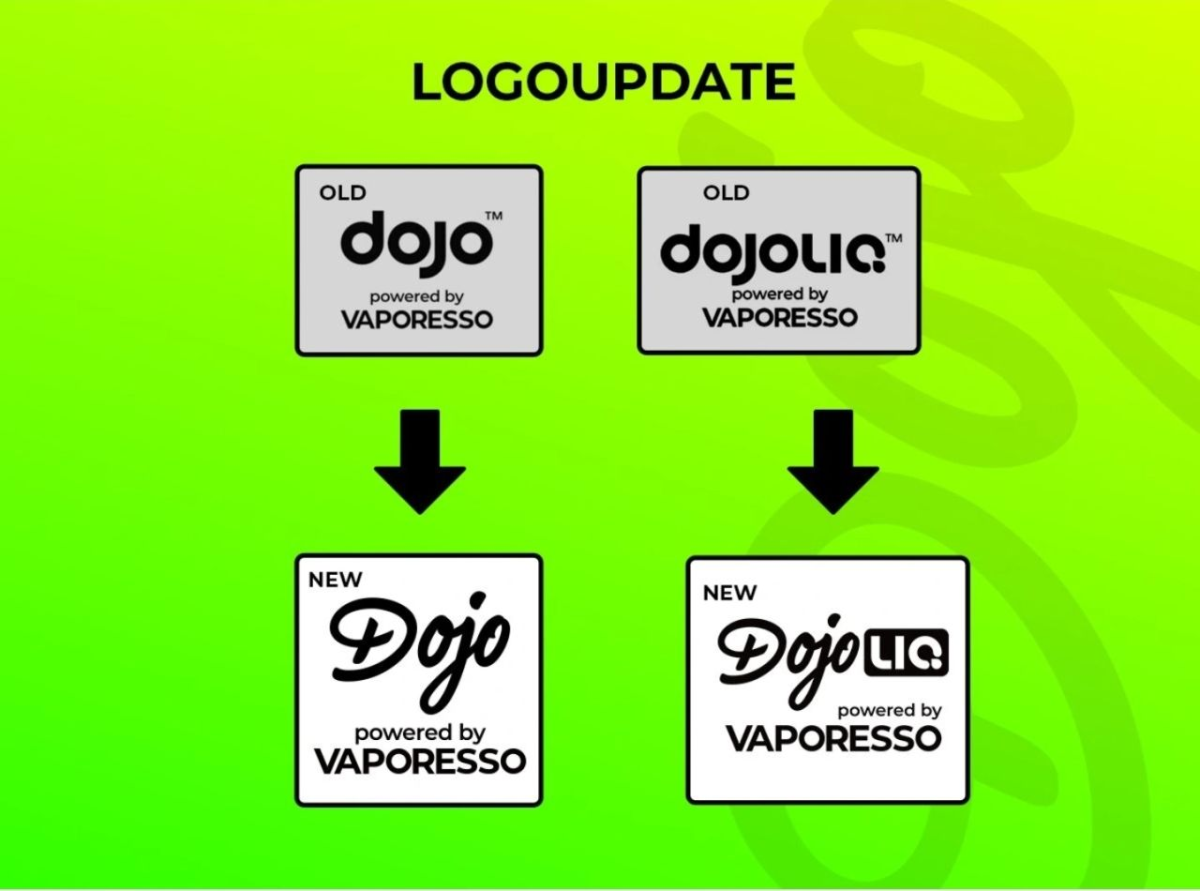
SMOORE’s DOJO by VAPORESSO to Launch New Global Brand Identity on September 1
According to recent LinkedIn posts from people at VAPORESSO, SMOORE and a German distribution partner, vape brand DOJO will begin rolling out a new global brand identity on September 1, 2026, led by a redesigned handwritten logo. The new visual system will be gradually applied across product packaging, marketing materials and digital assets over the following months. Fabio Corsaro, Head of Marketing and Purchasing at MG Wesel GmbH, said the rebrand was related to trademark issues, but that explanation has not been publicly confirmed by DOJO, VAPORESSO or SMOORE. DOJO is currently promoting its Blast X product in Germany.
Aug.31
Kuwait Tightens Tobacco and Nicotine Rules, Bans Under-21 Sales and Extends Public Smoking Restrictions to Vapes and Heated Tobacco
Kuwait has issued a comprehensive new regulatory framework covering tobacco, e-cigarettes, heated tobacco and other nicotine products. Ministerial Decision No. 237 of 2026, signed by Health Minister Ahmad Al-Awadhi, will take effect on January 1, 2027. The rules prohibit sales to people under 21 and ban sales through websites, apps, social media and delivery services. E-cigarettes and heated tobacco products will also be treated as smoking in public and enclosed places where smoking is prohibited. Nicotine pouches and other oral nicotine products not registered as medicines are banned.
Regulations
Aug.17 by 2Firsts Perspectives
Wisconsin Vape Directory One Year On: Retailer Reports Four Store Closures and 70% Staff Cuts
Wisconsin's electronic vaping device directory has been fully enforced for more than a year, and local vape retailers say the reduced range of eligible products has contributed to declining sales, store closures and layoffs. Johnny Vapes owner Ben Hall said he has closed four of seven locations and cut about 70% of his staff. State law bars the sale of vaping devices not listed on the Wisconsin Department of Revenue directory and allows penalties of $1,000 per day for each unlisted device sold or offered for sale. In April 2026, the U.S. Court of Appeals for the Seventh Circuit allowed enforcement of the law to continue.
Regulations
Oct.10
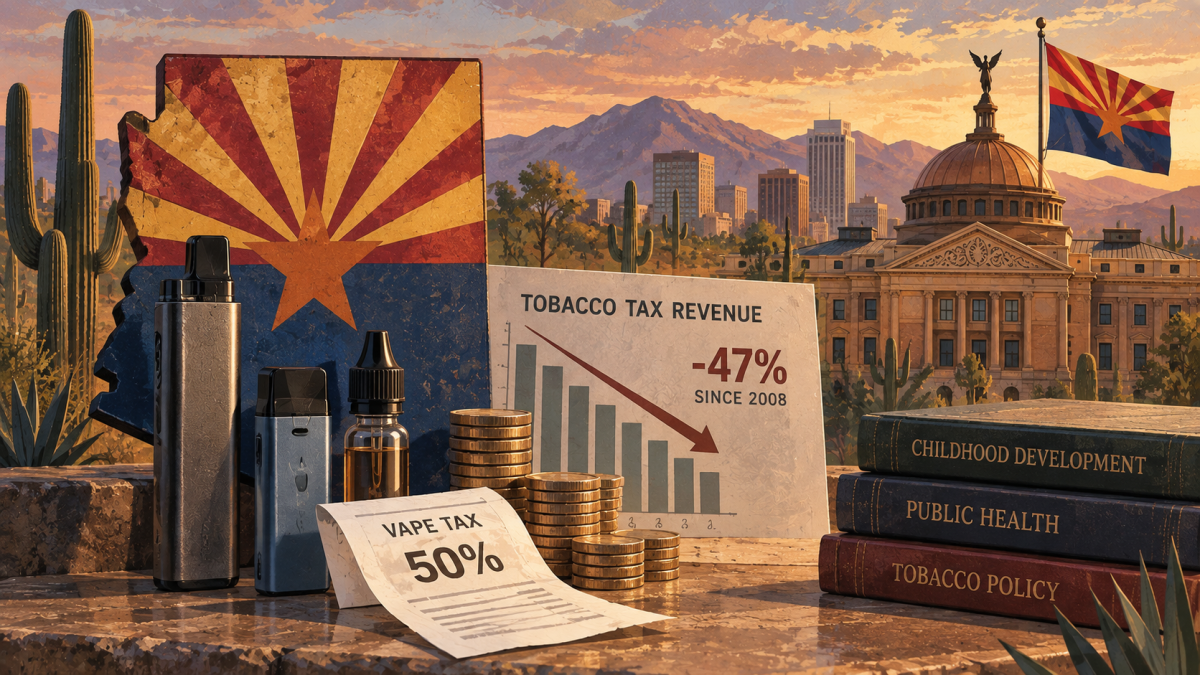
Arizona Turns to a 50% Retail Vape Tax as Tobacco Tax Revenue Falls 47% From 2008
Arizona's First Things First is pushing for an excise tax equal to 50% of the retail price of vaping products, estimating that the measure could generate about $100 million annually. The agency says its tobacco-tax revenue has fallen 47% from 2008 levels. Arizona has attempted to broaden its nicotine tax base in each of the past two years: a 2025 bill proposed a 50% wholesale-price tax, while a 2026 measure shifted to a 50% retail-price tax covering alternative nicotine products and vapor products. Separately, the state enacted HB 4001 this year to establish a new licensing and sales framework for alternative nicotine products.
Sep.21
2Firsts Interview | Cigarette Sales Fall as Smokeless Alternatives Gain in U.S. Convenience Stores, NACS Says
Ahead of the 2026 NACS Show, 2Firsts interviewed Chris Rapanick, NACS managing director of research, on changes reshaping the U.S. convenience-store tobacco and nicotine market. NACS data show cigarette sales declining while smokeless alternatives, including nicotine pouches, continue to grow. The interview also examines higher OTP margins, shifting backbar space, weaker store traffic, regulatory uncertainty and NACS’ outlook for 2027, offering a retailer-side view of one of the world’s largest nicotine markets.
Interview
Oct.03