Key Points
- The Irish Council presidency is seeking to move the tobacco-tax proposal through higher-level negotiations in October and November and reach political agreement at Ecofin.
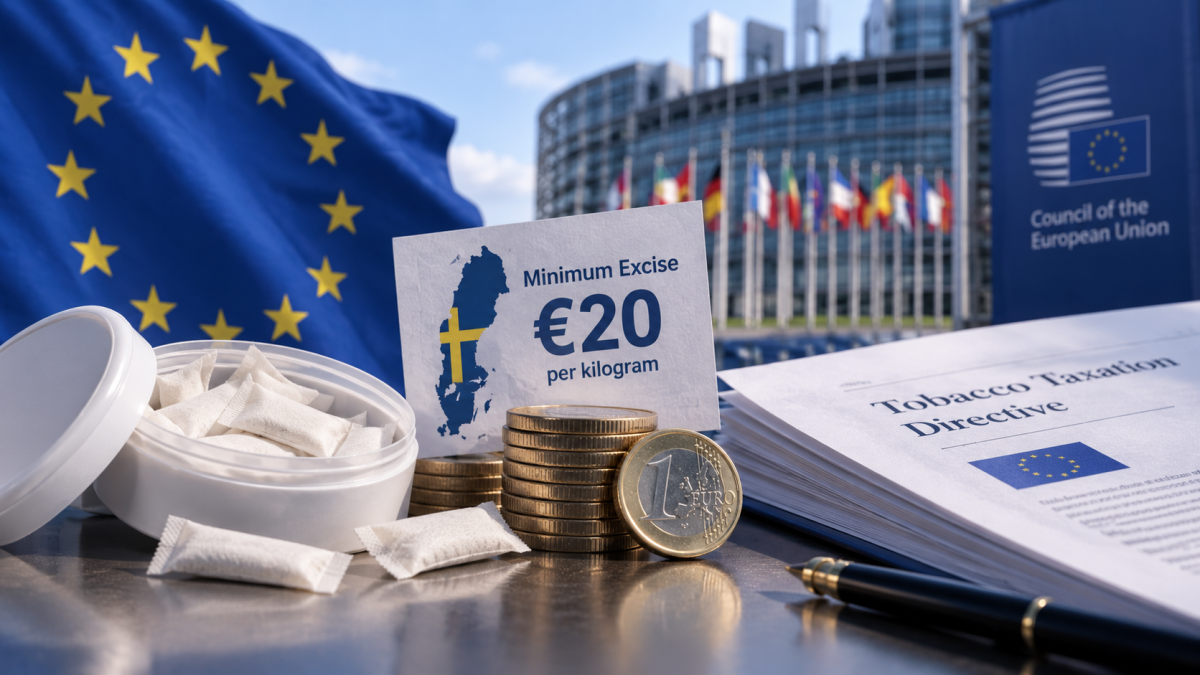
- Sweden is unwilling to accept a nicotine-pouch minimum above €20 per kilogram, according to an EU official cited by Law360.
- A May 2026 presidency compromise proposed minimums of 10% of the tax-inclusive retail price or €30 per kilogram in 2028-29, 25% or €50 in 2030-31, and 50% or €80 thereafter.
- The directive requires unanimity among EU member states in the Council, giving continued national objections significant weight.
2Firsts
September 17, 2026
According to Law360 on September 15, 2026, the Irish presidency of the Council of the European Union is using bilateral talks to advance a proposed overhaul of the bloc’s Tobacco Taxation Directive, with the aim of securing a political agreement before an Economic and Financial Affairs Council, or Ecofin, meeting in November. Sweden’s position on minimum excise duties for nicotine pouches remains one of the main unresolved issues.
The European Commission proposed a recast of the Tobacco Taxation Directive in July 2025 to raise minimum excise rates on traditional tobacco and extend the EU framework to newer products including e-cigarette liquids, heated tobacco and nicotine pouches. The proposal is a tax measure that requires unanimity among member states in the Council.
Sweden Resists a Threshold Above €20 per Kilogram
Sweden is currently unwilling to accept a minimum excise threshold for nicotine pouches above €20 per kilogram, according to an EU official cited by Law360. The position remains despite offers from the Irish presidency for more flexible phase-in arrangements.
That level is below the rates contained in an earlier public Council presidency compromise.
A compromise text dated May 29, 2026, proposed a minimum tax on nicotine pouches and other nicotine products of 10% of the tax-inclusive retail price or €30 per kilogram in 2028-29. The threshold would rise to 25% or €50 per kilogram in 2030-31, and then to 50% or €80 per kilogram after the transition.
The €30-per-kilogram starting amount in the May compromise remains above the €20 level attributed to Sweden by Law360.
Council Talks Have Already Reduced the Commission Proposal
The European Commission’s original 2025 proposal set higher monetary minimums.
Under that proposal, nicotine pouches would face a minimum excise duty of 25% of the tax-inclusive retail price or €71.5 per kilogram from 2030, rising to 50% or €143 per kilogram from 2032.
Council negotiations subsequently lowered the monetary thresholds and introduced transitional stages. The May 2026 compromise reduced the long-term monetary minimum to €80 per kilogram, with interim levels of €30 and €50.
The compromise text also introduced a mechanism allowing minimum rates to be adjusted according to member-state price levels, adding flexibility for countries with different economic conditions.
Reform Also Covers E-Cigarette Liquids and Other New Products
The proposed revision extends beyond nicotine pouches.
The Commission wants to bring e-cigarette liquids, heated tobacco, nicotine pouches and other newer nicotine products into a harmonized EU excise framework, while also raising minimum rates on some traditional tobacco products and strengthening controls on raw tobacco.
The May 2026 presidency compromise proposed the following minimum rates for e-cigarette liquids:
- 20% of the tax-inclusive retail price or €0.20 per milliliter in 2028-29;
- 20% or €0.25 per milliliter in 2030-31;
- 30% or €0.36 per milliliter thereafter.
The rates would apply to e-cigarette liquids both with and without nicotine.
The reform also seeks to bring raw tobacco into the EU’s electronic excise movement and monitoring system to strengthen oversight of cross-border flows.
Irish Presidency Seeks November Political Agreement
According to EU officials cited by Law360, the Irish presidency wants the proposal to move to a high-level Council working party on October 26, then to the Committee of Permanent Representatives, or Coreper, on November 4, before a planned Ecofin discussion on November 9.
The timetable remains a presidency objective and depends on progress among member states.
Because the tax directive requires unanimity in the Council, a continuing objection from any member state could prevent adoption.
Law360 reported that Sweden is not the only country with concerns. Malta and other member states have also raised questions about whether rapid increases in minimum rates could contribute to illicit-market activity and tax avoidance.
Sweden Has a Distinct Oral-Tobacco Policy Background
Sweden occupies a distinct position in EU rules on oral tobacco. Traditional snus is generally prohibited from being placed on the market in other EU member states, but Sweden secured a derogation when it joined the bloc.
Traditional snus and tobacco-free nicotine pouches are legally distinct product categories under EU rules. The proposed tax directive separately defines nicotine pouches as tobacco-free, nicotine-containing products intended for oral use and would establish EU-wide minimum excise duties for the category.
The minimum tax on nicotine pouches remains one of the main unresolved issues in the negotiations.
The Irish presidency has said it will continue bilateral engagement with the aim of securing unanimous political agreement before the November Ecofin meeting.
Follow 2Firsts for timely updates on global tobacco and nicotine regulations, market developments and industry trends.
Cover Image generated by AI