Key Points:
- Standards Launch: China has started the mandatory national standards process for heated cigarettes and nicotine pouches.
- Regulatory Progress: The move shows both categories are being brought into a more complete and enforceable regulatory framework.
- Clear Pathway: In China’s tobacco system, national standards are typically an important step before market access.
- No Near-Term Launch Signal: The standards process does not mean either product will enter the domestic market soon. Further drafting, review, approval and implementation are still required.
2Firsts
Shenzhen, April 15, 2026
China has begun the formal process of drafting mandatory national standards for heated cigarettes and nicotine pouches, in a move that further builds out the country’s regulatory framework for two emerging nicotine categories.
According to a notice seeking public comment, China’s National Public Service Platform for Standards Information has opened consultation on proposed mandatory national standard projects for Heated Cigarettes and Nicotine Pouches. Both projects were proposed by the State Tobacco Monopoly Administration and are listed as mandatory national standards under development, with a public comment period running from April 7 to May 7, 2026.
The move marks the start of national standards-setting work for both products. In China’s tobacco regulatory system, national standards are one of the necessary steps between regulatory classification and any future product oversight or market rollout. At the same time, the launch of standards work alone does not support the conclusion that either category will be introduced to the domestic market in the near term.
A Formal Step in China’s Regulatory Sequence
The two proposed standards are both classified as product standards and carry a planned project cycle of 22 months. In both cases, the stated justification for making them mandatory is the need to protect health and safety and to meet basic economic and social management requirements.
That matters because tobacco regulation in China typically follows a sequential path:
- Regulatory or legal classification first
- National standards formulation next
- Product launch arrangements after that
- Tax policy later
The process does not move automatically or quickly, but national standards are a key mechanism for turning a broad regulatory position into technically enforceable rules.
China’s e-cigarette regulation provides a recent example. From late 2021 to early 2022, authorities built out the legal framework for e-cigarette oversight. In April 2022, the national standard for e-cigarettes was released. On October 1, 2022, the main regulatory measures took effect, marking the start of full regulation of the category. Later that month, the Ministry of Finance, the General Administration of Customs, and the State Taxation Administration issued an announcement on the imposition of consumption tax on e-cigarettes.
The proposed projects carry a planned development cycle of 22 months. Under official rules, that generally refers to the period from plan issuance to the submission of approval materials, rather than a guaranteed timeline for final promulgation. It also suggests that, if the process proceeds normally, the standards-development work would generally be expected to conclude within about two years.
Against that backdrop, the new consultation on heated cigarettes and nicotine pouches is best understood as a regulatory development story, not as a near-term commercialization signal.
Heated Cigarettes: From Regulatory Classification to Product Standardization
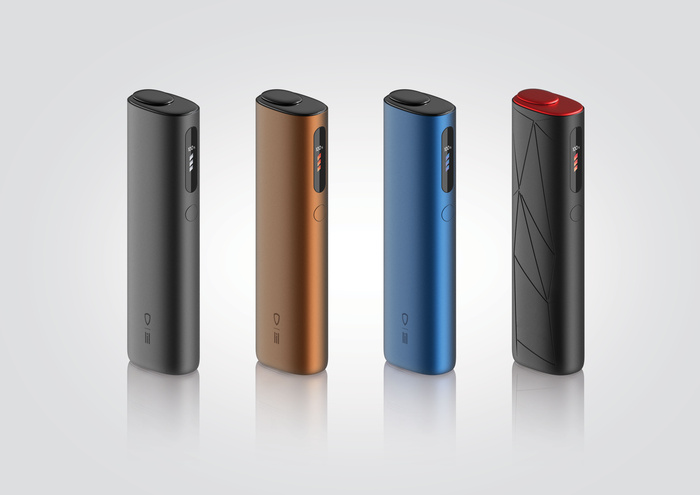
For heated cigarettes, the proposed standard would apply to heated cigarette sticks, electrically heated cigarette devices, and combined products.
The project description says the purpose is to develop a product standard that can provide technical support for domestic regulation of heated cigarettes. It defines heated cigarettes as a cigarette and device system that heats rather than burns and produces an aerosol containing nicotine for inhalation.
The document also states that electrically heated cigarettes are the mainstream form of heated tobacco products and a major research and development direction for multinational tobacco companies. It notes that the World Health Organization, the U.S. Food and Drug Administration, the European Union and some countries have all put forward product regulatory requirements for heated cigarettes.
In China, heated cigarettes have already been brought under cigarette management. But the project materials say traditional cigarette standards are not suitable for electrically heated cigarettes because the underlying product principles and structural composition differ significantly from conventional cigarettes. Regulators are now moving from broad classification toward a dedicated technical standard.
The proposed standard would define key terms including heated cigarettes, electrically heated cigarettes, heated cigarette sticks and heated cigarette devices. It would also set out requirements for design and raw materials, technical requirements, test methods, and marking and product instructions.
Among the listed areas are additive-use principles and prohibited substance ranges for cigarette sticks; electrical safety, structural design and electromagnetic compatibility requirements for devices; material requirements; requirements for tobacco substrates and cigarette-stick materials; and standards for lithium-ion batteries and battery packs. The technical section would also cover moisture activity in cigarette sticks and device requirements such as startup protection, waterproofing, pressure relief safety, drop resistance and ignition prevention.
Nicotine Pouches: Technical Rules Follow Regulatory Clarification
The proposed standard for nicotine pouches reflects a different regulatory path.
Unlike heated cigarettes, nicotine pouches have only recently been more clearly defined within China’s tobacco regulatory framework. The project description says the purpose of the standard is to provide technical support for domestic regulation of nicotine pouch products.
Its policy rationale is tied directly to recent regulatory developments. The document cites an Opinion issued by the General Office of the State Council in 2025 that called for strict action against the unlicensed production and sale of tobacco-related products containing tobacco or nicotine ingredients, including oral tobacco, nicotine pouches and nicotine paste. It also refers to a 2026 announcement by the State Tobacco Monopoly Administration that further clarified the tobacco-product status of nicotine pouches.
In that context, the standards project describes itself as a necessary step to translate regulatory requirements into concrete technical control measures and to support the incorporation of nicotine pouches into the monopoly regulatory system. It also says some products currently pose quality and safety risks in areas including the use of raw and auxiliary materials, nicotine addition levels and contaminant control.
The proposed standard would apply to nicotine pouch products, but not to other tobacco products or pharmaceuticals. It would define terms and set requirements for design and raw materials, technical performance, test methods, outer packaging and labeling.
One notable design requirement is that the product should contain nicotine. The technical framework would also address basic requirements, safety requirements and hygiene requirements. The project materials say the standard is intended to establish unified terminology, technical requirements and inspection methods, providing a technical benchmark for market access, market regulation and supervision.
Standards Work Opens the Door, But Does Not Guarantee a Launch
In an analysis shared with 2Firsts, Alan Zhao, co-founder of 2Firsts, said the move marks the start of China’s national standards-setting work for heated tobacco and nicotine pouches and further builds the regulatory framework for any future domestic sale of the two products.
But Zhao also cautioned against over-reading the move. The launch of standards-setting work is only the first step in the process, he said, and should not be taken as evidence that heated cigarettes or nicotine pouches will enter the Chinese domestic market soon. What it does show, he said, is that the regulatory system surrounding the two categories is gradually taking shape.
This distinction is critical. The formulation of national standards may be one of the necessary conditions for future market entry, but it is not, by itself, a sufficient one. The process must still proceed through drafting, public consultation, review, approval and implementation. If formal market launch is eventually to take place, further institutional arrangements would still be needed in areas such as product administration, licensing, industrial and commercial coordination, and tax policy, while a series of business decisions would also need to be made on branding, technology pathways, production and marketing.
China Tobacco has already launched heated tobacco and nicotine pouch products in international markets, suggesting that it has made corresponding preparations in brand development and product planning. The launch of these two standards projects further indicates that China is continuing to bring emerging tobacco and nicotine products into a more structured and enforceable regulatory framework. These product preparations, regulatory developments and related institutional arrangements will all be important factors shaping the timing, pace and rollout model of any future domestic launch of next-generation tobacco products by China Tobacco.
For more coverage of China’s tobacco market regulation, follow 2Firsts.
Further reading: