Key Points
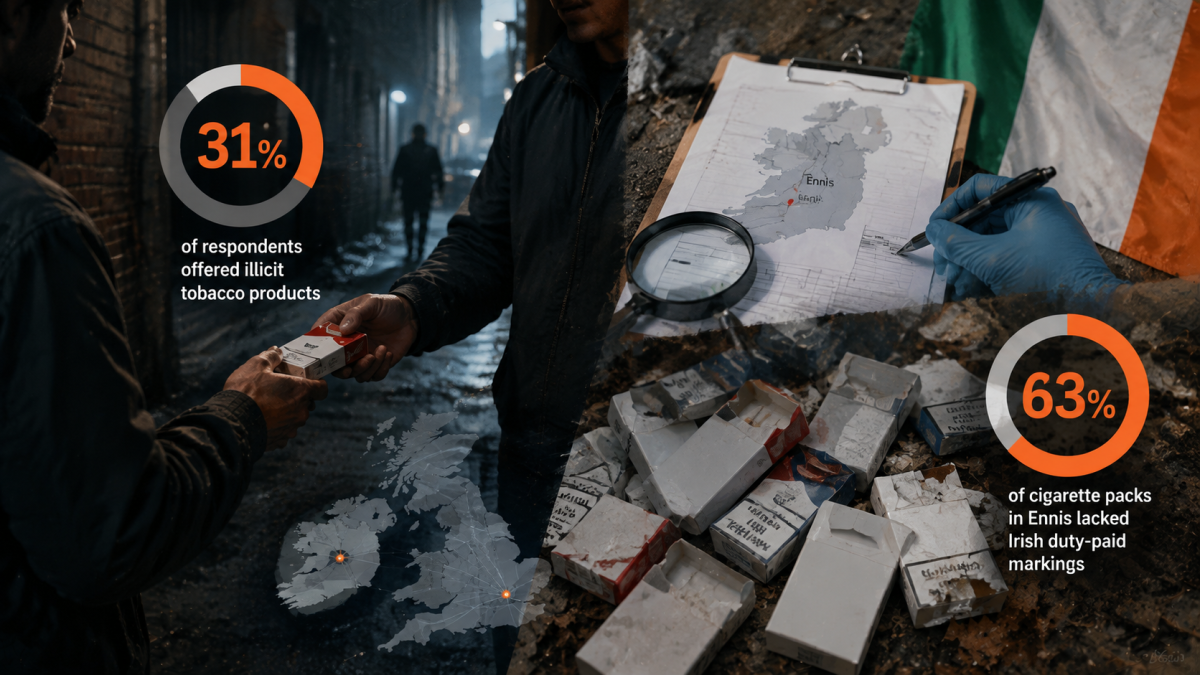
- JTI UK research found that 31% of respondents said they had been offered illicit tobacco products.
- A JTI Ireland empty pack survey found 63% of sampled cigarette packs in Ennis lacked Irish duty-paid markings.
- The UK research suggests illicit tobacco is becoming more visible to consumers.
- The Irish survey tracked the presence of non-duty-paid cigarette packs through packaging analysis.
- The figures come from industry studies and should not be interpreted as official government estimates of illicit-market size.
2Firsts
August 19, 2026
Multiple JTI-backed studies in the UK and Ireland indicate that illicit tobacco remains visible across consumer interactions, retail environments and local markets. In the UK, 31% of respondents said they had been offered illicit tobacco products, while an empty pack survey in Ireland’s Ennis area found 63% of sampled cigarette packs lacked Irish duty-paid markings.
The findings come from JTI-related market research projects and reflect the company’s assessment of illicit tobacco activity. They are not official government estimates of the size of the illicit market, but provide insight into consumer exposure and market conditions.
UK: 31% of Respondents Report Being Offered Illicit Tobacco
According to reports by Talking Retail and Better Retailing, JTI UK research found that illicit tobacco has become a product category that some consumers encounter directly.
The survey found that 31% of respondents said they had been offered illicit tobacco products.
JTI said the result suggested illicit tobacco was moving beyond hidden transactions and becoming more visible within consumer environments.
The research also examined public awareness of illicit tobacco and willingness to report suspicious activity. JTI said many consumers remain uncertain about how to identify or report illicit tobacco activity.
JTI UK has continued its “It Costs More Than You Think” campaign, aimed at raising awareness of the links between illicit tobacco, criminal activity, lost tax revenue and consumer risks.
Ireland: 63% of Ennis Packs Lacked Duty Marks
In Ireland, a JTI Ireland-commissioned Empty Pack Survey examined cigarette packs collected in the Ennis area.
The survey found that 63% of sampled cigarette packs did not carry Irish duty-paid markings.
Empty Pack Surveys typically analyse discarded cigarette packaging to identify whether products carry domestic tax markings, providing an indication of non-domestic duty-paid products in a local market.
The survey does not represent an official estimate of Ireland’s overall illicit tobacco market, but provides a snapshot of the presence of non-duty-paid products in the surveyed area.
JTI said illicit tobacco affects government revenue and creates additional pressure on legitimate retailers.
Illicit Tobacco Remains a Shared Regulatory Challenge
The UK and Ireland have both increased attention on illicit tobacco trade in recent years.
In the UK, enforcement agencies have focused on links between illicit tobacco sales, tax crime and organised criminal activity, while retailers have called for stronger action against illegal supply channels.
Ireland has also continued efforts to address illicit tobacco, citing concerns over lost tax revenue and competition faced by legitimate retailers.
JTI argues that illicit tobacco can reduce government revenue and provide funding streams for criminal networks.
However, industry research and government estimates measure different aspects of the market.
Company surveys typically examine consumer exposure, retail conditions and market behaviour, while government assessments generally rely on enforcement data, tax analysis and broader market modelling.
JTI’s research therefore provides one perspective on market visibility but does not replace official estimates of illicit tobacco prevalence.
Illicit Tobacco Remains a Focus for Regulators and Retailers
For legitimate tobacco retailers, illicit products create pricing pressure and can undermine confidence in regulated sales channels.
Retail groups in the UK have continued to call for stronger enforcement through border controls, market monitoring and cooperation between agencies.
At the same time, policymakers face the challenge of balancing taxation, public-health objectives and illicit-trade risks.
JTI’s UK and Ireland studies highlight continued visibility of illicit tobacco in consumer and market environments. Reducing illegal supply, improving public awareness and protecting legitimate retail channels are expected to remain key issues in European tobacco policy discussions.
Follow 2Firsts for the latest updates on global tobacco and nicotine regulation, market developments and policy trends.
Cover Image generated by AI