Key Points
- The FTC sent Lucky Bar Holdings LLC a warning letter on July 6, 2026, over “Made in the USA” claims.
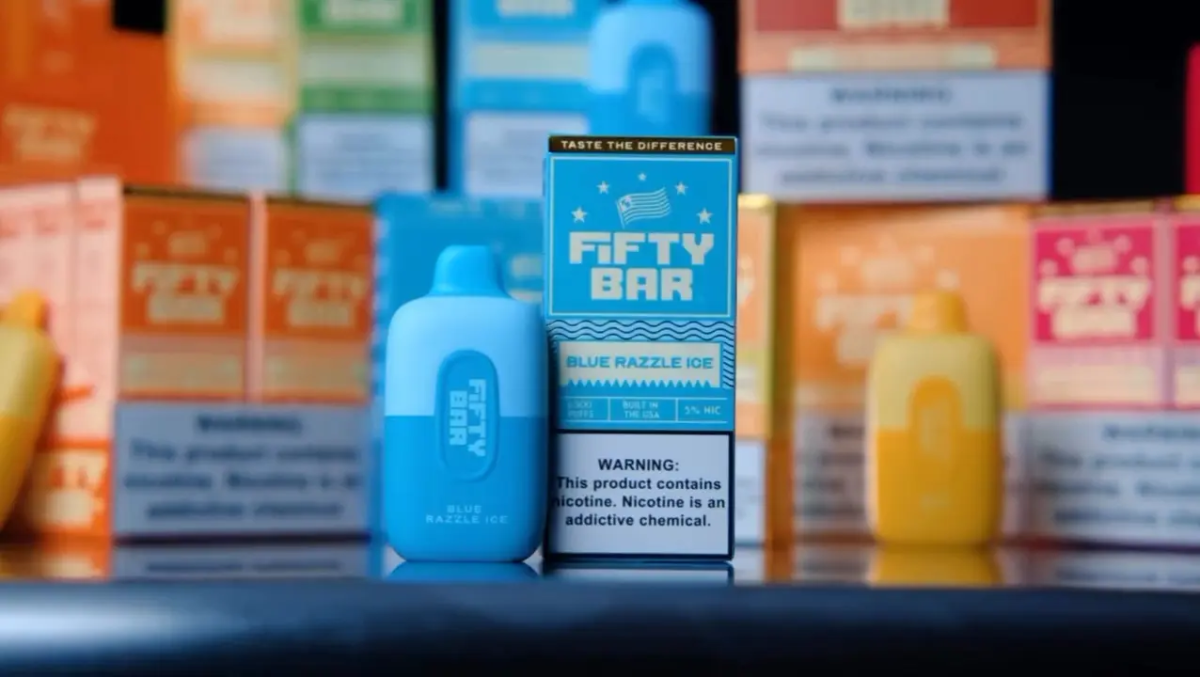
- The letter concerns Fifty Bar e-cigarette products and marketing statements such as “Built in the USA.”
- FTC staff said Lucky Bar may be importing the products in whole or in significant part while making unqualified U.S.-origin claims.
- The FTC said the letter is not a formal determination of legal violation.
- Violations of the Made in USA Labeling Rule may lead to consumer redress or civil penalties of up to $53,088 per violation.
- The FDA previously warned Fifty Bar-related entities in 2024 that certain Fifty Bar products lacked marketing authorization.
- The case shows that U.S. vape compliance risk now spans FDA product authorization, FTC advertising rules and origin-labeling claims.
2Firsts
July 20, 2026
According to the New York Post, the Federal Trade Commission is scrutinizing vape brand Fifty Bar over “Made in America” and similar U.S.-origin marketing claims.
FTC public records show that the agency sent a warning letter on July 6, 2026, to Lucky Bar Holdings LLC regarding “Made in the USA” representations. The company is tied to Fifty Bar e-cigarette products. The letter was addressed to Casey Bates, manager and chief financial officer of Lucky Bar Holdings LLC, at an Austin, Texas address.
FTC Questions Fifty Bar’s U.S.-Origin Claims
In the warning letter, the FTC said information obtained by Commission staff suggests that Lucky Bar promoted certain Fifty Bar e-cigarette products as being made in the United States.
The agency said the claims appeared on the Fifty Bar website, social media accounts and posts, and product labeling.
The FTC cited several examples, including:
- “BUILT IN THE USA”;
- “The Only Disposable Built in the USA”;
- “Proudly made in the USA”;
- “Built in America”;
- “Manufactured in U.S.-based facilities”;
- “Sourced through American suppliers and partners”;
- “Created by American workers, engineers, and innovators.”
The FTC said staff had reason to believe Lucky Bar may be importing the product in whole or in significant part despite making those unqualified U.S.-origin claims.
Unless Lucky Bar can adequately substantiate that “all or virtually all” of the product is made in the United States, the FTC said the claims may violate the FTC Act, the Made in USA Labeling Rule and Section 45a.

FTC Applies “All or Virtually All” Standard
The FTC letter explains that companies must meet a high standard when using “Made in the USA” or similar U.S.-origin claims.
Under the FTC Act, a product may be advertised as “Made in the USA” when all or virtually all of its ingredients are domestic, it contains no more than a de minimis amount of foreign content, and the product was last substantially transformed in the United States.
For product labeling, the FTC said the Made in USA Labeling Rule and Section 45a require final assembly or processing to occur in the United States, all significant processing to occur in the United States, and all or virtually all ingredients or components to be made and sourced in the United States.
That standard means U.S.-based filling, packaging, assembly, branding or marketing alone may not be enough to support an unqualified “Made in USA” claim.
Warning Letter Is Not a Final Legal Finding
The FTC emphasized that the letter does not reflect a formal determination that Lucky Bar’s “Made in the USA” claims violate the law.
However, the agency advised the company to immediately come into compliance with the FTC Act, the Made in USA Labeling Rule and Section 45a. It also told Lucky Bar to review its U.S.-origin representations, labeling and advertising, and to cease and desist any conduct that could violate the requirements.
The FTC requested that Lucky Bar contact agency staff within five business days of receiving the letter to discuss its compliance plan.
The agency said violations could lead to legal action and court injunctions. Violations of the Made in USA Labeling Rule could also result in enforcement actions seeking redress for injured American consumers and civil penalties of up to $53,088 per violation.
FTC Also Warned Other Vape Companies
The FTC said on July 6 that it had sent warning letters to seven companies that appeared to have misrepresented certain products as “Made in the USA,” or made similar origin claims, despite indications that the products were imported in whole or in significant part.
The products covered by the warning letters included drums, industrial laser machinery, coordinate measuring machines and e-cigarettes.
In the e-cigarette sector, the FTC also sent warning letters to My Vape Order Inc. and NebTech Inc.
In its letter to My Vape Order, the FTC said the company promoted certain Air Factory e-cigarette products with claims such as “AMERICAN MADE” and “Made in America.” The agency said staff had reason to believe My Vape Order may be importing the product in whole or in significant part while making unqualified U.S.-origin claims.
NebTech Inc., which the FTC listed among the recipients of the same batch of letters, was also identified in legal commentary as connected to Reign Bar e-cigarette claims.
“Made in USA” Claims Are an FTC Enforcement Priority
The action comes as the U.S. government is increasing scrutiny of “Made in USA” marketing claims.
The FTC said President Donald Trump issued a March 2026 executive order directing the Commission to prioritize enforcement over unlawful “Made in USA” claims. In April 2026, the FTC announced three enforcement settlements involving origin claims for American flag products, footwear and electronic dartboards.
Christopher Mufarrige, director of the FTC’s Bureau of Consumer Protection, said consumers who spend money on goods marketed as “Made in the USA” should be able to trust that such products are all or virtually all made in the country. He said the FTC would hold companies accountable for misleading or false U.S.-origin claims.
For the vape industry, the warning letters show that compliance is not limited to FDA marketing authorization. Advertising, labeling, social media marketing and origin claims are also becoming areas of regulatory exposure.
Fifty Bar Previously Received FDA Warning Letter
Fifty Bar has also drawn FDA attention.
FDA public records show that the agency’s Center for Tobacco Products sent a warning letter on September 12, 2024, to Beard Management Inc. d/b/a Beard Vape Co. d/b/a Lucky Bar Holdings, d/b/a Fifty Bar. The FDA said it reviewed the Fifty Bar website and determined that electronic nicotine delivery system products listed there were being manufactured and offered for sale or distribution to U.S. customers.
The FDA said products including Fifty Bar 6500 Puff Rechargeable Disposable Mint, Fifty Bar 6500 Puff Rechargeable Disposable Vanilla Custard and Fifty Bar 6500 Puff Rechargeable Disposable Pacific Cooler lacked FDA marketing authorization.
According to the FDA, the products were new tobacco products without marketing authorization orders in effect. The agency said they were adulterated and misbranded under the Federal Food, Drug, and Cosmetic Act.
The FDA requested a written response within 15 working days describing actions taken to address the violations and bring the products into compliance.
Two Different Compliance Risks
The FTC warning letter and the FDA warning letter address different legal issues.
The FDA warning letter focuses on whether e-cigarette products have marketing authorization. Under U.S. law, new tobacco products generally need FDA authorization before they can be legally marketed in the United States.
The FTC warning letter focuses on whether the company can substantiate U.S.-origin marketing claims. Even if a vape product undergoes some filling, packaging or assembly in the United States, an unqualified “Made in USA” claim may create legal risk if important components or the product as a whole are imported.
The Fifty Bar matter therefore illustrates how vape companies in the U.S. market face multilayered compliance scrutiny: the product itself must satisfy FDA tobacco requirements, while advertising and labeling must also comply with FTC consumer-protection and origin-claim rules.
Vape Brands Face Scrutiny Over Domestic Manufacturing Narratives
The U.S. vape market has long relied heavily on imported disposable e-cigarette products. Some brands have tried to differentiate themselves through claims such as “American made,” “American assembled,” “American filled,” or “U.S.-based.”
The FTC warning letter shows that companies using such claims must clearly distinguish between U.S. manufacturing, U.S. assembly, U.S. filling, U.S. brand ownership and U.S.-based operations.
If a brand uses imported devices, components, assemblies or semi-finished products, it may need more precise and qualified language rather than broad “Made in USA” claims.
For the vape industry, the case shows that U.S. regulators are expanding scrutiny beyond product authorization, youth access and illegal imports into advertising accuracy, label claims and consumer protection.
Follow 2Firsts for the latest updates on global tobacco harm reduction, nicotine products and regulatory developments.
Cover Image source: New York Post
Disclaimer
This article is provided solely for professional research, industry discussion, and informational purposes. Any references to brands, companies, products, technologies, or policies are made for factual reporting and analytical purposes only, and do not constitute endorsement, recommendation, promotion, or advertising by 2Firsts.
Nicotine-containing products, including but not limited to cigarettes, e-cigarettes, heated tobacco products, and nicotine pouches, carry significant health risks. Readers are responsible for complying with all applicable laws and regulations in their respective jurisdictions, including age restrictions and access limitations.
The information contained in this article should not be regarded as investment, legal, medical, regulatory, or commercial advice. While 2Firsts strives to ensure the accuracy and reliability of its content, it does not assume liability for any direct or indirect loss arising from errors, omissions, inaccuracies, or reliance on the information contained herein.
This article is not intended for individuals below the legal age for accessing tobacco or nicotine-related information in their jurisdiction.
Copyright Notice
This article is either original content produced by 2Firsts or content reproduced, translated, summarized, or adapted from third-party sources with attribution where applicable. The intellectual property rights of the original content remain with 2Firsts or the respective original rights holders.
No individual or organization may copy, reproduce, distribute, republish, modify, translate, or otherwise use this content without prior authorization. Any unauthorized use may result in legal action.
For copyright-related inquiries, corrections, or removal requests, please contact: info@2firsts.com.
AI-Assisted Translation and Editing Notice
Portions of this article may have been translated, edited, or reviewed with the assistance of artificial intelligence tools to improve efficiency and readability. Due to the limitations of AI-assisted translation and editing, discrepancies, omissions, or inaccuracies may exist when compared with the original source.
Where applicable, readers are advised to refer to the original source for the most complete and accurate information. If you identify any errors or believe that any content infringes upon your rights, please contact us at info@2firsts.com, and we will review and address the matter promptly.