Key Points
- House Bill 5364 would replace separate nicotine-salt and freebase rates with a unified ₱10-per-milliliter excise tax, indexed by 5% annually from 2027.
- Rodriguez projects the proposal could generate about ₱6 billion, roughly US$97 million, a year on average from 2027 through 2030.
- Current rates are roughly ₱60 per milliliter for nicotine salt and ₱6.95 per milliliter for freebase nicotine, creating a nearly ninefold tax differential.
- The government is considering excise and health-tax reforms as it seeks to offset around ₱66 billion, approximately US$1.07 billion, in expected forgone revenue from proposed tax relief.
- Lawmakers, industry groups and public-health advocates broadly support simplifying the two-tier system but remain divided over whether the unified rate should remain relatively low or rise substantially.
2Firsts
August 18, 2026
Philippine lawmakers are revisiting the country's vape excise-tax system, with several legislators seeking to eliminate separate rates for nicotine salt and freebase nicotine while arguing that vaping products should continue to face lower taxes than combustible cigarettes under a risk-based approach.
The debate comes as President Ferdinand Marcos Jr.'s government studies higher excise and health taxes to help replace billions of pesos in revenue expected to be lost under a proposed tax-relief package.
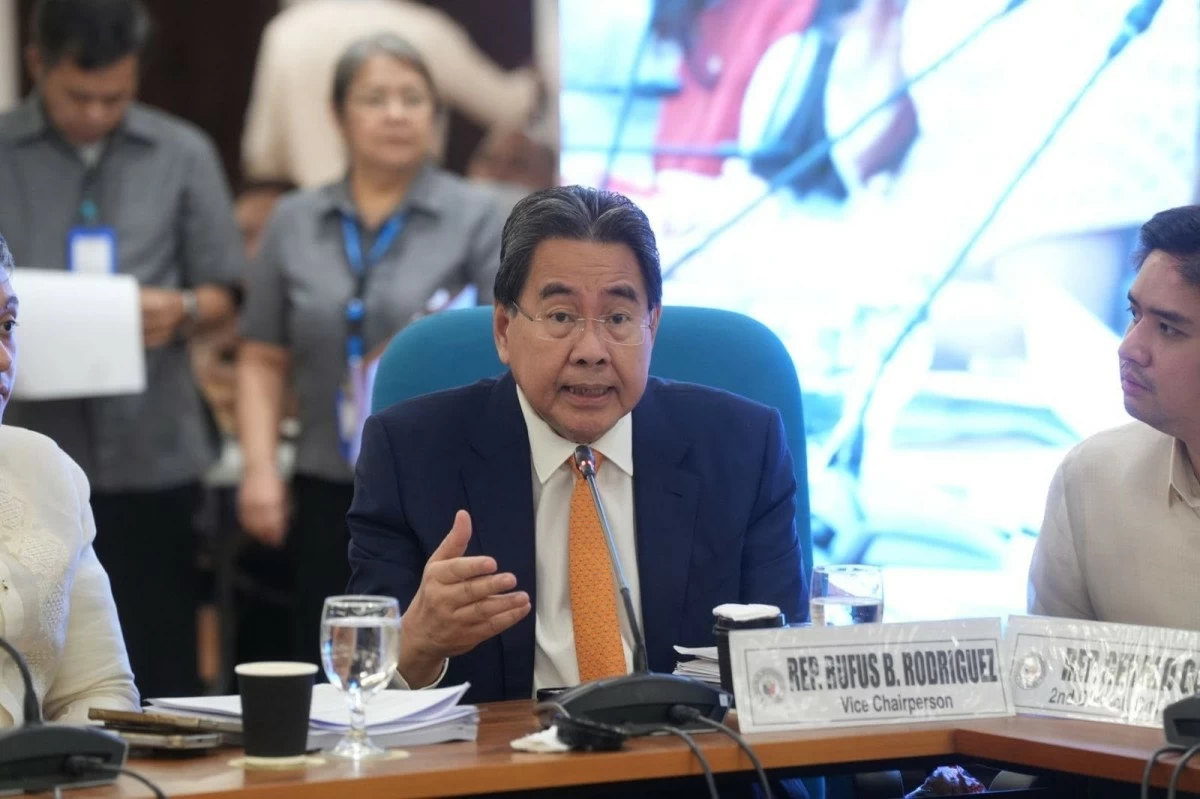
According to Manila Bulletin on Aug. 17, Cagayan de Oro City Second District Rep. Rufus Rodriguez used an Aug. 11 House Committee on Ways and Means hearing to press for House Bill 5364, which he has described as a Vape Tax Unification Bill.
House Bill 5364 Proposes ₱10-per-mL Unified Rate
House Bill 5364, introduced by Rodriguez and Rep. Maximo Rodriguez Jr., would amend Sections 144, 145 and 263-A of the National Internal Revenue Code.
The bill would impose a single ₱10-per-milliliter excise tax on covered vapor liquids regardless of whether they contain nicotine salt, freebase nicotine or fall within other categories covered by the proposal.
The unified rate would take effect when the law becomes effective and would increase by 5% annually beginning January 1, 2027.
The bill would also require the Bureau of Internal Revenue to establish a minimum price for vapor products that takes into account excise and value-added taxes, reasonable production costs and trade margins based on the lowest-priced brand registered with the BIR.
Rodriguez said his team projects the proposal could produce average annual revenue of around ₱6 billion, or about US$97 million, between 2027 and 2030, while improving compliance and reducing illicit trade and misdeclaration.
That revenue estimate comes from the bill's proponents and is not an official fiscal projection from the Philippine government.
Existing Rates Differ by Almost Ninefold
The Philippines currently taxes nicotine-salt and conventional freebase vapor products at sharply different rates.
Manila Bulletin reported that nicotine-salt products are taxed at around ₱60 per milliliter, while freebase nicotine products face a levy of about ₱69.50 per 10 milliliters, equivalent to ₱6.95 per milliliter.
That creates a nearly ninefold difference on a per-milliliter basis.
Rodriguez cited 2025 BIR data showing that more than 90% of vape excise-tax collections came from products declared as freebase nicotine.
He argues that the large differential creates a financial incentive for traders to misclassify nicotine-salt products as lower-taxed freebase liquids.
House Bill 5364's explanatory note similarly identifies mislabeling and classification arbitrage as reasons for reform. The proponents argue that regulators face practical difficulties in efficiently distinguishing nicotine salt from freebase nicotine, creating opportunities for traders to exploit the tax differential.
Government Seeks to Offset ₱66 Billion in Forgone Revenue
The vape-tax debate is unfolding as the Marcos administration considers broader fiscal measures.
The Philippine government has said proposed income and business tax-relief measures could result in around ₱66 billion, approximately US$1.07 billion, in forgone government revenue.
The Department of Finance is examining potential excise and health-tax reforms to offset part of that loss, with tobacco and vaping products, sweetened beverages and single-use plastics among the categories under consideration.
Vaping taxation is therefore being discussed at the intersection of two policy objectives: protecting government revenue while determining how alternative nicotine products should be taxed relative to combustible cigarettes.
Rodriguez and other supporters of risk-based taxation argue that non-combustible nicotine products should retain a tax advantage over cigarettes, both to reflect what they describe as differences in risk and to encourage adult smokers to move away from combustible products.
That approach has also received support from some economists and industry groups, though the appropriate tax level and public-health implications remain disputed.
Another Proposal Would Set the Rate at ₱15 per Milliliter
The ₱10 rate in House Bill 5364 is not the only unified-tax proposal before lawmakers.
Manila Bulletin reported that Manila Second District Rep. Rolando Valeriano has filed a separate bill proposing a ₱15-per-milliliter unified excise tax on vapor products beginning in 2027, followed by annual increases of 5% from 2028.
That proposal also cites the wide gap between current nicotine-salt and freebase rates as a source of classification ambiguity and tax avoidance.
The Philippine E-Cigarette Industry Association has backed a ₱10-per-milliliter uniform rate, arguing that it would remove incentives for misclassification and give the BIR and Bureau of Customs a simpler basis for enforcement.
Both rates remain legislative proposals and would have to pass through Congress before taking effect.
Public-Health Groups Push for a Higher Rate
While there is growing support for eliminating the two-tier structure, there is less agreement on where a unified rate should be set.
Youth for Health Coalition has backed a substantially higher uniform vape excise tax, arguing that higher prices are needed to reduce affordability among young people.
The group opposes using lower vape taxes as an incentive for switching and argues that taxation should prioritise reducing youth nicotine initiation.
Philippine tax and finance authorities have also previously supported moving toward a uniform rate, citing the administrative and enforcement problems created by the current split between nicotine salt and freebase products.
The core disagreement is therefore shifting from whether the two rates should be unified to how high the new rate should be and how large a tax differential should remain between vaping products and combustible cigarettes.
Risk-Based Taxation Becomes Central to Debate
Rodriguez framed his proposal during the Aug. 11 hearing as an application of risk-based taxation.
He argued that non-combustible alternatives should carry lower taxes than cigarettes and compared the principle with tax incentives that differentiate electric vehicles from gasoline-powered cars.
Economists Arthur Laffer and Ashok Kaul have also recently called for differentiated Philippine taxes on cigarettes and smoke-free nicotine products. They argue that maintaining a tax gap could influence adult smokers' product choices while reducing the risk that excessive taxation pushes consumers toward illicit markets.
Those positions are policy arguments made by lawmakers and economists, not established conclusions of Philippine health authorities.
Public-health advocates have taken a different position, emphasizing youth nicotine use and calling for higher excise taxes to make vaping products less affordable.
As the government also seeks to recover revenue lost through tax relief, lawmakers will have to weigh revenue collection, tax administration, illicit trade, product switching and youth protection as they decide how the next vape-tax regime should be structured.
Follow 2Firsts for the latest updates on global tobacco and nicotine taxation, regulation and policy developments.
Cover Image source: Manila Bulletin