Key Takeaways
- Glas submitted its PMTA for the G2 system on July 21, 2021, covering one age-gated device and eight pod products.
- FDA’s Office of Science first recommended all eight products for authorization in December 2025 and later supported six of them in February 2026.
- In March 2026, FDA authorized only the Glas G2 device and the Blonde Tobacco pod, while four flavored pods were held back from receiving marketing granted orders.
- Glas says the product was designed to address FDA concerns on youth access through age and identity verification, counterfeit cartridge detection and remote deactivation features.
- Glas argues the prolonged delay conflicts with internal scientific findings and also raises Administrative Procedure Act concerns.
2Firsts, April 23,2026
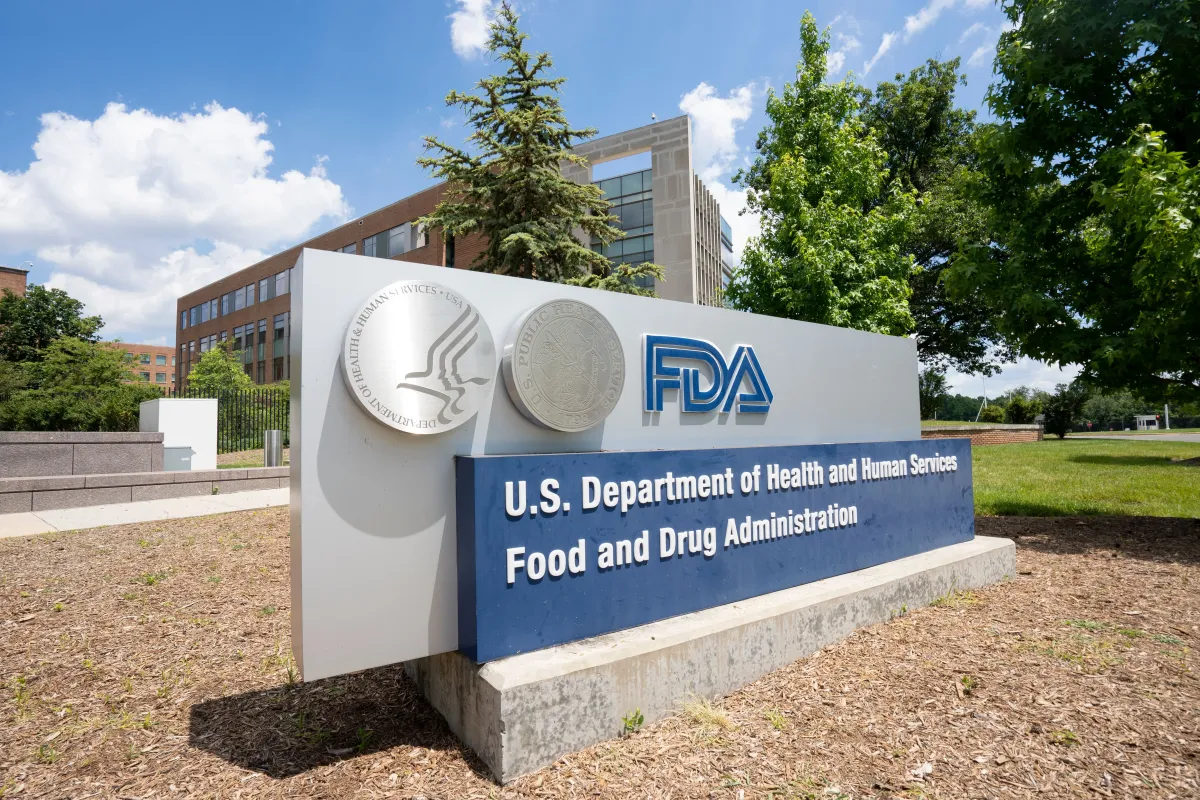
According to the report, California vape maker Glas has accused the U.S. Food and Drug Administration of sidelining its own science after newly released internal records showed agency reviewers had backed authorization for several flavored products that were later blocked by senior leadership.
The G2 application has been under review since 2021
The report said the dispute centers on Glas Inc.’s premarket tobacco product application for its G2 system, submitted on July 21, 2021. The application covered one age-gated device and eight pod products. Company emails and FDA memos obtained through a Freedom of Information Act request showed that FDA’s Center for Tobacco Products Office of Science initially advised granting marketing orders for all eight SKUs on Dec. 18, 2025.
FDA science staff later supported authorization for six items
According to the report, on Feb. 17, 2026, Office of Science Director Matthew Farrelly signed off on authorizing six items, including the device, four flavored pods, two of them menthol-flavored, and one tobacco-flavored pod. At the same time, he said two other tobacco-flavored pods, Blue Tobacco and Signature Tobacco, should remain under review because of issues tied to estimated cumulative excess lifetime cancer risk values.
The report added that Farrelly explicitly said he did not want the two tobacco-flavored pods to delay authorization for the other products.
Senior leadership later blocked four flavored pods
That track did not continue. The report cited a separate memo dated March 11, 2026, in which Acting CTP Director Bret Koplow wrote that Principal Deputy Commissioner Sara Brenner had instructed the agency on Feb. 19 to “refrain from issuing” marketing granted orders for four flavored pod products. Those products were Gold, Sapphire, Fresh Menthol and Classic Menthol.
As a result, FDA issued marketing granted orders only for the Glas G2 device and the Blonde Tobacco pod on March 12.
Glas says the outcome is hard to reconcile with the review process
In an April 7 letter to FDA Commissioner Marty Makary, Koplow and agency counsel, Glas wrote that the Brenner memo “does not fully account for the science and evidence in the record.” The company said the outcome was “difficult to reconcile with both the FDA’s own review process and the fulsome analysis and recommendations of the agency’s scientific staff.”
Glas attorney Stacy Ehrlich said it appeared that, for unclear reasons, FDA political leadership had overruled the expert scientific conclusions of its own tobacco scientists.
The company says the product was built to answer FDA youth-access concerns
The report said Glas has for years pitched the G2 system as a response to FDA concerns about youth access and counterfeit products in the ENDS market. In letters to Health and Human Services Secretary Robert F. Kennedy Jr. and FDA officials, Glas described embedded age and identity verification before first use, continued user authentication, counterfeit cartridge detection, cartridge identification to prevent unauthorized reuse and the ability to deactivate the device remotely.
Glas also said FDA had placed the product in an expedited review lane as a “product with merit” because of these access controls.
Glas says studies showed flavored products helped adult smokers switch
In its April 7 letter, Glas also said its application fit within the framework FDA later outlined in the March 2026 draft guidance on flavored ENDS and youth risk. The company said FDA had asked for evidence that the products could help adult smokers switch or reduce cigarette use, and that its PMTA included a three-month randomized switching study of 400 exclusive heavy smokers.
According to Glas, after three months, 13% to 21% of participants using Glas products had quit smoking entirely, 45% to 46% had cut daily cigarette consumption by at least half, and 79% to 92% showed some degree of reduction when combined benefit measures were used. Glas said the largest gains appeared with menthol and other flavored products.
The company also cited another actual-use study, saying smokers using Gold pods reduced daily cigarette use by 73%, while smokers using Sapphire pods reduced it by nearly 25%. It also referred to a perception study that, according to the company, showed interest among smokers who wanted to quit within 12 months but little interest among youth, former smokers and people who never smoked.
Glas says underage users could not activate the device in testing
On youth access, Glas said the evidence was even stronger. The company said it conducted multiple functional and age-verification tests in which no underage participants were able to activate the device. In its April 7 letter, Glas also quoted language it said came from FDA’s technical review, including that “the age-gating technology combined with the marketing restrictions … are expected to sufficiently mitigate the risk to youth,” and that “100% of youth and young adults below the minimum age of sale failed age-verification.”
Brenner’s memo, however, took a different view. As quoted by Glas, Brenner wrote that FDA has “very little experience evaluating device access restrictions in the context of ENDS” and therefore needed “additional time to consider” the four non-tobacco products, directing CTP not to issue marketing granted orders for them.
The dispute feeds a broader internal conflict over flavored vaping policy
The report said the split inside FDA is now feeding into a larger political conflict within the administration over flavored vaping policy. A Wall Street Journal report had said the White House was pushing to broaden access to flavored vaping products for adults, while Makary opposed authorizing new flavors and blocked that effort.
The same report said White House spokesman Kush Desai described the administration and FDA as “completely aligned on expanding the availability of flavored vape products for adults, and adults only,” while Kennedy told lawmakers, “We are doing everything we can now to get American vapes on the market. People are using those vapes to quit smoking, which is something that we like.”
Glas says the case raises questions about PMTA consistency
The report said one reason the Glas case stands out is the amount of documentation available. In a March 23 letter to Kennedy, Glas said FDA contacted the company on Dec. 17, 2025 to set up a teleconference for Dec. 19, but canceled it just hours before it was due to take place. The next day, FDA posted several Glas products on its authorized products webpage, including Blonde Tobacco, Classic Menthol, Fresh Menthol, the Glas G2 device, Gold and Sapphire.
According to Glas, after the company asked what was happening, Koplow responded that “The Glas products have not been authorized. The application remains pending. The website is being immediately corrected.” Glas said the sequence, scientific approval, a planned call, a public listing and then a reversal, showed the agency had been ready to proceed but was then held back.
The company says its products have remained in regulatory limbo for nearly five years
Glas is now characterizing the continuing delay as not only bad decision-making but also a possible Administrative Procedure Act issue. In its March 23 and April 7 letters, the company argued that FDA had missed the statutory 180-day PMTA deadline by years and then overruled scientific staff without a clear public explanation.
The report concluded that Glas says its application has been under review for almost five years, leaving the products in “regulatory limbo.” It said the newly released records sharpen a broader question for the ENDS market: when flavored products reach the commissioner’s office, how much weight FDA’s scientific review actually carries.
Click on the image to read "2Firsts GLAS PMTA Special Edition."
We welcome news tips, article submissions, interview requests, or comments on this piece.
Please contact us at info@2firsts.com, or reach out to Alan Zhao, CEO of 2Firsts, on LinkedIn
Notice
1. This article is intended solely for professional research purposes related to industry, technology, and policy. Any references to brands or products are made purely for objective description and do not constitute any form of endorsement, recommendation, or promotion by 2Firsts.
2. The use of nicotine-containing products — including, but not limited to, cigarettes, e-cigarettes, nicotine pouchand heated tobacco products — carries significant health risks. Users are responsible for complying with all applicable laws and regulations in their respective jurisdictions.
3. This article is not intended to serve as the basis for any investment decisions or financial advice. 2Firsts assumes no direct or indirect liability for any inaccuracies or errors in the content.
4. Access to this article is strictly prohibited for individuals below the legal age in their jurisdiction.
Copyright
This article is either an original work created by 2Firsts or a reproduction from third-party sources with proper attribution. All copyrights and usage rights belong to 2Firsts or the original content provider. Unauthorized reproduction, distribution, or any other form of unauthorized use by any individual or organization is strictly prohibited. Violators will be held legally accountable.
For copyright-related inquiries, please contact: info@2firsts.com
AI Assistance Disclaimer
This article may have been enhanced using AI tools to improve translation and editorial efficiency. However, due to technical limitations, inaccuracies may occur. Readers are encouraged to refer to the cited sources for the most accurate information.
We welcome any corrections or feedback. Please contact us at: info@2firsts.com