Key Points
- Volcano eCigs plans to close all 13 physical retail stores in Hawaii on December 31, affecting approximately 56 employees, according to a WARN notice filed with the state.
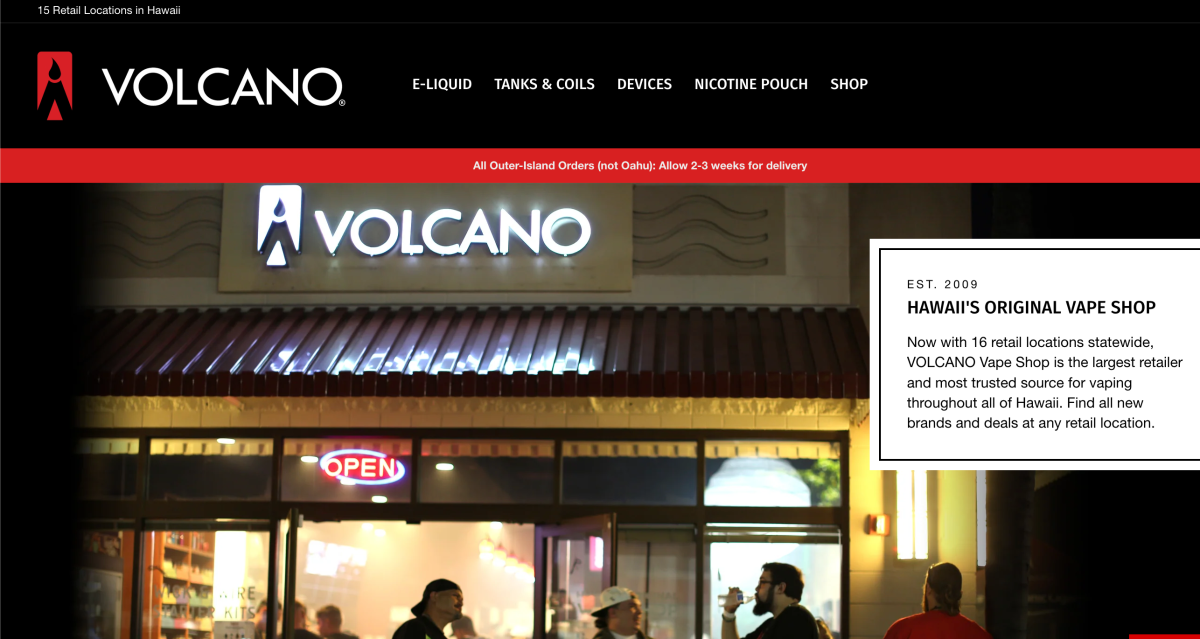
- Founded in 2009, Volcano operates vaping retail, wholesale, proprietary product and online businesses. Local media describe it as Hawaii's largest vape retailer.
- In legislative testimony submitted in 2024, Volcano described itself as Hawaii's largest independent vape retailer and wholesaler, reporting 15 stores and more than 80 full-time employees at that time.
- Hawaii's new product directory will take effect on January 1, 2027, with restrictions on unlisted vaping products and per-item penalties reaching $2,000 for repeated violations.
- The state has already expanded inspection and seizure powers and will introduce separate disposable-vape restrictions. Volcano warns the measures could shift some sales to informal channels.
2Firsts
November 9, 2026
Volcano eCigs, described by local broadcaster Hawaii News Now as Hawaii's largest vape retailer, plans to close all 13 of its physical stores on December 31, 2026, affecting approximately 56 employees. The company also operates wholesale, proprietary vaping product and online businesses. Its retail network is scheduled to close one day before new state vaping product directory and sales restrictions take effect on January 1, 2027.
Jocor Enterprises LLC, which operates Volcano eCigs, filed a Worker Adjustment and Retraining Notification (WARN) with the Hawaii Department of Labor and Industrial Relations on November 4, confirming the permanent closure of its physical retail operations and citing changes in the state's regulatory environment for electronic smoking products.
Hawaii's Largest Independent Retailer and Wholesaler Plans to Close 13 Stores After 17 Years
Volcano eCigs was founded in 2009, initially selling vaping products online before expanding into physical retail stores in Hawaii and developing its own devices, e-liquids and wholesale business.
The company has long described itself as Hawaii's largest independent retailer and wholesaler of vaping products.
In written testimony submitted to the Hawaii legislature in February 2024, Volcano Chief Operating Officer Scott Rasak said the company then operated 15 stores and employed more than 80 full-time workers. He also said Volcano sold products to customers in multiple U.S. states and more than 30 countries or territories overseas.
Those figures reflect the company's stated operating scale in 2024. The latest WARN filing, submitted on November 4, identifies 13 physical retail locations scheduled for closure and approximately 56 affected employees.
Affected positions include retail management, human resources and sales. Most employees are expected to leave on December 31, while a limited number may remain through January 15, 2027, to complete administrative and operational closeout work.
Volcano's product business includes proprietary devices and e-liquids alongside third-party brands.
Its company history identifies the VOLCANO Starter Kit, MAGMA, INFERNO and LAVATUBE device lines and proprietary e-liquid products. Store information also lists third-party hardware brands including SMOK, Geekvape and VOOPOO, together with e-liquid brands such as BLVK, Candy King, Hi-Drip, Skwezed and Juice Head.
The company's website also provides online retail and wholesale business channels.
The WARN notice concerns the physical retail network. Volcano has not disclosed its plans for wholesale and online operations following the closures, nor has it released figures for associated inventory, store revenue or closure costs.
Hawaii's 2027 Directory Restricts Retail and Wholesale Inventory, With Penalties Up to $2,000 Per Item
Volcano's planned store closures come amid significant changes to Hawaii's regulation of electronic smoking products.
Under Act 190 of 2026, the state will launch its Electronic Smoking Device and E-Liquid Directory on January 1, 2027.
Manufacturers must certify to the Hawaii Department of the Attorney General's Tobacco Enforcement Unit that the relevant products have received marketing granted orders from the U.S. Food and Drug Administration (FDA) and comply with applicable federal and state laws.
Certifications must identify specific brands, models and flavors. Beginning January 1, 2027, only devices and e-liquids included in the state directory may legally be sold in Hawaii.
The rules apply to retailers, wholesalers, dealers and distributors. Businesses may not acquire, possess, transport, store, sell or offer for sale products that are absent from the directory.
The state emphasizes that listing a brand does not automatically authorize every model or flavor sold under that brand.
Under guidance issued by the Attorney General's office, first-time violations carry civil penalties of $500 per individual product. Penalties increase for repeated violations within a 12-month period, reaching $1,500 to $2,000 per item for a fourth or subsequent violation.
Unlisted inventory may also be seized, forfeited or destroyed, and the state may recover applicable investigation and enforcement costs.
The directory requirements therefore extend beyond point-of-sale compliance to retail and wholesale inventory management. Businesses must verify the eligibility of individual products they acquire, hold and distribute.
A separate law, Act 189 of 2026, will restrict the sale of disposable electronic smoking devices meeting its statutory definition from January 1, 2027.
The definition covers non-refillable devices with non-rechargeable batteries that are intended to be discarded after their contents are depleted. Devices with FDA marketing granted orders are excluded from that definition. Violations may result in fines of up to $100 per day for each violation.
Act 229 of 2026, which took effect on September 1, expanded the authority of the Attorney General's office and Department of Taxation to inspect businesses and seize tobacco products, including electronic smoking devices and e-liquids. Relevant untaxed products may be treated as contraband.
The Attorney General's office previously reported that FDA records showed 48 authorized e-cigarette products as of August 28, 2026. That was a historical federal authorization count, not the final number of products expected in Hawaii's 2027 directory.
Retail Network Closure Fuels Debate as Wholesale and Online Plans Remain Undisclosed
Volcano Chief Operating Officer Scott Rasak told Hawaii News Now that the new laws would substantially reduce the range of products specialty vape stores could legally sell.
He argued that restrictions on products currently sold through age-verified retail stores could shift some transactions toward informal peer-to-peer and cash-based channels.
State Representative Scot Matayoshi, chair of the Hawaii House Consumer Protection and Commerce Committee, said closures among specialty vape stores reflected the extent to which existing retail assortments included products without FDA marketing authorization.
Matayoshi said the legislation was intended to reduce the availability of flavored vaping products marketed to young people.
Kevin Ramirez, a program manager at the Coalition For A Tobacco-Free Hawaii, described the state's existing vaping product supply as containing approximately 7,000 products and compared that estimate with the 48 e-cigarette products authorized by the FDA at the time.
The comparison reflects an advocate's estimate of local product availability and a historical federal authorization count. It does not establish the final size of Hawaii's 2027 directory or quantify potential changes in retail and wholesale sales.
Volcano's earlier legislative testimony indicated that its business extended beyond Hawaii to other U.S. markets and international customers. The company has not explained how the new state restrictions will affect those activities or disclosed how many of its proprietary and third-party SKUs qualify for inclusion in Hawaii's directory.
As of November 8, Volcano has formally announced plans to close all 13 physical stores in Hawaii, ending those retail operations one day before the new rules take effect. The future of its wholesale, online and other business activities remains undisclosed.
Follow 2Firsts for timely coverage of global tobacco and nicotine regulations, company operations and changes in retail and distribution markets.
Cover Image: Volcano eCigs