Key Points
- Too Much Capacity? Europe still has no clear answer on whether it needs five, 10 or 50 nicotine pouch factories.
- Competition Moves Upstream: At InterTabac, pouch growth is extending further into raw materials, equipment and OEM manufacturing.
- Differentiation Inside the Can: Formulation, flavour, pouch materials and mouthfeel may matter more than external format.
- Not a Category Replacement: AIRSCREAM sees pouches as an addition to its portfolio while continuing to expand its vape business.
2Firsts
Dortmund, September 18, 2026
Nicotine pouches remained one of the most visible product categories at InterTabac 2026. Compared with earlier editions of the Dortmund show, however, their presence was increasingly visible beyond finished consumer brands.
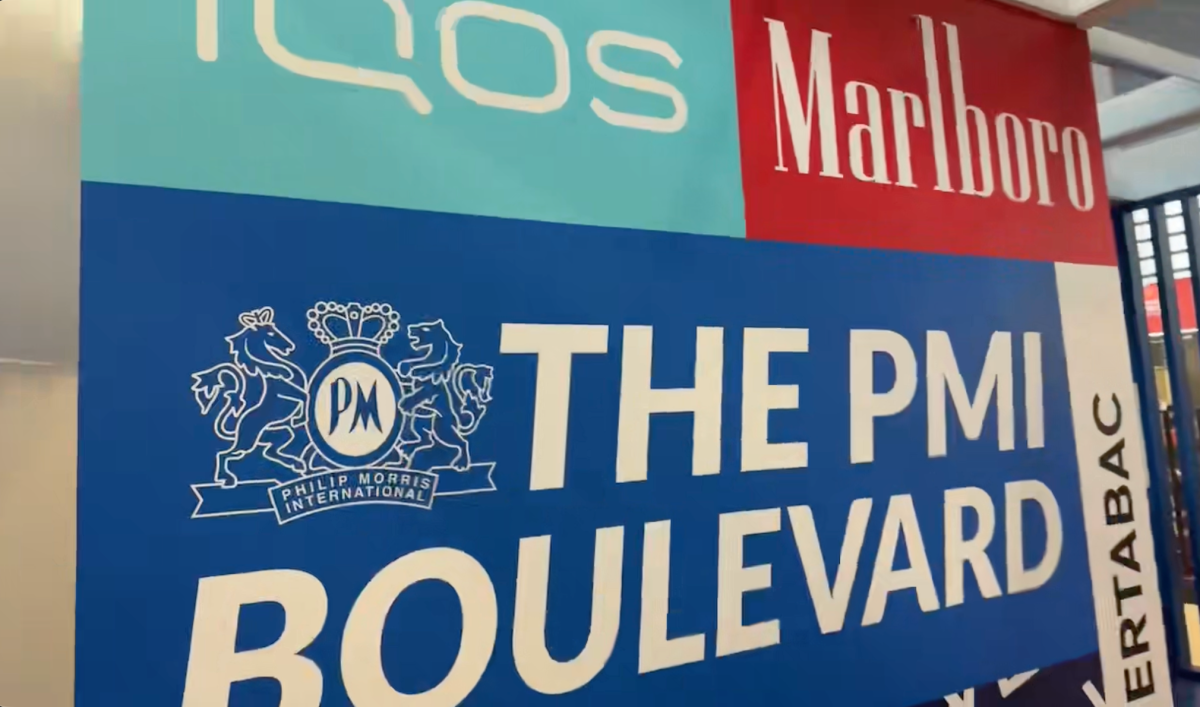
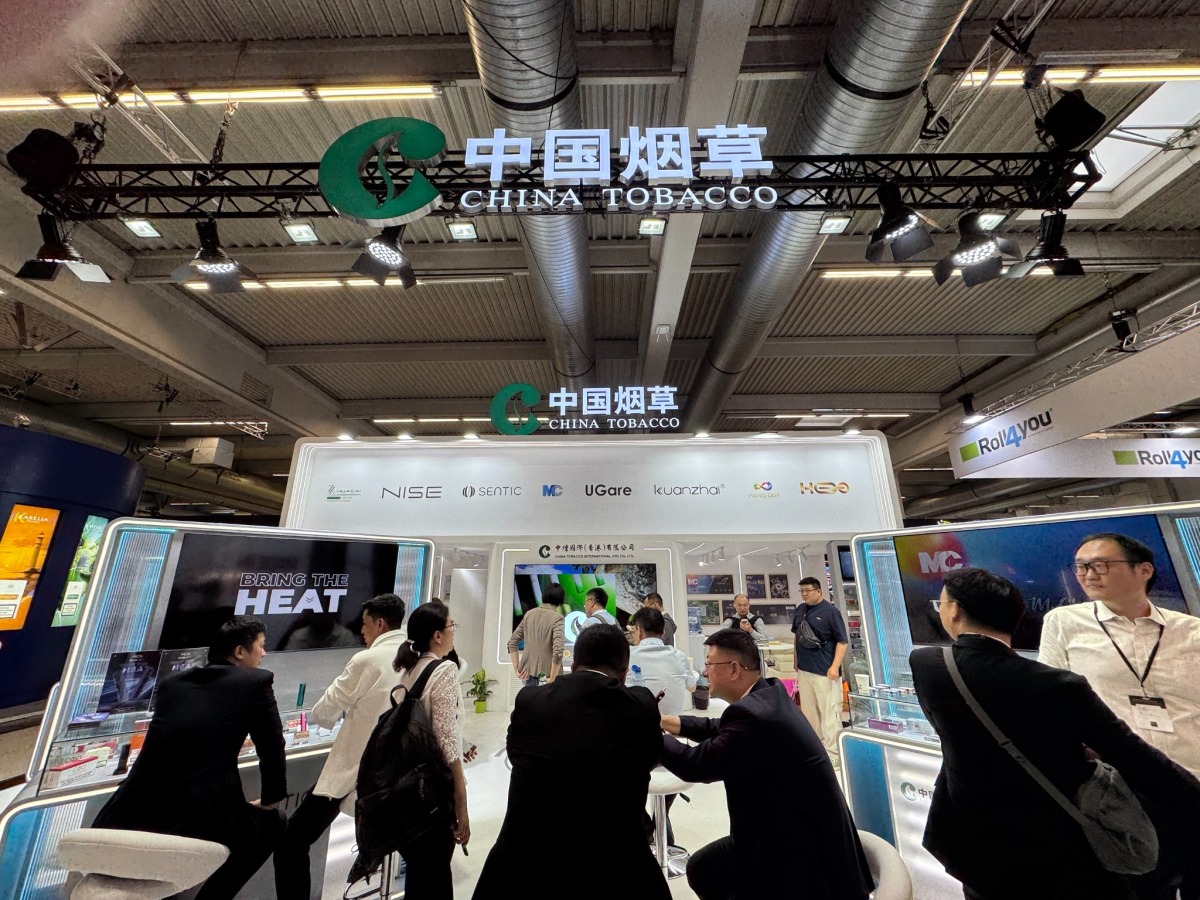
Alongside a wide range of pouch brands, 2Firsts saw manufacturing equipment, raw materials, packaging and OEM/ODM services across the exhibition. The trend has been visible since at least InterTabac 2024, when nicotine pouch brands began becoming more prominent. By 2026, that growth was also showing further upstream in the supply chain.
That raises a less frequently discussed question: how many nicotine pouch factories does Europe actually need?
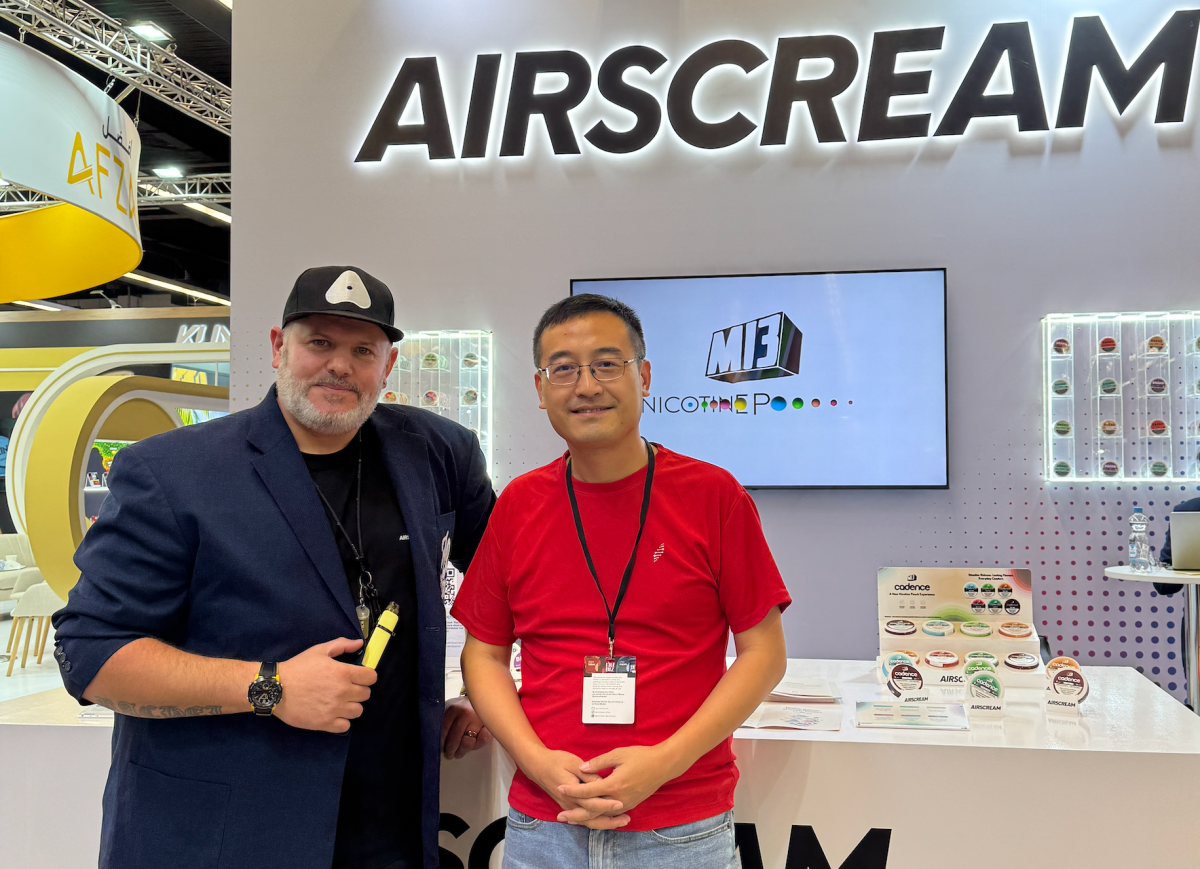
AIRSCREAM provided one case through which to examine the issue. During InterTabac, the company said its production hub in Žebrák, Czech Republic, had expanded into nicotine pouch OEM and ODM manufacturing, alongside e-liquid bottling, packaging, product documentation, warehousing and distribution.
On September 17, 2Firsts visited AIRSCREAM’s booth and interviewed Steve Moore, Head of Commercial at AIRSCREAM UK Limited, about the growth of nicotine pouches, the OEM market and how manufacturers may differentiate as more production capacity enters the category.
Pouches are growing, but vape is not disappearing
Despite AIRSCREAM’s established vape business, no vape hardware was on display at its InterTabac booth.
Moore said the company was using this year’s show primarily to showcase its manufacturing operation and nicotine pouch production. The facility serves AIRSCREAM’s own products as well as customers looking to develop their own pouch brands.
When 2Firsts asked whether the emphasis on nicotine pouches represented a broader strategic shift, Moore rejected that description.
“I wouldn’t say it’s a strategy. I think it’s an addition to our current portfolio.”
He said AIRSCREAM sees nicotine pouches continuing to grow while vaping remains an important part of the business. Moore also pointed to the larger presence of pouch-related exhibitors at InterTabac compared with previous years.
AIRSCREAM’s vape business also complicates any simple assumption that pouch growth means vape decline.
Moore said the company had built a strong base in South Africa and was also doing business in markets including Morocco and Zimbabwe. He said tighter regulation in the UK, including tax-stamp requirements, was making parts of the vape market more streamlined and professional.
For AIRSCREAM, nicotine pouches sit alongside rather than replace its existing vape and e-liquid activities.

More brands bring new demand for manufacturing
At InterTabac, the expansion of nicotine pouches has been accompanied by a widening field of brands and suppliers. But launching a brand still leaves a practical question: who will manufacture the product?
Moore said one barrier for businesses entering the category can be finding a supplier willing to work with companies at different stages and scales.
AIRSCREAM set up its own manufacturing operation partly to serve customers ranging from smaller businesses to medium-sized and larger projects, he said. Automation allows the factory to handle different production volumes.
According to information previously provided by AIRSCREAM, its Czech operation combines nicotine pouch manufacturing with e-liquid bottling, packaging, product documentation, bonded warehousing and distribution. The company offers OEM manufacturing based on a customer’s own specifications as well as ODM production using existing formulations as a starting point.
AIRSCREAM has also said qualifying inventory can be dispatched to nearby markets in approximately 24 to 48 hours, subject to order terms, customs and carrier requirements.
The same production and distribution platform is used for markets outside Europe. In materials previously provided to 2Firsts, AIRSCREAM cited e-liquid supplied to a boutique retail chain in North Africa and a South African partner whose products are distributed through forecourt retailers, supermarkets, specialist stores and other retail channels.
At this year’s InterTabac, Moore said AIRSCREAM was seeing many European customers and felt there were fewer international visitors than usual.
AIRSCREAM presents its Czech operation as a way to bring manufacturing, inventory and distribution closer to customers in Europe while also supporting exports to other regions.
But more manufacturing capacity creates a separate question. Category growth by itself does not determine how many factories the market can sustain.
How many factories does Europe actually need?
2Firsts asked Moore directly how many nicotine pouch factories Europe should ultimately have: five, 10, 20, 50?
“No, I couldn’t give a number,” Moore said.
He said nicotine pouches are still in a growth phase, making it too early to judge how many manufacturers the market will ultimately support.
Nicotine pouches pose a different manufacturing question from vapes.
Electronic cigarettes span disposable products, pod systems and open systems, while manufacturers can differentiate through hardware, atomisation systems, electronics and device architecture. Nicotine pouches have a much more uniform external format.
Moore did not see that relative uniformity as evidence that only a small number of factories could survive. To make the point, he compared the category with another everyday consumer product.
“If you compare it to chewing gum, there’s hundreds of chewing gum factories across UK, but it’s all chewing gum,” he said.
Moore pointed to flavour, the powders and formulations used, different pouch papers and mouthfeel as areas where manufacturers can make different choices.
Much of the differentiation may therefore sit inside the can rather than on the outside.
For an OEM manufacturer, that changes the commercial question from whether a factory can make nicotine pouches to why a brand should choose one factory over another.
Can China’s Vape Supply Chain Offer a Comparison?
Moore also drew a comparison with China’s e-cigarette manufacturing sector.
China has many vape manufacturers, he said, yet individual factories can still occupy different niches. He suggested European nicotine pouch manufacturers could also coexist if they develop distinct products or capabilities.
The comparison is not exact. Vape manufacturers can differentiate through hardware and multiple device architectures, while nicotine pouch producers work with a much more uniform product format.
That puts greater emphasis on formulation, flavour, pouch materials, mouthfeel, production consistency and the commercial capabilities surrounding manufacturing.
Later in the interview, when 2Firsts asked what AIRSCREAM would emphasise to a prospective customer looking for a nicotine pouch OEM supplier, Moore identified quality and flavour first. He also referred to the company’s clean-room production environment and customer relationships, including dedicated account management for individual markets.
At InterTabac this year, manufacturers were already positioning themselves in different ways. Some emphasised product development and formulation, while others focused on production flexibility, materials, manufacturing systems and the ability to serve customers across different markets and at different scales.
Moore did not offer a number for how many factories Europe can ultimately support. At InterTabac 2026, however, the nicotine pouch supply chain was still expanding, from raw materials and production equipment to OEM manufacturing.
The broader backdrop is that nicotine pouches have become one of the fastest-growing and most closely watched categories in the global tobacco and nicotine market. They are emerging as an important source of growth for several major international tobacco companies while also reshaping product portfolios and consumer choices in markets including the United States and Europe. The scale of the opportunity is attracting more brands, manufacturers and supply-chain companies into the category.
That rapid expansion is also raising the next set of questions. How much manufacturing capacity is supported by sustainable underlying demand? Could capacity eventually outpace the market? Which brands and manufacturers will remain as competition intensifies? And from upstream suppliers to consumer-facing brands, what will the long-term structure of the nicotine pouch industry look like? Those questions remain open as the market develops.
Follow 2Firsts for the latest developments across the global tobacco and nicotine industry.
Cover image:Steve Moore, Head of Commercial at AIRSCREAM (left), with 2Firsts Co-founder and CEO Alan Zhao at InterTabac 2026. Photo by 2Firsts.

Disclaimer
This article is provided solely for professional research, industry discussion, and informational purposes. Any references to brands, companies, products, technologies, or policies are made for factual reporting and analytical purposes only, and do not constitute endorsement, recommendation, promotion, or advertising by 2Firsts.
Nicotine-containing products, including but not limited to cigarettes, e-cigarettes, heated tobacco products, and nicotine pouches, carry significant health risks. Readers are responsible for complying with all applicable laws and regulations in their respective jurisdictions, including age restrictions and access limitations.
The information contained in this article should not be regarded as investment, legal, medical, regulatory, or commercial advice. While 2Firsts strives to ensure the accuracy and reliability of its content, it does not assume liability for any direct or indirect loss arising from errors, omissions, inaccuracies, or reliance on the information contained herein.
This article is not intended for individuals below the legal age for accessing tobacco or nicotine-related information in their jurisdiction.
Copyright Notice
This article is either original content produced by 2Firsts or content reproduced, translated, summarized, or adapted from third-party sources with attribution where applicable. The intellectual property rights of the original content remain with 2Firsts or the respective original rights holders.
No individual or organization may copy, reproduce, distribute, republish, modify, translate, or otherwise use this content without prior authorization. Any unauthorized use may result in legal action.
For copyright-related inquiries, corrections, or removal requests, please contact: info@2firsts.com.
AI-Assisted Translation and Editing Notice
Portions of this article may have been translated, edited, or reviewed with the assistance of artificial intelligence tools to improve efficiency and readability. Due to the limitations of AI-assisted translation and editing, discrepancies, omissions, or inaccuracies may exist when compared with the original source.
Where applicable, readers are advised to refer to the original source for the most complete and accurate information. If you identify any errors or believe that any content infringes upon your rights, please contact us at info@2firsts.com, and we will review and address the matter promptly.