Key Points
- Health Minister Marjorie Michel said she is not considering loosening nicotine pouch retail restrictions.
- Pouches containing 4 mg or less of nicotine per unit are non-prescription NRTs in Canada; products above that threshold are prescription drugs.
- Newer NRT formats such as nicotine pouches must generally be sold behind pharmacy counters, rather than through self-selection in general retail.
- Unsmoke Canada is campaigning for broader retail access. The group is part of the Rothmans, Benson & Hedges structure, PMI's Canadian subsidiary.
- Among Canadians aged 16 to 19, reported ever use of nicotine pouches rose from 2.0% in 2023 to 5.3% in 2024, while past-30-day use rose from 1.0% to 2.5%.
2Firsts
September 24, 2026
According to The Canadian Press on September 23, Canadian Health Minister Marjorie Michel said she is not considering loosening the country's retail restrictions on nicotine pouches, responding to calls from a Philip Morris International-linked group, convenience retailers and some political figures for wider access.
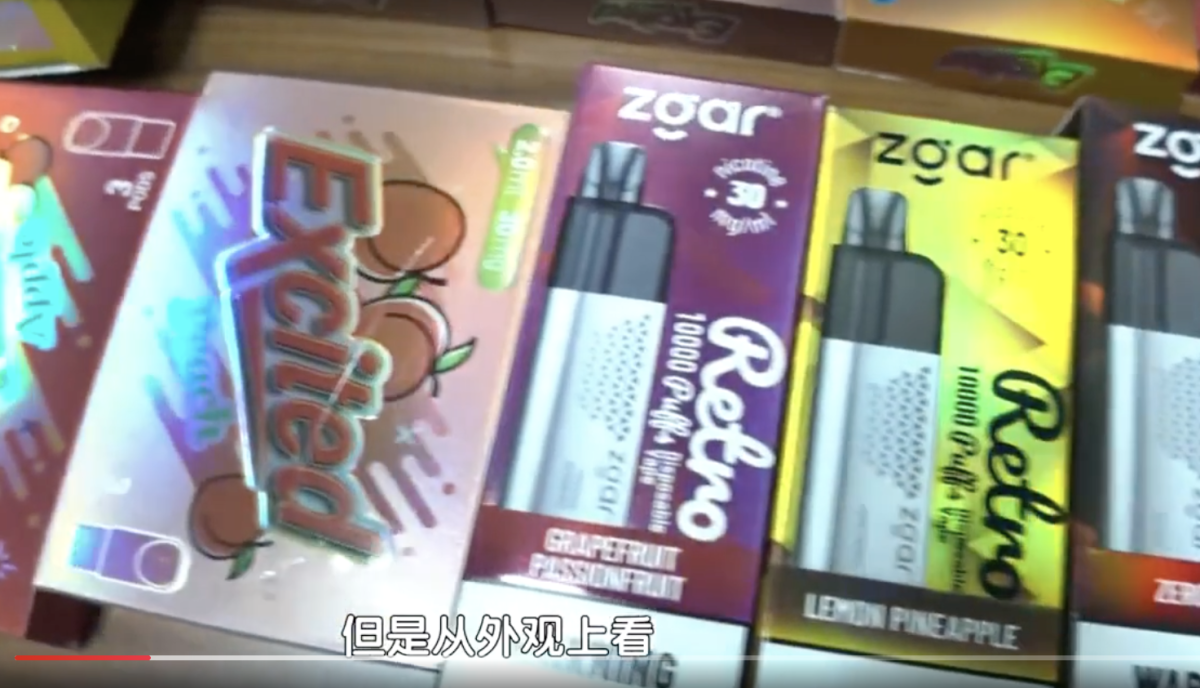
Michel also acknowledged that unauthorized nicotine pouches entering Canada through online and physical retail channels remain an issue, but did not indicate that the government would address the problem by relaxing current sales rules.
Pouches at 4 mg or Below Are Regulated as Smoking-Cessation Products
Canada does not impose a blanket ban on nicotine pouches. Products that meet regulatory requirements are treated as nicotine replacement therapy, or NRT.
Health Canada clarified in January 2026 that buccal nicotine pouches containing 4 mg or less per dosage unit are non-prescription products. Pouches above 4 mg per unit fall under prescription-drug status. Authorized pouches are intended as smoking-cessation products for adults aged 18 and older.
New and emerging NRT dosage forms that are not on Health Canada's self-selection list, including nicotine pouches, generally may be sold only by pharmacists or people under pharmacist supervision and must be kept inaccessible for consumer self-selection, such as behind the pharmacy counter. Online pharmacy sales also require pharmacist intervention.
Rules introduced in 2024 also restrict these products to mint, menthol or a combination of the two, and require front-of-pack nicotine addiction warnings and clear identification as smoking-cessation aids for adults.
PMI-Linked Group Pushes for General Retail Access
Unsmoke Canada is campaigning to allow nicotine pouches to return to convenience stores and other general retail outlets.
The group says limiting pouches to pharmacies creates access barriers for adult smokers seeking cessation products and argues they should be sold in outlets where cigarettes are available.
The Canadian Press reports that Unsmoke Canada is part of Rothmans, Benson & Hedges, PMI's Canadian subsidiary. The group has used advertising and policy advocacy to press for changes to the current rules and links wider legal access to efforts to reduce the unauthorized market.
The campaign has also drawn support from some retailers and Conservative political figures. Canada's Conservative Party has separately promoted a "Free the Zyn" campaign calling for wider adult access to nicotine pouches.
ZONNIC Remains an Authorized, Marketed Nicotine Pouch
Health Canada's Licensed Natural Health Products Database lists ZONNIC Nicotine Pouches as actively licensed and marketed, with 4 mg of nicotine per pouch and Nicoventures Trading Limited as the licence holder.
Imperial Tobacco Canada has said Nicoventures Trading Limited is a subsidiary of its parent company British American Tobacco, and that Imperial Tobacco Canada is ZONNIC's exclusive Canadian distributor.
ZONNIC is licensed as nicotine replacement therapy to help adults quit smoking by reducing cravings and withdrawal symptoms.
That creates a notable competitive structure in the Canadian pouch market: a BAT-group company currently holds the licence for a marketed pouch product, while a PMI-linked advocacy group is pushing for broader retail access for the category.
Health Canada Says Unauthorized Products Remain on the Market
Health Canada has previously said it continues to receive reports of unauthorized nicotine products, including pouches, being sold at convenience stores, gas stations, other retailers and online.
The agency advises consumers to use only authorized products, saying unauthorized products have not been assessed for safety, efficacy and quality.
Michel also acknowledged this week that the government cannot track every unauthorized product entering or circulating in the market.
Unsmoke Canada argues that wider access to authorized products would help reduce the illicit market. Tobacco-control groups take a different position, calling for stronger enforcement rather than weaker retail rules. The Canadian Press quoted Flory Doucas, co-director of the Quebec Coalition for Tobacco Control, as saying enforcement failures should not be used to justify weakening regulation.
Youth Nicotine Pouch Use Has Increased
Rising pouch use among young people is part of the public-health backdrop to Canada's current restrictions.
A repeat cross-sectional study using the International Tobacco Control Youth Tobacco and Vaping Survey found that ever use of nicotine pouches among Canadians aged 16 to 19 increased from 2.0% in 2023 to 5.3% in 2024.
Past-30-day use in the same age group increased from 1.0% to 2.5%.
Among Canadians aged 20 to 29, ever use was 9.1% in 2024 and past-30-day use was 4.2%.
The study covered Canada, England, the United States and New Zealand and found rising pouch use among young people across multiple markets. The survey data do not distinguish all use by whether the products were locally authorized.
Debate Centers on Retail Access Versus Enforcement
The Canadian policy dispute is increasingly focused less on whether authorized pouches may exist and more on how they should be sold.
Unsmoke Canada and some retail and political groups argue that pharmacy-only access makes authorized cessation products harder for adult smokers to obtain and leaves room for unauthorized products.
Michel has not adopted that approach. She said the government is not currently considering looser retail rules.
Unless the policy changes, authorized nicotine pouches in Canada will remain regulated under the NRT framework, including pharmacy-counter, flavour and labeling restrictions.
Follow 2Firsts for updates on global nicotine pouch regulation, market access and retail policy.
Cover Image generated by AI
Disclaimer
This article is provided solely for professional research, industry discussion, and informational purposes. Any references to brands, companies, products, technologies, or policies are made for factual reporting and analytical purposes only, and do not constitute endorsement, recommendation, promotion, or advertising by 2Firsts.
Nicotine-containing products, including but not limited to cigarettes, e-cigarettes, heated tobacco products, and nicotine pouches, carry significant health risks. Readers are responsible for complying with all applicable laws and regulations in their respective jurisdictions, including age restrictions and access limitations.
The information contained in this article should not be regarded as investment, legal, medical, regulatory, or commercial advice. While 2Firsts strives to ensure the accuracy and reliability of its content, it does not assume liability for any direct or indirect loss arising from errors, omissions, inaccuracies, or reliance on the information contained herein.
This article is not intended for individuals below the legal age for accessing tobacco or nicotine-related information in their jurisdiction.
Copyright Notice
This article is either original content produced by 2Firsts or content reproduced, translated, summarized, or adapted from third-party sources with attribution where applicable. The intellectual property rights of the original content remain with 2Firsts or the respective original rights holders.
No individual or organization may copy, reproduce, distribute, republish, modify, translate, or otherwise use this content without prior authorization. Any unauthorized use may result in legal action.
For copyright-related inquiries, corrections, or removal requests, please contact: info@2firsts.com.
AI-Assisted Translation and Editing Notice
Portions of this article may have been translated, edited, or reviewed with the assistance of artificial intelligence tools to improve efficiency and readability. Due to the limitations of AI-assisted translation and editing, discrepancies, omissions, or inaccuracies may exist when compared with the original source.
Where applicable, readers are advised to refer to the original source for the most complete and accurate information. If you identify any errors or believe that any content infringes upon your rights, please contact us at info@2firsts.com, and we will review and address the matter promptly.