Heno Bio and 2Firsts to Hold Compliance Strategic Cooperation Launch Ceremony in Shenzhen

Events by 2FIRSTS
Jan.02.2025
Heno Bio and 2Firsts to Hold Compliance Strategic Cooperation Launch Ceremony in Shenzhen
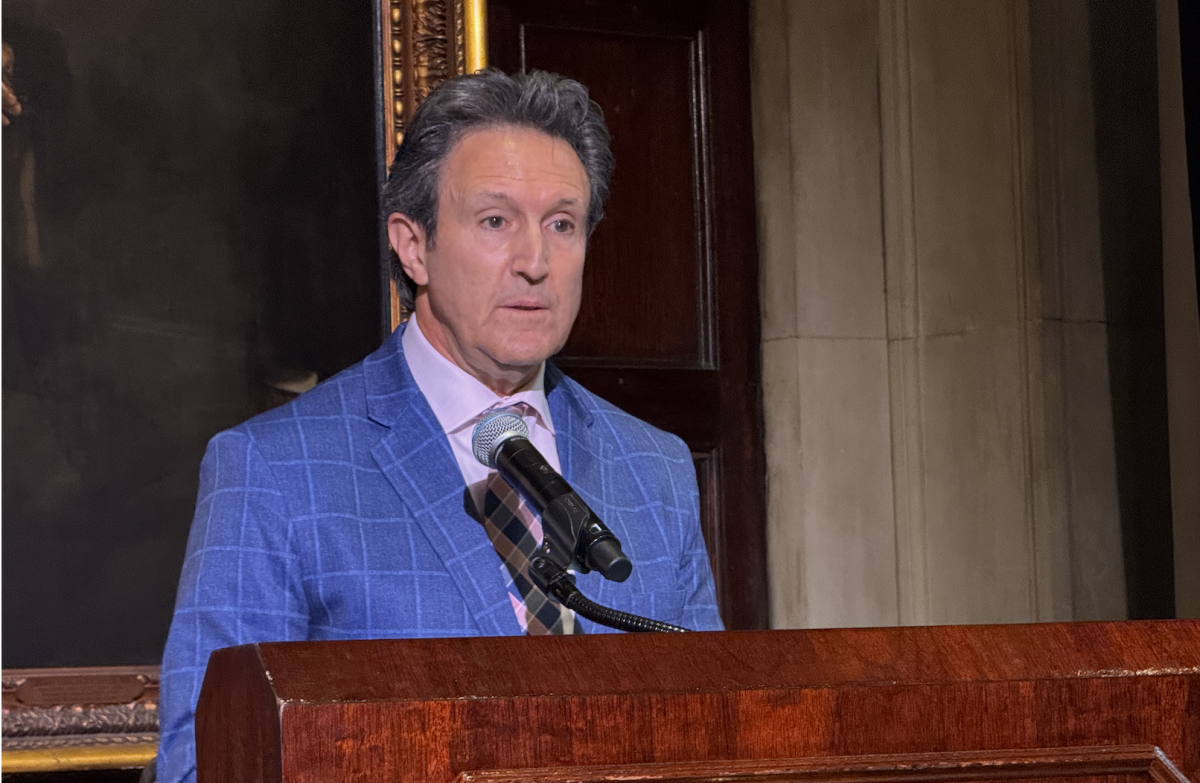
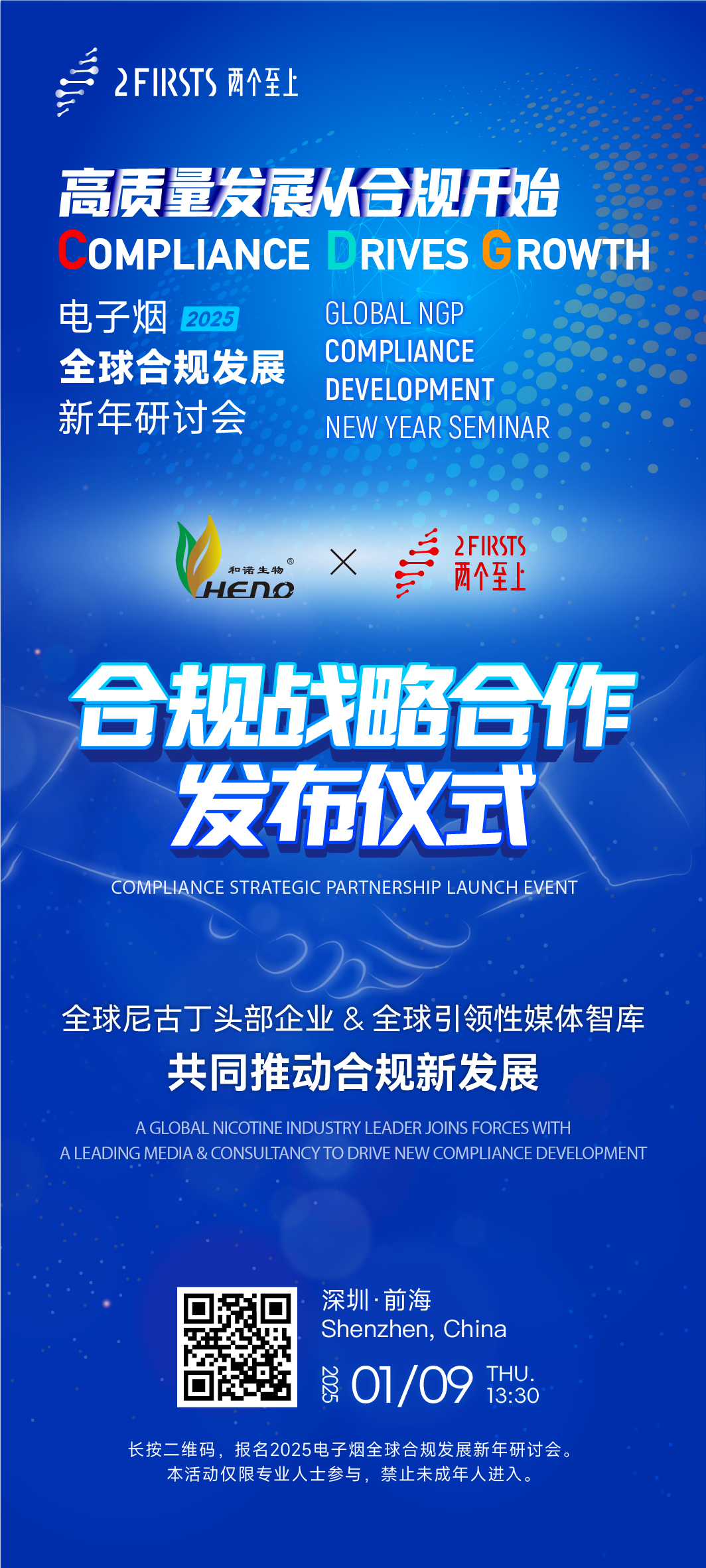
2Firsts to hold global NGP compliance development seminar in Shenzhen on January 9th, 2025, featuring top industry leaders.

On January 9, 2025, 2Firsts will host the 2025 Global NGP Regulatory Development New Year Seminar in Shenzhen Qianhai.


At this seminar, leading global nicotine companies, Heno Biotech, and 2Firsts will jointly hold a ceremony to launch a compliance strategic partnership, aiming to work together to promote industry regulatory compliance and create a new future for the NGP industry.
 

Heno Bio and 2Firsts to Hold Compliance Strategic Cooperation Launch Ceremony in Shenzhen
Event Poster | Image source: 2Firsts


We welcome news tips, article submissions, interview requests, or comments on this piece.

Please contact us at info@2firsts.com, or reach out to Alan Zhao, CEO of 2Firsts, on LinkedIn


Notice

1.  This article is intended solely for professional research purposes related to industry, technology, and policy. Any references to brands or products are made purely for objective description and do not constitute any form of endorsement, recommendation, or promotion by 2Firsts.

2.  The use of nicotine-containing products — including, but not limited to, cigarettes, e-cigarettes, nicotine pouchand heated tobacco products — carries significant health risks. Users are responsible for complying with all applicable laws and regulations in their respective jurisdictions.

3.  This article is not intended to serve as the basis for any investment decisions or financial advice. 2Firsts assumes no direct or indirect liability for any inaccuracies or errors in the content.

4.  Access to this article is strictly prohibited for individuals below the legal age in their jurisdiction.


Copyright


This article is either an original work created by 2Firsts or a reproduction from third-party sources with proper attribution. All copyrights and usage rights belong to 2Firsts or the original content provider. Unauthorized reproduction, distribution, or any other form of unauthorized use by any individual or organization is strictly prohibited. Violators will be held legally accountable.

For copyright-related inquiries, please contact: info@2firsts.com


AI Assistance Disclaimer


This article may have been enhanced using AI tools to improve translation and editorial efficiency. However, due to technical limitations, inaccuracies may occur. Readers are encouraged to refer to the cited sources for the most accurate information.

We welcome any corrections or feedback. Please contact us at: info@2firsts.com

Special Report | China’s Two Sessions Revisit Consumption Tax Reform, Tobacco Tax Outlook Draws Attention
China’s 2026 “Two Sessions” again raised the issue of consumption tax reform. As the largest source of consumption tax revenue, the tobacco tax system—its collection stages, tax structure and regional revenue distribution—has re-entered the policy discussion. This article outlines the structure of China’s tobacco consumption tax, past adjustments and key areas of debate, providing international readers with background on one of the country’s most important tax categories.
Special Report
Mar.08
Proposed vaping duty in Jersey: £467,000 forecast for 2026 as it takes effect in the second half of the year
Jersey is proposing a vaping duty. The Treasury Minister said the duty is forecast to raise £467,000 in 2026 because it will take effect in the second half of the year, and £955,000 per year from 2027 to 2029. Implementation is estimated to cost around £400,000 over four years, with an initial cost of £145,000 in 2026. The policy is described as aiming to reduce nicotine consumption and improve public health, while avoiding a shift to smoking.
Feb.26 by 2FIRSTS.ai
Malaysia moves ahead with vape sales ban plan; PMI urges Japan-style differentiated excise taxes
Malaysia plans to implement a ban or restrictions on e-cigarettes and vaping products as early as mid-2026 and no later than year-end. The head of Philip Morris Malaysia and Singapore said the government should look to Japan’s approach of regulating and taxing different tobacco and nicotine products differently, warning that an outright ban could push demand into illicit channels.
Feb.02
Guam names retailers fined for selling tobacco to under-21 customers; penalties range from $2,000 to $4,000
Guam disclosed enforcement details for its 2025 tobacco retail compliance program, showing a 97.1% compliance rate among 277 inspected retailers. Nine violations were recorded, including eight underage sales cases and one signage violation, with fines ranging from $500 to $4,000.
Feb.10 by 2FIRSTS.ai
Report: 43% of 546 Canadian specialty vape shops found non-compliant in federal inspections
Health Canada’s vaping compliance and enforcement report covering inspections from April 2024 to March 2025 found 43% of 546 specialty vaping businesses were not compliant with the Tobacco and Vaping Products Act and the Canada Consumer Product Safety Act, according to the report cited. Health inspectors seized vaping products at 235 specialty vaping establishments.
Feb.26 by 2FIRSTS.ai
Fiscal benefit, not health, strongest indicator for vape bans – Contributed by Samrat Chowdhery
Data shows 75% of nations with state stakes in tobacco trade ban modern substitutes compared to 10% in the free-market group. What is driving these divergent regulations?
Feb.04