Key Points
- The Bombay High Court ruled on September 22 that airport duty-free shops remain subject to Indian non-fiscal regulatory laws.
- The case concerns ZYN and FOX nicotine pouches sold at Mumbai's international airport and described by the retailers as tobacco-free nicotine pouches.
- The court did not set aside an April 2 sales halt, but it also did not determine that the products are legally classified as drugs.
- The court said the retailers had not previously supplied sufficient product specifications and nicotine-composition information.
- The companies have four weeks to submit additional material, after which the relevant authorities have 30 days to issue a reasoned decision.
- India's existing rules treat different nicotine products differently, leaving the regulatory status of the specific pouches dependent on further technical assessment.
2Firsts
September 24, 2026
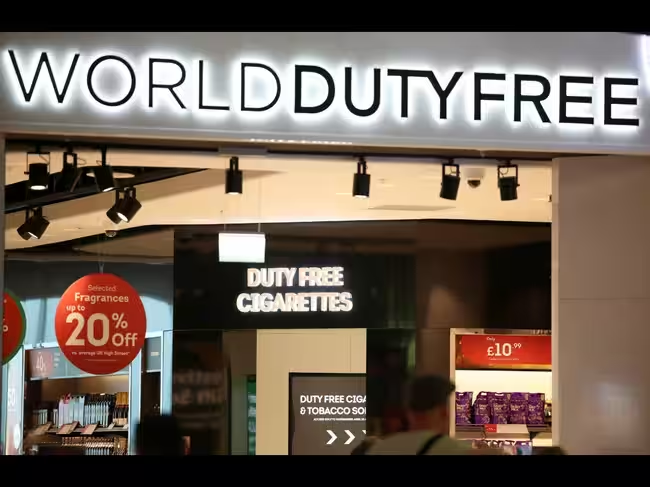
The Bombay High Court has ruled that airport duty-free shops cannot claim exemption from India's domestic regulatory laws merely because they operate beyond the customs barrier, leaving in place a sales halt covering ZYN and FOX nicotine pouches at Mumbai's Chhatrapati Shivaji Maharaj International Airport.
The judgment was pronounced on September 22 and reported by The Economic Times and other Indian media on September 23.
The court, however, did not determine that the pouches necessarily qualify as "drugs" under India's Drugs and Cosmetics Act, 1940. It instead allowed the retailers to submit additional technical information for the relevant authorities to reconsider the products' classification and import-licensing requirements.
Duty-Free Status Does Not Exempt Products From Domestic Regulation
The petitions were brought by Mumbai Travel Retail Limited and Flemingo Dutyfree Shop Private Limited, which operate duty-free retail businesses at Mumbai's international departure terminals.
According to the judgment, the companies imported ZYN and FOX nicotine pouches, stored them in special customs-licensed warehouses and sold them to outbound international passengers. The petitioners described the products as tobacco-free nicotine pouches.
The retailers argued that the products were not intended to enter India's domestic consumer market and that sales to outbound passengers effectively amounted to re-export. They therefore argued that India's domestic drug-licensing regime should not apply.
The Bombay High Court rejected that argument.
The court held that exemptions associated with duty-free operations may apply to fiscal measures such as customs duties and taxes, but do not create blanket immunity from public-health, safety or other domestic regulatory laws.
Goods imported into Indian territory remain subject to applicable Indian law even when brought in only for warehousing or subsequent re-export, the court held.
Dispute Followed a 2025 Complaint
The judgment shows that Mothers Against Vaping filed a complaint on October 3, 2025, raising concerns about the sale of nicotine pouches and their potential health effects.
Customs authorities subsequently asked Mumbai Travel Retail to provide details on the legality and authorization of the sales.
On April 2, 2026, the Assistant Drugs Controller issued a communication directing that sales stop on the basis that the products were being handled in violation of the Drugs and Cosmetics Act. A further communication was sent to customs authorities on April 8.
The retailers did not hold an import licence or registration certificate issued under the Drugs and Cosmetics Act for the products.
They subsequently challenged the regulatory action before the Bombay High Court.
The case was reserved for judgment on August 7 and pronounced on September 22.
Court Did Not Classify Nicotine Pouches as Drugs
While the court held that domestic regulatory law applies to duty-free shops, it did not make a final finding that the ZYN and FOX pouches fall within the definition of a "drug" under Section 3(b) of the Drugs and Cosmetics Act.
The judgment said the regulatory communications did not specify which category within Section 3(b) applied to the products. The retailers had also not supplied sufficient product specifications to the authorities, leaving the exact composition and nicotine content unclear on the record before the court.
The judges said determining the status of a specific product requires a factual and technical examination of its composition, use and applicable regulatory provisions and was not appropriate for determination in the writ proceedings.
The court therefore did not set aside the April 2 communication, while allowing the retailers to seek a fresh regulatory review after supplying fuller information.
Indian Rules Do Not Treat All Nicotine Products the Same Way
The judgment also examined India's existing regulatory treatment of nicotine-containing products.
Under a 2022 notification cited by the court, certain finished tobacco products containing nicotine fall into prohibited categories under India's foreign-trade framework. At the same time, nicotine "for oral application" under ITC (HS) 24049100 is listed as "free."
The court said this indicated that not every form of nicotine is necessarily restricted or prohibited and that the presence of nicotine alone does not resolve whether a product qualifies as a drug under Section 3(b).
Schedule D of India's Drugs Rules can exempt certain substances not intended for medicinal use from ordinary drug-import requirements, subject to specified conditions.
Schedule K contains a nicotine-specific exemption covering certain gums and lozenges containing up to 2 mg of nicotine, but the court noted that the entry does not expressly include nicotine pouches.
Whether the products in this case fall within the drug definition or qualify for an exemption therefore depends on their specific composition, use and regulatory characteristics.
Retailers Given Four Weeks to Submit Product Information
The court gave the petitioners four weeks from the uploading of the judgment to submit representations to the appropriate authorities, including the Central Drugs Standard Control Organisation, or CDSCO.
The retailers may provide product specifications and other supporting material to argue that the pouches either do not fall within the Section 3(b) drug definition or qualify for Schedule D and/or Schedule K exemptions.
If representations are filed within that period, the authorities must consider them on their merits and issue a reasoned order, with a personal hearing if necessary.
The review must be completed within 30 days of receipt of the representations.
ZYN and FOX Airport Sales Depend on Further Classification
Until a new regulatory decision is made, the April sales halt covering the products has not been overturned.
The next review will determine whether the specific ZYN and FOX products require pharmaceutical import licensing and registration or qualify for an applicable exemption.
The judgment establishes that airport duty-free operations remain subject to India's domestic regulatory regime, but it does not establish a final nationwide classification for all nicotine pouches.
Follow 2Firsts for updates on global nicotine pouch regulation, product classification and market access.
Cover Image: The Economic Times
Disclaimer
This article is provided solely for professional research, industry discussion, and informational purposes. Any references to brands, companies, products, technologies, or policies are made for factual reporting and analytical purposes only, and do not constitute endorsement, recommendation, promotion, or advertising by 2Firsts.
Nicotine-containing products, including but not limited to cigarettes, e-cigarettes, heated tobacco products, and nicotine pouches, carry significant health risks. Readers are responsible for complying with all applicable laws and regulations in their respective jurisdictions, including age restrictions and access limitations.
The information contained in this article should not be regarded as investment, legal, medical, regulatory, or commercial advice. While 2Firsts strives to ensure the accuracy and reliability of its content, it does not assume liability for any direct or indirect loss arising from errors, omissions, inaccuracies, or reliance on the information contained herein.
This article is not intended for individuals below the legal age for accessing tobacco or nicotine-related information in their jurisdiction.
Copyright Notice
This article is either original content produced by 2Firsts or content reproduced, translated, summarized, or adapted from third-party sources with attribution where applicable. The intellectual property rights of the original content remain with 2Firsts or the respective original rights holders.
No individual or organization may copy, reproduce, distribute, republish, modify, translate, or otherwise use this content without prior authorization. Any unauthorized use may result in legal action.
For copyright-related inquiries, corrections, or removal requests, please contact: info@2firsts.com.
AI-Assisted Translation and Editing Notice
Portions of this article may have been translated, edited, or reviewed with the assistance of artificial intelligence tools to improve efficiency and readability. Due to the limitations of AI-assisted translation and editing, discrepancies, omissions, or inaccuracies may exist when compared with the original source.
Where applicable, readers are advised to refer to the original source for the most complete and accurate information. If you identify any errors or believe that any content infringes upon your rights, please contact us at info@2firsts.com, and we will review and address the matter promptly.