Indonesia's Presidential Candidate Advocates for the Establishment of a Tobacco Center

Dec.27.2023
Indonesia's Presidential Candidate Advocates for the Establishment of a Tobacco Center
Indonesia presidential candidate Ganjar Pranowo proposes establishing a tobacco center in Java to expand the industry's potential.

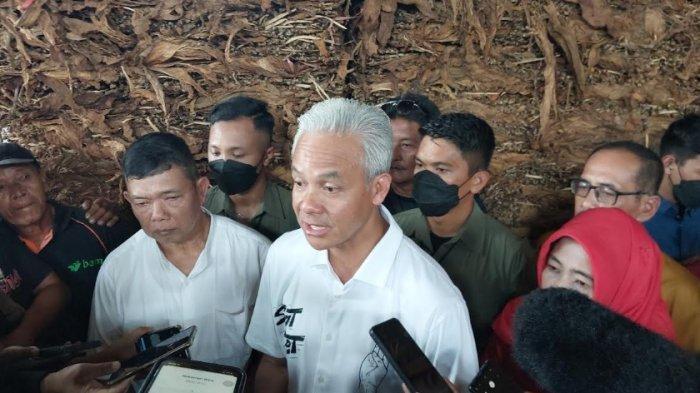
According to an article by Indonesian media outlet Tribunnews on December 27th, Indonesian presidential candidate Ganjar Pranowo has expressed the need for Indonesia to establish its own tobacco center.


Gan Ya, during his visit to tobacco farmers in Central Java, expressed his viewpoint that he hopes there will be a region that can develop into a global tobacco hub. "Temanggung has already become an iconic city for tobacco worldwide, and the srinthil variety we are discussing is only produced in Temanggung, commanding a very high price," commented Gan Ya.


As a result, Gan Ya believes that Central Java is the best location for setting up a tobacco center, both domestically within Indonesia and globally.


I believe that we need to establish a tobacco center in Indonesia, and the ideal location would be Central Java," said Ganja.


Gan Ya also added that if Indonesia could have its own tobacco center, tobacco production could be expanded by further researching other uses of tobacco. He further emphasized that by incorporating downstream processing into the research process, tobacco could be used for various purposes, which calls for a dedicated research hub to facilitate its development rather than terminating it.


Ganjar Pranowo, a member of the Indonesian Democratic Party and former governor of Central Java province, has successfully won re-election in the province's recent elections.


We welcome news tips, article submissions, interview requests, or comments on this piece.

Please contact us at info@2firsts.com, or reach out to Alan Zhao, CEO of 2Firsts, on LinkedIn


Notice

1.  This article is intended solely for professional research purposes related to industry, technology, and policy. Any references to brands or products are made purely for objective description and do not constitute any form of endorsement, recommendation, or promotion by 2Firsts.

2.  The use of nicotine-containing products — including, but not limited to, cigarettes, e-cigarettes, nicotine pouchand heated tobacco products — carries significant health risks. Users are responsible for complying with all applicable laws and regulations in their respective jurisdictions.

3.  This article is not intended to serve as the basis for any investment decisions or financial advice. 2Firsts assumes no direct or indirect liability for any inaccuracies or errors in the content.

4.  Access to this article is strictly prohibited for individuals below the legal age in their jurisdiction.


Copyright


This article is either an original work created by 2Firsts or a reproduction from third-party sources with proper attribution. All copyrights and usage rights belong to 2Firsts or the original content provider. Unauthorized reproduction, distribution, or any other form of unauthorized use by any individual or organization is strictly prohibited. Violators will be held legally accountable.

For copyright-related inquiries, please contact: info@2firsts.com


AI Assistance Disclaimer


This article may have been enhanced using AI tools to improve translation and editorial efficiency. However, due to technical limitations, inaccuracies may occur. Readers are encouraged to refer to the cited sources for the most accurate information.

We welcome any corrections or feedback. Please contact us at: info@2firsts.com

Tobacco Farming in the New Nicotine Era: Why Indian Farmers Struggle to Transition — Contributed by Samrat Chowdhery
In this contributed article to 2Firsts, Mumbai-based journalist and harm reduction advocate Samrat Chowdhery examines India’s tobacco transition from the perspective of agriculture, supply chains and regulation. As noted by 2Firsts, India offers a relevant case for understanding how new nicotine technologies may affect not only consumption, trade and policy, but also tobacco farming.
Special Report
May.29
Cross-Party Romanian Lawmakers Propose Ban on E-Cigarettes and Heated Tobacco Use in All Enclosed Public Spaces
Lawmakers from Romania’s USR, PSD and PNL have submitted a bill that would ban e-cigarettes, vapes and heated tobacco devices in all enclosed public spaces. The proposal would redefine “smoking” so that inhaling aerosols produced by heating or vaporizing products containing tobacco, nicotine or other substances intended for inhalation would also be considered smoking, except for medical-use products.
Apr.17 by 2FIRSTS.ai
Nearly 35.00% of Surveyed Retailers Shifted to Online Sales After Tighter Controls in Vietnam
A study of nearly 2,500 university students in Hanoi, Da Nang, Hue, and Ho Chi Minh City found that the average age of first use of e-cigarettes and heated tobacco products was 16.90. The findings were presented on April 9 in Hanoi. The study also found that 14.00% of students had tried e-cigarettes and 3.00% were current users, while the figures for heated tobacco were 6.00% and 0.80%. % of surveyed retail outlets moving to online sales.
Apr.10 by 2FIRSTS.ai
State Registries Are Reshaping U.S. Vape Market Access 2Firsts Interview with U.S. Vapor Manufacturers Association President Allison Boughner
As the U.S. vapor market faces FDA authorizations, import seizures and growing state-level restrictions, AVM President Allison Boughner told 2Firsts that state product registries and white-list systems are having the most immediate impact. She said distributors are placing greater weight on documentation, product origin and supply-chain transparency.
Special Report
May.26
FDA Adds 18 Tobacco Harmful Constituents and Seeks Comment on 3 More
U.S. Food and Drug Administration published a Federal Register notice finalizing the addition of 18 constituents to the established list of Harmful and Potentially Harmful Constituents in tobacco products. With the update, the list now contains 111 constituents. FDA also proposed adding three more constituents to the list and opened a public comment period ending at 11:59 p.m. ET on May 26, 2026.
Apr.24 by 2FIRSTS.ai
BAT New Zealand Says Illicit Tobacco Trade Drove Nearly 29% Revenue Decline in 2025
British American Tobacco New Zealand said the illicit tobacco trade is responsible for its profit halving and revenue falling between the 2024 and 2025 financial years. Financial results filed with the Companies Office show that BAT Holdings (New Zealand) recorded 2025 revenue of NZ$180.7 million, or about US$106.95 million based on the European Central Bank’s April 27, 2026 reference rates, down from NZ$254 million, or about US$150.33 million, in 2024.
Apr.28 by 2FIRSTS.ai