Key Points
- Constitutional review: Indonesia's Constitutional Court is reviewing provisions of Law No. 17 of 2023 on Health. The petitioner seeks to prohibit the production, importation, distribution and use of e-cigarettes.
- Stakeholder positions: Three industry associations challenged the proposed ban by citing existing taxation and business licensing regulations, while MUI supported a comprehensive ban. The government defended the constitutionality of the existing law without ruling out a future ban.
- Industrial scale: Indonesia has approximately 200 companies in the e-cigarette manufacturing sector, more than 7,000 production and retail businesses, and IDR 31 trillion in cumulative investment. E-cigarette exports rose from $164.95 million in 2022 to $518.28 million in 2025.
- Next hearing: The ministries of industry and trade, the National Police, the National Narcotics Agency and the Indonesian Food and Drug Authority are scheduled to present their views on December 2. The Ministry of Industry and the National Narcotics Agency have previously advocated tighter regulation and a comprehensive ban, respectively.
2Firsts
November 27, 2026
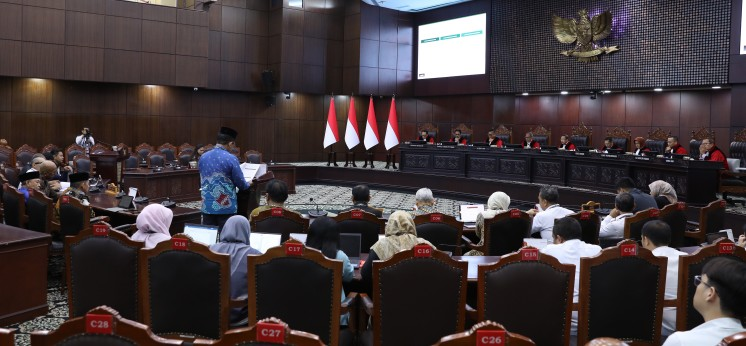
Indonesia's Constitutional Court (MKRI) held its fifth hearing on November 25 in a constitutional review of the country's Health Law involving a proposed comprehensive ban on e-cigarettes, according to a statement published by the court. Three vaping industry associations and the Indonesian Ulema Council (Majelis Ulama Indonesia, MUI) were among the interested parties participating in the hearing.
The industry associations challenged the proposed ban, citing existing excise regulations, local tobacco taxes and risk-based business licensing requirements. MUI called for ending the legal distribution of e-cigarettes, citing the misuse of vaping devices for narcotics consumption.
The petitioner seeks to prohibit the production, importation, distribution and use of e-cigarettes. According to Indonesia's Ministry of Industry, the country has approximately 200 companies in the e-cigarette manufacturing sector, employs around 100,000 people across the supply chain and recorded $518.28 million in e-cigarette exports in 2025.
The next hearing is scheduled for December 2, when the ministries of industry and trade, the National Police, the National Narcotics Agency and the Indonesian Food and Drug Authority are expected to present their views.
Proposed Ban Covers Production, Importation, Distribution and Use; Government Does Not Rule Out Future Ban
The case, registered as Petition No. 363/PUU-XXIV/2026, was filed in September 2026 by Indonesian lawyer Zico Leonard Djagardo Simanjuntak. It challenges the constitutionality of Article 149, Article 150(1) and Article 152(2) of Law No. 17 of 2023 on Health.
The petitioner argues that existing legislation permitting the production and distribution of e-cigarettes fails to adequately protect citizens' constitutional right to a good and healthy environment. He seeks to add a provision to Article 149 prohibiting the production, importation, distribution and use of e-cigarettes and to amend other provisions governing the products.
On November 10, a representative of Indonesia's House of Representatives (DPR) told the court that a comprehensive ban warranted consideration but would require harmonization with existing legislation.
On November 17, Ministry of Health Secretary-General Kunta Wibawa Dasa Nugraha, representing the government, argued that emerging problems involving the misuse of e-cigarettes for narcotics consumption did not render the existing provisions of the Health Law unreasonable or unconstitutional.
The government also stated that policymakers and lawmakers could reassess the effectiveness of existing regulations as product risks and regulatory circumstances evolve, including consideration of tighter restrictions or a comprehensive ban.
As of November 26, the Constitutional Court had not issued a ruling.
Three Industry Associations Cite Existing Licensing Rules as MUI Calls for an End to Legal Vape Distribution
The industry organizations participating in the November 25 hearing included the Indonesian Vape Retail Association (Asosiasi Ritel Vape Indonesia, ARVINDO), the Indonesian Personal Vaporizer Association (APVI) and the Indonesian E-Liquid Producers Association (PPEI). Youth organization Muda Untuk Perubahan Taktis was also listed as an interested party.
Luthfi Yazid, legal counsel representing the three associations, challenged the proposed ban by citing Indonesia's existing excise regulations, local tobacco taxes under Law No. 1 of 2022 and the risk-based business licensing system established under Government Regulation No. 28 of 2025.
The associations argued that e-cigarette businesses were already subject to national taxation and licensing requirements, with legally operating companies required to comply with market entry, production and distribution rules. They argued that the proposed ban did not adequately account for the existing regulatory framework.
According to Indonesian news agency ANTARA, five vaping industry associations signed an integrity pact in Jakarta on November 16, pledging to assist authorities in preventing the misuse of vaping devices for narcotics consumption, restricting access among people under 21 and strengthening industry compliance.
At the November 25 hearing, Shofiyullah Muzzamil, deputy chairman of MUI's Fatwa Commission, supported a comprehensive ban, citing laboratory findings from Indonesia's National Narcotics Agency (BNN).
According to data published by BNN on October 23, 98% of the 1,789 vape liquid samples tested by the agency between January 2025 and September 2026 contained narcotics, psychotropic substances or new psychoactive substances (NPS), while 96.71% of the samples contained etomidate. The agency's announcement did not provide detailed information on its sampling methodology.
MUI also argued that e-cigarette excise revenue was insufficient to offset associated healthcare, law enforcement and social costs. It called on the government to provide alternative business and employment opportunities for those potentially affected by a ban.
On November 6, MUI issued Fatwa No. 131 of 2026, declaring the use, production and trade of e-cigarettes religiously prohibited, or haram. It recommended that the president and parliament introduce an e-cigarette ban with penalties and called on the Ministry of Industry to stop issuing e-cigarette manufacturing licenses and review existing licensing policies.
The religious ruling does not itself constitute a statutory nationwide ban.
Indonesia's E-Cigarette Exports More Than Triple to $518 Million as Cumulative Investment Reaches IDR 31 Trillion
Indonesian business publication Bisnis Indonesia reported on November 19, citing Ministry of Industry data, that the country's e-cigarette exports rose from $164.95 million in 2022 to $518.28 million in 2025, an increase of 214.2% over three years.
At a November 3 discussion organized by MUI, Ministry of Industry official Nugraha Prasetia Yogie said Indonesia had approximately 200 companies in the e-cigarette manufacturing sector, operating across open-system liquid, closed-system liquid and solid-product categories.
The industry employed around 100,000 people across its supply chain and had recorded cumulative investment of IDR 31 trillion, equivalent to approximately $1.7 billion using the exchange-rate basis in previous 2Firsts coverage.
Citing data from the Ministry of Industry and industry associations, ANTARA reported that Indonesia had more than 7,000 e-cigarette production and retail businesses, with employment in related businesses exceeding 150,000. E-cigarette excise revenue reached approximately IDR 2.8 trillion in 2025.
Key Economic Indicators of Indonesia's E-Cigarette Industry
| Indicator | Figure | Source |
|---|---|---|
| Companies in the manufacturing sector | Approximately 200 | Ministry of Industry |
| Production and retail businesses | More than 7,000 | Ministry and industry data cited by ANTARA |
| Supply chain employment | Approximately 100,000 | Ministry of Industry |
| Employment in related businesses | More than 150,000 | Industry data cited by ANTARA |
| Cumulative investment | IDR 31 trillion | Ministry of Industry |
| E-cigarette excise revenue in 2025 | Approximately IDR 2.8 trillion | Ministry and industry data cited by ANTARA |
| Exports in 2022 | $164.95 million | Ministry of Industry |
| Exports in 2025 | $518.28 million | Ministry of Industry |
| Export growth, 2022–2025 | 214.2% | Calculated from ministry data |
Sources: Indonesia's Ministry of Industry, MUI, Bisnis Indonesia and ANTARA. Employment figures are based on different sources and statistical definitions.
The Indonesian E-Liquid Producers Association estimates that its member companies employ approximately 17,100 people in e-cigarette production and distribution. The association recently participated in World Vape Show 2026 in Dubai, United Arab Emirates, as part of efforts to expand overseas markets and better understand product standards, taxation and market access requirements in export destinations.
As previously reported by 2Firsts, Indonesia's e-cigarette manufacturing sector has attracted substantial investment in recent years, with some companies expanding manufacturing and export operations. The comprehensive ban sought in the Constitutional Court case extends to production, although publicly available details of the petition do not specify whether manufacturing exclusively for export would be exempt.
Industry Ministry and Narcotics Agency Advocate Different Regulatory Approaches Ahead of December 2 Hearing
Indonesia's National Narcotics Agency announced on October 13 that it was coordinating with other government agencies to advance a comprehensive ban on the use and distribution of e-cigarettes. Its work also includes studies of the associated economic, fiscal, healthcare and social costs.
At the November 3 discussion organized by MUI, the Ministry of Industry advocated stronger product standards, trade controls and distribution oversight rather than a comprehensive ban.
Indonesia's existing e-cigarette regulatory framework includes Law No. 17 of 2023 on Health, Government Regulation No. 28 of 2024, excise regulations and a risk-based business licensing system. These regulations cover product standards, age restrictions, retail locations, packaging, labeling, advertising and business licensing.
According to the Constitutional Court's published schedule, the next hearing is set for December 2 at 10:30 a.m. Jakarta time. The court is scheduled to hear from the National Police, the National Narcotics Agency, the Indonesian Food and Drug Authority (BPOM), the Ministry of Trade and the Ministry of Industry.
Follow 2Firsts for timely updates on global tobacco and nicotine regulations, market developments and industry trends.
Cover Image: Indonesian Ulema Council (MUI Digital)