Key Points
- Regional coordination: ITGA said tobacco grower organizations from Argentina, Brazil, Colombia, the Dominican Republic and the United States called for stronger cooperation across the Americas.
- Balanced regulation: Grower groups urged governments to pursue evidence-based regulation that considers both public health goals and the livelihoods of tobacco-growing communities.
- Supply chain pressure: ITGA and Afubra warned that restrictive policies could increase pressure on legal supply chains while illicit markets operate outside taxation, traceability, labour and environmental rules.
- Production-side impact: The meeting highlighted how global tobacco-control debates are increasingly affecting tobacco production, exports, rural employment and farming communities.
- Country data: The article also provides socio-economic data on major tobacco-producing countries in the Americas, including Argentina, Brazil, Colombia, the Dominican Republic and the United States.
2Firsts
June 2, 2026
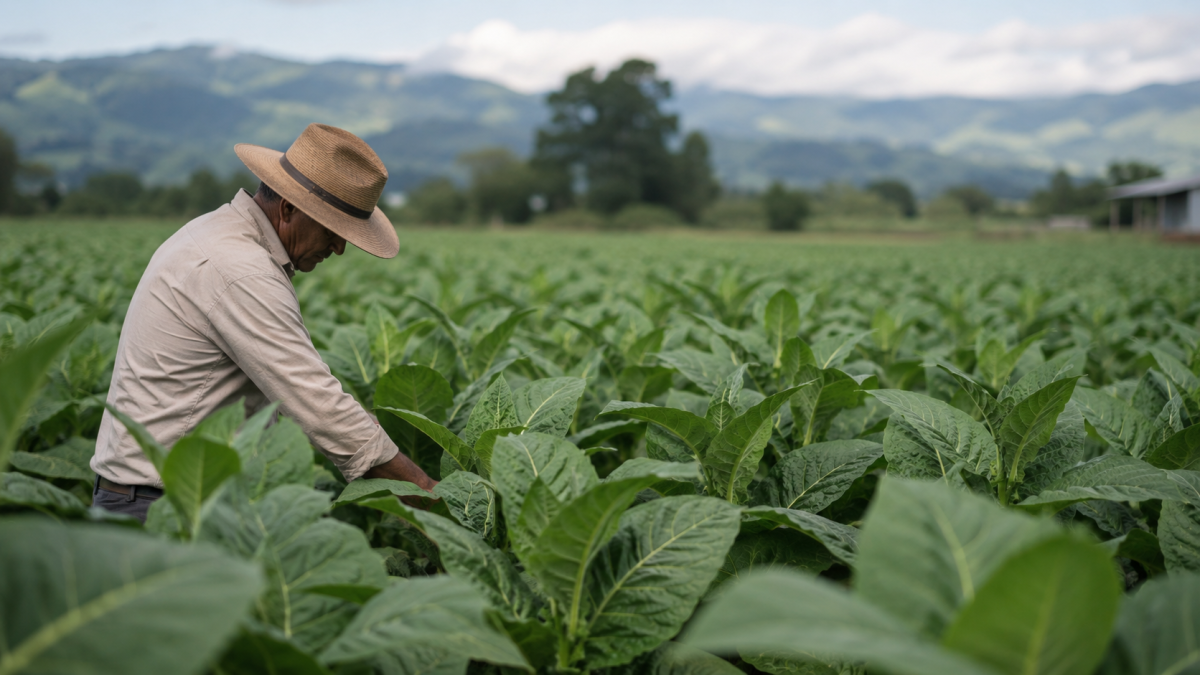
Tobacco grower organizations from Argentina, Brazil, Colombia, the Dominican Republic and the United States have called for stronger regional coordination and more balanced regulation, warning that increasingly restrictive tobacco policies could add pressure on farming communities, exports and legal supply chains.
According to public materials released by the International Tobacco Growers’ Association (ITGA), the call followed the ITGA & Afubra Americas Workshop held on May 22 in Santa Cruz do Sul, Brazil. Afubra, or Associação dos Fumicultores do Brasil, is a Brazilian tobacco growers’ association.
The meeting focused on regional cooperation, farmer representation, global regulation, trade issues and the socio-economic role of tobacco production across the Americas.
ITGA describes itself as the only worldwide association representing tobacco growers. Founded in 1984, the organization says its work includes grower representation, information sharing, market monitoring, engagement with policymakers and publicizing the socio-economic importance of tobacco farming.
The meeting came as tobacco regulation continues to expand across global and regional policy forums. While much of the debate around tobacco and nicotine remains focused on consumption, products and public health, grower groups said regulatory decisions are increasingly affecting the production side of the sector, including farm income, exports, labour standards, traceability requirements and rural livelihoods.

A Regional Declaration Focused on Cooperation and Farmer Representation
Participating organizations agreed to sign a formal declaration aimed at strengthening cooperation among tobacco-growing communities in the Americas, according to ITGA’s release.
The declaration focuses on information exchange, coordinated regional action and efforts to respond to what participating organizations described as growing attacks on tobacco production and tobacco-producing communities.
The groups also said they would seek to counter what they described as false accusations against tobacco-growing communities and negative narratives promoted by anti-tobacco NGOs. The declaration calls on governments to pursue balanced and evidence-based regulation that protects public health objectives while also taking account of rural livelihoods.
For grower organizations, the issue is not only how tobacco products are regulated in consumer markets, but whether farming communities are represented in policy discussions that may affect the economic basis of production.
Regulation Is Moving Further Upstream
Among the main issues raised at the meeting was the evolution of the World Health Organization Framework Convention on Tobacco Control. Growers argued that although the treaty was originally designed to address tobacco consumption, its scope has increasingly expanded into measures that directly affect tobacco production and farming communities.
Participants also discussed the forthcoming revision of the European Union Tobacco Products Directive. Although the TPD is a European regulatory process, ITGA and participating organizations said its consequences could extend beyond Europe and affect the long-term sustainability of tobacco-producing regions, including in the Americas.
The meeting agenda also included discussions on WHO FCTC developments, the EU TPD, U.S. FDA regulation, Mercosur trade agreements, cigar markets and country reports from Brazil, the United States, Argentina, the Dominican Republic and Colombia.
Grower groups said regulatory pressure is arriving at a time when producers are already facing higher production costs, labour pressures, trade uncertainty and volatility linked to energy prices and geopolitical instability.
Growers Link Unbalanced Regulation to Illicit Trade and Supply Chain Pressure
A central theme of the meeting was the argument that overly restrictive regulation can create unintended consequences when legal supply chains face higher compliance costs while illicit markets remain outside formal regulatory systems.
“The evidence is increasingly clear. Excessive and unbalanced regulation has not eliminated tobacco consumption globally, but it has created serious unintended consequences across multiple markets — including the expansion of illicit trade, loss of government revenue, increased criminal activity, and growing economic instability in rural producing regions,” said José Aranda, President of the International Tobacco Growers’ Association.
Legal supply chains are subject to taxation, traceability, labour and environmental requirements, while illicit operators remain outside those systems, according to the release.
“In several countries where restrictive policies have accelerated aggressively, illegal markets have expanded dramatically, undermining legal supply chains that comply with taxation, traceability, labour, and environmental standards. Farmers and legitimate businesses are being punished while illicit operators continue to grow outside any regulatory framework,” said Marcílio Drescher, President of Afubra.
ITGA’s release said legal operators are required to meet taxation, traceability, labour, export and environmental standards, while illicit markets operate outside formal regulatory frameworks.
Tobacco’s Economic Footprint Remains Central in Producing Regions
ITGA’s release emphasized the socio-economic role of tobacco in several producing countries across the Americas.
In Argentina, ITGA said tobacco production remains a critical economic pillar in provinces such as Jujuy, Salta and Misiones, where approximately 20,000 tobacco growers depend directly on the sector for their livelihoods. The release said tobacco also supports employment across the agricultural and manufacturing supply chain and contributes fiscal resources to provincial development and social programmes.
In Brazil, tobacco production sustains more than 135,000 tobacco-producing families, particularly in the southern states, according to ITGA. The organization said Brazil remains the world’s largest tobacco exporter, with exports contributing to employment and regional economic stability.
The Dominican Republic was cited as one of the clearest examples of tobacco’s economic impact. ITGA said the country’s tobacco sector generates more than US$1.3 billion annually in exports, represents about 10% of national exports and supports more than 120,000 direct jobs. The country remains a global leader in premium cigar exports.
In the United States, growers emphasized tobacco’s continuing role as a cornerstone crop in farming communities, particularly in states such as North Carolina and Kentucky. Discussions also highlighted the impact of labour costs, trade dynamics and regulatory uncertainty on the long-term sustainability of tobacco farming operations.
Colombia was also cited as a country where tobacco production continues to support rural economic activity in traditional growing regions while retaining technical knowledge and production expertise developed over decades.
ITGA used the country data to argue that tobacco policy has implications beyond consumer markets, including for farmers, employment, exports and rural development.
A Farming Sector Facing the Wider Nicotine Transition
The global tobacco and nicotine sector is changing as smoke-free nicotine products grow, consumer behaviour shifts and governments tighten tobacco-control policies. Most of that debate focuses on products, health risks, consumers and enforcement.
The materials released by ITGA show how grower organizations are seeking a place in that debate.
In many producing regions, tobacco farming remains closely tied to rural employment, seasonal income, export earnings and smallholder livelihoods. Its significance therefore extends beyond the tobacco industry itself, reaching into broader questions of agriculture, trade and poverty reduction.
This also suggests that future tobacco policy debates may need to be considered within a wider economic and social context, including how regulatory changes affect countries, farming communities and legal supply chains that still depend on tobacco production.
2Firsts will continue to follow how global tobacco regulation, nicotine market transition and tobacco-growing communities intersect.
Appendix: Socio-Economic Footprint of Tobacco Production in Selected Americas Countries
The following figures are based on ITGA’s published infographics on tobacco production in the Americas. Some figures differ from those used in ITGA’s press release, likely reflecting different data years or statistical scopes.
Argentina
ITGA’s infographic states that Argentina produces approximately 80 million kg of tobacco and has more than 16,000 tobacco growers. Tobacco leaf exports generate more than US$224 million. Salta and Jujuy, known for FCV Virginia tobacco, and Misiones, known for Burley tobacco, are listed as the country’s principal tobacco-growing regions.
ITGA’s press release separately states that approximately 20,000 tobacco growers in Argentina depend directly on the sector for their livelihoods.
Brazil
According to ITGA’s infographic, more than 133,000 families are involved in tobacco production in Brazil, while more than 625,000 people depend on tobacco for their livelihoods. The sector generates US$2.9 billion in foreign currency and creates around 90,000 seasonal jobs per year.
The infographic describes Brazil as the world’s leading tobacco exporter and the second-largest tobacco producer. ITGA’s press release states that tobacco production sustains more than 135,000 tobacco-producing families in the country.
Colombia
ITGA’s infographic states that Colombia has a tobacco crop area of more than 2,000 hectares and employs 3,600 farmers. Tobacco generates more than US$5 million in export value. The infographic also says Colombian growers are currently focusing on tobacco for cigars.
Dominican Republic
ITGA’s infographic describes tobacco as the Dominican Republic’s No. 1 agricultural crop. It states that more than 110,000 people work in the tobacco supply chain, women hold more than 60% of jobs in the sector, and tobacco generates more than US$1.2 billion in exports per year.
ITGA’s press release separately states that the Dominican tobacco sector generates more than US$1.3 billion annually in exports, represents about 10% of national exports and supports more than 120,000 direct jobs.
United States
ITGA’s infographic states that the United States has 75,931 hectares of harvested tobacco area and annual leaf production exceeding 195 million kg. Tobacco exports generate US$1.1 billion, and more than 2,500 tobacco farms remain in operation.
The infographic describes the United States as the world’s third-biggest tobacco exporter in value terms. ITGA’s press release highlights North Carolina and Kentucky as states where tobacco remains an important crop for farming communities.
ITGA and 2Firsts Partnership
The International Tobacco Growers’ Association (ITGA), founded in 1984, is a non-profit organization established by representatives from major tobacco-growing countries. It is dedicated to representing tobacco growers worldwide and ensuring that issues such as farmer livelihoods, rural communities and sustainable agriculture are considered in policy discussions.
2Firsts is a media and consulting platform focused on the global tobacco and new nicotine sectors. Through professional reporting, industry research and compliance services, 2Firsts works to connect the global value chain and support discussions around tobacco harm reduction (THR) and industry sustainability.
In April 2025, ITGA and 2Firsts officially signed a memorandum of understanding during the ITGA Americas Regional Meeting in San Salvador de Jujuy, Argentina, launching a strategic partnership. The cooperation covers four core areas and aims to support tobacco growers worldwide, strengthen communication and collaboration between the traditional tobacco-growing sector and the new tobacco and nicotine industries, and promote information exchange and shared development across global markets:
Official Media Partner: 2Firsts will serve as ITGA’s official media partner, participating in and reporting on ITGA’s global meetings and events to increase the visibility of related industry issues.
Joint Conference Development: The two parties will jointly organize the ITGA Asia-Pacific Regional Meeting, building a professional dialogue platform focused on tobacco growing, industry trends and policy developments.
Strategic Representative in Greater China: 2Firsts will serve as ITGA’s exclusive local liaison representative in Greater China, including mainland China, Hong Kong, Macao and Taiwan, to facilitate deeper cooperation between ITGA and relevant institutions and industry stakeholders in the region.
Joint Research and Publications: The two parties will jointly develop and publish industry blue books and market research reports, providing professional insights and forward-looking analysis for the global tobacco-growing and new nicotine sectors.
To learn more about the collaboration between ITGA and 2Firsts, click here.

Disclaimer
This article is provided solely for professional research, industry discussion, and informational purposes. Any references to brands, companies, products, technologies, or policies are made for factual reporting and analytical purposes only, and do not constitute endorsement, recommendation, promotion, or advertising by 2Firsts.
Nicotine-containing products, including but not limited to cigarettes, e-cigarettes, heated tobacco products, and nicotine pouches, carry significant health risks. Readers are responsible for complying with all applicable laws and regulations in their respective jurisdictions, including age restrictions and access limitations.
The information contained in this article should not be regarded as investment, legal, medical, regulatory, or commercial advice. While 2Firsts strives to ensure the accuracy and reliability of its content, it does not assume liability for any direct or indirect loss arising from errors, omissions, inaccuracies, or reliance on the information contained herein.
This article is not intended for individuals below the legal age for accessing tobacco or nicotine-related information in their jurisdiction.
Copyright Notice
This article is either original content produced by 2Firsts or content reproduced, translated, summarized, or adapted from third-party sources with attribution where applicable. The intellectual property rights of the original content remain with 2Firsts or the respective original rights holders.
No individual or organization may copy, reproduce, distribute, republish, modify, translate, or otherwise use this content without prior authorization. Any unauthorized use may result in legal action.
For copyright-related inquiries, corrections, or removal requests, please contact: info@2firsts.com.
AI-Assisted Translation and Editing Notice
Portions of this article may have been translated, edited, or reviewed with the assistance of artificial intelligence tools to improve efficiency and readability. Due to the limitations of AI-assisted translation and editing, discrepancies, omissions, or inaccuracies may exist when compared with the original source.
Where applicable, readers are advised to refer to the original source for the most complete and accurate information. If you identify any errors or believe that any content infringes upon your rights, please contact us at info@2firsts.com, and we will review and address the matter promptly.