Key Points
- PMI confirmed IQOS will enter Argentina.
- The launch window is before end-2026.
- Argentina has created a new regulatory framework.
- About 7 million smokers represent a potential market.
2Firsts
June 26, 2026
According to Contexto Tucumán, citing iProfesional, Philip Morris International (PMI) has confirmed plans to bring its IQOS heated tobacco device to Argentina before the end of 2026. The plan was revived after the Argentine government removed long-standing restrictions and advanced regulation of such products. Contexto Tucumán reported that Argentina has about 7 million conventional cigarette consumers who previously had no legal access to the heated tobacco technology.
Regulatory Shift Opens the Market
Demian Pintos, managing director of PMI’s South Cluster, said the company expects to soon have the opportunity to offer related solutions to adult smokers in Argentina and aims to launch its flagship IQOS product before year-end. The report said the Argentine government removed the ban on these devices and moved forward with regulation, allowing PMI to reactivate plans that had been frozen for years.
Argentina’s health authorities previously said the government had created a new framework for tobacco and nicotine products. Under the new rules, e-cigarettes, vaping devices, heated tobacco products, vaporization liquids and nicotine pouches are treated as tobacco and nicotine products and must comply with Law No. 26,687 and related regulations.
That marks a shift from long-standing prohibition toward registration, regulation and market control for new nicotine products. For companies, the opening of a legal sales pathway also means that product registration, quality standards, labeling, sales channels and compliance responsibility will become entry requirements.
For PMI, Argentina is important not only as a new sales market, but also as part of the heated tobacco map in Latin America. The report quoted Pintos as saying the region is “a little behind” in the heated tobacco wave, and that Argentina’s absence was not due to lack of company interest, but to regulatory barriers.
IQOS Positioned as Heated Tobacco
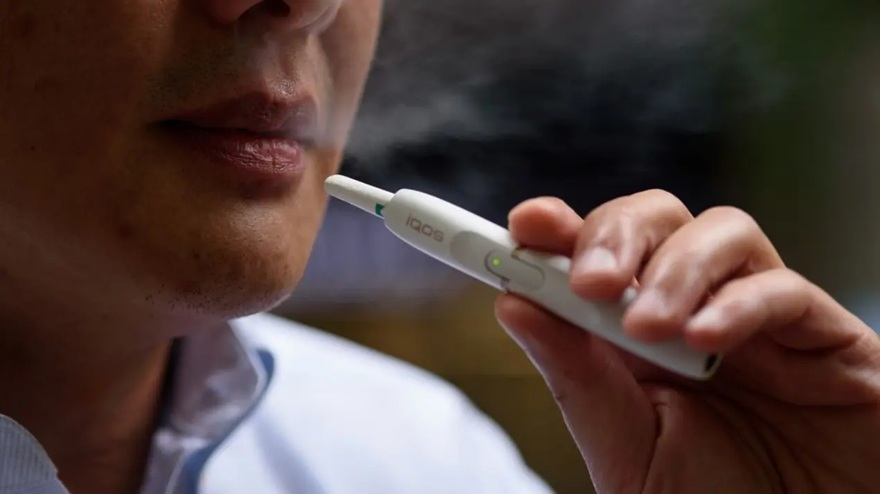
IQOS is not a standard e-cigarette or open-system vaping device. It is a heated tobacco product. The system uses tobacco sticks containing processed tobacco, which are inserted into the device and heated at controlled temperatures to release nicotine-containing aerosol without burning the tobacco.
PMI has long positioned heated tobacco as a core part of its smoke-free product portfolio. The report said 42% of PMI’s global revenue now comes from smoke-free products, with heated tobacco platforms such as IQOS leading the segment ahead of e-cigarettes and nicotine pouches.
The report also said IQOS has been sold in more than 100 countries for more than a decade. Japan was among the first markets to receive the product, while Italy, Spain and Greece are key European markets. PMI sees similarities between Argentina and some European cities in culture and consumer behavior, which it views as a basis for product adoption.
PMI sees Argentina’s roughly 7 million conventional cigarette consumers as a potential conversion base. The company says heated tobacco can reduce exposure to harmful substances produced by combustion compared with conventional cigarettes, while also stating that no nicotine product is risk-free.
From an industry perspective, Argentina’s market opening gives PMI access to a major South American market that had long been excluded from the global IQOS footprint. For competitors, the regulatory shift may also create opportunities for other heated tobacco, vaping and nicotine pouch brands to enter Argentina.
Channel and Service Challenges
PMI said IQOS launch in Argentina will involve more than placing a product on shelves. Pintos said the IQOS commercialization ecosystem differs significantly from the traditional cigarette channel because the product involves an electronic device, tobacco consumables and guidance for adult consumers.
The report said PMI needs to accelerate internal transformation processes to ensure the launch has the operational and commercial conditions for success. That includes point-of-sale training, logistics for devices and tobacco sticks, consumer support, and a hybrid business model combining a one-time device purchase with recurring consumable sales.
This is especially important in Argentina. Conventional cigarettes rely on mature distribution networks and retail endpoints, while IQOS requires more product explanation, after-sales support and compliant selling processes. If regulators set specific requirements for channels, age verification, labeling and advertising, companies will need to build those systems before launch.
The report said PMI does not want to repeat mistakes made in other markets where launches were rushed, and instead aims to arrive with the infrastructure needed to support demand and new-user questions. The company is working toward a launch window before the end of 2026.
For Argentina’s new nicotine market, IQOS entry will test how the new regulatory framework works in practice. Key issues to watch include product registration timing, tax classification, tobacco-stick supply chains, sales-channel strategy, the relationship with conventional cigarette pricing and how regulators balance adult alternative access with youth protection.
Follow 2Firsts for the latest updates on global tobacco harm reduction, nicotine products and regulatory developments.
Cover image:Contexto Tucumán