Long Term Study: Vaping Increases Odds of Quitting Heavy Smoking

Innovation
Jul.26.2022
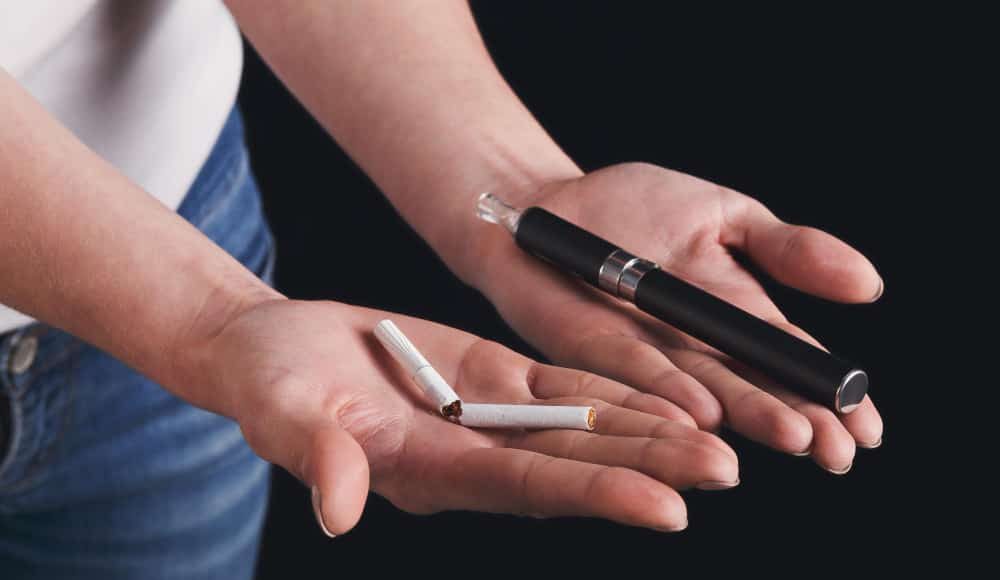
A long term study carried out by researchers at Roswell Park Comprehensive Cancer Center, has found that adult heavy smokers with no plans to quit are more likely to do so when they switch to vaping regularly.

Only about 6% of all smokers included in the trial quit smoking completely, but the rates were significantly higher among those who vaped daily, at 28%.
Long Term Study: Vaping Increases Odds of Quitting Heavy Smoking

Published recently in JAMA Network Open, the study titled, “Association of e-Cigarette Use With Discontinuation of Cigarette Smoking Among Adult Smokers Who Were Initially Never Planning to Quit,” used data from 2014 to 2019 as part of the Population Assessment of Tobacco and Health (PATH) Study, a long-term study looking into tobacco use behaviour and related health patterns in the US.


Findings from Wave 1 of the study released in 2016, had already put to rest certain misconceptions about vaping such as the infamous Gateway Theory. When the researchers focused their analysis on a select group of 1,600 smokers who had no plans to quit smoking and were not using e-cigarettes when the study began, they found that those who went on to vape daily were the ones who managed to quit.


“These findings are paradigm-shifting, because the data suggest that vaping may actually help people who are not actively trying to quit smoking. Most other studies focus exclusively on people who are actively trying to quit smoking, but this study suggests that we may be missing effects of e-cigarettes by not considering this group of smokers with limited intention to stop smoking -; a group that is often at the highest risk for poor health outcomes from cigarette smoking,” said Andrew Hyland, PhD, Chair of Health Behavior at Roswell Park Comprehensive Cancer Center.


The study reported that only about 6% of all smokers included in the trial quit smoking completely, but the rates were significantly higher among those who vaped daily, at 28%. “While clinical trials show strong evidence that vaping can help people quit smoking, findings from real-world population studies have been mixed,” said lead study author Karin Kasza, PhD, a research scientist in the Department of Health Behavior at Roswell Park. “Our study identified a positive association between daily vaping and cigarette quitting specifically among the segment of smokers who were not planning to quit, consistent with data from clinical trials.”

From Heating Blades to Heating Paper? CTHB Patent Points to Microwave Heated Tobacco Design
According to China’s patent office records, a patent owned by China Tobacco Hubei Industrial Corporation (CTHB) for “cigarette paper and a cigarette for microwave heating” was granted on May 19, 2026. The patent describes cigarette paper with an outer wrapping layer, a heating layer, and an isolation heat-conducting layer, allowing it to absorb microwave energy, convert it to heat, and transfer that heat to the aerosol-generating substrate.
Jun.10
 FDA Begins Review of 22nd Century’s VLN MRTP Renewal Applications
FDA Begins Review of 22nd Century’s VLN MRTP Renewal Applications
The U.S. Food and Drug Administration (FDA) has initiated scientific review of renewal applications for 22nd Century Group’s VLN reduced-nicotine cigarettes under the Modified Risk Tobacco Product (MRTP) pathway, with current authorizations set to expire in December 2026.
News
May.13
China Tobacco Yunnan Patent Describes Cigar Flavor Granules With Encapsulation Rate Above 77%
According to public records from China’s National Intellectual Property Administration, a patent application filed by China Tobacco Yunnan Industrial Co., Ltd. for “cigar flavor granules” was published on May 12, 2026. The filing proposes purifying an ethanol extract of cigar tobacco leaves using LX-8 macroporous resin, followed by encapsulation with maltodextrin and sucrose fatty acid ester to improve smoking comfort, reduce dryness and enhance aroma release stability in reconstituted tobacco.
Jun.10
Canada Faces Growing Debate as Youth Nicotine Pouch Use Reaches 34.8%
New Canadian research shows that 34.8% of people aged 17 to 27 have tried nicotine pouches, up more than fourfold from 7.6% in 2022. The findings come as Conservative politicians, Alberta’s government and the tobacco industry push Ottawa to relax current restrictions on pouch sales.
Jun.12
Putin Signs Russia’s Tobacco and Nicotine Product Licensing Law, Banning Unlicensed Sales From 2027
Russian President Vladimir Putin has signed a law introducing mandatory licensing for wholesale and retail trade in tobacco and nicotine-containing products, with the system taking effect on October 1, 2026, and unlicensed operations banned from March 1, 2027, while vape and e-liquid retail may also face uncertainty from temporary regional sales-ban powers.
Jul.01
FIFA Bans Vaping in 2026 World Cup Stadiums, Putting Nicotine Rules in Event Compliance Focus
FIFA’s 2026 World Cup stadium rules prohibit smoking, vaping and the use of any tobacco products or electronic smoking devices inside stadiums, including inner and outer perimeters, while electronic smoking devices, tobacco products, lighters and matches are listed as prohibited items, bringing nicotine-product management, venue compliance and cross-border legal differences into focus at a major global sporting event.
Jul.06