Malaysia’s Selangor health authorities fine company US$5,000 over toy-like vape devices

Mar.05
Malaysia’s Selangor health authorities fine company US$5,000 over toy-like vape devices
Selangor’s health department said a company was fined RM20,000(US$5,000) for supplying vape devices designed to resemble toys. Officers raided the firm’s premises near Taman Kosas in Ampang on Dec 19, 2025 after discovering it was importing and distributing toy-shaped vape devices.

Key Takeaways


  • A company was fined RM20,000 (about US$5,000) in Selangor, Malaysia
  • Officers raided premises near Taman Kosas, Ampang on Dec 19, 2025
  • Seized: 159 vape devices and e-cigarette flavourings worth about RM4,700 (about US$1,175)
  • Case cited Section 15(1) and penalty provision Section 15(2)(b)(i) of Act 852
  • A company representative pleaded guilty; seized items to be disposed of by prosecutors


2Firsts, March 5, 2026


According to Freemalaysia Today, Selangor’s health department said a company was fined RM20,000 (about US$5,000, using RM1 = US$0.25) for supplying vape devices designed to resemble toys, after a representative pleaded guilty at the Ampang Magistrates’ Court.


A spokesperson said officers raided the company’s premises near Taman Kosas in Ampang on Dec 19, 2025 after discovering it was importing and distributing toy-shaped vape devices. During the raid, officers seized 159 vape devices and e-cigarette flavourings estimated to be worth RM4,700 (about US$1,175).


Selling vape devices that resemble toys is an offence under Section 15(1) of the Control of Smoking Products for Public Health Act 2024 (Act 852) and is punishable under Section 15(2)(b)(i) of the same Act, the report said.


The spokesperson was quoted as saying the fine has been paid, and all seized items will be handed over to the prosecution for disposal.


Image source: Freemalaysia Today.


We welcome news tips, article submissions, interview requests, or comments on this piece.

Please contact us at info@2firsts.com, or reach out to Alan Zhao, CEO of 2Firsts, on LinkedIn


Notice

1.  This article is intended solely for professional research purposes related to industry, technology, and policy. Any references to brands or products are made purely for objective description and do not constitute any form of endorsement, recommendation, or promotion by 2Firsts.

2.  The use of nicotine-containing products — including, but not limited to, cigarettes, e-cigarettes, nicotine pouchand heated tobacco products — carries significant health risks. Users are responsible for complying with all applicable laws and regulations in their respective jurisdictions.

3.  This article is not intended to serve as the basis for any investment decisions or financial advice. 2Firsts assumes no direct or indirect liability for any inaccuracies or errors in the content.

4.  Access to this article is strictly prohibited for individuals below the legal age in their jurisdiction.


Copyright


This article is either an original work created by 2Firsts or a reproduction from third-party sources with proper attribution. All copyrights and usage rights belong to 2Firsts or the original content provider. Unauthorized reproduction, distribution, or any other form of unauthorized use by any individual or organization is strictly prohibited. Violators will be held legally accountable.

For copyright-related inquiries, please contact: info@2firsts.com


AI Assistance Disclaimer


This article may have been enhanced using AI tools to improve translation and editorial efficiency. However, due to technical limitations, inaccuracies may occur. Readers are encouraged to refer to the cited sources for the most accurate information.

We welcome any corrections or feedback. Please contact us at: info@2firsts.com

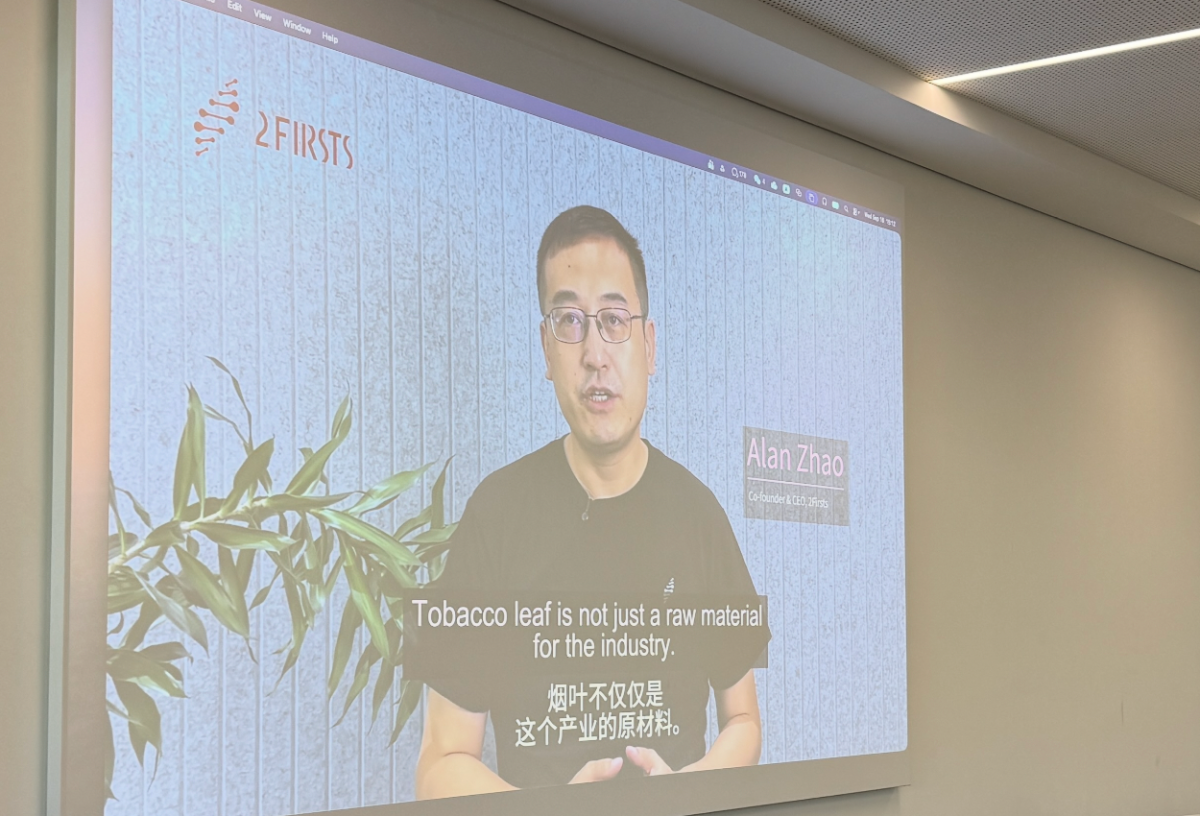
2Firsts Hosts China Market Forum at InterTabac as Global Industry Attention to China’s Tobacco Sector Deepens
On September 16, 2Firsts hosted a China-focused industry forum during InterTabac in Dortmund, bringing together more than 30 participants from North America, Europe, India, South Korea and other markets. The session covered traditional tobacco, next-generation products, exports, technology, regulation and supply chains, while examining how China’s tobacco sector operates, where its transformation may be heading, and why its growing role matters increasingly to companies across the global tobacco and nicotine industry.
Sep.21
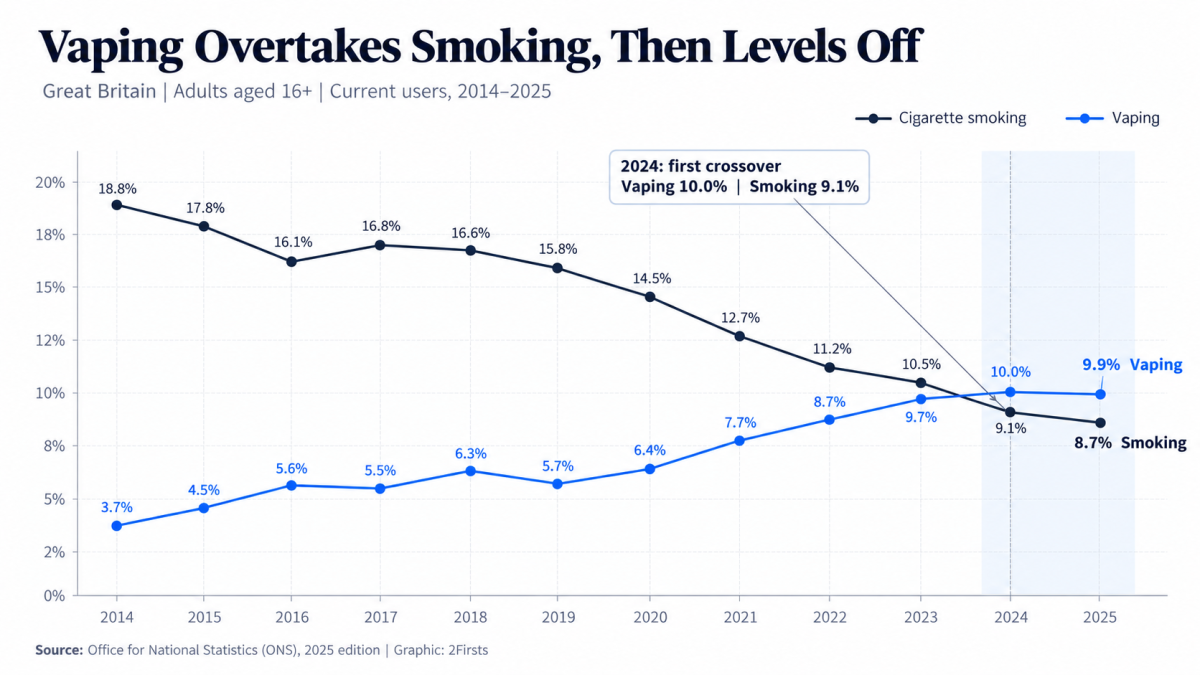
Latest UK ONS Data: Vaping Rate Edges Down to 9.9% in 2025, a Year After Overtaking Cigarette Smoking
Vaping prevalence in Great Britain edged down to 9.9% in 2025 from 10.0% in 2024, with the number of adult users holding at approximately 5.4 million for a second consecutive year, according to the Office for National Statistics (ONS). E-cigarette use had risen from 6.4% in 2020 to 10.0% in 2024, when it exceeded cigarette smoking prevalence for the first time. Cigarette smoking continued to decline to 8.7% in 2025, widening the gap to 1.2 percentage points. Daily vaping declined slightly, while usage among adults aged 25–34 increased despite falling rates in other age groups.
DATA
Oct.14
PMI Global Communications Chief Moira Gilchrist: Why AI Matters More Than Ever in the Smoke-Free Transition
Philip Morris International (PMI) Chief Global Communications Officer Moira Gilchrist said artificial intelligence is changing how companies understand audiences, manage owned information channels and communicate business transformation. PMI is using AI-generated audience personas to test messaging while optimizing its corporate website and other owned channels for large language models. As PMI continues its transition from cigarettes toward smoke-free products, Gilchrist said owned data and corporate channels are becoming increasingly important in demonstrating the scale of that transformation.
Aug.26
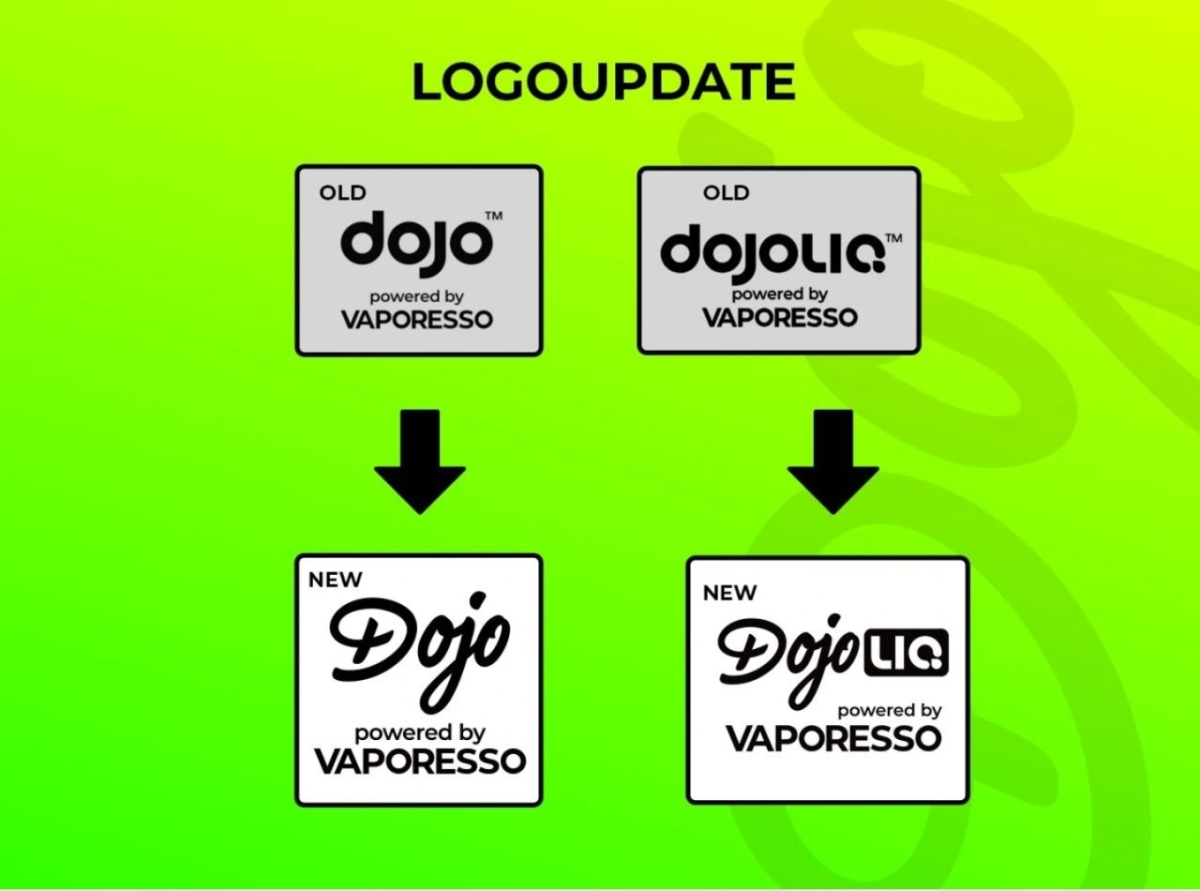
SMOORE’s DOJO by VAPORESSO to Launch New Global Brand Identity on September 1
According to recent LinkedIn posts from people at VAPORESSO, SMOORE and a German distribution partner, vape brand DOJO will begin rolling out a new global brand identity on September 1, 2026, led by a redesigned handwritten logo. The new visual system will be gradually applied across product packaging, marketing materials and digital assets over the following months. Fabio Corsaro, Head of Marketing and Purchasing at MG Wesel GmbH, said the rebrand was related to trademark issues, but that explanation has not been publicly confirmed by DOJO, VAPORESSO or SMOORE. DOJO is currently promoting its Blast X product in Germany.
Aug.31
Russia Adds Vapes to “Strategic Goods” List, Illegal Cross-Border Trade Faces Up to Five Years in Prison
Russia will place e-cigarettes and related nicotine products under its “strategic goods” framework from August 20, 2026. According to TVP World’s report published on August 19, the newly listed items include e-cigarettes, electronic smoking devices, vape liquids and nicotine salts. Individuals who illegally move these products across Russia’s customs border or its state border with other Eurasian Economic Union (EAEU) members could face up to five years in prison if shipment values exceed 100,000 rubles (about €1,000), provided all elements of a criminal offence are established.
Aug.20
U.S. Ninth Circuit Upholds FDA Denial of MH Global’s Flavored Vape PMTA Applications
The U.S. Court of Appeals for the Ninth Circuit upheld the FDA’s denial of MH Global LLC’s applications to market flavored electronic nicotine delivery systems (ENDS). The court ruled that FDA’s comparative-efficacy framework, which requires applicants to show that flavored products provide greater cessation or switching benefits than tobacco-flavored alternatives, is consistent with the Tobacco Control Act’s “appropriate for the protection of the public health” standard. The court also found that FDA was not required to establish the framework through notice-and-comment rulemaking.
Aug.26