Netherlands plans to raise nicotine purchase age to 21, including vapes

Feb.09
Netherlands plans to raise nicotine purchase age to 21, including vapes
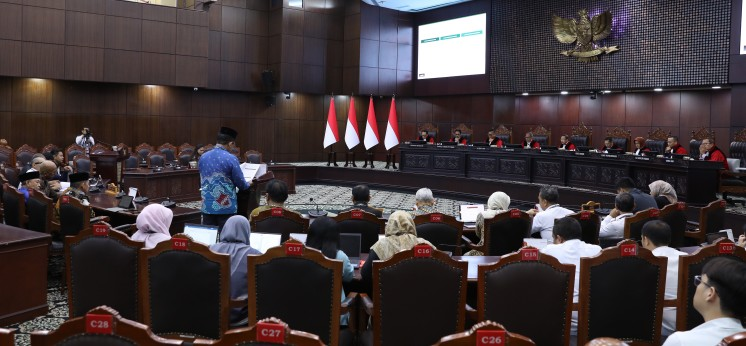
The Netherlands is planning to raise the legal age for buying nicotine-containing products from 18 to 21, a change that would also cover vapes. The move, embedded in the governing coalition’s latest agreement, aligns with a wider European trend toward tighter youth nicotine controls, though industry groups have criticised the proposal and warned it could fuel illicit trade.

Key Points


  • The Dutch coalition agreement proposes raising the minimum purchase age for nicotine-containing products to 21, including vapes.
  • The plan follows rising concern about youth vaping in the Netherlands.
  • Similar tightening is underway in Latvia, Ireland and Finland via higher age thresholds or “smoke-free generation” approaches.
  • Industry groups argue 18-year-olds are legal adults and warn the change could drive illicit trade and cross-border purchases.


2Firsts, Feb 9, 2026


According to Euractiv, the Netherlands is planning to raise the minimum legal age for purchasing nicotine-containing products to 21, with the change also applying to vapes currently sold from age 18. The policy is referenced in the Dutch coalition agreement reached last month, which links the measure to ongoing “smoke-free generation” initiatives.


Euractiv notes the proposal comes amid heightened concern about youth vaping. A 2025 government-commissioned study found that one in 10 12-year-olds had tried vaping, while nearly 40% of 12–16-year-old users said they were addicted, with one in three of those vaping daily.


The proposed shift mirrors developments elsewhere in Europe. Latvia raised the minimum legal age for tobacco, vapes and nicotine pouches from 18 to 20 last year, while Ireland is pursuing a “smoke-free generation” pathway that would raise the purchasing age to 21 by Feb. 1, 2028. Finland is also considering lifting its age threshold from 18 to 20 as part of its “tobacco- and nicotine-free by 2030” goal. Euractiv adds that the long-term impact of such measures remains under review, with Latvian officials indicating fuller data may only emerge in late 2026 or 2027.


Industry groups have criticised the Dutch plan, arguing that 18-year-olds are legal adults and questioning the effectiveness of a higher age limit, while warning it could encourage illicit trade and cross-border buying. Euractiv also points to neighbouring policy differences, including Germany debating tax changes rather than an age increase, and Belgium maintaining age 18 sales while banning disposable vapes in 2025.


Image source: Euractiv

We welcome news tips, article submissions, interview requests, or comments on this piece.

Please contact us at info@2firsts.com, or reach out to Alan Zhao, CEO of 2Firsts, on LinkedIn


Notice

1.  This article is intended solely for professional research purposes related to industry, technology, and policy. Any references to brands or products are made purely for objective description and do not constitute any form of endorsement, recommendation, or promotion by 2Firsts.

2.  The use of nicotine-containing products — including, but not limited to, cigarettes, e-cigarettes, nicotine pouchand heated tobacco products — carries significant health risks. Users are responsible for complying with all applicable laws and regulations in their respective jurisdictions.

3.  This article is not intended to serve as the basis for any investment decisions or financial advice. 2Firsts assumes no direct or indirect liability for any inaccuracies or errors in the content.

4.  Access to this article is strictly prohibited for individuals below the legal age in their jurisdiction.


Copyright


This article is either an original work created by 2Firsts or a reproduction from third-party sources with proper attribution. All copyrights and usage rights belong to 2Firsts or the original content provider. Unauthorized reproduction, distribution, or any other form of unauthorized use by any individual or organization is strictly prohibited. Violators will be held legally accountable.

For copyright-related inquiries, please contact: info@2firsts.com


AI Assistance Disclaimer


This article may have been enhanced using AI tools to improve translation and editorial efficiency. However, due to technical limitations, inaccuracies may occur. Readers are encouraged to refer to the cited sources for the most accurate information.

We welcome any corrections or feedback. Please contact us at: info@2firsts.com

Indonesia's Vape Ban Case Advances, With 200 Industrial Companies and $518 Million in Annual Exports Facing Uncertainty; Five Government Agencies to Address Court on December 2
Indonesia's Constitutional Court held its fifth hearing on November 25 in a case seeking a comprehensive ban on e-cigarettes. Three vaping industry associations challenged the proposed ban, citing existing excise duties, local tobacco taxes and business licensing regulations, while the Indonesian Ulema Council (MUI) called for ending the legal distribution of e-cigarettes. The Ministry of Health previously defended the constitutionality of the existing Health Law on behalf of the government but did not rule out tighter restrictions or a comprehensive ban in the future. According to the Ministry of Industry, Indonesia has approximately 200 companies in the e-cigarette manufacturing sector, with exports reaching $518.28 million in 2025, more than triple their 2022 level. Five government agencies, including the ministries of industry and trade, are scheduled to present their views on December 2.
Regulations
Nov.27
Japan Tobacco Reshuffles Leadership for 2027, Names New Domestic Tobacco CEO and Moves Incumbent to Corporate Strategy, Business Development and Governance
On November 27, Japan Tobacco (JT) announced its 2027 executive appointments, naming Yoshiyuki Orita, a former general manager of JTI Vietnam with experience in international markets including Iran and Canada, as the next CEO of its domestic tobacco business. Takashi Araki, the incumbent, will move to a corporate role overseeing strategy, business development and governance. JT also revised the responsibilities of six executive officers, removing corporate communications from its finance executives' portfolios. In the first nine months of 2026, Ploom volume in Japan increased 34.3% year on year, while JT's share of the domestic heated tobacco category reached 17.4% in the third quarter.
company
Nov.27
FDA Rescinds Denials for 280 Charlie’s Vape and E-Liquid Products; Court Vacates MDOs for Five Other Firms on Same Day
The U.S. Food and Drug Administration (FDA) rescinded marketing denial orders (MDOs) covering 280 e-cigarette and e-liquid products owned by Charlie’s Holdings on November 18, 2026. The products include 248 PACHA Syn disposable vapes and 32 Charlie’s Chalk Dust and Pachamama e-liquids. On the same day, the U.S. Court of Appeals for the Fifth Circuit vacated MDOs involving five other vaping companies and remanded their cases to the FDA. Both actions were linked to the court’s August ruling in NicQuid. Charlie’s affected PMTAs have returned to review without receiving marketing authorization. The company reported retaining 678 PMTA assets, while third-quarter 2026 net revenue fell 55.9% year over year.
product
Nov.24
Product | OXVA Introduces XLIM PRO 4 With Liquid-Level Anti-Burn Technology and Dedicated Pods
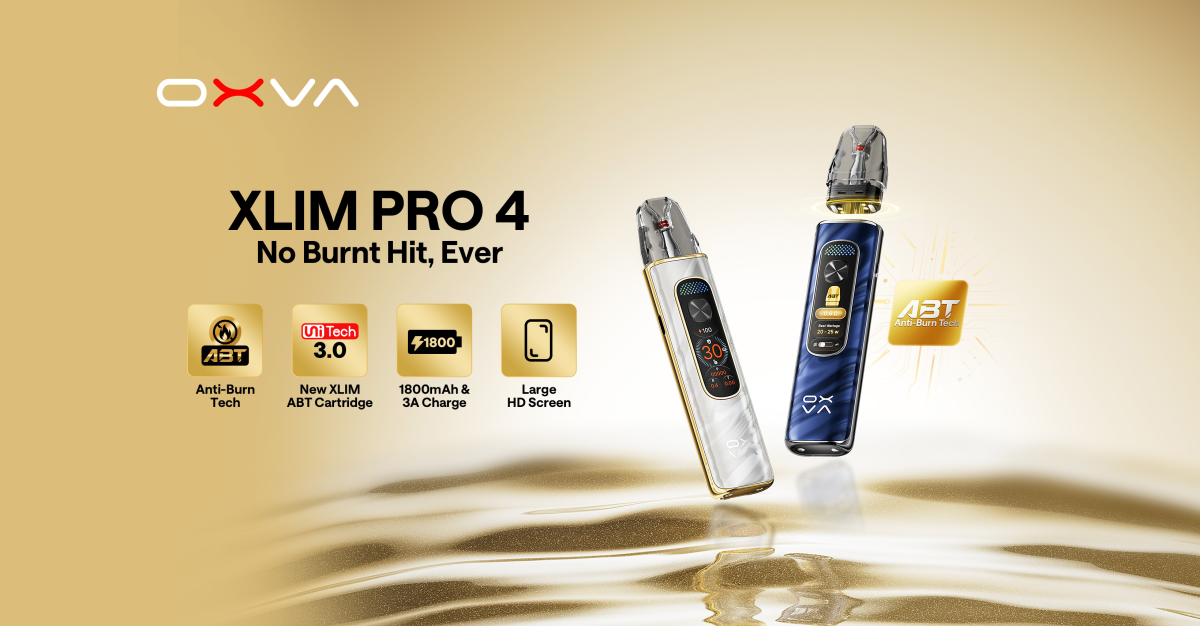
Vaping brand OXVA introduced the XLIM PRO 4 refillable pod system in October 2026, featuring Anti-Burn Tech (ABT) based on smart e-liquid-level detection. The system can issue refill alerts and stop power output when e-liquid levels become too low. ABT requires the XLIM PRO 4 device and a dedicated XLIM ABT cartridge. Standard XLIM pods remain compatible but do not support ABT protection. OXVA previously introduced temperature-based anti-burn technology in the XLIM Pro 2 DNA, developed with Evolv. The new device features a 1,800mAh battery, 5–30W output and a 0.98-inch HD color screen. OXVA's official store lists the device at $37.90 and dedicated ABT replacement cartridges at $12.99. Independent testing confirmed the low-liquid protection response but recorded varying cartridge lifespans.
product
Oct.30
Special Report|Virginia Vape Directory Shows Contrast Between Vuse and JUUL Pod Systems and CrossBar 20K, Loon Flavored Disposables
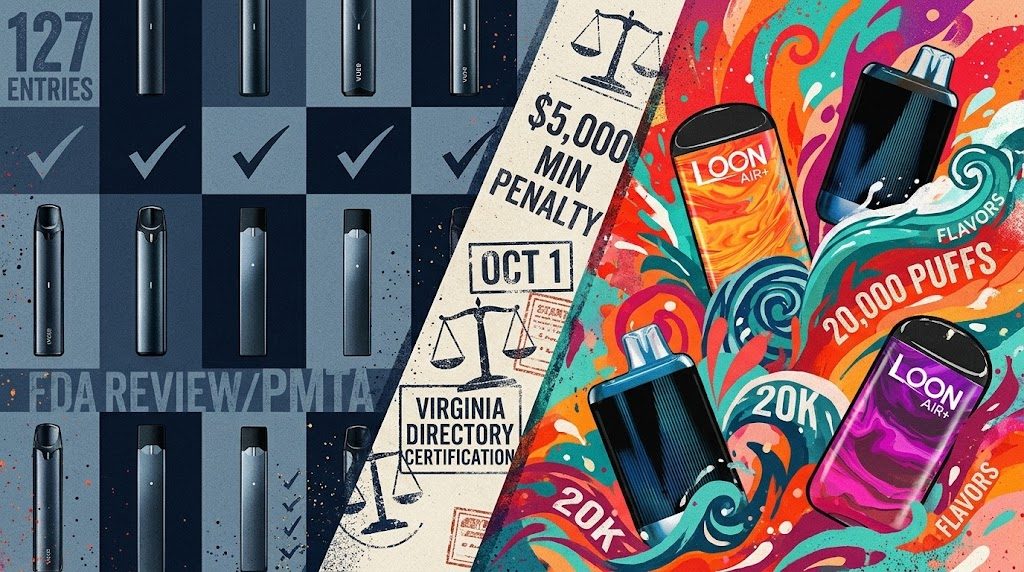
A 2Firsts analysis of Virginia's liquid nicotine and vapor product certification directory identified 213 product records from 15 manufacturers. Companies associated with BAT, Altria, Imperial Brands, JTI and JUUL account for 127 entries. The directory also includes independent brands CrossBar 20K, Loon and Breeze. CrossBar advertises a 13mL disposable capable of up to 20,000 puffs, while Loon has 16 disposable entries featuring fruit, cooling and beverage-related flavors. Of all records, 120 are labeled as under FDA PMTA review. Virginia introduced revised penalties on October 1, 2026, including a minimum first-violation civil penalty of $5,000 per unlisted product, alongside new retail tobacco permitting requirements.
Regulations
Oct.30
Hungary Moves to End BAT-Backed Tobacco Supply Monopoly Eight Years Early After $200 Million in Profits, With No Compensation Planned
Hungary's government announced on November 18, 2026, plans to terminate the exclusive tobacco retail supply concession held by Országos Dohányboltellátó (ODBE) on June 1, 2027, approximately eight years before the contract's scheduled expiry in 2035. ODBE is owned 49% by a Hungarian subsidiary of British American Tobacco (BAT) and 51% by Tabán Trafik. It has served as the exclusive supplier to Hungary's licensed tobacco retail network since 2015. The proposed legislation would end the concession without compensation and allow other qualified suppliers and tobacco wholesalers to serve retailers directly. ODBE generated HUF 67.3 billion (approximately $200 million) in after-tax profit between 2015 and 2025 and distributed nearly HUF 64 billion ($191 million) in dividends. The bill also proposes changes to retail margins, inventory rules, payment arrangements and procurement penalties, including those affecting heated tobacco products.
company
Nov.19 by 2Firsts Perspectives