Key Points
● PMTA Framework Review: FDA is reassessing the current PMTA framework, with priorities including greater clarity, predictability, efficiency, and reduced administrative burden.
● Review Capacity Constraint: CTP currently has only nine PMTA scientific review teams, and Bret Koplow said he would like to more than double that number.
● Faster, More Targeted Review: CTP is expanding category-specific review through the nicotine pouch pilot and sPMTA pilot, while also using AI tools to support certain review activities.
● Harm Reduction and Product Access: Koplow reaffirmed tobacco harm reduction as a practical, scientific and legal foundation of CTP’s work, including consideration of flavored products where youth risks can be sufficiently mitigated.
● Unauthorized Market and Youth Protection: Koplow highlighted the scale of unauthorized e-cigarette sales, while stressing that broader access to authorized products must be balanced with strong youth protections and responsible marketing.
2Firsts
Washington, D.C., October 6, 2026
Eight days after the U.S. Food and Drug Administration said it intends to evaluate changes to the Premarket Tobacco Product Application (PMTA) regulatory framework — including possible new rulemaking to replace the current framework — Bret Koplow, Director of FDA’s Center for Tobacco Products (CTP), offered new details Tuesday on how the agency is approaching PMTA reform.
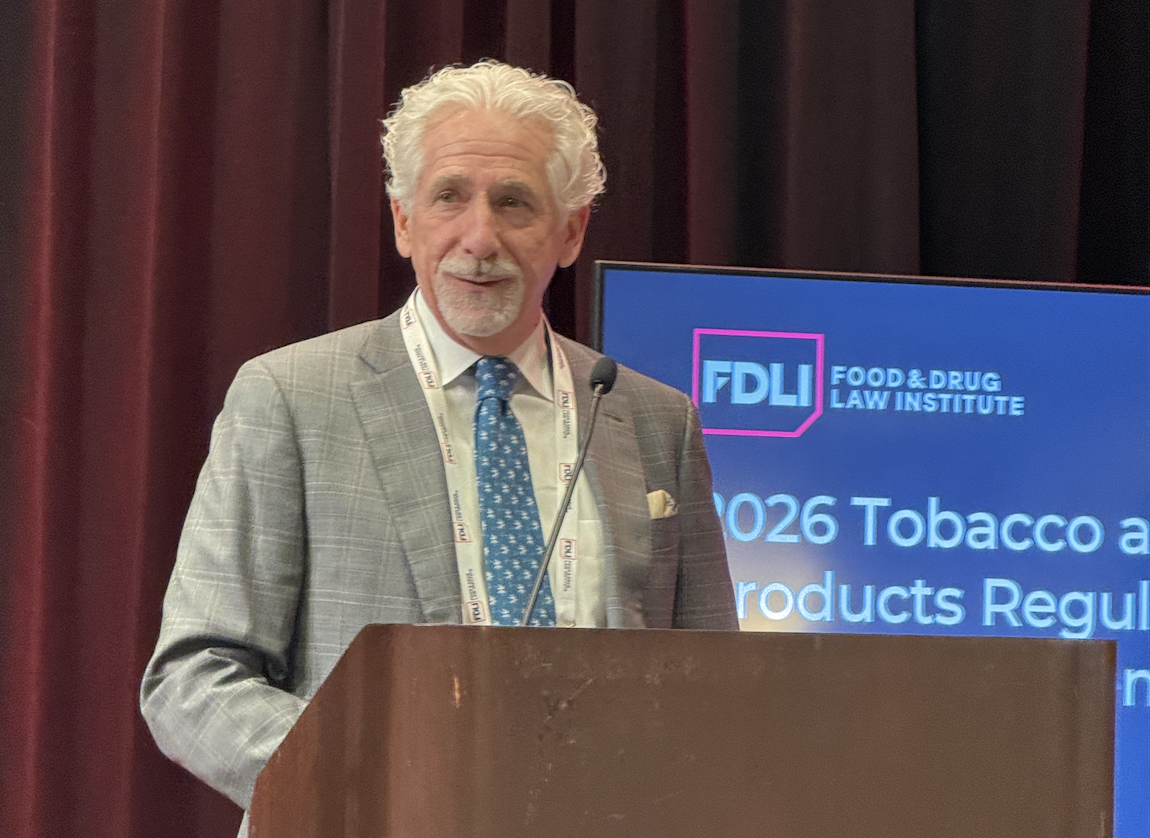
Koplow delivered the keynote address at the 2026 Tobacco and Nicotine Products Regulation and Policy Conference, hosted by the Food and Drug Law Institute (FDLI) in Washington, D.C., on October 6–7.
Founded in 1949, FDLI is a nonprofit membership organization focused on food and drug law and regulation. It describes itself as a neutral convener across FDA-regulated sectors, with a community of more than 30,000 people spanning government, industry, law firms, academia, consulting and nonprofit organizations. FDLI describes its annual tobacco and nicotine conference as a forum bringing together federal and state regulators, public health leaders, researchers, manufacturers, attorneys, consumer advocates and other stakeholders.
“This is my fourth keynote in about as many weeks,” Koplow told the audience as he opened his remarks. He said tobacco harm reduction would again be a central theme, as it has been in several of his recent public appearances.
On September 25, Koplow addressed the New Approaches Summit in New York, where he stated that “the PMTA pathway is predicated on tobacco harm reduction” and argued that FDA’s authorizations of new tobacco products through the pathway have, at least in part, applied harm-reduction principles.
His FDLI speech returned to many of the same themes, but added substantial detail on PMTA reform, scientific review capacity, category-specific review, supplemental PMTAs, artificial intelligence and the institutional constraints facing CTP.

FDA Reconsiders the PMTA Framework
On September 28, FDA announced that it was reviewing its experience implementing the 2021 PMTA rule and intends to evaluate changes to the regulatory framework, including through the initiation of new rulemaking to replace the current framework.
FDA cited its experience implementing the 2021 rule, the widespread development of an illicit and unregulated market, the pace of new product introductions and recent judicial developments. The agency specifically referenced a federal lawsuit filed in the U.S. District Court for the Northern District of Texas challenging the current regulatory framework. FDA said a modernized framework should better reflect market realities and provide greater clarity and predictability.
At FDLI, Koplow gave additional context for the review.
He said the PMTA rule was finalized before FDA had accumulated significant practical experience reviewing millions of applications. Both the agency and the regulated industry faced a learning curve after tobacco products became subject to premarket review.
Koplow said many early applications were scientifically deficient or lacked key information needed for FDA to make a public health determination. He cited missing ingredient information, toxicological assessments and evidence showing a meaningful benefit to adults who smoke among the shortcomings encountered in applications.
Those requirements, he said, are fundamental components of scientific review rather than obscure regulatory demands.
Koplow said FDA and the regulated industry are now better positioned to move toward a more predictable and transparent review process.
Potential revisions to the PMTA framework, he said, could provide applicants with greater clarity and predictability, improve efficiency, reduce administrative burdens on CTP scientists and relieve undue burdens on applicants. A more efficient system could also allow products that meet the statutory public health standard to receive decisions and reach the legal market more quickly.
The current PMTA rule remains in effect. Koplow said any revisions would proceed through the established rulemaking process, including an opportunity for public comment. FDA’s September 28 announcement likewise states that the agency will continue accepting and reviewing PMTAs and issuing regulatory decisions under existing statutory requirements while it considers future changes.
CTP Has Nine Scientific Review Teams — Koplow Wants More Than Twice That Number
Koplow also identified a constraint that changing the PMTA framework alone would not resolve: CTP’s scientific review capacity.
He said CTP currently has nine scientific review teams handling PMTAs. Each includes experts from multiple scientific disciplines.
A newly filed PMTA cannot move into substantive scientific review until one of those teams completes another review, Koplow said, creating a capacity bottleneck regardless of how efficiently the overall regulatory framework is designed.
“I would like to see us more than double the number of scientific review teams that we have,” Koplow told the audience.
He linked the staffing constraint in part to CTP’s hiring authorities.
Koplow said other FDA centers can use the more flexible Title 21 Alternative Pay and Personnel System, while CTP currently cannot. FDA describes Title 21 as an alternative pay and personnel system designed to improve the agency’s ability to recruit and retain scientific, technical and professional experts through more flexible hiring and competitive compensation.
CTP competes for toxicologists, chemists, engineers, pharmacologists and other specialists who are also needed elsewhere within FDA. Koplow said other centers can generally offer higher compensation and that CTP has lost scientists to them as a result.
He said extending comparable Title 21 hiring authority to CTP would ultimately require congressional action.
Nicotine Pouch Pilot Offers a Model for Category-Specific Review
Koplow pointed to FDA’s nicotine pouch pilot program as an example of how the agency can tailor scientific review to the characteristics of a particular product category.
He described nicotine pouches as a relatively homogeneous category. Unlike e-cigarettes, they do not contain a battery or heating element, and their risk profile differs from other types of tobacco products.
“The review process should reflect that,” Koplow said.
Under the pilot, CTP tailored its approach to the characteristics of nicotine pouches, enabled real-time communication with applicants and focused review on the most critical elements. That allowed applicants to address questions, gaps and deficiencies during the process rather than waiting until the end of scientific review.
Koplow said 23 products have been authorized through the pilot so far, and said the reviews were completed in record time without lowering FDA’s scientific standards.
“That is a model we want to build on where it’s appropriate to do so,” he said.
FDA independently reported on August 21 that it had authorized 43 nicotine pouch products overall, including 23 through the pilot program. The agency said the pilot had resulted in faster resolution of issues, shorter applicant response times to deficiency letters and more efficient scientific reviews, and that some efficiencies learned through the pilot were already being applied to other PMTAs.
The category-specific approach builds on a point Koplow made at the September 25 NAS meeting. Asked about review frameworks, he said different tobacco product categories differ in meaningful ways and that “one size doesn’t necessarily fit all.”
Supplemental PMTA Pilot Targets Product Modifications
Koplow also discussed CTP’s Supplemental Premarket Tobacco Product Application, or sPMTA, pilot.
For products that have already received a marketing granted order, he said, some modifications should not require the same level of review as an entirely new product.
Koplow cited improvements in electronics technology and also referred in his remarks to certain ingredient substitutions as examples of changes that could receive expedited review under the approach.
CTP is developing a process to accelerate review of such modifications, he said. The goal is to reduce burdens on applicants while freeing scientific resources for applications that require more extensive review.
Koplow also linked the initiative to a broader objective: increasing the agency’s ability to make a wider range of legally marketed tobacco products available to adults who may benefit from switching away from higher-risk products.
CTP Is Using AI Tools to Support Some Reviews
Koplow also said CTP is already using artificial intelligence tools to support certain types of review work.
He did not identify the specific review stages or tasks in which the tools are being used.
Koplow said the technology is being used to improve efficiency while protecting the security and integrity of applicant submissions, and emphasized that regulatory decisions continue to be made by CTP staff.
The use of AI was not discussed in Koplow’s September 25 NAS speech.
Pending Applications Down About 70%; Acceptance Review Backlog Down More Than 99%
Koplow also provided updated figures on CTP’s PMTA backlog.
Since the beginning of 2025, he said, the center has reduced the number of pending applications by approximately 70% and reduced the number of applications awaiting acceptance review by more than 99%.
A PMTA submitted today can enter the first phase of review within a few days of receipt, according to Koplow.
He contrasted that with the situation two years earlier, when applicants could wait months or even years to learn whether an application was sufficiently complete to be accepted for further review.
At NAS on September 25, Koplow had already reported an approximately 70% reduction in the pending application backlog and said there was no longer a queue for acceptance review. The FDLI speech added the more specific figure of a greater-than-99% reduction at the acceptance stage.
Harm Reduction Remains the Regulatory Foundation
Koplow framed the operational changes within a broader policy position that has become central to his recent speeches: tobacco harm reduction.
At FDLI, he described tobacco harm reduction not as a slogan or rallying cry, but as a practical, scientific and legal framework guiding much of CTP’s work.
The statutory standard for PMTA review is whether marketing a new tobacco product is “appropriate for the protection of the public health,” or APPH. Koplow said that standard requires FDA to weigh potential benefits against risks to the population as a whole, including youth.
In practice, he said, this often means assessing the potential benefit to adults who smoke and may switch to the new product against risks such as youth use.
The same argument was at the center of his September 25 NAS speech, where Koplow said each PMTA authorization depends at least in part on the expectation that some consumers will completely switch from, or significantly reduce use of, a generally higher-risk tobacco product.
Flavors and Device Access Restrictions: Youth Protection Can Change the Risk Calculation
Koplow again addressed flavored e-cigarettes and Device Access Restriction technologies, or DARs.
He cited systems incorporating ID verification, smartphone pairing and periodic biometric checks designed to limit device access to verified adults aged 21 and older.
When youth access risk is meaningfully mitigated through robust technology, Koplow said, “the risk calculus around flavors changes.”
Under those conditions, he said, a broader range of flavors could potentially be made available to adults who smoke and want to switch completely from combustible cigarettes while protecting youth from access.
Koplow also said the recently authorized approach should not be viewed as the only possible technological solution. He expects other methods to emerge, including systems that may not rely on smartphone applications.
Nor, he said, is DAR technology the only possible pathway for a non-tobacco-flavored product. Such a product could still be authorized if an application demonstrates that its benefit in helping adults stop smoking outweighs its potential risk to youth.
These positions were also a major part of his September 25 speech, when he discussed FDA’s first authorization of non-tobacco, non-menthol flavored e-cigarette products incorporating device access restriction technology.
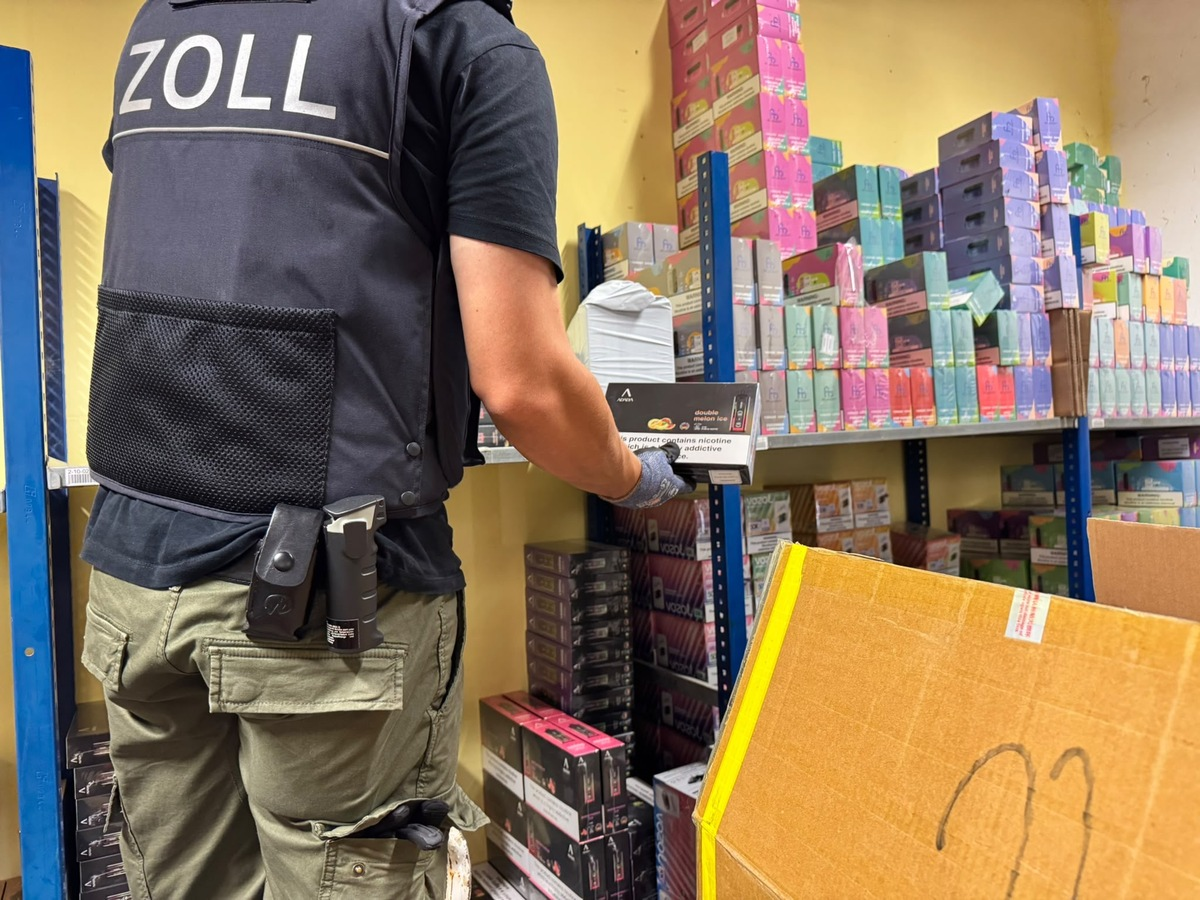
Unauthorized Products Account for an Estimated Nearly 70% of E-Cigarette Sales in Key Retail Channels
Koplow also returned to the scale of the unauthorized e-cigarette market.
Citing a CDC Foundation study based on Circana data, he said unauthorized products were estimated to account for almost 70% of U.S. e-cigarette sales in convenience and grocery channels as of December 2025.
Koplow called the figure unacceptably high, while adding that it partly reflects demand from consumers and retailers for greater product choice.
He argued that the problem has direct implications for tobacco harm reduction.
An adult trying to move away from cigarettes may find authorized and unauthorized products on the same retail shelf. If that consumer chooses a product that does not provide comparable nicotine delivery — or poses risks that have not been established through FDA review — an unsuccessful switching attempt could lead the person back to cigarettes.
Koplow said FDA has seen products with such problems reach scientific review. He described a failed switching attempt as a missed opportunity to prevent disease, premature death and future healthcare costs.
He also said enforcement alone would not clear unauthorized and defective products from the market.
Koplow called for a combination of efficient scientific evaluation, legal product authorizations, compliance efforts supporting manufacturers, distributors and retailers that follow the law, public education, targeted enforcement capable of broader deterrence and cooperation among federal, state and local authorities.
Risk Perceptions Have Shifted Sharply
Another major part of Koplow’s speech focused on what he described as a gap between scientific evidence and public understanding.
Koplow cited survey data showing that the share of U.S. adults who viewed e-cigarettes as generally less harmful than cigarettes fell from about 51% in 2012 to under 17% in 2022.
A published analysis of Health Information National Trends Survey data reported a decline from 50.7% in 2012 to 16.7% in 2022 in the proportion of U.S. adults who perceived e-cigarettes as less harmful than combustible cigarettes.
Koplow said the shift occurred during a period in which, in his view, the scientific evidence supporting tobacco harm reduction was strengthening.
He pointed to the 2019 surge in youth vaping and the outbreak of e-cigarette or vaping product use-associated lung injury, or EVALI, as developments that affected public perceptions of e-cigarettes.
Koplow also focused on healthcare providers.
He said some providers incorrectly understand the risks associated with nicotine, while many are unaware that FDA has authorized particular e-cigarette products following scientific review or of the potential risk-reduction opportunity for adult patients who smoke.
Healthcare providers, he said, have credibility with patients that regulators and tobacco companies do not, yet conversations about lower-risk FDA-authorized alternatives are not occurring often enough.
Koplow also noted that industry-funded research often faces greater skepticism and that some medical organizations do not engage with tobacco companies. As a result, he said, greater responsibility for communicating accurate information falls on FDA, academic researchers and independent scientific organizations.
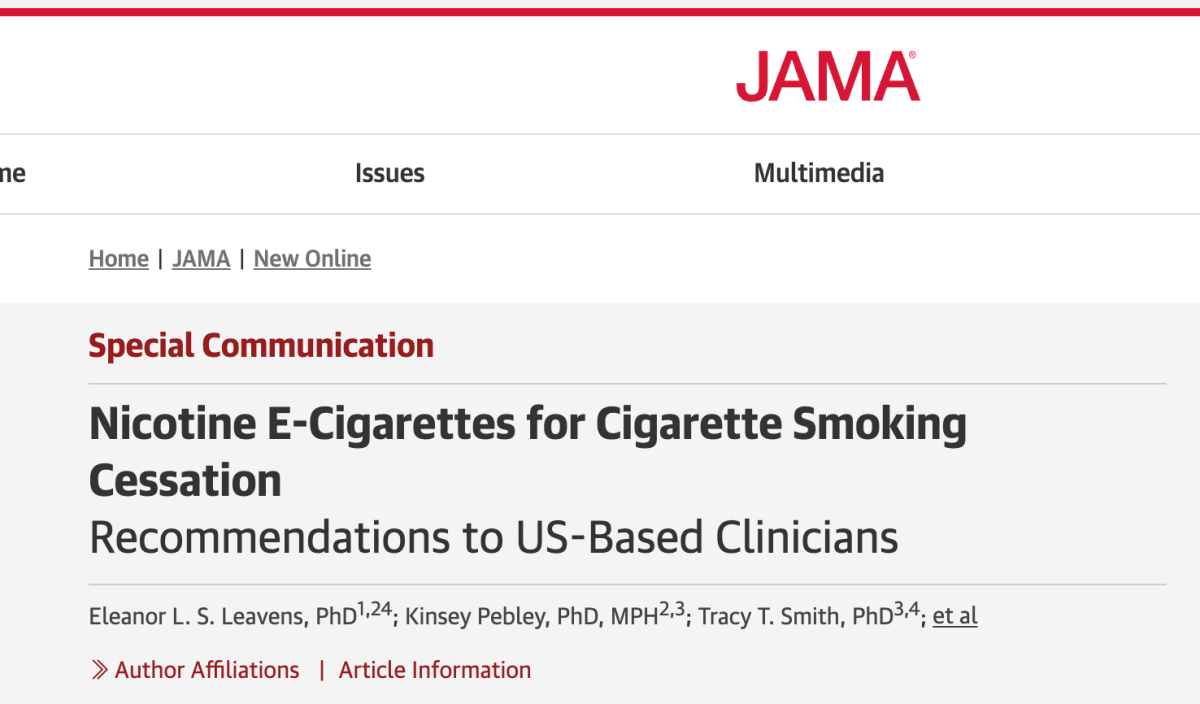
He cited a July 30 JAMA Special Communication developed by a working group within the Society for Research on Nicotine and Tobacco’s Treatment Research Network. The paper summarizes evidence on nicotine e-cigarettes for smoking cessation and provides recommendations for clinicians on discussing their use with adult patients who smoke.
Koplow said FDA is working to expand communication on tobacco harm reduction to healthcare providers and other audiences while seeking to avoid undermining youth prevention messages. CTP is also studying how harm-reduction messages affect intended and unintended audiences and monitoring the effects of recent product authorizations on consumer behavior and public perceptions.
Youth Tobacco Use Has Declined, but About 2 Million Students Still Report Current Use
Koplow paired his support for adult harm reduction with repeated emphasis on youth protection.
He cited the 2025 National Youth Tobacco Survey and said youth tobacco use, including e-cigarette use, had declined in recent years.
FDA’s published 2025 NYTS results show that 7.2% of U.S. middle and high school students, or approximately 2.01 million students, reported current use of a tobacco product. Current e-cigarette use was reported by 5.2%, or approximately 1.44 million students.
Koplow said those declines represent meaningful progress but cautioned that approximately 2 million young people still report current tobacco use.
He argued that tobacco harm reduction applies to adults capable of making informed choices, while youth require a different approach because of their susceptibility to nicotine addiction. Every product authorization, he said, continues to be evaluated through the lens of youth protection.
Koplow also cited FDA’s The Real Cost youth e-cigarette prevention campaign. FDA says an evaluation found that the campaign prevented an estimated 444,252 American youth from starting to use e-cigarettes between 2023 and 2024.
Koplow Warns Industry Over Marketing That May Appeal to Youth
Koplow then directed part of his speech specifically at tobacco companies.
He said companies must pay attention not only to what they submit in product applications, but also to how they promote products after they reach the market.
He cited high-value loyalty rewards including smartphones, exclusive items and vacations, arguing that even where programs formally have an age minimum, their appeal can extend to youth.
“Companies are responsible not just for what they put in their products, but also for how and to whom they market these products,” Koplow said.
At the same time, he acknowledged that today’s tobacco industry is not the same as it was decades ago and said many companies have invested in rigorous applications, youth access restrictions and regulatory compliance.
CTP, he said, wants to work with companies that follow the rules.
But bad actors can damage the broader industry’s credibility with regulators, researchers, clinicians and the public, he warned.
“To be trusted, one must be trustworthy,” Koplow said, calling on companies to go beyond minimum legal requirements and voluntarily take steps to keep tobacco products away from children.
What Was New Compared With Koplow’s September 25 NAS Speech?
Many of the themes in Tuesday’s speech were already present in Koplow’s September 25 NAS address.
At NAS, he had already placed tobacco harm reduction at the center of PMTA policy, discussed device access restrictions and flavored products, highlighted the scale of the unauthorized market, called for better communication of relative risk and described lessons from the nicotine pouch pilot.
Speaking at FDLI eight days after FDA’s September 28 announcement, Koplow explained how the agency’s experience reviewing millions of applications is informing its reconsideration of the PMTA framework and identified clarity, predictability, efficiency and reduced administrative burden as key objectives.
He also disclosed that CTP currently has only nine scientific review teams for PMTAs and said he wants the number to more than double. He identified CTP’s hiring authorities and lack of access to the same Title 21 Alternative Pay and Personnel System available elsewhere in FDA as a constraint.
Koplow also discussed CTP’s use of AI tools to support certain review work, while emphasizing that regulatory decisions remain with agency staff.
And he provided more detail on the supplemental PMTA pilot and on CTP’s broader move toward review processes tailored to the characteristics of specific tobacco product categories.
FDA’s reconsideration of the PMTA framework remains at an early stage. The current rule is still in force, and the agency has said any future changes will be pursued under applicable law with opportunities for public input.
2Firsts will continue reporting from Washington and following developments in FDA tobacco regulation, the PMTA review system, and the U.S. tobacco and nicotine market.
Cover image: Bret Koplow, Director of the FDA’s Center for Tobacco Products (CTP), speaks at the FDLI conference. Photo by 2Firsts.

Disclaimer
This article is provided solely for professional research, industry discussion, and informational purposes. Any references to brands, companies, products, technologies, or policies are made for factual reporting and analytical purposes only, and do not constitute endorsement, recommendation, promotion, or advertising by 2Firsts.
Nicotine-containing products, including but not limited to cigarettes, e-cigarettes, heated tobacco products, and nicotine pouches, carry significant health risks. Readers are responsible for complying with all applicable laws and regulations in their respective jurisdictions, including age restrictions and access limitations.
The information contained in this article should not be regarded as investment, legal, medical, regulatory, or commercial advice. While 2Firsts strives to ensure the accuracy and reliability of its content, it does not assume liability for any direct or indirect loss arising from errors, omissions, inaccuracies, or reliance on the information contained herein.
This article is not intended for individuals below the legal age for accessing tobacco or nicotine-related information in their jurisdiction.
Copyright Notice
This article is either original content produced by 2Firsts or content reproduced, translated, summarized, or adapted from third-party sources with attribution where applicable. The intellectual property rights of the original content remain with 2Firsts or the respective original rights holders.
No individual or organization may copy, reproduce, distribute, republish, modify, translate, or otherwise use this content without prior authorization. Any unauthorized use may result in legal action.
For copyright-related inquiries, corrections, or removal requests, please contact: info@2firsts.com.
AI-Assisted Translation and Editing Notice
Portions of this article may have been translated, edited, or reviewed with the assistance of artificial intelligence tools to improve efficiency and readability. Due to the limitations of AI-assisted translation and editing, discrepancies, omissions, or inaccuracies may exist when compared with the original source.
Where applicable, readers are advised to refer to the original source for the most complete and accurate information. If you identify any errors or believe that any content infringes upon your rights, please contact us at info@2firsts.com, and we will review and address the matter promptly.